Results by title
338 books match the query 'Indigenous Studies' and 5 start with n
Nahua Horizons
Writing, Persuasion, and Futurities in Colonial MexicoEzekiel G. Stear
University of Arizona Press, 2025
Nahua Horizons: Writing, Persuasion, and Futurities in Colonial Mexico investigates how Nahuas conceptualized their futures in the early colonial period. Scholar Ezekiel G. Stear delves deeply into canonical texts such as the Florentine Codex and the Crónica mexicayotl as well as understudied texts such as the Lienzo de Quauhquechollan, the Tira de Tepechpan, and the Anales de Juan Bautista. The study does more than describe how Nahuas conceived of their own futures: it also shows their specific plans for moving into the coming years.
The book examines how Nahua writers in Central Mexico and other Mesoamerican voices in colonial Spanish America played an active, decisive role in shaping culture, using writing to persuade their communities to mold their own destinies, even amid colonial upheaval. This work opens up new directions for research and teaching, shifting inquiry from how Nahuas preserved cultural continuity to how they envisioned their roles as pathfinders toward times to come.
Nahua Horizons challenges the notion that the Spanish erased Nahua culture. The book emphasizes the ways people kept sovereignty over the futures they envisioned for themselves and their communities. Stear’s bold new approach follows the paths that Nahuas forged ahead into unknown times.
Native Space
Geographic Strategies to Unsettle Settler ColonialismNatchee Blu Barnd
Oregon State University Press, 2017
What are the limits and potentials of indigenous acts of spatial production? Native Space argues that control over the notion of “Indianness” still sits at the center of how space is produced in a neocolonial nation, and shows how non-indigenous communities uniquely deploy Native identities in the direct construction of colonial geographies. In short, “the Indian” serves to create White space in concrete ways. Yet, Native geographies effectively reclaim indigenous identities, assert ongoing relations to the land, and refuse the claims of settler colonialism.
Barnd creatively and persuasively uses original cartographic research and demographic data, a series of interrelated stories set in the Midwestern Plains states of Kansas and Oklahoma, an examination of visual art by contemporary indigenous artists, and discussions of several forms of indigenous activism to support his argument. With its highly original, interdisciplinary approach, Native Space makes a significant contribution to the literature in cultural and critical geography, comparative ethnic studies, indigenous studies, cultural studies, American Studies, and related fields.
Naturalization
A Queer Genealogy of US Citizenship, Race, and SexualitySiobhan B. Somerville
Duke University Press, 2026
Navajo Sovereignty
Understandings and Visions of the Diné PeopleEdited by Lloyd L. Lee; Foreword by Jennifer Nez Denetdale
University of Arizona Press, 2017
The last few decades have given rise to an electrifying movement of Native American activism, scholarship, and creative work challenging five hundred years of U.S. colonization of Native lands. Indigenous communities are envisioning and building their nations and are making decolonial strides toward regaining power from colonial forces.
The Navajo Nation is among the many Native nations in the United States pushing back. In this new book, Diné author Lloyd L. Lee asks fellow Navajo scholars, writers, and community members to envision sovereignty for the Navajo Nation. He asks, (1) what is Navajo sovereignty, (2) how do various Navajo institutions exercise sovereignty, (3) what challenges does Navajo sovereignty face in the coming generations, and (4) how did individual Diné envision sovereignty?
Contributors expand from the questions Lee lays before them to touch on how Navajo sovereignty is understood in Western law, how various institutions of the Navajo Nation exercise sovereignty, what challenges it faces in coming generations, and how individual Diné envision power, authority, and autonomy for the people.
A companion to Diné Perspectives: Revitalizing and Reclaiming Navajo Thought, each chapter offers the contributors’ individual perspectives. The book, which is organized into four parts, discusses Western law’s view of Diné sovereignty, research, activism, creativity, and community, and Navajo sovereignty in traditional education. Above all, Lee and the contributing scholars and community members call for the rethinking of Navajo sovereignty in a way more rooted in Navajo beliefs, culture, and values.
Contributors:
Raymond D. Austin
Bidtah N. Becker
Manley A. Begay, Jr.
Avery Denny
Larry W. Emerson
Colleen Gorman
Michelle L. Hale
Michael Lerma
Leola Tsinnajinnie
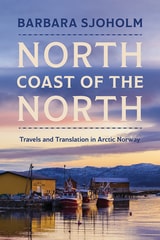
North Coast of the North
Travels and Translation in Arctic NorwayBarbara Sjoholm
University of Minnesota Press, 2027
A traveler and translator explores the multiethnic cultures, histories, and landscapes of Norway's high north
A companionable travel memoir about Arctic Norway, North Coast of the North details Barbara Sjoholm’s trip in the summer of 2024 to the northernmost region of the Scandinavian peninsula, a borderland that is home to a richly multicultural society, an expanding tourist industry, and landscapes bearing the marks of colonization, environmental damage, and climate change. A writer with decades of experience in the Nordic countries, Sjoholm flew from her home in the Pacific Northwest to Norway’s high north to research a collection of Sámi folktales and witness firsthand the settings from which the stories emerged.
Sjoholm’s journey takes her from Kirkenes, the final port on the Hurtigruten coastal route and an outpost on the Russian border, to the fertile farmlands of the Pasvik River Valley and to Indigenous archaeological sites and historic trading posts around the Varangerfjord. She voyages west along the Barents Sea coastline and south to Tromsø, past islands and inlets of surpassing beauty (as well as liquid gas plants and wind farms), and writes about the ongoing resource exploitation and local resistance to Norwegian and global corporate interests. North Coast of the North intertwines Sjoholm’s observations on the tragedies of World War II and the literature and folklore of the Sámi with her own warm memories of Norway, a country that never ceases to intrigue her.
An absorbing and expansive blend of travel writing, memoir, and reflections on translation, history, and literature, North Coast of the North is a vivid look at an often exoticized, frequently overlooked, yet increasingly important environmental and geopolitical region of Northern Europe.
Retail e-book files for this title are screen-reader friendly with images accompanied by short alt text and/or extended descriptions.