Results by title
220 books match the query 'Israel' and 7 start with n
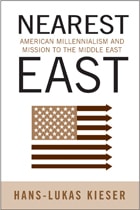
Nearest East
American Millenialism and Mission to the Middle EastAuthored by Hans-Lukas Kieser
Temple University Press, 2012
Long before oil interests shaped American interaction with the Middle East, the U.S. had a strong influence on the late Ottoman and post-Ottoman region. Covering the period from approximately 1800 to the 1970s, Hans-Lukas Kieser’s compelling Nearest East tells the story of this intimate, identity-building relationship between the U.S. and the Near East.
Kieser chronicles how American missionaries worked to implement their belief in Biblical millennialism, enlightened modernity, and a modern Zion-Israel. Millennialism was part of an American identity that constituted itself religiously in the interaction with and the representation of the “cradle of Zion.” As such, "going Near East" was—at least to American evangelical Protestants—in some ways more important than colonizing the American West. However, many Ottoman Muslims felt threatened by the American missionaries perceiving their successful institutions as an estranging challenge from the outside.
Measuring the long twisted road from the missionary Zion-builders of the early 19th century to the privileged US-Israeli partnership in the late 20th century, Nearest East looks carefully on both sides of the relationship. Kieser uses a wide range of Ottoman, Turkish, French, German and other sources, unfamiliar to most Anglophone readers, to tell this story that will appeal to historians of all stripes.
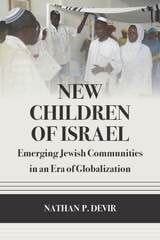
New Children of Israel
Emerging Jewish Communities in an Era of GlobalizationNathan P. Devir
University of Utah Press, 2017
This comparative ethnographic study, the first of its kind, presents in-depth analyses of the backgrounds, motivations, and sociohistorical contexts of emerging Jewish communities in Cameroon, Ghana, India, and other postcolonial locales. It investigates the ramifications of these new movements for the larger Judeo-Christian world, particularly with regard to issues of multiculturalism, immigration, race relations, and messianic expectations concerning the prophecy of Isaiah 11:12, according to which God will “assemble the dispersed of Israel, and gather together the scattered of Judah from the four corners of the earth.”
New Directions in Israeli Media
Film, Television, and Digital ContentEdited by Yaron Peleg, Eran Kaplan, and Ido Rosen
University of Texas Press, 2025
A comprehensive analysis of the major trends and developments in contemporary Israeli media.
In the twenty-first century, Israeli filmmaking has transformed from a localized industry into a globally recognized and diverse national cinema, its filmmakers gaining prominence internationally and introducing new themes, aesthetics, and voices to the scene. At the same time, Israeli television shows have emerged as a dominant force, propelled by the spread of streaming. Through the rise of online content creation and consumption, especially in the 2010s, new voices have revolutionized the creative landscape.
With Israel’s position at the cutting edge of technology and virtual platforms, Israeli media has seen a boom, winning prizes at international film festivals and adapting shows like Euphoria, Homeland, and Fauda for wider audiences. In New Directions in Israeli Media, thirteen contributors detail the shifting dynamics of Israeli cinema, television, and online content in the digital age, exploring how globalization, technological advances, and changing audience preferences are reshaping creative industries. Editors Yaron Peleg, Eran Kaplan, and Ido Rosen have assembled a volume that prompts critical reflection on the intersection of art, technology, and culture in a rapidly changing media landscape.
New Inscriptions and Seals Relating to the Biblical World
Meir Lubetski
SBL Press, 2012
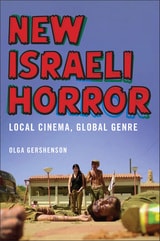
New Israeli Horror
Local Cinema, Global GenreOlga Gershenson
Rutgers University Press, 2024
Before 2010, there were no Israeli horror films. Then distinctly Israeli serial killers, zombies, vampires, and ghosts invaded local screens. The next decade saw a blossoming of the genre by young Israeli filmmakers. New Israeli Horror is the first book to tell their story. Through in-depth analysis, engaging storytelling, and interviews with the filmmakers, Olga Gershenson explores their films from inception to reception. She shows how these films challenge traditional representations of Israel and its people, while also appealing to audiences around the world.
Gershenson introduces an innovative conceptual framework of adaptation, which explains how filmmakers adapt global genre tropes to local reality. It illuminates the ways in which Israeli horror borrows and diverges from its international models. New Israeli Horror offers an exciting and original contribution to our understanding of both Israeli cinema and the horror genre.
A companion website to this book is available at https://websites.umass.edu/newisraelihorror/
Book trailer: https://youtu.be/oVJsD0QCORw (https://youtu.be/oVJsD0QCORw)

Notes from a Sealed Room
An Israeli View of the Gulf WarRobert Werman. Introduction by Gerald M. Phillips
Southern Illinois University Press, 1992
In this compelling and often startling account, Robert Werman chronicles his experiences as an Israeli citizen living in Jerusalem during the Gulf War. On January 19, 1991, he began writing daily reports on his computer, sending them to friends and a few computer networks that dealt with Jewish culture and the politics of the Middle East. To Werman’s surprise, he received numerous electronic responses to his entries, sometimes as many as one hundred a day. As a result, his "war diary" was born, a diary that he continued until February 22, 1991, when, near the end of the war, he was hospitalized for a heart condition.
In the early entries, Werman notes each Iraqi Scud attack, describing in detail the sealed room in which he and his family sought shelter during the expected chemical attacks. "Sitting in the antigas room, members of the family try to put on a brave face, make jokes. . . . Only the dog, a rather stately collie, sits quietly and does not appear at all excited. We pity the dog, for he is the only one without a mask. But then we remember that—without a mask—he is our canary in the coal mine." Futilely, Werman seeks patterns to the attacks, attempting to predict when they might occur. He writes of the nation’s response to war: joggers running with their gas masks in hand, schools temporarily disbanded while children meet in small groups to continue their education, city streets emptied by six o'clock each evening as people wait in their homes for the sound of the sirens that herald an assault. He discusses the varying opinions concerning retaliation against Iraq, the fluctuating morale of the country, the damage produced by Iraqi missiles, and the widespread speculation of Israeli citizens concerning their country’s survival. Yet Werman’s daily reports, digressions, and explanations not only include his observations and impressions; they also poignantly reveal his own personal story and political, religious, and philosophical views.
Werman’s journal gives a singular view of a country under siege, recounting in detail the pressures, conflicts, and dangers existing during a war. It is a distinctive book, a fascinating personal and political account of a man, his family, their nation, and a war.
Nothing Vast
A NovelMoshe Zvi Marvit
Acre Books, 2024
Spanning from 1932 to 1973, Nothing Vast delves deeply into the circumstances and concerns of Jews in cities across the globe—in Poland, France, Morocco, and the United States—as well as in Israel. Giving voice to characters male and female, young and old, Moshe Zvi Marvit braids together stories of migration and struggle, of custom and superstition, of long-held secrets and lies. This beautifully crafted novel follows a survivor of sexual assault, a member of the French resistance, a dream interpreter, a petty criminal, and a venerated rabbi.
Based on the experiences and traditions of the author’s own half-Arab Jewish family, the book is rife with historical and cultural detail and with the intricacies of faith and identity, both personal and national. At the center of the novel is Israel itself—a place existing first in the collective imagination, then in reality as Marvit slips into nonfiction to document the establishment of the country and the reactions to its birth. The characters’ experiences upon arrival in their new nation are vastly different: one family is given a large orange grove upon which to establish a Yeshiva, while the other, not accorded the same privileges, lives beneath notice. The story takes yet another twist when, years later, a grandchild of one of the founding rabbis, seeking answers, discovers the origin of his family’s land.
Visceral, intellectual, and searching, Nothing Vast is nothing short of a virtuosic debut.