Results by title
412 books match the query 'Japan' and 8 start with n
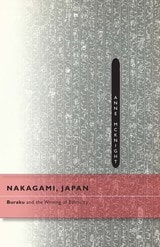
Nakagami, Japan
Buraku and the Writing of EthnicityAnne McKnight
University of Minnesota Press, 2010
In Nakagami, Japan, Anne McKnight shows how the writer’s exploration of buraku led to a unique blend of fiction and ethnography—which amounted to nothing less than a reimagining of modern Japanese literature. McKnight develops a parallax view of Nakagami’s achievement, allowing us to see him much as he saw himself, as a writer whose accomplishments traversed both buraku literary arts and high literary culture in Japan.
As she considers the ways in which Nakagami and other twentieth-century writers used ethnography to shape Japanese literature, McKnight reveals how ideas about language also imagined a transfigured relation to mainstream culture and politics. Her analysis of the resulting “rhetorical activism” lays bare Nakagami’s unique blending of literature and ethnography within the context of twentieth-century ideas about race, ethnicity, and citizenship—in Japan, but also on an international scale.
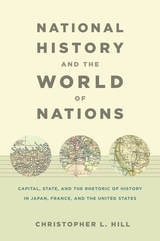
National History and the World of Nations
Capital, State, and the Rhetoric of History in Japan, France, and the United StatesChristopher L. Hill
Duke University Press, 2008
Delving into narrative histories, prose fiction, and social philosophy, Hill analyzes the rhetoric, narrative form, and intellectual genealogy of late-nineteenth-century texts that contributed to the creation of national history in each of the three countries. He discusses the global political economy of the era, the positions of the three countries in it, and the reasons that arguments about history loomed large in debates on political, economic, and social problems. Examining how the writing of national histories in the three countries addressed political transformations and the place of the nation in the world, Hill illuminates the ideological labor national history performed. Its production not only naturalized the division of the world by systems of states and markets, but also asserted the inevitability of the nationalization of human community; displaced dissent to pre-modern, pre-national pasts; and presented the subject’s acceptance of a national identity as an unavoidable part of the passage from youth to adulthood.

Nature in Translation
Japanese Tourism Encounters the Canadian RockiesShiho Satsuka
Duke University Press, 2015

Nightmare on Iwo Jima
A Marine in CombatPatrick F. Caruso, with a foreword by David G. Rathgeber
University of Alabama Press, 2007
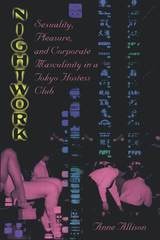
Nightwork
Sexuality, Pleasure, and Corporate Masculinity in a Tokyo Hostess ClubAnne Allison
University of Chicago Press, 1994
Allison describes in detail a typical company outing to such a club—what the men do, how they interact with the hostesses, the role the hostess is expected to play, and the extent to which all of this involves "play" rather than "work." Unlike previous books on Japanese nightlife, Allison's ethnography of one specific hostess club (here referred to as Bijo) views the general phenomenon from the eyes of a woman, hostess, and feminist anthropologist.
Observing that clubs like Bijo further a kind of masculinity dependent on the gestures and labors of women, Allison seeks to uncover connections between such behavior and other social, economic, sexual, and gendered relations. She argues that Japanese corporate nightlife enables and institutionalizes a particular form of ritualized male dominance: in paying for this entertainment, Japanese corporations not only give their male workers a self-image as phallic man, but also develop relationships to work that are unconditional and unbreakable. This is a book that will appeal to anyone interested in gender roles or in contemporary Japanese society.
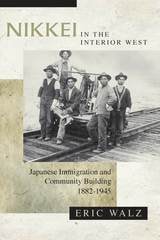
Nikkei in the Interior West
Japanese Immigration and Community Building, 1882–1945Eric Walz
University of Arizona Press, 2012
Eric Walz's Nikkei in the Interior West tells the story of more than twelve thousand Japanese immigrants who settled in the interior West--Arizona, Colorado, Idaho, Nebraska, and Utah. They came inland not as fugitives forced to relocate after Pearl Harbor but arrived decades before World War II as workers searching for a job or as picture brides looking to join husbands they had never met.
Despite being isolated from their native country and the support of larger settlements on the West Coast, these immigrants formed ethnic associations, language schools, and religious institutions. They also experienced persecution and discrimination during World War II in dramatically different ways than the often-studied immigrants living along the Pacific Coast. Even though they struggled with discrimination, these interior communities grew both in size and in permanence to become an integral part of the American West.
Using oral histories, journal entries, newspaper accounts, organization records, and local histories, Nikkei in the Interior West explores the conditions in Japan that led to emigration, the immigration process, the factors that drew immigrants to the interior, the cultural negotiation that led to ethnic development, and the effects of World War II. Examining not only the formation and impact of these Japanese communities but also their interaction with others in the region, Walz demonstrates how these communities connect with the broader Japanese diaspora.

Northern Frontiers of Qing China and Tokugawa Japan
A Comparative Study of Frontier PolicyRichard Louis Edmonds
University of Chicago Press, 1985
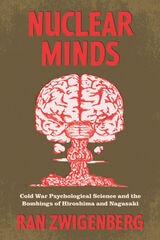
Nuclear Minds
Cold War Psychological Science and the Bombings of Hiroshima and NagasakiRan Zwigenberg
University of Chicago Press, 2023
In 1945, researchers on a mission to Hiroshima with the United States Strategic Bombing Survey canvassed survivors of the nuclear attack. This marked the beginning of global efforts—by psychiatrists, psychologists, and other social scientists—to tackle the complex ways in which human minds were affected by the advent of the nuclear age. A trans-Pacific research network emerged that produced massive amounts of data about the dropping of the bomb and subsequent nuclear tests in and around the Pacific rim.
Ran Zwigenberg traces these efforts and the ways they were interpreted differently across communities of researchers and victims. He explores how the bomb’s psychological impact on survivors was understood before we had the concept of post-traumatic stress disorder. In fact, psychological and psychiatric research on Hiroshima and Nagasaki rarely referred to trauma or similar categories. Instead, institutional and political constraints—most notably the psychological sciences’ entanglement with Cold War science—led researchers to concentrate on short-term damage and somatic reactions or even, in some cases, on denial of victims’ suffering. As a result, very few doctors tried to ameliorate suffering.
But, Zwigenberg argues, it was not only that doctors “failed” to issue the right diagnosis; the victims’ experiences also did not necessarily conform to our contemporary expectations. As he shows, the category of trauma should not be used uncritically in a non-Western context. Consequently, this book sets out, first, to understand the historical, cultural, and scientific constraints in which researchers and victims were acting and, second, to explore how suffering was understood in different cultural contexts before PTSD was a category of analysis.