Results by title
4030 books match the query 'Language Arts & Disciplines' and 87 start with n
NT Greek
A Systems ApproachJohn Clabeaux
University of Scranton Press, 2009
For many years now John Clabeaux has been perfecting his technique for teaching New Testament Greek—using his classrooms at St. John’s Seminary College, Harvard Divinity School, and the Pontifical College Josephinum as language laboratories. The comprehensive, meticulous, and user-friendly text NT Greek: A Systems Approach is the fruit of these efforts.
NT Greek is designed to be used both as a classroom text and as a reference manual for those students pursuing degrees in theological and biblical studies. The text includes a Greek index, an English index, a Greek-to-English glossary, verb maps, noun and adjective declension charts, and a list of helpful hints and rules. A digitally mastered CD of Greek recitations comes with every book to assist students with their pronunciations.
Naming How We Feel
Specific Affect and Emotional Labor In the Writing CenterDaniel Lawson
Utah State University Press, 2026
Writing centers are the locus for a wide range of emotional labor on campus, often serving students beyond the typical educational purpose. Naming How We Feel grapples with the question of how writing center administrators account for, train for, and theorize emotion and affect in the writing center to facilitate better and more ethical practices and considers how writing center administrators might ameliorate the costs of such emotional labor to faculty, tutors, and students.
Beginning with a discussion of how writing center scholars might identify and understand emotional labor, the book then expands to examine richly varied case studies and anecdotes to showcase how tutors tend to experience such labor and consider its relationship and association with emotional intelligence and burnout. Lawson considers how the field might better prepare and train tutors for affect and emotional labor, ultimately advocating for more equitable conditions for emotional labor within writing centers.
Naming How We Feel examines the critical role feelings play in writing and writing center work, offering advice on training tutors for emotional labor and literacy and suggestions for how administrators might engage institutional stakeholders to create and support more equitable conditions for emotional labor within their writing centers.
Naming What We Know, Classroom Edition
Threshold Concepts of Writing StudiesLinda Adler-Kassner
Utah State University Press, 2016
Naming What We Know
Threshold Concepts of Writing StudiesLinda Adler-Kassner
Utah State University Press, 2015
Naming What We Know examines the core principles of knowledge in the discipline of writing studies using the lens of “threshold concepts”—concepts that are critical for epistemological participation in a discipline. The first part of the book defines and describes thirty-seven threshold concepts of the discipline in entries written by some of the field’s most active researchers and teachers, all of whom participated in a collaborative wiki discussion guided by the editors. These entries are clear and accessible, written for an audience of writing scholars, students, and colleagues in other disciplines and policy makers outside the academy. Contributors describe the conceptual background of the field and the principles that run throughout practice, whether in research, teaching, assessment, or public work around writing. Chapters in the second part of the book describe the benefits and challenges of using threshold concepts in specific sites—first-year writing programs, WAC/WID programs, writing centers, writing majors—and for professional development to present this framework in action.
Naming What We Know opens a dialogue about the concepts that writing scholars and teachers agree are critical and about why those concepts should and do matter to people outside the field.
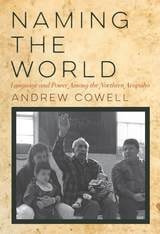
Naming the World
Language and Power Among the Northern ArapahoAndrew Cowell
University of Arizona Press, 2018
As the Arapaho people resist Euro-American assimilation or domination, the Arapaho language and the idea that the language is sacred are key rallying points—but also key points of contestation. Cowell finds that while many at Wind River see the language as crucial for maintaining access to more-than-human power, others primarily view the language in terms of peer-oriented identities as Arapaho, Indian, or non-White. These different views lead to quite different language usage and attitudes in relation to place naming, personal naming, cultural metaphors, new word formation, and the understudied practice of folk etymology.
Cowell presents data from conversations and other natural discourse to show the diversity of everyday speech and attitudes, and he links these data to broader debates at Wind River and globally about the future organization of indigenous societies and the nature of Arapaho and indigenous identity.
Narrative As Communication
Didier Coste
University of Minnesota Press, 1989
Narrative as Communication is the first major treatise on narrative and narrative theory to make use of all the analytic tools developed in the twenty years. Intended as an up-to-date introduction, it carefully defines narrative discourse, distinguishing it from other discourses, and analyzes what it entails by referring to numerous examples spanning a wide range of media and literary works. At the same time, it orients narrative theory in the current debates surrounding the “New Historicism” and postmodern ideology, showing that theories of narrative are necessarily central to any understanding of history.
Not restricted to any single genre, Coste’s text emphasizes the production of narrative meaning in diverse contexts: The Epic of Gilgamesh, a John Ford film classic, French American, and Spanish new fiction, Dante, Shakespeare, the pastoral, the fairy tale, The Communist Manifesto, Prescott’s History of the Conquest of Peru, a painting by Gustave Moreau. Coste thoroughly and critically examines the usual concepts of voice, character, point of view and narrative syntax, and he develops radical revisions in the notion of fictionality, character, narrative economy and the function of narrative meaning itself. The book is a remarkable synthesis that will likely become a reference for future studies in narratology.
Narrative suspense
Eric S. Rabkin
University of Michigan Press, 1973
Narratives of (Dis)Enfranchisement
Reckoning with the History of Libraries and the Black and African American ExperienceTracey Overbey and Amanda L. Folk
American Library Association, 2022
Still a predominantly white profession, librarianship has a legacy of racial discrimination, and it is essential that we face the ways that race impacts how we meet the needs of diverse user communities. Identifying and acknowledging implicit and learned bias is a necessary step toward transforming not only our professional practice but also our scholarship, assessment, and evaluation practices. From this Special Report, readers will
- learn the hidden history of Africa’s contributions to libraries and educational institutions, which are often omitted from K-12, higher education, and library school curricula;
- engage with the racist legacies of libraries as well as contemporary scholarship related to Black and African American users’ experiences with libraries;
- be introduced to frameworks and theories that can help to identify and unpack the role of race in librarianship and in library users’ experiences; and
- garner practical takeaways to bring to their own views and practice of librarianship.
Narratives of (Dis)Engagement
Exploring Black and African American Students’ Experiences in LibrariesAmanda L. Folk and Tracey Overbey
American Library Association, 2022
- learn details about the study, which focused on the potential role of race in the students’ interactions with library staff, including white staff and staff of color;
- gain insight into Black and African American users’ perceptions of libraries and library staff, attitudes towards reading, frequency of library usage, and the importance of family;
- understand the implications of the study’s findings for our practice and for librarianship more broadly, including our ongoing commitment to diversifying the profession; and
- walk away with recommendations that can be applied to every library and educational context, such as guidance for developing an antiracist organization and more equitable service provision.
Narratives of Joy and Failure in Antiracist Assessment
Exploring Collaborative Writing AssessmentsAsao B. Inoue
University Press of Colorado, 2024
National Healing
Race, State, and the Teaching of CompositionClaude Hurlbert
Utah State University Press, 2013
In National Healing, author Claude Hurlbert persuasively relates nationalism to institutional racism and contends that these are both symptoms of a national ill health afflicting American higher education and found even in the field of writing studies. Teachers and scholars, even in progressive fields like composition, are unwittingly at odds with their own most liberatory purposes, he says, and he advocates consciously broadening our understanding of rhetoric and writing instruction to include rhetorical traditions of non-Western cultures.
Threading a personal narrative of his own experiences as a student, professor, and citizen through a wide ranging discussion of theory, pedagogy, and philosophy in the writing classroom, Hurlbert weaves a vision that moves beyond simple polemic and simplistic multiculturalism. National Healing offers a compelling new aesthetic, epistemological, and rhetorical configuration.
National Rhetorics in the Syrian Immigration Crisis
Victims, Frauds, and FloodsClarke Rountree
Michigan State University Press, 2019
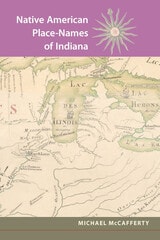
Native American Place Names of Indiana
Michael McCafferty
University of Illinois Press, 2007
A linguistic history of Native American place-names in Indiana
In tracing the roots of Indiana place names, Michael McCafferty focuses on those created and used by local Native Americans. Drawing from exciting new sources that include three Illinois dictionaries from the eighteenth century, the author documents the language used to describe landmarks essential to fur traders in Les Pays d’en Haut and settlers of the Old Northwest territory. Impeccably researched, this study details who created each name, as well as when, where, how and why they were used. The result is a detailed linguistic history of lakes, streams, cities, counties, and other Indiana names. Each entry includes native language forms, translations, and pronunciation guides, offering fresh historical insight into the state of Indiana.
Native Studies Keywords
Edited by Stephanie Nohelani Teves, Andrea Smith, and Michelle Raheja
University of Arizona Press, 2015
Take sovereignty, for example. The word has served as the battle cry for social justice in Indian Country. But what is the meaning of sovereignty? Native peoples with diverse political beliefs all might say they support sovereignty—without understanding fully the meaning and implications packed in the word.
The field of Native studies is filled with many such words whose meanings are presumed, rather than articulated or debated. Consequently, the foundational terms within Native studies always have multiple and conflicting meanings. These terms carry the colonial baggage that has accrued from centuries of contested words.
Native Studies Keywords is a genealogical project that looks at the history of words that claim to have no history. It is the first book to examine the foundational concepts of Native American studies, offering multiple perspectives and opening a critical new conversation.
Navigating Difficult Situations in Public Libraries
The PLA Guide to Trauma-Informed De-EscalationMargaret Ann Paauw
American Library Association, 2025
- a succinct overview of how to define and understand trauma, including its definition, causes, effects, and manifestations;
- evidence-informed approaches drawn from the fields of social work, psychology, and counseling;
- dozens of activities, handouts, and worksheets designed to spur reflection and help readers build upon the practices introduced in the book;
- guidance on debriefing, evaluation, facing compassion fatigue, and other aftercare topics; and
- appendices that provide information on mental health resources, crisis intervention hotlines, and further reading on trauma and burnout.
Navigating Disability in the Academic Library Workplace
Paula Martin
Assoc of College & Research Libraries, 2025
Navigating Disability in the Academic Library Workplace collects ways that the library can support its workers with disabilities and encourage them to succeed. It’s a guide for librarians with disabilities on supporting and advocating for themselves in the workplace, but also a resource for able-bodied and neurotypical managers and workers to learn how to be allies.
Chapters examine identities, intersections, The Americans with Disabilities Act, accommodations, advocacy, and collective care practices. Authors generously share their own stories and experiences and offer their own definitions of ableism, disability, intersectionality, and other relevant terms to help capture the diversity and magnitude of identities held by people with disabilities. Navigating Disability in the Academic Library Workplace offers a chorus of voices with different perspectives and provides ideas and resources for individuals with disabilities, supervisors, coworkers, and the profession.

Navigating Legal Issues in Archives
Menzi L. Behrnd-Klodt
American Library Association, 2009
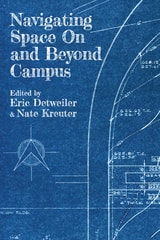
Navigating Space On and Beyond Campus
Eric Detweiler
Utah State University Press, 2026
Offering practical applications of scholarship in spatial theory and rhetorics of space and place, Navigating Space On and Beyond Campus profiles how writing and rhetoric programs across the United States have responded to the spatial challenges and possibilities facing higher education. Exploring how instructors creatively and critically navigate actual, virtual, and inaccessible spaces in the pursuit of effective, ethically informed rhetoric and writing education, this book also reveals how the use of space contributes to the creation and/or denial of equity among students, faculty, and programs.
Contributors document how they have secured and repurposed campus real estate, literally and metaphorically navigated relationships with other campus resources, and responded to austerity measures that have threatened the spaces they have historically called their own. Individual sections focus on the historical pressures that have shaped programs’ locations and resources, developments in the work and design of writing centers, the creation of new labs and centers, and the relationship between writing programs and the broader places and communities with which they are intertwined.
How spaces are allocated, structured, and regulated is a key determinant of access and equity in higher education. Navigating Space On and Beyond Campus offers timely strategies for and reflections on the place of rhetoric and writing on college and university campuses.

Navigating The Future With Sce Nario Planning
A Guidebook FoJoan Giesecke
Assoc of College & Research Libraries, 2015
Navigating the Complexities of Privacy
Issues for Libraries and Content ProvidersDoreen Bradley
Against the Grain, LLC, 2024
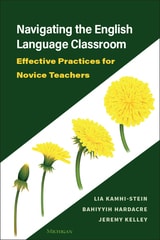
Navigating the English Language Classroom
Effective Practices for Novice TeachersLía D. Kamhi-Stein, Bahiyyih Hardacre, and Jeremy Kelley
University of Michigan Press, 2024
Each chapter offers context; a case study; common concerns; and concrete, research-based practices that link theory to practice in an easy-to-access manner. Readers will learn how to face several challenges, including:
- lesson planning and delivery
- classroom assessment
- integrating technology into the classroom
- using corpora in the classroom
- establishing a professional identity
Navigating the Future with Scenario Planning
A Guidebook for LibrariansJoan Giesecke
Assoc of College & Research Libraries, 2015
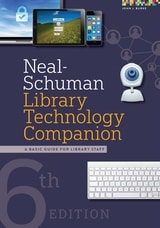
Neal-Schuman Library Technology Companion
A Basic Guide for Library StaffJohn J. Burke
American Library Association, 2020
Carrying over the reorganization that made the fifth edition such a convenient learning resource for students and working professionals alike, the newest edition of this comprehensive library technology primer is timelier and more compelling than ever. Burke's guide should be at the top of the reading list for any current or future library professional looking to stay at the forefront of technological advancement. Updated with new case studies to illuminate key areas, its incisive coverage includes
- complete analysis of the librarian's technological toolbox for teaching, security, databases, and more;
- expert advice on how to compare and evaluate competing technology solutions;
- social media, streaming media, and educating patrons about digital privacy;
- makerspaces and other technology programing, including virtual and augmented reality technologies;
- technology lending programs;
- open source catalog systems, discovery layers, and related library management systems;
- websites, web-based services, and free information resources;
- copyright and licensing as they pertain to the use of digital materials;
- new technology predictions for the future, with tips on how to stay up to date with the latest developments; and
- a refreshed glossary of useful terms.
Informed by a large-scale survey of librarians across the spectrum of institution types, this guide will be a true technology companion to readers at all experience levels.
Neal-Schuman Library Technology Companion
A Basic Guide for Library StaffJohn J. Burke
American Library Association, 2016
Neal-Schuman Library Technology Companion
A Basic Guide for Library StaffRobin Hastings
American Library Association, 2025
Foreword by Maurice Coleman
Technology infuses every aspect of every day in every library, and thus basic technology skills are a prerequisite for everyone who works in a library. Providing a one-stop overview of all technologies used in libraries today, this comprehensive primer belongs at the top of the reading list for any current or future library professional looking to stay at the forefront of technological advancement. Representing a complete update of the book under a new author, this seventh edition of the guide is bolstered with fresh insights gleaned from librarians and library staff members sharing how they work with a given technology in their library settings. Readers will learn about
- how technologies have historically impacted libraries;
- electronic resources including e-books, full-text articles, and streaming media;
- the crucial role of free web information in supporting library research;
- discovery layers and other systems for organizing information to make it easier to find;
- desktops, laptops, tablets, and mobile devices;
- library websites, web services, screencasts, distance learning, and learning management systems;
- social networking and patron participation, with newly crafted guidelines;
- makerspaces and other possibilities for adding creative activities and technologies to libraries such as virtual reality and augmented reality;
- a comprehensive examination of how to build and maintain the library technology environment, with advice on crafting an effective plan, purchasing equipment, putting systems into operation, and preservation issues stemming from dead and dying technologies;
- Universal Design (UX) and adaptive/assistive technologies;
- protecting technology and technology users by securing collections, enhancing computer security, and safeguarding privacy; and
- possible future developments in library technology, with suggested resources for staying informed.
Neatness Counts
Essays on the Writer’s DeskKevin Kopelson Kopelson
University of Minnesota Press, 2006
Negotiating the Intersections of Writing and Writing Instruction
Proceedings from the 2019 Conference of the European Association for the Teaching of Academic Writingedited by Magnus Gustafsson and Andreas Eriksson
University Press of Colorado, 2022
Negroes and Jobs
A Book of ReadingsEdited by Louis A. Ferman, Joyce L. Kornbluh and J.A. Miller
University of Michigan Press, 1968
Netprov
Networked Improvised Literature for the Classroom and BeyondRob Wittig
Amherst College Press, 2021
“Jargon-free and ambitious in scope, Netprov meets the needs of several types of readers. Casual readers will be met with straightforward and easy-to-follow definitions and examples. Scholars will find deep wells of in- formation about networked roleplay games. Teachers and students will find instructions for how-to play, and a ready-made academic context to make their play meaningful and memorable.” —Kathi Inman Berens, Portland State University
Network Reshapes the Library
Lorcan Dempsey on Libraries, Services, and NetworksLorcan American Library Association
American Library Association, 2014
Network Sense
Methods for Visualizing a DisciplineDerek N. Mueller
University Press of Colorado, 2018
New Approaches to Interpreter Education
Cynthia B. Roy
Gallaudet University Press, 2006
The latest addition to the Interpreter Education series expands the tools available to instructors with six new, vital chapters on new curricula and creative teaching methods. Series editor Cynthia B. Roy leads the way by calling for the use of a discourse-oriented curriculum for educating interpreters. In the following chapter, Claudia Angelelli outlines the bottom-line principles for teaching effective health-care interpreting, postulating a model that depends upon the development of skills in six critical areas: cognitive-processing, interpersonal, linguistics, professional, setting-specific, and sociocultural. Risa Shaw, Steven D. Collins, and Melanie Metzger collaborate on describing the process for establishing a bachelor of arts program in interpreting at Gallaudet University distinct from the already existent masters program.
In the fourth chapter, Doug Bowen-Bailey describes how to apply theories of discourse-based interpreter education in specific contexts by producing customized videos. Jemina Napier blends three techniques for instructing signed language interpreters in Australia: synthesizing sign and spoken language interpreting curricula; integrating various interpreting concepts into a theoretical framework; and combining online and face-to-face instruction. Finally, Helen Slatyer delineates the use of an action research methodology to establish a curriculum for teaching ad hoc interpreters of languages used by small population segments in Australia.
New Directions for Library Service to Young Adults
American Library Association, 2002
New Issues in Librarianship
Presented Papers at the ALA 2009 Annual ConferenceAmerican Library Association, 2009
New Perspectives on Case Theory
Edited by Ellen Brandner and Heike Zinsmeister
CSLI, 2003
New Perspectives on Language Variety in the South
Historical and Contemporary ApproachesMichael D. Picone
University of Alabama Press, 2015
Beginning with an introduction to American Indian languages of the Southeast, five fascinating essays discuss indigenous languages, including Caddo, Ofo, and Timucua, and evidence for the connection between the Pre-Columbian Southeast and the Caribbean.
Five essays explore the earlier Englishes of the South, covering topics such as the eighteenth century as the key period in the differentiation of Southern American English and the use of new quantitative methods to trace the transfer of linguistic features from England to America. They examine a range of linguistic resources, such as plantation overseers’ writings, modern blues lyrics, linguistic databases, and lexical and locutional compilations that reveal the region’s distinctive dialectal traditions.
New Perspectives on Language Variety in the South: Historical and Contemporary Approaches widens the scope of inquiry into the linguistic influences of the African diaspora as evidenced in primary sources and records. A comprehensive essay redefines the varieties of French in Louisiana, tracing the pathway from Colonial Louisiana to the emergence of Plantation Society French in a diglossic relationship with Louisiana Creole. A further essay maps the shift from French to English in family documents.
An assortment of essays on English in the contemporary South touch on an array of compelling topics from discourse strategies to dialectal emblems of identity to stereotypes in popular perception.
Essays about recent Latino immigrants to the South bring the collection into the twenty-first century, taking into account the dramatic increase in the population of Spanish speakers and illuminating the purported role of “Spanglish,” the bilingual lives of Spanish-speaking Latinos in Mississippi, and the existence of regional Spanish dialectal diversity.
New Routes to Library Success
100+ Ideas from Outside the StacksElisabeth Doucett
American Library Association, 2015
New Supervisors in Technical Services
A Management Guide Using ChecklistsAmerican Library Association, 2007
New Top Technologies Every Librarian Needs to Know
A LITA GuideKenneth J. Varnum
American Library Association, 2019
New Work of Writing Across the Curriculum
Diversity and Inclusion, Collaborative Partnerships, and Faculty DevelopmentStaci M. Perryman-Clark
Utah State University Press, 2023
Many of these initiatives are created in isolation, reinforcing institutional silos that are not used strategically to gain the attention of senior administrators, particularly those working at state-supported public institutions who must manage shrinking institutional budgets. Yet teaching and learning centers and WAC programs gain tremendously from one another by building explicit partnerships on campus-wide diversity initiatives that emphasize cultural competence. In addition, both cultural competence and written proficiency enhance the transferable skills necessary for completing undergraduate education requirements, and this work can be leveraged to draw the attention of senior administrative leadership.
Faculty development and WAC need to make diversity and inclusion initiatives a priority for professional development. The New Work of Writing Across the Curriculum reviews initiatives that point to increased understanding of diversity and inclusion that will be of significance to administrators, WAC specialists, faculty developers, and diversity officers across the spectrum of institutions of higher learning.
New Writing Classroom
Listening, Motivation, and Habits of MindPatrick Sullivan
Utah State University Press, 2014
In A New Writing Classroom, Patrick Sullivan provides a new generation of teachers a means and a rationale to reconceive their approach to teaching writing, calling into question the discipline's dependence on argument.
Including secondary writing teachers within his purview, Sullivan advocates a more diverse, exploratory, and flexible approach to writing activities in grades six through thirteen. A New Writing Classroom encourages teachers to pay more attention to research in learning theory, transfer of learning, international models for nurturing excellence in the classroom, and recent work in listening to teach students the sort of dialogic stance that leads to higher-order thinking and more sophisticated communication.
The conventional argumentative essay is often a simplistic form of argument, widely believed to be the most appropriate type of writing in English classes, but other kinds of writing may be more valuable to students and offer more important kinds of cognitive challenges. Focusing on listening and dispositions or "habits of mind” as central elements of this new composition pedagogy, A New Writing Classroom draws not just on composition studies but also on cognitive psychology, philosophy, learning theory, literature, and history, making an exciting and significant contribution to the field.
New on the Job
A School Librarian's Guide to SuccessHilda K. Weisburg
American Library Association, 2014
New on the Job
A School Library Media Specialist's Guide to SuccessRuth Toor
American Library Association, 2007
Newbery & Caldecott Medal Books, 1986-2000
A Comprehensive Guide to the WinnersAmerican Library Association, 2001
News Parade
The American Newsreel and the World as SpectacleJoseph Clark
University of Minnesota Press, 2020
A fascinating look at the United States’ conflicted relationship with news and the media, through the lens of the newsreel
When weekly newsreels launched in the early twentieth century, they offered the U.S. public the first weekly record of events that symbolized “indisputable evidence” of the news. In News Parade, Joseph Clark examines the history of the newsreel and how it changed the way Americans saw the world. He combines an examination of the newsreel’s methods of production, distribution, and reception with an analysis of its representational strategies to understand the newsreel’s place in the history of twentieth-century American culture and film history.
Clark focuses on the sound newsreel of the 1930s and 1940s, arguing that it represents a crucial moment in the development of a spectacular society where media representations of reality became more fully integrated into commodity culture. Using several case studies, including the newsreel’s coverage of Charles Lindbergh’s transatlantic flight and the Sino–Japanese War, News Parade shows how news film transformed the relationship between its audience and current events, as well as the social and political consequences of these changes. It pays particular attention to how discourses of race and gender worked together with the rhetoric of speed, mobility, and authority to establish the power and privilege of newsreel spectatorship.
In the age of fake news and the profound changes to journalism brought on by the internet, News Parade demonstrates how new technologies and media reshaped the American public’s relationship with the news in the 1930s—a history that can help us to better understand the transformations happening today.
News That Matters
Television and American Opinion, Updated EditionShanto Iyengar and Donald R. Kinder
University of Chicago Press, 2010
Almost twenty-five years ago, Shanto Iyengar and Donald R. Kinder first documented a series of sophisticated and innovative experiments that unobtrusively altered the order and emphasis of news stories in selected television broadcasts. Their resulting book News That Matters, now hailed as a classic by scholars of political science and public opinion alike, is here updated for the twenty-first century, with a new preface and epilogue by the authors. Backed by careful analysis of public opinion surveys, the authors show how, despite changing American politics, those issues that receive extended coverage in the national news become more important to viewers, while those that are ignored lose credibility. Moreover, those issues that are prominent in the news stream continue to loom more heavily as criteria for evaluating the president and for choosing between political candidates.
“News That Matters does matter, because it demonstrates conclusively that television newscasts powerfully affect opinion. . . . All that follows, whether it supports, modifies, or challenges their conclusions, will have to begin here.”—The Public Interest
News Values
Ideas for an Information AgeJack Fuller
University of Chicago Press, 1996
"Every talk show host should read this book. So should every newsroom cynic. . . . 'Pursuit of truth is not a license to be a jerk.' In all too many newsrooms, that statement would resound like a three-bell bulletin."—Martin F. Nolan, New York Times Book Review
"[News Values] ought to be required reading not just for those who work for newspapers, but for all those who read and care about them. . . . [This book] seems destined to become one of those slim but important volumes people read for a long time to come."—Richard J. Tofel, Wall Street Journal
"Fuller stays above the fray [of the many books on the media]: His is a deeply intellectual approach, one that provides serious context to the highly complicated issue of how the news 'works.'"—Duncan McDonald, Chicago Tribune Books
"News Values has the touch and feel of knowledgeable, authentic caring about the kind of journalism than can help make society more cohesive, even human." —"Monitor's Pick," Christian Science Monitor
News at Work
Imitation in an Age of Information AbundancePablo J. Boczkowski
University of Chicago Press, 2010
Before news organizations began putting their content online, people got the news in print or on TV and almost always outside of the workplace. But nowadays, most of us keep an eye on the headlines from our desks at work, and we have become accustomed to instant access to a growing supply of constantly updated stories on the Web. This change in the amount of news available as well as how we consume it has been coupled with an unexpected development in editorial labor: rival news organizations can now keep tabs on the competition and imitate them, resulting in a decrease in the diversity of the news. Peeking inside the newsrooms where journalists create stories and the work settings where the public reads them, Pablo J. Boczkowski reveals why journalists contribute to the growing similarity of news—even though they dislike it—and why consumers acquiesce to a media system they find increasingly dissatisfying.
Comparing and contrasting two newspapers in Buenos Aires with similar developments in the United States, News at Work offers an enlightening perspective on living in a world with more information but less news.
News
The Politics of Illusion, Ninth EditionW. Lance Bennett
University of Chicago Press, 2011
News
The Politics of Illusion, Tenth EditionW. Lance Bennett
University of Chicago Press, 2016