Results by title
320 books match the query 'Legal status, laws, etc' and 8 start with n
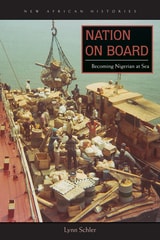
Nation on Board
Becoming Nigerian at SeaLynn Schler
Ohio University Press, 2016
In the 1940s, British shipping companies began the large-scale recruitment of African seamen in Lagos. On colonial ships, Nigerian sailors performed menial tasks for low wages and endured discrimination as cheap labor, while countering hardships by nurturing social connections across the black diaspora. Poor employment conditions stirred these seamen to identify with the nationalist sentiment burgeoning in postwar Nigeria, while their travels broadened and invigorated their cultural identities.
Working for the Nigerian National Shipping Line, they encountered new forms of injustice and exploitation. When mismanagement, a lack of technical expertise, and pillaging by elites led to the NNSL’s collapse in the early 1990s, seamen found themselves without prospects. Their disillusionment became a broader critique of corruption in postcolonial Nigeria.
In Nation on Board: Becoming Nigerian at Sea, Lynn Schler traces the fate of these seamen in the transition from colonialism to independence. In so doing, she renews the case for labor history as a lens for understanding decolonization, and brings a vital transnational perspective to her subject. By placing the working-class experience at the fore, she complicates the dominant view of the decolonization process in Nigeria and elsewhere.
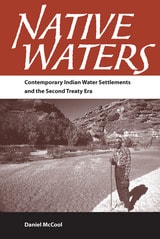
Native Waters
Contemporary Indian Water Settlements and the Second Treaty EraDaniel McCool
University of Arizona Press, 2002

Naturalizing Mexican Immigrants
A Texas HistoryBy Martha Menchaca
University of Texas Press, 2011
2013 — NACCS Book Award – National Association for Chicana and Chicano Studies
During the nineteenth and early twentieth centuries, a majority of the Mexican immigrant population in the United States resided in Texas, making the state a flashpoint in debates over whether to deny naturalization rights. As Texas federal courts grappled with the issue, policies pertaining to Mexican immigrants came to reflect evolving political ideologies on both sides of the border.
Drawing on unprecedented historical analysis of state archives, U.S. Congressional records, and other sources of overlooked data, Naturalizing Mexican Immigrants provides a rich understanding of the realities and rhetoric that have led to present-day immigration controversies. Martha Menchaca's groundbreaking research examines such facets as U.S.-Mexico relations following the U.S. Civil War and the schisms created by Mexican abolitionists; the anti-immigration stance that marked many suffragist appeals; the effects of the Spanish American War; distinctions made for mestizo, Afromexicano, and Native American populations; the erosion of means for U.S. citizens to legalize their relatives; and the ways in which U.S. corporations have caused the political conditions that stimulated emigration from Mexico.
The first historical study of its kind, Naturalizing Mexican Immigrants delivers a clear-eyed view of provocative issues.

Nature's Wild
Love, Sex, and Law in the CaribbeanAndil Gosine
Duke University Press, 2021
Duke University Press Scholars of Color First Book Award recipient
Negotiating Tribal Water Rights
Fulfilling Promises in the Arid WestBonnie G. Colby, John E. Thorson, and Sarah Britton; Foreword by David H. Getches
University of Arizona Press, 2005
Much has been written about Indian water rights; for the many tribal and non-Indian stakeholders who rely upon western water, this book now offers practical guidance on how to negotiate them. By providing a comprehensive synthesis of western water issues, tribal water disputes, and alternative approaches to dispute resolution, it offers a valuable sourcebook for all—tribal councils, legislators, water professionals, attorneys—who need a basic understanding of the complexities of the situation.
The book reviews the history, current status, and case law related to western water while revealing strategies for addressing water conflicts among tribes, cities, farms, environmentalists, and public agencies. Drawing insights from the process, structure, and implementation of water rights settlements currently under negotiation or already agreed to, it presents a detailed analysis of how these cases evolve over time. It also provides a wide range of contextual materials, from the nuts and bolts of a Freedom of Information Act request to the hydrology of irrigation. It also includes contributed essays by expert authors on special topics, as well as interviews with key individuals active in water management and tribal water cases.
As stakeholders continue to battle over rights to water, this book clearly addresses the place of Native rights in the conflict. Negotiating Tribal Water Rights offers an unsurpassed introduction to the ongoing challenges these claims present to western water management while demonstrating the innovative approaches that states, tribes, and the federal government have taken to fulfill them while mitigating harm to both non-Indians and the environment.
Normal Life
Administrative Violence, Critical Trans Politics, and the Limits of LawDean Spade
Duke University Press, 2015
Wait—what's wrong with rights? It is usually assumed that trans and gender nonconforming people should follow the civil rights and "equality" strategies of lesbian and gay rights organizations by agitating for legal reforms that would ostensibly guarantee nondiscrimination and equal protection under the law. This approach assumes that the best way to address the poverty and criminalization that plague trans populations is to gain legal recognition and inclusion in the state's institutions. But is this strategy effective?
In Normal Life Dean Spade presents revelatory critiques of the legal equality framework for social change, and points to examples of transformative grassroots trans activism that is raising demands that go beyond traditional civil rights reforms. Spade explodes assumptions about what legal rights can do for marginalized populations, and describes transformative resistance processes and formations that address the root causes of harm and violence.
In the new afterword to this revised and expanded edition, Spade notes the rapid mainstreaming of trans politics and finds that his predictions that gaining legal recognition will fail to benefit trans populations are coming to fruition. Spade examines recent efforts by the Obama administration and trans equality advocates to "pinkwash" state violence by articulating the US military and prison systems as sites for trans inclusion reforms. In the context of recent increased mainstream visibility of trans people and trans politics, Spade continues to advocate for the dismantling of systems of state violence that shorten the lives of trans people. Now more than ever, Normal Life is an urgent call for justice and trans liberation, and the radical transformations it will require.

Not Just Roommates
Cohabitation after the Sexual RevolutionElizabeth H. Pleck
University of Chicago Press, 2012
The late twentieth century has seen a fantastic expansion of personal, sexual, and domestic liberties in the United States. In Not Just Roommates, Elizabeth H. Pleck explores the rise of cohabitation, and the changing social norms that have allowed cohabitation to become the chosen lifestyle of more than fifteen million Americans.
Despite this growing social acceptance, Pleck contends that when it comes to the law, cohabitors have been, and continue to be, treated as second-class citizens, subjected to discriminatory laws, limited privacy, a lack of political representation, and little hope for change. Because cohabitation is not a sexual identity, Pleck argues, cohabitors face the legal discrimination of a population with no group identity, no civil rights movement, no legal defense organizations, and, often, no consciousness of being discriminated against. Through in-depth research in written sources and interviews, Pleck shines a light on the emergence of cohabitation in American culture, its complex history, and its unpleasant realities in the present day.
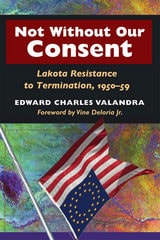
Not without Our Consent
Lakota Resistance to Termination, 1950-59Edward Charles Valandra
University of Illinois Press, 2006
Edward Valandra's Not Without Our Consent documents the tenacious and formidable Lakota resistance to attempts at applying this law. In unprecedented depth, it follows their struggle through the 1950s when, against all odds, their resistance succeeded in the amendment of PL 83-280 to include Native consent as a prerequisite to state jurisdiction. The various House and Senate bills discussed in the manuscript are reproduced in five appendices.