Results by title
1445 books match the query 'Life Sciences' and 25 start with n
Natural Communities
Lee R. Dice
University of Michigan Press, 1952
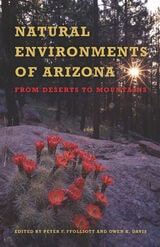
Natural Environments of Arizona
From Desert to MountainsEdited by Peter F. Ffolliott and Owen K. Davis
University of Arizona Press, 2008
Natural Environments of Arizona bridges the gap between coffee-table volumes and scientific literature, offering a nontechnical, single-volume overview that introduces readers to a myriad of topics and provides pointers toward deeper reading. It’s all here: climate, geology, soil and water resources, an amazing variety of flora and fauna—and of course human impacts on the state’s fragile ecosystems.
These chapters show the extent to which Arizona’s natural environments have changed since Lowe first set the stage for their study. They consider changes in forests and grasslands, the effects of soil erosion, questions about water quality, and the evolving status of rivers and wildlife communities. And while the common thread of environments makes the book a complete introduction to the subject, each chapter stands alone as an authoritative synopsis of its particular topic.
Ranging widely over the impacts of drought, floods, and wildfires, this practical guide clearly shows that nature is more than picturesque landscapes, vegetation, and wildlife. For anyone with a dog-eared copy of Lowe, this book will serve as the new standard on the subject—a valuable tool for resource managers, students, and general readers alike.
Natural Missouri
Working with the LandNapier Shelton
University of Missouri Press, 2005
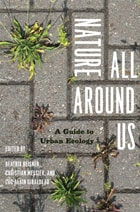
Nature All Around Us
A Guide to Urban EcologyEdited by Beatrix Beisner, Christian Messier, and Luc-Alain Giraldeau
University of Chicago Press, 2012
Nature All Around Us uses the familiar—such as summer Sundays humming with lawn mowers, gray squirrels foraging in planters, and flocks of pigeons—in order to introduce basic ecological concepts. In twenty-five short chapters organized by scale, from the home to the neighborhood to the city at large, it offers a subtle and entertaining education in ecology sure to inspire appreciation and ultimately stewardship of the environment. Various ecological concepts that any urban dweller might encounter are approachably examined, from understanding why a squirrel might act aggressively towards its neighbor to how nutrients and energy contained within a discarded apple core are recycled back into the food chain. Streaming through the work is an introduction to basic ecology, including the dangers of invasive species and the crucial role played by plants and trees in maintaining air quality.
Taken as a whole, Nature All Around Us is an unprecedented field guide to the ecology of the urban environment that invites us to look at our towns, cities, and even our backyards through the eyes of an ecologist. It is an entertaining, educational, and inspiring glimpse into nature in seemingly unnatural settings, a reminder that we don’t have to trek into the wild to see nature—we just have to open our eyes.
Nature Inc.
Environmental Conservation in the Neoliberal AgeEdited by Bram Büscher, Wolfram Dressler, and Robert Fletcher
University of Arizona Press, 2014
As public funding for conservation efforts grows ever scarcer and the private sector is brimming with ideas about how its role—along with its profits— can grow, market forces have found their way into environmental management to a degree unimaginable only a few years ago. Ecotourism, payment for environmental services (PES), and new conservation finance instruments such as species banking, carbon trading, and biodiversity derivatives are only some of the market mechanisms that have sprung into being. This is “Nature™ Inc.”: a fast-growing frontier of networks, activities, knowledge, and regulations that are rapidly changing the relations between people and nature on both global and local scales.
Nature™ Inc. brings together cutting-edge research by respected scholars from around the world to analyze how “neoliberal conservation” is reshaping human–nature relations that have been fashioned over two centuries of capitalist development. Contributors synthesize and add to a growing body of academic literature that cuts across the disciplinary boundaries of geography, sociology, anthropology, political science, and development studies to critically interrogate the increasing emphasis on neoliberal market-based mechanisms in environmental conservation. They all grapple with one overriding question: can capitalist market mechanisms resolve the environmental problems they have helped create?
Nature Journal
L. J. Davenport, with a Foreword by John C. Hall
University of Alabama Press, 2010
Explore Nature. Record Wonder. Keep Your Own Journal.
Nature Journal is an innovative presentation of the best columns and photographs from L. J. Davenport’s popular column in Alabama Heritage magazine. Readers of the magazine have come to relish his artful and often witty descriptions of common species encountered in the Alabama outdoors. But Nature Journal is designed to be much more than a mere collection of entertaining essays; it is also an educational tool—a means of instructing and encouraging readers in the art of keeping a nature journal for themselves.
Each of the 25 chapters is a self-contained lesson in close observation of species morphology, behavior, and habitat; research in the literature; nondestructive capture of the subject by photography or drawing; and written description of the total observed natural phenomenon. At the end of each account, stimulating questions and gentle directives guide the reader into making his or her own observations and recordings.
This book is intended for broad nature-study use in Alabama and throughout the southeast by the general reader and nature enthusiast alike, as well as visitors to museums and outdoor centers, and students of nature and nature writing at the high school and college levels. Beautifully designed to look like a personal journal, it is a perfect gift and treasured keepsake for all lovers of the natural world.
Publication supported in part by Samford University
Nature Remade
Engineering Life, Envisioning WorldsEdited by Luis A. Campos, Michael R. Dietrich, Tiago Saraiva, and Christian C. Young
University of Chicago Press, 2021
Nature's Fabric
Leaves in Science and CultureDavid Lee
University of Chicago Press, 2017
A lush, incredibly informative tribute to the leaf, Nature’s Fabric offers an introduction to the science of leaves, weaving biology and chemistry with the history of the deep connection we feel with all things growing and green. Leaves come in a staggering variety of textures and shapes: they can be smooth or rough, their edges smooth, lobed, or with tiny teeth. They have adapted to their environments in remarkable, often stunningly beautiful ways—from the leaves of carnivorous plants, which have tiny “trigger hairs” that signal the trap to close, to the impressive defense strategies some leaves have evolved to reduce their consumption. (Recent studies suggest, for example, that some plants can detect chewing vibrations and mobilize potent chemical defenses.) In many cases, we’ve learned from the extraordinary adaptations of leaves, such as the invention of new self-cleaning surfaces inspired by the slippery coating found on leaves. But we owe much more to leaves, and Lee also calls our attention back to the fact that that our very lives—and the lives of all on the planet—depend on them. Not only is foliage is the ultimate source of food for every living thing on land, its capacity to cycle carbon dioxide and oxygen can be considered among evolution’s most important achievements—and one that is critical in mitigating global climate change.
Taking readers through major topics like these while not losing sight of the small wonders of nature we see every day—if you’d like to identify a favorite leaf, Lee’s glossary of leaf characteristics means you won’t be left out on a limb—Nature’s Fabric is eminently readable and full of intriguing research, sure to enhance your appreciation for these extraordinary green machines.
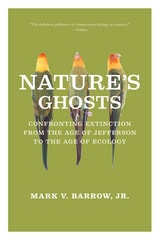
Nature's Ghosts
Confronting Extinction from the Age of Jefferson to the Age of EcologyMark V. Barrow, Jr.
University of Chicago Press, 2009
The rapid growth of the American environmental movement in recent decades obscures the fact that long before the first Earth Day and the passage of the Endangered Species Act, naturalists and concerned citizens recognized—and worried about—the problem of human-caused extinction.
As Mark V. Barrow reveals in Nature’s Ghosts, the threat of species loss has haunted Americans since the early days of the republic. From Thomas Jefferson’s day—when the fossil remains of such fantastic lost animals as the mastodon and the woolly mammoth were first reconstructed—through the pioneering conservation efforts of early naturalists like John James Audubon and John Muir, Barrow shows how Americans came to understand that it was not only possible for entire species to die out, but that humans themselves could be responsible for their extinction. With the destruction of the passenger pigeon and the precipitous decline of the bison, professional scientists and wildlife enthusiasts alike began to understand that even very common species were not safe from the juggernaut of modern, industrial society. That realization spawned public education and legislative campaigns that laid the foundation for the modern environmental movement and the preservation of such iconic creatures as the bald eagle, the California condor, and the whooping crane.
A sweeping, beautifully illustrated historical narrative that unites the fascinating stories of endangered animals and the dedicated individuals who have studied and struggled to protect them, Nature’s Ghosts offers an unprecedented view of what we’ve lost—and a stark reminder of the hard work of preservation still ahead.
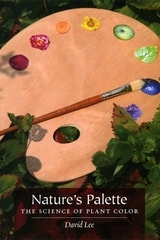
Nature's Palette
The Science of Plant ColorDavid Lee
University of Chicago Press, 2007
Nature’s Palette is the fully ripened fruit of that journey—a highly illustrated, immensely entertaining exploration of the science of plant color. Beginning with potent reminders of how deeply interwoven plant colors are with human life and culture—from the shifting hues that told early humans when fruits and vegetables were edible to the indigo dyes that signified royalty for later generations—Lee moves easily through details of pigments, the evolution of color perception, the nature of light, and dozens of other topics. Through a narrative peppered with anecdotes of a life spent pursuing botanical knowledge around the world, he reveals the profound ways that efforts to understand and exploit plant color have influenced every sphere of human life, from organic chemistry to Renaissance painting to the highly lucrative orchid trade.
Lavishly illustrated and packed with remarkable details sure to delight gardeners and naturalists alike, Nature’s Palette will enchant anyone who’s ever wondered about red roses and blue violets—or green thumbs.
Natures of Data
A Discussion between Biologists, Artists and Science ScholarsPhilipp Fischer, Gabriele Gramelsberger, Christoph Hoffmann, Hans Hofmann, Hans-Jörg Rheinberger, and Hannes Rickli
Diaphanes, 2020
Nelumbonaceae to Vitaceae
Water Lotuses to GrapesRobert H. Mohlenbrock
Southern Illinois University Press, 2010
In this fourth and final installment in the Aquatic and Standing Water Plants of the Central Midwest series, veteran botanist Robert H. Mohlenbrock identifies aquatic and wetland plants in eight central Midwestern states, which include Iowa, Illinois, Indiana, Ohio, Kansas, Kentucky (excluding the Cumberland Mountain region), Missouri, and Nebraska.
Nelumbonaceae to Vitaceae: Water Lotuses to Grapes contains 346 highly informative and technically accurate illustrations as well as ecological information, nomenclature, and keys for plants in the aforementioned families, including white water lily, fireweed, smartweed, mild water pepper, hawthorn, and wild strawberry. Mohlenbrock identifies and describes each plant in concise and readable prose and indicates its usual habitats and the states in which it occurs.
As with previous volumes, Mohlenbrock organizes each species into three groups: truly aquatic plants, which spend their entire life with their vegetative parts either completely submerged or floating on the water’s surface; emergents, which are usually rooted under water with their vegetative parts standing above the water’s surface; and wetland plants, which live most or all of their lives out of water.
With Nelumbonaceae to Vitaceae, Mohlenbrock completes the four-volume series organizing and identifying wetland plants in the central Midwest. The botanical series will aid many, from teachers and students to state and federal employees, focused on conservation efforts and mitigation issues.
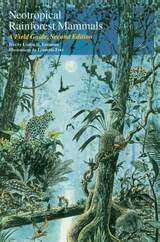
Neotropical Rainforest Mammals
A Field GuideLouise H. Emmons and François Feer
University of Chicago Press, 1997
In this completely revised and updated second edition:
A total of 226 species are treated in full (206 were included in the first edition).
All species accounts retained from the first edition have been updated to include the most recent research.
All 195 maps showing the distribution and geographic range of each species have been revised to reflect the most current information.
Twenty-nine beautiful color plates illustrate more than 220 species (including significant color variants between males and females or adults and young). Seven black-and-white plates contain more than 60 images of individual species, mainly bats.
A compact disc of mammal vocalizations—crucial to identifying nocturnal and otherwise cryptic animals that sometimes may be heard rather than seen—will be available for purchase separately.
Praise for the first edition:
"If you can't go to the Central and South American rain forests to see firsthand their threatened ecosystems, here is the next best thing."—Washington Post Book World
"A large amount of information is presented concisely and in a way that is easy to use."—Choice
"The presentation and wealth of information contained in this field guide is outstanding and will satisfy the needs of both the 'tourist' and 'researcher' traveling to the Neotropics."—Canadian Field-Naturalist
Neurobehavioral Anatomy, Third Edition
Christopher M. Filley
University Press of Colorado, 2011

Neuromatic
Or, A Particular History of Religion and the BrainJohn Lardas Modern
University of Chicago Press, 2021
In Neuromatic, religious studies scholar John Lardas Modern offers a sprawling examination of the history of the cognitive revolution and current attempts to locate all that is human in the brain, including spirituality itself. Neuromatic is a wildly original take on the entangled histories of science and religion that lie behind our brain-laden present: from eighteenth-century revivals to the origins of neurology and mystic visions of mental piety in the nineteenth century; from cyberneticians, Scientologists, and parapsychologists in the twentieth century to contemporary claims to have discovered the neural correlates of religion.
What Modern reveals via this grand tour is that our ostensibly secular turn to the brain is bound up at every turn with the religion it discounts, ignores, or actively dismisses. In foregrounding the myths, ritual schemes, and cosmic concerns that have accompanied idealizations of neural networks and inquiries into their structure, Neuromatic takes the reader on a dazzling and disturbing ride through the history of our strange subservience to the brain.

Neurotechnology
Methods, advances and applicationsVictor Hugo C. de Albuquerque
The Institution of Engineering and Technology, 2020
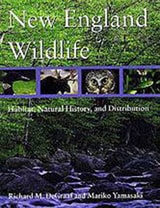
New England Wildlife
Habitat, Natural History, and DistributionRichard M. DeGraaf and Mariko Yamasaki
University Press of New England, 2000

New Jersey Ferns and Fern Allies
Montgomery, James D.
Rutgers University Press, 1993
New Jersey is exceptionally rich in ferns, as three centuries of naturalists have recognized. Both amateur and professional botanists will welcome this new, complete, fully illustrated guide to the state's ferns and fern allies (the lycopods and horsetails). After an introduction to fern classification and nomenclature, the history of fern collecting, and the ecology and distribution of ferns within New Jersey, the authors describe eighty-three species, in thirty genera, and thiry-two hybrid forms (more than any other state). They include a fascinating account of the rare curly-grass fern, Schizaea pusilla, "New Jersy's most famous plant."
For each species, the authors provide a detailed drawing and comments on taxonomy, habitat, chromosome counts, habits of growth, and status as endangered species. Distribution maps show not only where plants have been collected, but also the time period for the most recent date of collectionÐÐa convenient way of showing the plant's spread or depletion. Throughout, the book reflects the latest research by fern experts.
An essential field guide and reference for naturalists, botanists, hikers, gardeners, and conservationists in New Jersey and the mid-Atlantic states.
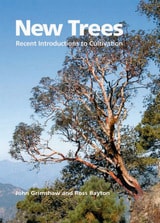
New Trees
Recent Introductions to CultivationJohn Grimshaw and Ross Bayton
Royal Botanic Gardens, Kew, 2009
This comprehensive volume, commissioned by the International Dendrology Society, covers more than eight hundred tree species that have been introduced to cultivation in the United Kingdom, Europe, and North America in recent decades. Up until now there has been no comparable source of information. Featuring horticultural notes from a network of growers and enthusiasts, backed up by data from recent scientific studies, the book presents a remarkable amount of information in a fashion accessible to amateurs as well as specialists. More than one hundred line drawings and nearly six hundred photographs—many portraying rarely seen trees—offer aids to identification. Introductory chapters covering conservation and modern techniques of tree-growing, and a comprehensive glossary and bibliography, round out the volume and make New Trees incomparable—and indispensable.
Nightingales in Berlin
Searching for the Perfect SoundDavid Rothenberg
University of Chicago Press, 2019
But have you ever listened closely to a nightingale’s song? It’s a strange and unsettling sort of composition—an eclectic assortment of chirps, whirs, trills, clicks, whistles, twitters, and gurgles. At times it is mellifluous, at others downright guttural. It is a rhythmic assault, always eluding capture. What happens if you decide to join in?
As philosopher and musician David Rothenberg shows in this searching and personal new book, the nightingale’s song is so peculiar in part because it reflects our own cacophony back at us. As vocal learners, nightingales acquire their music through the world around them, singing amidst the sounds of humanity in all its contradictions of noise and beauty, hard machinery and soft melody. Rather than try to capture a sound not made for us to understand, Rothenberg seeks these musical creatures out, clarinet in tow, and makes a new sound with them. He takes us to the urban landscape of Berlin—longtime home to nightingale colonies where the birds sing ever louder in order to be heard—and invites us to listen in on their remarkable collaboration as birds and instruments riff off of each other’s sounds. Through dialogue, travel records, sonograms, tours of Berlin’s city parks, and musings on the place animal music occupies in our collective imagination, Rothenberg takes us on a quest for a new sonic alchemy, a music impossible for any one species to make alone. In the tradition of The Hidden Life of Trees and The Invention of Nature, Rothenberg has written a provocative and accessible book to attune us ever closer to the natural environment around us.
Ninety-nine Gnats, Nits, and Nibblers
May R. Berenbaum
University of Illinois Press, 1989
Why the "Jesus bug" can walk on water
How the katydid’s nighttime noise inspired romantic poetry
The trapping prowess of the hungry antlion
That disgusting thing chiggers do to eat your skin
A witty and educational guide that’s as accessible as the container of flour you should have closed more tightly, Ninety-nine Gnats, Nits, and Nibblers is the fascinating story of our million closest neighbors.
Nonadaptive Selection
An Evolutionary Source of Ecological LawsJohn Damuth and Lev R. Ginzburg
University of Chicago Press, 2025
In this important treatise, ecologists and evolutionary biologists John Damuth and Lev R. Ginzburg identify a specific evolutionary process in biology, which they call nonadaptive selection. The idea is simple, but the implications are profound. Nonadaptive selection, as they use the term, is selection among biological entities (as is natural selection) but is based on the fitness effects of structural properties intrinsic to the entities under selection rather than on interactions between traits and a local shared environment. In other words, features of systems that evolve by nonadaptive selection do not adapt to local environmental conditions; rather, this selective process increases the long-term stability of the focal systems independent of local conditions.
Nonadaptive selection may be of particular value in explaining broad, persistent patterns in multispecies biological units where adaptive evolution may be weak or poorly defined. Examples include Damuth’s Law, the equivalence of energy use among animal species across a wide range of body sizes; the ratio-dependent, or Arditi-Ginzburg, predation conjecture; the consistency of allometric scaling powers; the shortness of trophic chains; and the prevalence of certain types of three-species trophic structures across ecosystems. Damuth and Ginzburg see nonadaptive selection underlying patterns of ecological allometries, community structure, and species interactions, with some implications for macroevolution. Moreover, they find a surprising relationship between these nonadaptive processes and biological laws. They do not advocate the reorientation of any existing research programs but present nonadaptive selection as an additional conceptual framework that may be useful to add to ecology and evolution.
Nonsense on Stilts
How to Tell Science from BunkMassimo Pigliucci
University of Chicago Press, 2010
Recent polls suggest that fewer than 40 percent of Americans believe in Darwin’s theory of evolution, despite it being one of science’s best-established findings. More and more parents are refusing to vaccinate their children for fear it causes autism, though this link can been consistently disproved. And about 40 percent of Americans believe that the threat of global warming is exaggerated, despite near consensus in the scientific community that manmade climate change is real.
Why do people believe bunk? And what causes them to embrace such pseudoscientific beliefs and practices? Noted skeptic Massimo Pigliucci sets out to separate the fact from the fantasy in this entertaining exploration of the nature of science, the borderlands of fringe science, and—borrowing a famous phrase from philosopher Jeremy Bentham—the nonsense on stilts. Presenting case studies on a number of controversial topics, Pigliucci cuts through the ambiguity surrounding science to look more closely at how science is conducted, how it is disseminated, how it is interpreted, and what it means to our society. The result is in many ways a “taxonomy of bunk” that explores the intersection of science and culture at large.
No one—not the public intellectuals in the culture wars between defenders and detractors of science nor the believers of pseudoscience themselves—is spared Pigliucci’s incisive analysis. In the end, Nonsense on Stilts is a timely reminder of the need to maintain a line between expertise and assumption. Broad in scope and implication, it is also ultimately a captivating guide for the intelligent citizen who wishes to make up her own mind while navigating the perilous debates that will affect the future of our planet.
Northern Pike
Ecology, Conservation, and Management HistoryRodney B. Pierce
University of Minnesota Press, 2012
The northern pike—sometimes affectionately known as the “aquatic wolf”—is one of the most sought after and mythologized fishes in Minnesota, but until now there have been few books devoted to the history and ecological management of the species. Based on pioneering research carried out in Minnesota by leading pike specialist Rodney B. Pierce, Northern Pike Ecology, Conservation, and Management History is the most complete collection of information to date on the species, for everyone from scientists and conservation biologists to general readers and recreational anglers.
A tremendously important game fish and resource both in Minnesota and throughout the northern hemisphere, northern pike populations directly reflect local geology and human influence, playing a key role in the health of freshwater ecosystems. As urbanization spreads and the human population continues to grow, pike populations face increasing pressure, requiring new ways of looking at and managing the species. In Minnesota, groundbreaking work has been conducted on northern pike: analyses of stocking success and investigations into the relationships within fish communities, the management of rearing marshes, environmental effects on natural production, the genetics of northern pike, and strategies for scientifically monitoring pike. The state has been a leader in developing fishing regulations to help restore large pike, among many other measures designed to ensure the future quantity and health of a key species in Minnesota’s waterways.
Weaving significant historical scientific literature and technical details together with his own research, Pierce’s benchmark study documents and synthesizes the long history of northern pike management and describes the latest efforts being taken to better understand and manage this critical and renowned species.
Now Is the Time to Collect
Daniel Giraud Elliot, Carl Akeley, and the Field Museum African Expedition of 1896Paul D. Brinkman
University of Alabama Press, 2024
The rediscovery of a curator’s lost journal illuminates the astonishing African journey that formed the basis of the Chicago Field Museum’s famed collections
“Now” Is the Time to Collect tells the fascinating story of the Chicago Field Museum of Natural History’s zoological expedition to Africa in 1896, the source of many of the museum’s foundational collections and an astounding episode in nineteenth-century science. After the well-publicized extinction of the dodo and Carolina parakeet and the collapse of the American bison population, late nineteenth-century naturalists expected many more vulnerable species to die out with spread of Western-style industrialization. This triggered a race to collect rare species of animals expected soon to be lost forever.
Established in 1893, Chicago’s ambitious Field Museum aimed to become a global center of study. Zoologist Daniel Giraud Elliot persuaded museum patrons to fund an immediate expedition to British Somaliland (contemporary Somalia). There, his team hunted and killed hundreds of animals for the growing collection. On the trip was groundbreaking taxonomist Carl Akeley. Back in Chicago, Akeley created captivating lifelike dioramas of rare animal groups that enhanced the museum’s fame and remain popular to this day.
Enriched with illuminated passages from Elliot’s journal, only recently rediscovered, “Now” Is the Time to Collect is the first book of its kind by an American museum and a case study in what author Paul D. Brinkman calls “salvage zoology”—the practice of aggressively collecting rare animal specimens for preservation just prior to the birth of the modern conservation movement. It is a riveting account of the expedition, the travelers’ experiences in Somalia during its colonial period, and the astonishing origins of one of Chicago’s classic museum experiences.