Results by title
78 books match the query 'Light' and 3 start with n
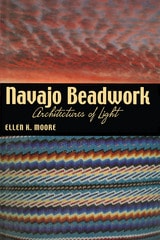
Navajo Beadwork
Architectures of LightEllen K. Moore
University of Arizona Press, 2003
Sunset. Fire. Rainbow. Drawing on such common occurrences of light, Navajo artists have crafted an uncommon array of design in colored glass beads. Beadwork is an art form introduced to the Navajos through other Indian and Euro-American contacts, but it is one that they have truly made their own. More than simple crafts, Navajo beaded designs are architectures of light.
Ellen Moore has written the first history of Navajo beadwork—belts and hatbands, baskets and necklaces—in a book that examines both the influence of Navajo beliefs in the creation of this art and the primacy of light and color in Navajo culture. Navajo Beadwork: Architectures of Light traces the evolution of the art as explained by traders, Navajo consultants, and Navajo beadworkers themselves. It also shares the visions, words, and art of 23 individual artists to reveal the influences on their creativity and show how they go about creating their designs.
As Moore reveals, Navajo beadwork is based on an aggregate of beliefs, categories, and symbols that are individually interpreted and transposed into beaded designs. Most designs are generated from close observation of light in the natural world, then structured according to either Navajo tradition or the newer spirituality of the Native American Church. For many beadworkers, creating designs taps deeply embedded beliefs so that beaded objects reflect their thoughts and prayers, their aesthetic sensibilities, and their sense of being Navajo—but above all, their attention to light and its properties.
No other book offers such an intimate view of this creative process, and its striking color plates attest to the wondrous results. Navajo Beadwork: Architectures of Light is a valuable record of ethnographic research and a rich source of artistic insight for lovers of beadwork and Native American art.
[more]
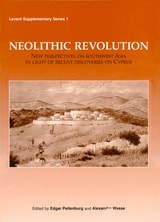
Neolithic Revolution
New Perspectives on Southwest Asia in Light of Recent Discoveries on Cyprus (Levant Supplementary): No. 1E. Peltenburg
Council for British Research in the Levant, 2004
The move towards a sedentary way of life had a profound effect on the human way of life: the development of complex societies can be directly attributed to the beginnings of farming in place of a nomadic hunter-gatherer lifestyle. When Gordon Childe coined the term 'Neolithic revolution' he meant it to reflect these vast changes that had occurred in the near east. This book extends the reach of these changes to include Cyprus, presenting new evidence that shows that the island played host to settled farming communities at the same time as the mainland, pushing its habitation back by 2000 years.
[more]
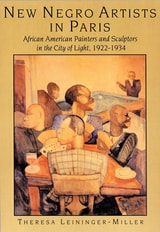
New Negro Artists in Paris
African American Painters and Sculptors in the City of Light, 1922-1934Leininger-Miller, Theresa
Rutgers University Press, 2001
The New Negro Artist in Paris analyzes the experiences and works of six African American artists who lived and worked in Paris during the Jazz Age sculptors Elizabeth Prophet and Augusta Savage, and painters Palmer Hayden, Hale Woodruff, Archibald J. Motley, Jr., and Albert Alexander Smith. More than 120 works of art are analyzed, many never before published.
These artists exhibited the works they created in Paris at prestigious salons in France and in the United States, winning fellowships, grants, and awards. Leininger-Miller argues that it was study abroad that won these artists critical acclaim, establishing their reputations as some of the most significant leaders of the New Negro movement in the visual arts. She begins her study with a history of the debut of African American artists in Paris, 1830–1914, then provides readers with rarely seen profiles of each of the six artists from their birth through the end of their time abroad. Finally, Leininger-Miller examines patterns and differences in these individuals’ backgrounds and development, their patronage in the United States and France, their shared experiences abroad, and the impact their study in Paris had on the rest of their careers.
These artists exhibited the works they created in Paris at prestigious salons in France and in the United States, winning fellowships, grants, and awards. Leininger-Miller argues that it was study abroad that won these artists critical acclaim, establishing their reputations as some of the most significant leaders of the New Negro movement in the visual arts. She begins her study with a history of the debut of African American artists in Paris, 1830–1914, then provides readers with rarely seen profiles of each of the six artists from their birth through the end of their time abroad. Finally, Leininger-Miller examines patterns and differences in these individuals’ backgrounds and development, their patronage in the United States and France, their shared experiences abroad, and the impact their study in Paris had on the rest of their careers.
[more]