Results by title
1488 books match the query 'Media Studies' and 41 start with n

NEWSPEAK in the 21st Century
David Cromwell and David Edwards
Pluto Press, 2009
Since 2001, Media Lens has encouraged thousands of readers to challenge the filtered and distorted version of the world provided by major newspapers and broadcasters. The media responses, collected in Newspeak, are an exposé of the arrogance and servility to power of our leading journalists and editors, starring Andrew Marr, Alan Rusbridger, Roger Alton, Jon Snow, Jeremy Bowen and even George Monbiot.
Picking up where the highly acclaimed and successful Guardians of Power (2006) left off, Newspeak is packed with forensic media analysis, revealing the lethal bias in "balanced" reporting. Even the "best" UK media -- the Guardian, the Independent, Channel 4 News and the BBC -- turn out to be cheerleaders for government, business and war.
Alongside an A-Z of BBC propaganda and chapters on Iraq and climate change, Newspeak focuses on the demonisation of Iran and Venezuela, the Israel-Palestine conflict, the myth of impartial reporting and the dark art of smearing dissidents.

Narrative Landmines
Rumors, Islamist Extremism, and the Struggle for Strategic InfluenceBernardi, Daniel Leonard
Rutgers University Press, 2012
Islamic extremism is the dominant security concern of many contemporary governments, spanning the industrialized West to the developing world. Narrative Landmines explores how rumors fit into and extend narrative systems and ideologies, particularly in the context of terrorism, counter-terrorism, and extremist insurgencies. Its concern is to foster a more sophisticated understanding of how oral and digital cultures work alongside economic, diplomatic, and cultural factors that influence the struggles between states and non-state actors in the proverbial battle of hearts and minds. Beyond face-to-face communication, the authors also address the role of new and social media in the creation and spread of rumors.
As narrative forms, rumors are suitable to a wide range of political expression, from citizens, insurgents, and governments alike, and in places as distinct as Singapore, Iraq, and Indonesia—the case studies presented for analysis. The authors make a compelling argument for understanding rumors in these contexts as “narrative IEDs,” low-cost, low-tech weapons that can successfully counter such elaborate and expansive government initiatives as outreach campaigns or strategic communication efforts. While not exactly the same as the advanced technological systems or Improvised Explosive Devices to which they are metaphorically related, narrative IEDs nevertheless operate as weapons that can aid the extremist cause.
Narrative Podcasting in an Age of Obsession
Neil Verma
University of Michigan Press, 2024
Narrative Podcasting in an Age of Obsession is the first book to look back on this prodigious body of material and attempt to make sense of it from a structural, historical, and analytic point of view. Focusing on more than 350 podcasts and other audio works released between Serial and the COVID pandemic, the book explores why so many of these podcasts seem “obsessed with obsession,” why they focus not only on informing listeners but also dramatizing the labor that goes into it, and why fiction podcasts work so hard to prove they are a brand new form, even as they revive features of radio from decades gone by. This work also examines the industry's reckoning with its own implication in systemic racism, misogyny, and other forms of discrimination. Employing innovative new critical techniques for close listening—including pitch tracking software and spectrograms—Narrative Podcasting in an Age of Obsession makes a major contribution to podcast studies and media studies more broadly.
Narratives, Nerdfighters, and New Media
Jennifer Burek Pierce
University of Iowa Press, 2020
For decades, we’ve been warned that video killed the radio star, and, more recently, that social media has replaced reading. Nerdfighteria, a first-of-its-kind online literary community with nearly three million members, challenges these assumptions. It is the brainchild of brothers Hank and John Green, who provide literary themed programming on their website and YouTube channel, including video clips from John, a best-selling author most famous for his young adult book, The Fault in Our Stars. These clips not only give fans personal insights into his works and the writing process writ large, they also provide unique access to the author, inspiring fans to create their own fan art and make connections with one another.
In the twenty-first century, reading and watching videos are related activities that allow people to engage with authors and other readers. Whether they turn to The Fault in Our Stars or titles by lesser-known authors, Nerdfighters are readers. Incorporating thousands of testimonials about what they read and why, Jennifer Burek Pierce not only sheds light on this particular online community, she also reveals what it tells us about the changing nature of reading in the digital age. In Nerdfighteria, we find a community who shows us that being online doesn’t mean disinterest in books.

National Conversations
Public Service Media and Cultural Diversity in EuropeEdited by Gavan Titley, Karina Horsti, and Gunilla Hultén
Intellect Books, 2014
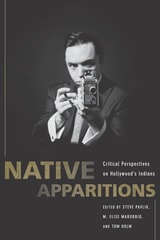
Native Apparitions
Critical Perspectives on Hollywood’s IndiansEdited by Steve Pavlik, M. Elise Marubbio, and Tom Holm
University of Arizona Press, 2017
Native Apparitions offers a critical intervention and response to Hollywood’s representations of Native peoples in film, from historical works by director John Ford to more contemporary works, such as Apocalypto and Avatar. But more than a critique of stereotypes, this book is a timely call for scholarly activism engaged in Indigenous media sovereignty. The collection clusters around three approaches: retrospective analysis, individual film analysis, and Native- and industry-centered testimonials and interviews, which highlight indigenous knowledge and cultural context, thus offering a complex and multilayered dialogic and polyphonic response to Hollywood’s representations.
Using an American Indian studies framework, Native Apparitions deftly illustrates the connection between Hollywood’s representations of Native peoples and broader sociopolitical and historical contexts connected to colonialism, racism, and the Western worldview. Most importantly, it shows the impact of racializing stereotypes on Native peoples, and the resilience of Native peoples in resisting, transcending, and reframing Hollywood’s Indian tropes.
CONTRIBUTORS
Chadwick Allen
Richard Allen
Joanna Hearne
Tom Holm
Jan-Christopher Horak
Jacqueline Land
Andrew Okpeaha MacLean
M. Elise Marubbio
Steve Pavlik
Rose Roberts
Myrton Running Wolf
Richard M. Wheelock
Natures of Data
A Discussion between Biologists, Artists and Science ScholarsPhilipp Fischer, Gabriele Gramelsberger, Christoph Hoffmann, Hans Hofmann, Hans-Jörg Rheinberger, and Hannes Rickli
Diaphanes, 2020
Navigating White News
Asian American Journalists at WorkDavid C Oh
Rutgers University Press, 2023
Combining critical race studies with cultural production studies, Navigating White News: Asian American Journalists at Work is the only academic book to examine the ways that racial identification and activation matters in their understanding of news. This adds to the existing literature on race and the sociology of news by examining intra-racial differences in the ways they navigate and understand White newsrooms. Employing in-depth interviews with twenty Asian American journalists who are actively working in large and small newsrooms across the United States, Navigating White News: Asian American Journalists at Work argues that Asian American reporters for whom racial identities are important questioned what counted as news, questioned the implicitly White perspective of objectivity, and actively worked toward providing more complex, substantive coverage of Asian American communities. For Asian American reporters for whom racial identity was not meaningful, they were more invested in existing professional norms. Regardless, all journalists understood that news is a predominantly and culturally White institution.
Negative, Nonsensical, and Non-Conformist
The Films of Suzuki SeijunPeter A. Yacavone
University of Michigan Press, 2023
Neobugarrón
Heteroflexibility, Neoliberalism, and Latin/o American Sexual PracticeRamón E. Soto-Crespo
The Ohio State University Press, 2023
How should we understand the bugarrón, a man who has sex with other men while regarding himself as heterosexual? Reaching beyond queer and gay studies, Ramón E. Soto-Crespo’s research suggests that this paradoxical figure mutated into what he calls the “neobugarrón,” a neoliberal market-oriented actor who used the traditional sexual practice as an optimizing strategy for manipulating the forces of globalization during the 1990s. In Neobugarrón: Heteroflexibility, Neoliberalism, and Latin/o American Sexual Practice, Soto-Crespo chronicles the cultural modifications of bugarrón, a distinct male-male sexual practice in Latin/o America and the Caribbean, during the twentieth and twenty-first centuries. Working with and against Foucault and Kinsey to examine diverse works from anthropology, literature, cinema, and social media, he investigates a wide array of bugarrón sources, ranging from previously underexamined multimedia to ethnographies, fiction, films, and beyond. These works constitute a neobugarrón archive and attest to a sexual practice currently metamorphosing on the cusp of extinction. Soto-Crespo’s analysis challenges conventional understandings of “heteroflexible” sex between men and reveals a hitherto unnoticed transformation in neoliberal ecologies of bugarrón sexual practice.
Net Neutrality and the Battle for the Open Internet
Danny Kimball
University of Michigan Press, 2022
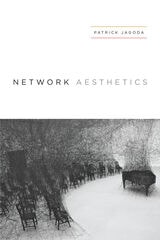
Network Aesthetics
Patrick Jagoda
University of Chicago Press, 2016
Each chapter considers how popular media and artistic forms make sense of decentralized network metaphors and infrastructures. Patrick Jagoda first examines narratives from the 1990s and 2000s, including the novel Underworld, the film Syriana, and the television series The Wire, all of which play with network forms to promote reflection on domestic crisis and imperial decline in contemporary America. Jagoda then looks at digital media that are interactive, nonlinear, and dependent on connected audiences to show how recent approaches, such as those in the videogame Journey, open up space for participatory and improvisational thought.
Contributing to fields as diverse as literary criticism, digital studies, media theory, and American studies, Network Aesthetics brilliantly demonstrates that, in today’s world, networks are something that can not only be known, but also felt, inhabited, and, crucially, transformed.
Networked Reenactments
Stories Transdisciplinary Knowledges TellKatie King with a foreword by Donna Haraway
Duke University Press, 2012
Never Alone, Except for Now
Art, Networks, PopulationsKris Cohen
Duke University Press, 2017
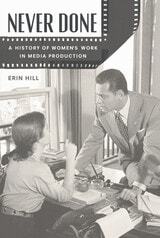
Never Done
A History of Women’s Work in Media ProductionHill, Erin
Rutgers University Press, 2016
Histories of women in Hollywood usually recount the contributions of female directors, screenwriters, designers, actresses, and other creative personnel whose names loom large in the credits. Yet, from its inception, the American film industry relied on the labor of thousands more women, workers whose vital contributions often went unrecognized.
For more information: http://erinhill.squarespace.com
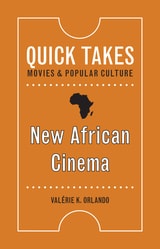
New African Cinema
Orlando, Valérie K
Rutgers University Press, 2017
Orlando illuminates the diverse themes evident in the works of filmmakers such as Ousmane Sembène’s Ceddo (Senegal, 1977), Sarah Maldoror’s Sambizanga (Angola, 1972), Assia Djebar’s La Nouba des femmes de Mont Chenoua (The Circle of women of Mount Chenoua, Algeria, 1978), Zézé Gamboa’s The Hero (Angola, 2004) and Abderrahmane Sissako’s Timbuktu (Mauritania, 2014), among others. Orlando also considers the influence of major African film schools and their traditions, as well as European and American influences on the marketing and distribution of African film. For those familiar with the polemics of African film, or new to them, Orlando offers a cogent analytical approach that is engaging.
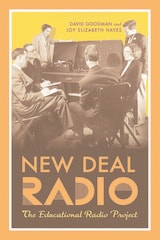
New Deal Radio
The Educational Radio ProjectDavid Goodman
Rutgers University Press, 2022
Contextualizing the different series aired by the Educational Radio Project as part of a unified project about radio and citizenship is crucial to understanding them. New Deal Radio argues that this distinctive government commercial partnership amounted to a critical intervention in US broadcasting and an important chapter in the evolution of public radio in America.
New Directions in Israeli Media
Film, Television, and Digital ContentEdited by Yaron Peleg, Eran Kaplan, and Ido Rosen
University of Texas Press, 2025
A comprehensive analysis of the major trends and developments in contemporary Israeli media.
In the twenty-first century, Israeli filmmaking has transformed from a localized industry into a globally recognized and diverse national cinema, its filmmakers gaining prominence internationally and introducing new themes, aesthetics, and voices to the scene. At the same time, Israeli television shows have emerged as a dominant force, propelled by the spread of streaming. Through the rise of online content creation and consumption, especially in the 2010s, new voices have revolutionized the creative landscape.
With Israel’s position at the cutting edge of technology and virtual platforms, Israeli media has seen a boom, winning prizes at international film festivals and adapting shows like Euphoria, Homeland, and Fauda for wider audiences. In New Directions in Israeli Media, thirteen contributors detail the shifting dynamics of Israeli cinema, television, and online content in the digital age, exploring how globalization, technological advances, and changing audience preferences are reshaping creative industries. Editors Yaron Peleg, Eran Kaplan, and Ido Rosen have assembled a volume that prompts critical reflection on the intersection of art, technology, and culture in a rapidly changing media landscape.
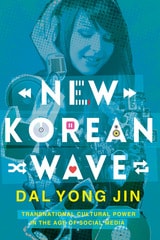
New Korean Wave
Transnational Cultural Power in the Age of Social MediaDal Yong Jin
University of Illinois Press, 2016
New Patterns in Global Television Formats
Edited by Karina Aveyard, Albert Moran, and Pia Majbritt Jensen
Intellect Books, 2016
New Queer Television
From Marginalization to MainstreamificationEdited by Thomas Brassington, Debra Ferreday, and Dany Girard
Intellect Books, 2024
Though queer critics and queer theory tend to frame queer identities as marginal, this edited volume draws attention to a dynamic field in which a wide variety of queer identities can be put on display and consumed by audiences. Cementing a foundational understanding of queerness that is at odds with current shifts in media production, contributors present a broad variety of queer identities from across a range of televisual shows and genres to reconsider the marginalization of queerness in the twenty-first century. Doing so challenges preexisting notions that such “mainstreamification” necessitates being subsumed by the cisheteropatriarchy. This project argues the opposite, showing that heteronormative assumptions are outdated and that new queer representations lay the groundwork for filling gaps that queer criticism has left open.
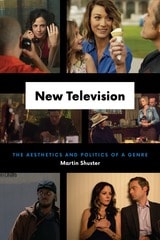
New Television
The Aesthetics and Politics of a GenreMartin Shuster
University of Chicago Press, 2017
Philosopher Martin Shuster argues that television is the modern art form, full of promise and urgency, and in New Television, he offers a strong philosophical justification for its importance. Through careful analysis of shows including The Wire, Justified, and Weeds, among others; and European and Anglophone philosophers, such as Stanley Cavell, Hannah Arendt, Martin Heidegger, and John Rawls; Shuster reveals how various contemporary television series engage deeply with aesthetic and philosophical issues in modernism and modernity. What unifies the aesthetic and philosophical ambitions of new television is a commitment to portraying and exploring the family as the last site of political possibility in a world otherwise bereft of any other sources of traditional authority; consequently, at the heart of new television are profound political stakes.
New Zealand Film and Television
Institution, Industry and Cultural ChangeTrisha Dunleavy and Hester Joyce
Intellect Books, 2011
Despite challenges arising from a limited population and the difficulty of obtaining adequate funding, both the film and television industries of New Zealand have been the source of significant achievements and profound cultural influence. Charting their emergence and subsequent development through five decades, New Zealand Film and Television looks at these two increasingly vibrant cultural and creative industries. While there is a growing body of academic work on film and television in New Zealand, relatively little exists that examines the specific cultural concerns, local industries, institutions, and policies involved, which this book addresses in full.
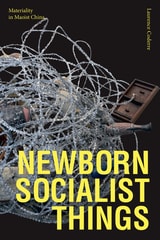
Newborn Socialist Things
Materiality in Maoist ChinaLaurence Coderre
Duke University Press, 2021
News Parade
The American Newsreel and the World as SpectacleJoseph Clark
University of Minnesota Press, 2020
A fascinating look at the United States’ conflicted relationship with news and the media, through the lens of the newsreel
When weekly newsreels launched in the early twentieth century, they offered the U.S. public the first weekly record of events that symbolized “indisputable evidence” of the news. In News Parade, Joseph Clark examines the history of the newsreel and how it changed the way Americans saw the world. He combines an examination of the newsreel’s methods of production, distribution, and reception with an analysis of its representational strategies to understand the newsreel’s place in the history of twentieth-century American culture and film history.
Clark focuses on the sound newsreel of the 1930s and 1940s, arguing that it represents a crucial moment in the development of a spectacular society where media representations of reality became more fully integrated into commodity culture. Using several case studies, including the newsreel’s coverage of Charles Lindbergh’s transatlantic flight and the Sino–Japanese War, News Parade shows how news film transformed the relationship between its audience and current events, as well as the social and political consequences of these changes. It pays particular attention to how discourses of race and gender worked together with the rhetoric of speed, mobility, and authority to establish the power and privilege of newsreel spectatorship.
In the age of fake news and the profound changes to journalism brought on by the internet, News Parade demonstrates how new technologies and media reshaped the American public’s relationship with the news in the 1930s—a history that can help us to better understand the transformations happening today.
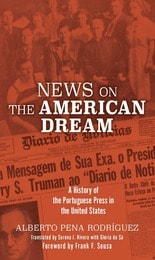
News on the American Dream
A History of the Portuguese Press in the United StatesAlberto Pena Rodríguez, Translated by Serena J. Rivera
Tagus Press, 2020
News on the American Dream traces the development of the Portuguese-American press from its beginnings in the late nineteenth century to the present, taking readers from the East Coast to Hawaii, with strategic stops in places with large Portuguese communities, including New Bedford, Massachusetts; Oakland, California; and Newark, New Jersey. Alberto Pena Rodríguez's nuanced analysis of the political, economic, social, and cultural roles played by these publications proves how important they were for the Portuguese-American community and the history of the ethnic press in the United States. Fascinating narratives about the founders, editors, and owners of these publications—and their challenges, squabbles, and successes—round out this engaging study.
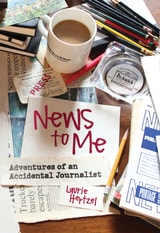
News to Me
Adventures of an Accidental JournalistLaurie Hertzel
University of Minnesota Press, 2010
The story of a journalist’s coming of age in Duluth during the boom days of print
Laurie Hertzel wasn't yet a teenager in Duluth, Minnesota, when she started her first newspaper, which she appropriately christened Newspaper. Complete with the most sensational headlines of the day-MARGO FLUEGEL HAS ANOTHER BIRTHDAY!-and with healthy competition from her little brothers and their rival publication, Magapaper (a magazine and a newspaper), this venture would become Hertzel's first step toward realizing what her heart was already set on: journalism as her future.
News to Me is the adventurous story of Hertzel's journey into the bustling world of print journalism in the mid-1970s, a time when copy was still banged out on typewriters by chain-smoking men in fedoras and everybody read the paper. A coming-of-age tale in more ways than one, Hertzel's eighteen-year career at the Duluth News Tribune began when journalism was a predominantly male profession. And while the newspaper trade was booming, Duluth had fallen on difficult times as factories closed and more and more people moved away. Hertzel describes her climb up the ranks of the paper against the backdrop of a Midwestern city during a time of extraordinary change. She was there during major events like the Congdon murders, the establishment of the BWCA, and the rise of Indian treaty rights, and eventually follows the biggest story of her life to Soviet Russia-and completely blows her deadline.
Written with the insight and humor of someone who makes a living telling stories, News to Me is the chronicle of a small-city newspaper on the cusp of transformation, an affectionate portrait of Duluth and its people, and the account of a talented, persistent journalist who witnessed it all and was changing right along with it-whether she wanted to or not.
(Oh, Newspaper doggedly outlasted the full-color Magapaper).
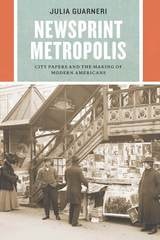
Newsprint Metropolis
City Papers and the Making of Modern AmericansJulia Guarneri
University of Chicago Press, 2017
At the turn of the twentieth century, ambitious publishers like Joseph Pulitzer, William Randolph Hearst, and Robert McCormick produced the most spectacular newspapers Americans had ever read. Alongside current events and classified ads, publishers began running comic strips, sports sections, women’s pages, and Sunday magazines. Newspapers’ lavish illustrations, colorful dialogue, and sensational stories seemed to reproduce city life on the page.
Yet as Julia Guarneri reveals, newspapers did not simply report on cities; they also helped to build them. Metropolitan sections and civic campaigns crafted cohesive identities for sprawling metropolises. Real estate sections boosted the suburbs, expanding metropolitan areas while maintaining cities’ roles as economic and information hubs. Advice columns and advertisements helped assimilate migrants and immigrants to a class-conscious, consumerist, and cosmopolitan urban culture.
Newsprint Metropolis offers a tour of American newspapers in their most creative and vital decades. It traces newspapers’ evolution into highly commercial, mass-produced media, and assesses what was gained and lost as national syndicates began providing more of Americans’ news. Case studies of Philadelphia, New York, Chicago, and Milwaukee illuminate the intertwined histories of newspapers and the cities they served. In an era when the American press is under attack, Newsprint Metropolis reminds us how papers once hosted public conversations and nurtured collective identities in cities across America.

Nigerian Video Films
Revised and Expanded EditionJonathan Haynes
Ohio University Press, 2000
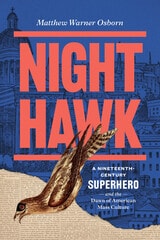
Night Hawk
A Nineteenth-Century Superhero and the Dawn of American Mass CultureMatthew Warner Osborn
University of Chicago Press, 2026
Unmasks the long-forgotten story of how a flying, superhuman vigilante played a pivotal role in the founding of the American labor movement.
On July 5, 1828, more than a century before Superman arrived on Earth, a superhero took flight in Philadelphia’s night sky. Buried on page three of a small local newspaper, the announcement of his arrival appeared under the title “The Night-Hawk, No. 1” with a cryptic epigraph from Romeo and Juliet: “I’ll be a candleholder and look on.” Who and what was the Night Hawk? As Matthew Warner Osborn reveals, this was the sobriquet of a mysterious columnist for the weekly Mechanics’ Free Press, the first radical socialist newspaper in America. Dressed in a mysterious cloak, the Night Hawk soared over Philadelphia, revealing the evil crimes of prominent gentlemen, fighting murderous criminals, and calling out fraudulent moral authorities.
The Night Hawk was the ingenious invention of an impoverished actor, Cornelius A. Logan, who created the character as a public champion of Philadelphia’s Working Men’s movement, the first successful American labor party. The Night Hawk’s nocturnal adventures transformed their socialist ideology into an entertaining fantasy that dramatized the struggle against industrial exploitation and the degradation of working people. The success of the character made Logan into a celebrity, and he went on to become a popular and innovative comedian on the antebellum stage.
A harbinger of the superheroes we know today, the Night Hawk promises to illuminate dark secrets from the past, but he can also shed light on our present. He ignites our need to see corrupt elites unmasked and held accountable for their actions, all while protecting the innocent and oppressed. Americans have always loved to fantasize about powerful superheroes who hide behind masks while chasing bad guys, and Osborn shows in this entertaining history how the Night Hawk was perhaps the first standard bearer for that enduring mystique.
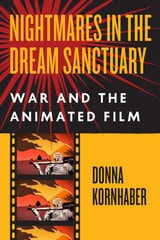
Nightmares in the Dream Sanctuary
War and the Animated FilmDonna Kornhaber
University of Chicago Press, 2019
Generation after generation, artists have turned to this most fantastical of mediums to capture real-life horrors they can express in no other way. From Chinese animators depicting the Japanese invasion of Shanghai to Bosnian animators portraying the siege of Sarajevo, from African animators documenting ethnic cleansing to South American animators reflecting on torture and civil war, from Vietnam-era protest films to the films of the French Resistance, from firsthand memories of Hiroshima to the haunting work of Holocaust survivors, the animated medium has for more than a century served as a visual repository for some of the darkest chapters in human history. It is a tradition that continues even to this day, in animated shorts made by Russian dissidents decrying the fighting in Ukraine, American soldiers returning from Iraq, or Middle Eastern artists commenting on the Israeli-Palestinian conflict, the Arab Spring, or the ongoing crisis in Yemen.
Nightmares in the Dream Sanctuary: War and the Animated Film vividly tells the story of these works and many others, covering the full history of animated film and spanning the entire globe. A rich, serious, and deeply felt work of groundbreaking media history, it is also an emotional testament to the power of art to capture the endurance of the human spirit in the face of atrocity.
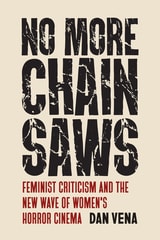
No More Chainsaws
Feminist Criticism and the New Wave of Women's Horror CinemaDan Vena
Rutgers University Press, 2026
“Welcome to the Golden Age of Women-Directed Horror.” Over the last fifteen years, there has been a sustained global influx of women artists working in mainstream and independent horror cinemas earning notable public and industry acclaim. As a result, now, for the first time in horror history, there is also a concentrated corpus of films that explicitly address topics of identity, sexuality, trauma, and monstrosity from women’s perspectives. No More Chainsaws offers an in-depth analysis of some of the earliest and underrated releases within this New Wave of women’s horror cinema: Catherine Hardwicke’s Twilight (2008), Karyn Kusama’s Jennifer’s Body (2009), Jennifer and Sylvia Soska’s American Mary (2012), and Kimberly Peirce’s Carrie (2013). No More Chainsaws articulates the ways in which these contemporary films attempt to liberate horror from an overdetermining gendered lexicon of violence and terror.
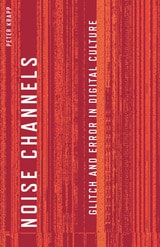
Noise Channels
Glitch and Error in Digital CulturePeter Krapp
University of Minnesota Press, 2011
To err is human; to err in digital culture is design. In the glitches, inefficiencies, and errors that ergonomics and usability engineering strive to surmount, Peter Krapp identifies creative reservoirs of computer-mediated interaction. Throughout new media cultures, he traces a resistance to the heritage of motion studies, ergonomics, and efficiency; in doing so, he shows how creativity is stirred within the networks of digital culture.
Noise Channels offers a fresh look at hypertext and tactical media, tunes into laptop music, and situates the emergent forms of computer gaming and machinima in media history. Krapp analyzes text, image, sound, virtual spaces, and gestures in noisy channels of computer-mediated communication that seek to embrace—rather than overcome—the limitations and misfires of computing. Equally at home with online literature, the visual tactics of hacktivism, the recuperation of glitches in sound art, electronica, and videogames, or machinima as an emerging media practice, he explores distinctions between noise and information, and how games pivot on errors at the human–computer interface.
Grounding the digital humanities in the conditions of possibility of computing culture, Krapp puts forth his insight on the critical role of information in the creative process.
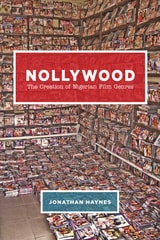
Nollywood
The Creation of Nigerian Film GenresJonathan Haynes
University of Chicago Press, 2016
Haynes describes the major Nigerian film genres and how they relate to Nigerian society—its values, desires, anxieties, and social tensions—as the country and its movies have developed together over the turbulent past two decades. As he shows, Nollywood is a form of popular culture; it produces a flood of stories, repeating the ones that mean the most to its broad audience. He interprets these generic stories and the cast of mythic figures within them: the long-suffering wives, the business tricksters, the Bible-wielding pastors, the kings in their traditional regalia, the glamorous young professionals, the emigrants stranded in New York or London, and all the rest. Based on more than twenty years of research, Haynes’s survey of Nollywood’s history and genres is unprecedented in scope, while his book also vividly describes landmark films, leading directors, and the complex character of this major branch of world cinema.
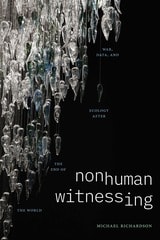
Nonhuman Witnessing
War, Data, and Ecology after the End of the WorldMichael Richardson
Duke University Press, 2024
North of Empire
Essays on the Cultural Technologies of SpaceJody Berland
Duke University Press, 2009
Berland explores how understandings of space and time, empire and margin, embodiment and technology, and nature and culture are shaped by broadly conceived communications technologies including pianos, radio, television, the Web, and satellite imaging. Along the way, she provides a useful overview of the assumptions driving communications research on both sides of the U.S.-Canadian border, and she highlights the distinctive contributions of the Canadian communication theorists Harold Innis and Marshall McLuhan. Berland argues that electronic mediation is central to the construction of social space and therefore to anti-imperialist critique. She illuminates crucial links between how space is traversed, how it is narrated, and how it is used. Making an important contribution to scholarship on globalization, Berland calls for more sophisticated accounts of media and cultural technologies and their complex “geographies of influence.”
Nostalgic Futures
The Reactionary Fantasies of Speculative Fiction FandomsMax Dosser
Rutgers University Press, 2026
Speculative fiction imagines impossible futures and alternative pasts, alien species and angelic monsters, technological marvels and magical solutions. In recent years, however, many in its fandoms have protested the inclusion of nonwhite, nonmale, and nonheterosexual characters as betrayals of their beloved media for the sake of “wokeness.” Nostalgic Futures: The Reactionary Fantasies of Speculative Fiction Fandoms examines how contemporary fan controversies— particularly those surrounding gender, race, and sexuality in speculative fiction media—intersect with reactionary movements within and beyond fandom. This book explores how the nostalgic fantasies of fans and far-right movements contribute to broader reactionary discourses, shaping not only the past they long for but the future they fear. From the Hugo Awards and PuppyGate to Star Wars’ #NotMyJedi to Mass Effect and The Last of Us boycotts, Nostalgic Futures reveals how speculative fiction fandom has become a site of contestation over our visions of the past, present, and future.
Not a Catholic Nation
The Ku Klux Klan Confronts New England in the 1920sMark Paul Richard
University of Massachusetts Press, 2015
Drawing on a wide range of previously untapped sources—French-language newspapers in the New England–Canadian borderlands; KKK documents scattered in local, university, and Catholic repositories; and previously undiscovered copies of the Maine Klansmen—Richard demonstrates that the Klan was far more active in the Northeast than previously thought. He also challenges the increasingly prevalent view that the Ku Klux Klan became a mass movement during this period largely because it functioned as a social, fraternal, or civic organization for many Protestants. While Richard concedes that some Protestants in New England may have joined the KKK for those reasons, he shows that the politics of ethnicity and labor played a more significant role in the Klan's growth in the region.
The most comprehensive analysis of the Ku Klux Klan's antagonism toward Catholics in the 1920s, this book is also distinctive in its consideration of the history of the Canada–U.S. borderlands, particularly the role of Canadian immigrants as both proponents and victims of the Klan movement in the United States.
Not in Front of the Children
'Indecency,' Censorship, and the Innocence of YouthHeins, Marjorie
Rutgers University Press, 2007
From Huckleberry Finn to Harry Potter, from Internet filters to the v-chip, censorship exercised on behalf of children and adolescents is often based on the assumption that they must be protected from “indecent” information that might harm their development—whether in art, in literature, or on a Web site. But where does this assumption come from, and is it true?
In Not in Front of the Children, Marjorie Heins explores the fascinating history of “indecency” laws and other restrictions aimed at protecting youth. From Plato’s argument for rigid censorship, through Victorian laws aimed at repressing libidinous thoughts, to contemporary battles over sex education in public schools and violence in the media, Heins guides us through what became, and remains, an ideological minefield. With fascinating examples drawn from around the globe, she suggests that the “harm to minors” argument rests on shaky foundations.
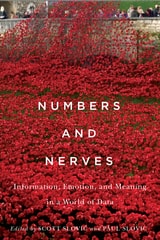
Numbers and Nerves
Information, Emotion, and Meaning in a World of DataScott Slovic
Oregon State University Press, 2015
The essays and interviews in Numbers and Nerves explore the quandary of our cognitive responses to quantitative information, while also offering compelling strategies for overcoming insensitivity to the meaning of such information. With contributions by journalists, literary critics, psychologists, naturalists, activists, and others, this book represents a unique convergence of psychological research, discourse analysis, and visual and narrative communication.
At a time of unprecedented access to information, our society is frequently stymied in its efforts to react to the world’s massive problems. Many of these problems are systemic, deeply rooted in seemingly intransigent cultural patterns and lifestyles. In order to sense the significance of these issues and begin to confront them, we must first understand the psychological tendencies that enable and restrict our processing of numerical information.
Numbers and Nerves explores a wide range of psychological phenomena and communication strategies—fast and slow thinking, psychic numbing, pseudoinefficacy, the prominence effect, the asymmetry of trust, contextualized anecdotes, multifaceted mosaics of prose, and experimental digital compositions, among others—and places these in real-world contexts. In the past two decades, cognitive science has increasingly come to understand that we, as a species, think best when we allow numbers and nerves, abstract information and experiential discourse, to work together. This book provides a roadmap to guide that collaboration. It will be invaluable to scholars, educators, professional communicators, and anyone who struggles to grasp the meaning behind the numbers.
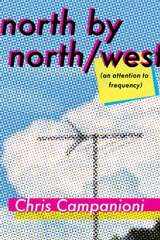
north by north/west
(an attention to frequency)Chris Campanioni
West Virginia University Press, 2025
2025 Foreword Indies Finalist, Nonfiction (Multicultural)
north by north/west is a hybrid work of creative nonfiction assembled as several iterative sequences—a discontinuous itinerary—of exile. Harnessing both montage and collage to represent the incohesive experience of being between cultures, categories, and language, this book is a personal, critical, and autoethnographic exploration of diasporic identity formation and creative expression amidst the cultural and political impacts of Cold War colonialism and fragmentation. As the narrator begins work on a rough translation of the 1959 film North by Northwest, focal points surface through textual correspondences with distant coordinates, shifting between close readings of Whitney Houston’s early music videos, current events reportage, illness journals, eighties spy movies, the most recent solar eclipse, Alfred Hitchcock’s unproduced films, Cold War “stay-behind operations,” an ill-fated party at the Festival de Cannes, and family accounts of migration. These meticulously arranged narrative threads—harnessing elements of a novel alongside poetry, photographs, and field notes—attempt to discompose the epistemology of the West/Global North in order to conceptualize a genre of work by the children of exiles who have been called “the post-dictatorship generation.”