273 books match the query 'Memoir' and 4 start with n
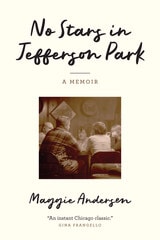
cover of No Stars in Jefferson Park: A Memoir

No Stars in Jefferson Park

A Memoir

Maggie Andersen

Northwestern University Press, 2026

A Chicagoan’s coming-of-age memoir finds courage in the face of immense loss

In her early twenties, Maggie Andersen was a founding ensemble member of Chicago’s storied Gift Theatre with her then-boyfriend, Michael Patrick Thornton. But after a series of spinal strokes left Thornton paralyzed, Andersen made the heart-wrenching decision to leave him, along with their growing company and, later, her beloved city. No Stars in Jefferson Park alternates between two narratives: the energy and excitement of making art in Chicago’s thriving storefront theater scene and the devastating day-to-day realities of rehabilitation and rebuilding—and somewhere in the middle finding the courage to choose yourself.

Over the past twenty-plus years, the Gift—now performing in the working-class neighborhood of Portage Park—has become one of the most vital storefront theaters in Chicago, with Thornton’s career taking him to Hollywood and Broadway. But Andersen’s story has brought her back home. No Stars in Jefferson Park is a testament to lifelong friendship, a love letter to Chicago, and a profound coming-of-age story about the pain and necessity of putting yourself first.
[more]
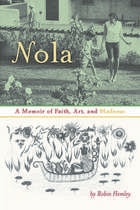
cover of Nola: A Memoir of Faith, Art, and Madness

Nola

A Memoir of Faith, Art, and Madness

Robin Hemley

University of Iowa Press, 1998
The evidence at hand: an autobiography—complete with their mother’s edits—written by his brilliant and disturbingly religious sister; a story featuring actual childhood events, but published by his mother as fiction; the transcript of a hypnotherapy session from his adolescence; and perjured court documents hidden in a drawer for decades. These are the clues Robin Hemley gathers when he sets out to reconstruct the life of his older sister Nola, who died at the age of twenty-five after several years of treatment for schizophrenia. Armed with these types of clues, Hemley quickly discovers that finding the truth in any life—even one’s own—is a fragmented and complex task.

Nola: A Memoir of Faith, Art, and Madness is much more than a remembrance of a young woman who was consumed her entire life by a passion for finding and understanding God; it is also a quest to understand what people choose to reveal and conceal, and an examination of the enormous toll mental illness takes on a family. Finally, it is a revelation of the alchemy that creates a writer: confidence in the unknowable, distrust of the proven, tortuous devotion to the fine print in life, and sacrifice to writing itself as it plays the roles of confessor, scourge, and creator.

Upon its first release in 1998, Nola won ForeWord’s Book of the Year Award for biography/memoir, the Washington State Book Award for biography/memoir, and the Independent Press Book Award for autobiography/memoir. 
[more]
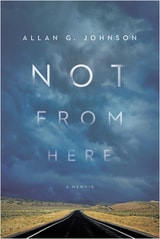
cover of Not from Here: A Memoir

Not from Here

A Memoir

Allan Johnson

Temple University Press, 2015

When Allan Johnson asked his dying father where he wanted his ashes to be placed, his father replied—without hesitation—that it made no difference to him at all. In his poignant, powerful memoir, Not from Here, Johnson embarks on an extraordinary, 2,000-mile journey across the Upper Midwest and Northern Plains to find the place where his father’s ashes belonged.
 
As a white man with Norwegian and English lineage, Johnson explores both America and the question of belonging to a place whose history holds the continuing legacy of the displacement, dispossession, and genocide of Native peoples.
 
More than a personal narrative, Not from Here illuminates the national silence around unresolved questions of accountability, race, and identity politics, and the dilemma of how to take responsibility for “a past we did not create.” Johnson’s story—about the past living in the present; of redemption, fate, family, tribe, and nation; of love and grief—raises profound questions about belonging, identity, and place.
[more]
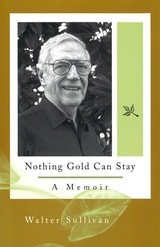
cover of Nothing Gold Can Stay: A Memoir

Nothing Gold Can Stay

A Memoir

Walter Sullivan

University of Missouri Press, 2006

In his enduring fiction and criticism, Walter Sullivan has invited readers to share the thoughts of a penetrating, contemporary intellect. Now he turns his pen on his own life to forge a stirring memoir that fondly recounts the life of the mind.
From childhood in 1920s Nashville, where his father died three months after he was born, to the halls of Vanderbilt University, where he taught creative writing for more than fifty years, Sullivan recalls key episodes in his life—often pausing to ponder why some memories of seemingly trivial events persist while others, seemingly more important, have faded from view.
As witness to a series of social and cultural moments, Sullivan passes on his sharp observations about depression and war, southern renascence and civil rights. He also includes lively anecdotes and sharp character sketches, with personalities ranging from his grandmother “Chigger” and Sally Fudge—who had lived through the Civil War and was said to attend the funerals of people she didn’t know—to Mrs. Gertrude Vanderbilt, with whose eccentricities he sometimes had to contend.
Readers will discover a treasure trove of insights, as Sullivan’s views of academic life are complemented by remembrances of important writers: John Crowe Ransom, Robert Lowell, Eudora Welty, Robert Penn Warren, James Dickey, Flannery O’Connor, and a host of others, blending the formal and familiar in a style befitting a lingering southernness. He also recalls his shock at being branded a racist by Kingsley Amis and addresses issues of race in academia and southern culture. Throughout his career, he sees himself as a guardian of lost causes, continuing to teach an appreciation of literature in the face of encroaching post-structuralism and political correctness.
Laced with humor while maintaining a profound seriousness about what really matters in life, Nothing Gold Can Stay is a lively narrative of a life well lived that will charm any reader interested in American society during and after the Great Depression. Graced with emotional coherence achieved by an almost ironic tone that is sustained from first sentence to last, it is a book in which a distinguished writer considers his world—and his own mortality—and leaves us richer for it.
[more]