Results by title
479 books match the query 'Methodology' and 12 start with n
Naked Fieldnotes
A Rough Guide to Ethnographic WritingDenielle Elliott
University of Minnesota Press, 2024
Creative and diverse approaches to ethnographic knowledge production and writing
Ethnographic research has long been cloaked in mystery around what fieldwork is really like for researchers, how they collect data, and how it is analyzed within the social sciences. Naked Fieldnotes, a unique compendium of actual fieldnotes from contemporary ethnographic researchers from various modalities and research traditions, unpacks how this research works, its challenges and its possibilities.
The volume pairs fieldnotes based on observations, interviews, drawings, photographs, soundscapes, and other contemporary modes of recording research encounters with short, reflective essays, offering rich examples of how fieldnotes are composed and shaped by research experiences. These essays unlock the experience of conducting qualitative research in the social sciences, providing clear examples of the benefits and difficulties of ethnographic research and how it differs from other forms of writing such as reporting and travelogue. By granting access to these personal archives, Naked Fieldnotes unsettles taboos about the privacy of ethnographic writing and gives scholars a diverse, multimodal approach to conceptualizing and doing ethnographic fieldwork.
Contributors: Courtney Addison, Te Herenga Waka—Victoria U of Wellington; Patricia Alvarez Astacio, Brandeis U; Sareeta Amrute, The New School; Barbara Andersen, Massey U Auckland, New Zealand; Adia Benton, Northwestern U; Letizia Bonanno, U of Kent; Alexandrine Boudreault-Fournier, U of Victoria; Michael Cepek, U of Texas at San Antonio; Michelle Charette, York U; Tomás Criado, Humboldt-U of Berlin; John Dale, George Mason U; Elsa Fan, Webster U; Kelly Fayard, U of Denver; Michele Friedner, U of Chicago; Susan Frohlick, U of British Columbia, Okanagan, Syilx Territory; Angela Garcia, Stanford U; Danielle Gendron, U of British Columbia; Mascha Gugganig, Technical U Munich; Natalia Gutkowski, Hebrew U of Jerusalem; T. S. Harvey, Vanderbilt U; Saida Hodžić, Cornell U; K. G. Hutchins, Oberlin College; Basit Kareem Iqbal, McMaster U; Emma Kowal, Deakin U in Melbourne; Mathangi Krishnamurthy, IIT Madras; Shyam Kunwar; Margaret MacDonald, York U in Toronto; Stephanie McCallum, U Nacional de San Martín and U de San Andrés, Argentina; Diana Ojeda, Cider, U de los Andes in Bogotá, Colombia; Valerie Olson, U of California, Irvine; Patrick Mbullo Owuor, Northwestern U; Stacy Leigh Pigg, Fraser U; Jason Pine, Purchase College, State U of New York; Chiara Pussetti, U of Lisbon; Tom Rice, U of Exeter; Leslie A. Robertson, U of British Columbia, Vancouver; Yana Stainova, McMaster U; Richard Vokes, U of Western Australia; Russell Westhaver, Saint Mary’s U in Nova Scotia; Paul White, U of Nevada, Reno.
Narrating Their Lives
Examining English Language Teachers' Professional Identities within the ClassroomEdited by Lia Kamhi-Stein
University of Michigan Press, 2013
“…a groundbreaking book that will…engage, inform, and connect with present and future teachers and teacher educators.”
---Stephanie Vandrick, Foreword to Narrating Their Lives
The field of TESOL has called attention to the ways that the issues of race and ethnicity, language status and power, and cultural background affect second language learners’ identities and, to some degree, those of teachers. In Narrating Their Lives, Kamhi-Stein examines the process of identity construction of classroom teachers so as to make connections between their personal and professional identities and their instructional practices. To do that, she has selected six autobiographical narratives from teachers who were once part of her TESL 570 (Educational Sociolinguistics) class in the MA TESOL program at California State University, Los Angeles. These six narratives cover a surprisingly wide range of identity issues but also touch on broader instructional themes that are part of teacher education programs.
Because of the reflective nature of the narratives—with the teachers using their stories to better understand how their experiences shape what they do in the classroom—this volume includes provocative chapter-opening and reflective chapter-closing questions. An informative discussion of the autobiographical narrative assignment and the TESL 570 course (including supplemental course readings and assessment criteria) is also included.
Narrative Policy Analysis
Theory and PracticeEmery Roe
Duke University Press, 1994
Assuming no prior knowledge of literary theory, Roe introduces the theoretical concepts and terminology from literary analysis through an examination of the budget crises of national governments. With a focus on several particularly intractable issues in the areas of the environment, science, and technology, he then develops the methodology of narrative policy analysis by showing how conflicting policy "stories" often tell a more policy-relevant meta-narrative. He shows the advantage of this approach to reading and analyzing stories by examining the ways in which the views of participants unfold and are told in representative case studies involving the California Medfly crisis, toxic irrigation in the San Joaquin Valley, global warming, animal rights, the controversy over the burial remains of Native Americans, and Third World development strategies.
Presenting a bold innovation in the interdisciplinary methodology of the policy sciences, Narrative Policy Analysis brings the social sciences and humanities together to better address real-world problems of public policy—particularly those issues characterized by extreme uncertainty, complexity, and polarization—which, if not more effectively managed now, will plague us well into the next century.
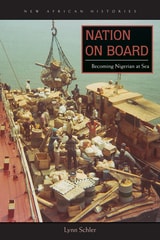
Nation on Board
Becoming Nigerian at SeaLynn Schler
Ohio University Press, 2016
In the 1940s, British shipping companies began the large-scale recruitment of African seamen in Lagos. On colonial ships, Nigerian sailors performed menial tasks for low wages and endured discrimination as cheap labor, while countering hardships by nurturing social connections across the black diaspora. Poor employment conditions stirred these seamen to identify with the nationalist sentiment burgeoning in postwar Nigeria, while their travels broadened and invigorated their cultural identities.
Working for the Nigerian National Shipping Line, they encountered new forms of injustice and exploitation. When mismanagement, a lack of technical expertise, and pillaging by elites led to the NNSL’s collapse in the early 1990s, seamen found themselves without prospects. Their disillusionment became a broader critique of corruption in postcolonial Nigeria.
In Nation on Board: Becoming Nigerian at Sea, Lynn Schler traces the fate of these seamen in the transition from colonialism to independence. In so doing, she renews the case for labor history as a lens for understanding decolonization, and brings a vital transnational perspective to her subject. By placing the working-class experience at the fore, she complicates the dominant view of the decolonization process in Nigeria and elsewhere.
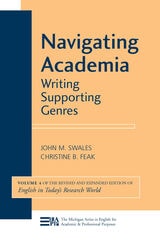
Navigating Academia
Writing Supporting GenresJohn M. Swales & Christine B. Feak
University of Michigan Press, 2011
Navigating Academia is a bit different from the other volumes in the series because it focuses on the supporting genres that facilitate the more public genres that form the building blocks of an academic and/or research career. Included are statements of purpose for graduate school applications, letters of recommendation, and responses to journal reviewers.
One feature that these genres have in common is that they are largely hidden from public view; it is difficult to find examples of them in university libraries. Although guidance about these genres can increasingly be found on the Internet, this guidance is often too general to be helpful in an individual particular situation. This is unfortunate because in almost all cases, the individual needs to be seen as both a serious scholar, researcher, or instructor (whether beginning or getting established) and as a collegial but objective person. As a result, many of these academic communications need to be carefully considered, particularly with regard to the likely effect this communication will have on its intended recipients, who, more often than not, are established figures in the field (as with a job application letter). Because of the roles of these genres, this volume also differs somewhat from the others in that it is as much concerned with social academic practice as it is with more formal academic texts.
This volume represents a revision and expansion of the material on academic correspondence that appeared in English in Today's Research World.
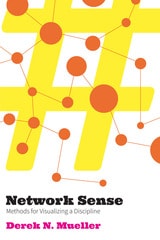
Network Sense
Methods for Visualizing a DisciplineDerek N. Mueller
University Press of Colorado, 2018

New Narratives for Old
The Historical Method of Reading Early Christian Theology: Essays in Honor of Michel Rene BarnesAnthony Briggman
Catholic University of America Press, 2022
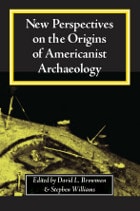
New Perspectives on the Origins of Americanist Archaeology
Edited by David L. Browman and Stephen Williams
University of Alabama Press, 2002
In this landmark book, experienced scholars take a retrospective look at the developing routes that have brought American archaeologists into the 21st century.
In 1996, the Society for American Archaeology's Committee on the History of Archaeology established a biennial symposium
named after Gordon R. Willey, one of the fathers of American archaeology, to focus on the history of the discipline. This volume grew out of the
second symposium, presented at the 1998 meeting of the Society for American Archaeology.
Interest in the intellectual history of the field is certainly nothing new—the first such volume appeared in 1856—but previously, focus has been on individuals and their theories and methods, or on various government agencies that supported, developed, or mandated
excavations in North America. This volume, however, focuses on the roots of Americanist archaeology, including its pre-1915 European connections, and on some of the earliest work by women archaeologists, which has been largely overlooked.
Full of valuable insights for archaeologists and anthropologists—both professional and amateur—into the history and
development of Americanist archaeology, New Perspectives will also inspire and serve as a model for future research.
David Browman is Professor of Anthropology and Chair of the Interdisciplinary Program in Archaeology at Washington University. Stephen Williams is Professor Emeritus of Anthropology at Harvard University.
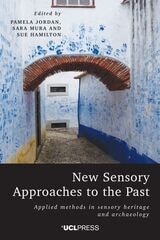
New Sensory Approaches to the Past
Applied Methods in Sensory Heritage and ArchaeologyEdited by Pamela Jordan, Sara Mura, and Sue Hamilton
University College London, 2025
In recent years, archaeologists and other researchers dealing with heritage sites have increasingly emphasized the fact that people in the past interacted with their natural and built environment through all of their senses. In turn, they have come to acknowledge the limits of research methods that rely solely on visual analysis. Presenting studies of historical environments from multiple fields, from archaeology to acoustics, through the lens of the senses, New Sensory Approaches to the Past showcases the latest developments in sensory research through real-world scenarios of human-environment connections. Interdisciplinary examples of diverse sensory in-situ studies will enable readers to replicate and enhance their own investigations. Further, the volume pushes beyond historically Western frameworks of sensory perception towards a more global understanding of the senses.

Not Just Where To Click
Teaching Students (Pil #68)Heather Jagman
American Library Association, 2015

Not Just Where to Click
Teaching Students How to Think About InformationTroy A. Swanson
Assoc of College & Research Libraries, 2015
Notes on Social Measurement
Historical and CriticalOtis Dudley Duncan
Russell Sage Foundation, 1984