Results by title
683 books match the query 'Middle East' and 16 start with n
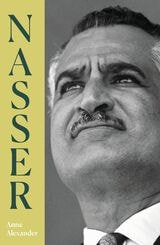
Nasser
Anne Alexander
Haus Publishing, 2025
More than fifty years after his death, Gamal Abd al-Nasser remains a towering figure in the Arab world. As one of the young officers who overthrew British-backed King Farouk in Egypt in 1952, Nasser rose to prominence as a charismatic visionary who challenged foreign dominance. At just thirty-six years old, he became the undisputed leader of Egypt in a presidency that would run from 1956 to 1970.
This insightful biography, in its second edition and featuring a new introduction from the author, delves into the life of Nasser, charting his rise to power, his nationalization of the Suez Canal, and his turbulent years as president. Many in the Arab World celebrate Nasser for his defiance of colonial rule and his dream of Arab unity. However, his legacy is not without its contradictions. Critics have alluded, for instance, to his autocratic rule and unfulfilled promises. In Nasser, Anne Alexander explores this tension between Nasser’s revolutionary ideas and the reality of his governance.
National Myths in the Middle East
Representations, Revisions, and Critiques, Volume 2003Adina Back , Magnus T. Bernhardsson, Mansour Bonakdarian, and Sally Charnow, eds.
Duke University Press, 0
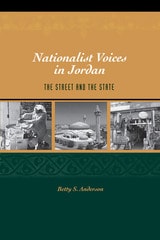
Nationalist Voices in Jordan
The Street and the StateBy Betty S. Anderson
University of Texas Press, 2005
According to conventional wisdom, the national identity of the Jordanian state was defined by the ruling Hashemite family, which has governed the country since the 1920s. But this view overlooks the significant role that the "Arab street"—in this case, ordinary Jordanians and Palestinians—played and continues to play in defining national identity in Jordan and the Fertile Crescent as a whole. Indeed, as this pathfinding study makes clear, "the street" no less than the state has been a major actor in the process of nation building in the Middle East during and after the colonial era.
In this book, Betty Anderson examines the activities of the Jordanian National Movement (JNM), a collection of leftist political parties that worked to promote pan-Arab unity and oppose the continuation of a separate Jordanian state from the 1920s through the 1950s. Using primary sources including memoirs, interviews, poetry, textbooks, and newspapers, as well as archival records, she shows how the expansion of education, new jobs in the public and private sectors, changes in economic relationships, the establishment of national militaries, and the explosion of media outlets all converged to offer ordinary Jordanians and Palestinians (who were under the Jordanian government at the time) an alternative sense of national identity. Anderson convincingly demonstrates that key elements of the JNM's pan-Arab vision and goals influenced and were ultimately adopted by the Hashemite elite, even though the movement itself was politically defeated in 1957.
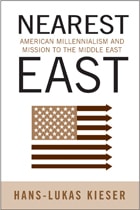
Nearest East
American Millenialism and Mission to the Middle EastAuthored by Hans-Lukas Kieser
Temple University Press, 2012
Long before oil interests shaped American interaction with the Middle East, the U.S. had a strong influence on the late Ottoman and post-Ottoman region. Covering the period from approximately 1800 to the 1970s, Hans-Lukas Kieser’s compelling Nearest East tells the story of this intimate, identity-building relationship between the U.S. and the Near East.
Kieser chronicles how American missionaries worked to implement their belief in Biblical millennialism, enlightened modernity, and a modern Zion-Israel. Millennialism was part of an American identity that constituted itself religiously in the interaction with and the representation of the “cradle of Zion.” As such, "going Near East" was—at least to American evangelical Protestants—in some ways more important than colonizing the American West. However, many Ottoman Muslims felt threatened by the American missionaries perceiving their successful institutions as an estranging challenge from the outside.
Measuring the long twisted road from the missionary Zion-builders of the early 19th century to the privileged US-Israeli partnership in the late 20th century, Nearest East looks carefully on both sides of the relationship. Kieser uses a wide range of Ottoman, Turkish, French, German and other sources, unfamiliar to most Anglophone readers, to tell this story that will appeal to historians of all stripes.
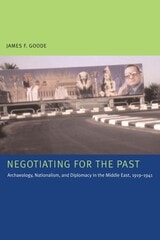
Negotiating for the Past
Archaeology, Nationalism, and Diplomacy in the Middle East, 1919-1941By James F. Goode
University of Texas Press, 2007
The discovery of the tomb of Tutankhamun in 1922 was a landmark event in Egyptology that was celebrated around the world. Had Howard Carter found his prize a few years earlier, however, the treasures of Tut might now be in the British Museum in London rather than the Egyptian Museum in Cairo. That's because the years between World War I and World War II were a transitional period in Middle Eastern archaeology, as nationalists in Egypt and elsewhere asserted their claims to antiquities discovered within their borders. These claims were motivated by politics as much as by scholarship, with nationalists seeking to unite citizens through pride in their ancient past as they challenged Western powers that still exercised considerable influence over local governments and economies. James Goode's analysis of archaeological affairs in Turkey, Egypt, Iran, and Iraq during this period offers fascinating new insight into the rise of nationalism in the Middle East, as well as archaeological and diplomatic history.
The first such work to compare archaeological-nationalistic developments in more than one country, Negotiating for the Past draws on published and archival sources in Arabic, English, French, German, Persian, and Turkish. Those sources reveal how nationalists in Iraq and Iran observed the success of their counterparts in Egypt and Turkey, and were able to hold onto discoveries at legendary sites such as Khorsabad and Persepolis. Retaining artifacts allowed nationalists to build museums and control cultural heritage. As Goode writes, "Going to the national museum became a ritual of citizenship." Western archaeologists became identified (in the eyes of many) as agents of imperialism, thus making their work more difficult, and often necessitating diplomatic intervention. The resulting "negotiations for the past" pulled patrons (such as John D. Rockefeller, Jr., and Lord Carnarvon), archaeologists (James Breasted and Howard Carter), nationalist leaders (Ataturk and Sa'd Zaghlul), and Western officials (Charles Evan Hughes and Lord Curzon) into intractable historical debates with international implications that still resonate today.
Neo-Babylonian Trial Records
Shalom E. Holtz
SBL Press, 2014
New translations of fifty transliterated texts for research and classroom use
This collection of sixth-century B.C.E. Mesopotamian texts provides a close-up, often dramatic, view of ancient courtroom encounters shedding light on Neo-Babylonian legal culture and daily life. In addition to the legal texts, Holtz provides an introduction to Neo-Babylonian social history, archival records, and legal materials. This is an essential resource for scholars interested in the history of law.
Features
- Fifty new English translations
- Transliterations for use in advanced Akkadian courses
- Background essays perfect for courses dealing with ancient Near Eastern history and law
- Explanatory essays preceding each text and its translation
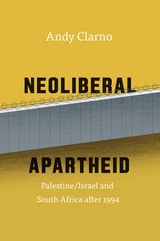
Neoliberal Apartheid
Palestine/Israel and South Africa after 1994Andy Clarno
University of Chicago Press, 2017
After a decade of research in the Johannesburg and Jerusalem regions, Andy Clarno presents here a detailed ethnographic study of the precariousness of the poor in Alexandra township, the dynamics of colonization and enclosure in Bethlehem, the growth of fortress suburbs and private security in Johannesburg, and the regime of security coordination between the Israeli military and the Palestinian Authority in the West Bank. The first comparative study of the changes in these two areas since the early 1990s, the book addresses the limitations of liberation in South Africa, highlights the impact of neoliberal restructuring in Palestine, and argues that a new form of neoliberal apartheid has emerged in both contexts.
Neolithic Revolution
New Perspectives on Southwest Asia in Light of Recent Discoveries on Cyprus (Levant Supplementary): No. 1E. Peltenburg
Council for British Research in the Levant, 2004
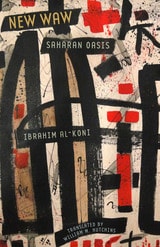
New Waw, Saharan Oasis
By Ibrahim al-Koni
University of Texas Press, 2014
Winner, National Translation Award, American Literary Translators Association, 2015
Upon the death of their leader, a group of Tuareg, a nomadic Berber community whose traditional homeland is the Sahara Desert, turns to the heir dictated by tribal custom; however, he is a poet reluctant to don the mantle of leadership. Forced by tribal elders to abandon not only his poetry but his love, who is also a poet, he reluctantly serves as leader. Whether by human design or the meddling of the Spirit World, his death inspires his tribe to settle down permanently, abandoning not only nomadism but also the inherited laws of the tribe. The community they found, New Waw, which they name for the mythical paradise of the Tuareg people, is also the setting of Ibrahim al-Koni’s companion novel, The Puppet.
For al-Koni, this Tuareg tale of the tension between nomadism and settled life represents a choice faced by people everywhere, in many walks of life, as a result of globalism. He sees an inevitable interface between myth and contemporary life.
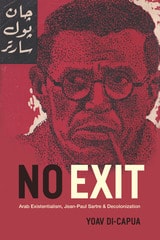
No Exit
Arab Existentialism, Jean-Paul Sartre, and DecolonizationYoav Di-Capua
University of Chicago Press, 2018
By closely following the remarkable career of Arab existentialism, Yoav Di-Capua reconstructs the cosmopolitan milieu of the generation that tried to articulate a political and philosophical vision for an egalitarian postcolonial world. He tells this story by touring a fascinating selection of Arabic and Hebrew archives, including unpublished diaries and interviews. Tragically, the warm and hopeful relationships forged between Arab intellectuals, Sartre, Simone de Beauvoir, and others ended when, on the eve of the 1967 war, Sartre failed to embrace the Palestinian cause. Today, when the prospect of global ethical engagement seems to be slipping ever farther out of reach, No Exit provides a timely, humanistic account of the intellectual hopes, struggles, and victories that shaped the Arab experience of decolonization and a delightfully wide-ranging excavation of existentialism’s non-Western history.
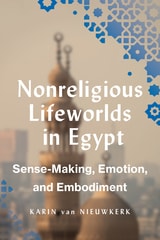
Nonreligious Lifeworlds in Egypt
Sense-Making, Emotion, and EmbodimentKarin van Nieuwkerk
University of Texas Press, 2026
An analysis of the growing visibility of nonreligion in Egypt.
Egypt's 2011 Uprising, while often perceived as a failed revolution, nonetheless nonetheless had durable social effects. Among these has been a rise in expressing atheism and agnosticism, especially among educated and affluent youth—the country’s future leaders.
An intimate ethnography, Nonreligious Lifeworlds in Egypt explores the intellectual and emotional transformations of atheists and agnostics inspired by the aspirational freedom-seeking of the Arab Spring. Rejecting both of Egypt’s dominant religious traditions, Islam and Coptic Christianity, nonreligious people are widely viewed as agents of moral outrage. Amid media-driven panics, their sanity is often questioned by their own families as they experiment with new ways of living and relating. Drawing from in-depth fieldwork, interviews, and social media analysis, Karin van Nieuwkerk reveals her interlocutors’ changing perspectives on sex and gender, eating and drinking, and life and death. Above all, she emphasizes the affective experiences of renouncing religion, marked by anxiety and regret—but also liberation and relief. With rigor and compassion, Van Nieuwkerk opens our minds to the arduous process of exchanging established norms for self-determination.
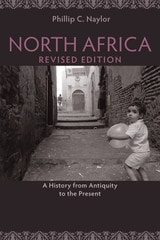
North Africa, Revised Edition
A History from Antiquity to the PresentBy Phillip C. Naylor
University of Texas Press, 2014
North Africa has been a vital crossroads throughout history, serving as a connection between Africa, Asia, and Europe. Paradoxically, however, the region's historical significance has been chronically underestimated. In a book that may lead scholars to reimagine the concept of Western civilization, incorporating the role North African peoples played in shaping "the West," Phillip Naylor describes a locale whose transcultural heritage serves as a crucial hinge, politically, economically, and socially.
Ideal for novices and specialists alike, North Africa begins with an acknowledgment that defining this area has presented challenges throughout history. Naylor's survey encompasses the Paleolithic period and early Egyptian cultures, leading readers through the pharonic dynasties, the conflicts with Rome and Carthage, the rise of Islam, the growth of the Ottoman Empire, European incursions, and the postcolonial prospects for Egypt, Libya, Tunisia, Algeria, Morocco, and Western Sahara.
Emphasizing the importance of encounters and interactions among civilizations, North Africa maps a prominent future for scholarship about this pivotal region.
Now with a new afterword that surveys the “North African Spring” uprisings that roiled the region from 2011 to 2013, this is the most comprehensive history of North Africa to date, with accessible, in-depth chapters covering the pre-Islamic period through colonization and independence.
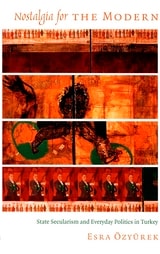
Nostalgia for the Modern
State Secularism and Everyday Politics in TurkeyEsra Özyürek
Duke University Press, 2006
Drawing on her ethnographic research in Istanbul and Ankara during the late 1990s, Özyürek describes how ordinary Turkish citizens demonstrated their affinity for Kemalism in the ways they organized their domestic space, decorated their walls, told their life stories, and interpreted political developments. She examines the recent interest in the private lives of the founding generation of the Republic, reflects on several privately organized museum exhibits about the early Republic, and considers the proliferation in homes and businesses of pictures of Atatürk, the most potent symbol of the secular Turkish state. She also explores the organization of the 1998 celebrations marking the Republic’s seventy-fifth anniversary. Özyürek’s insights into how state ideologies spread through private and personal realms of life have implications for all societies confronting the simultaneous rise of neoliberalism and politicized religion.

Notes from a Sealed Room
An Israeli View of the Gulf WarRobert Werman. Introduction by Gerald M. Phillips
Southern Illinois University Press, 1992
In this compelling and often startling account, Robert Werman chronicles his experiences as an Israeli citizen living in Jerusalem during the Gulf War. On January 19, 1991, he began writing daily reports on his computer, sending them to friends and a few computer networks that dealt with Jewish culture and the politics of the Middle East. To Werman’s surprise, he received numerous electronic responses to his entries, sometimes as many as one hundred a day. As a result, his "war diary" was born, a diary that he continued until February 22, 1991, when, near the end of the war, he was hospitalized for a heart condition.
In the early entries, Werman notes each Iraqi Scud attack, describing in detail the sealed room in which he and his family sought shelter during the expected chemical attacks. "Sitting in the antigas room, members of the family try to put on a brave face, make jokes. . . . Only the dog, a rather stately collie, sits quietly and does not appear at all excited. We pity the dog, for he is the only one without a mask. But then we remember that—without a mask—he is our canary in the coal mine." Futilely, Werman seeks patterns to the attacks, attempting to predict when they might occur. He writes of the nation’s response to war: joggers running with their gas masks in hand, schools temporarily disbanded while children meet in small groups to continue their education, city streets emptied by six o'clock each evening as people wait in their homes for the sound of the sirens that herald an assault. He discusses the varying opinions concerning retaliation against Iraq, the fluctuating morale of the country, the damage produced by Iraqi missiles, and the widespread speculation of Israeli citizens concerning their country’s survival. Yet Werman’s daily reports, digressions, and explanations not only include his observations and impressions; they also poignantly reveal his own personal story and political, religious, and philosophical views.
Werman’s journal gives a singular view of a country under siege, recounting in detail the pressures, conflicts, and dangers existing during a war. It is a distinctive book, a fascinating personal and political account of a man, his family, their nation, and a war.
Nothing Vast
A NovelMoshe Zvi Marvit
Acre Books, 2024
Spanning from 1932 to 1973, Nothing Vast delves deeply into the circumstances and concerns of Jews in cities across the globe—in Poland, France, Morocco, and the United States—as well as in Israel. Giving voice to characters male and female, young and old, Moshe Zvi Marvit braids together stories of migration and struggle, of custom and superstition, of long-held secrets and lies. This beautifully crafted novel follows a survivor of sexual assault, a member of the French resistance, a dream interpreter, a petty criminal, and a venerated rabbi.
Based on the experiences and traditions of the author’s own half-Arab Jewish family, the book is rife with historical and cultural detail and with the intricacies of faith and identity, both personal and national. At the center of the novel is Israel itself—a place existing first in the collective imagination, then in reality as Marvit slips into nonfiction to document the establishment of the country and the reactions to its birth. The characters’ experiences upon arrival in their new nation are vastly different: one family is given a large orange grove upon which to establish a Yeshiva, while the other, not accorded the same privileges, lives beneath notice. The story takes yet another twist when, years later, a grandchild of one of the founding rabbis, seeking answers, discovers the origin of his family’s land.
Visceral, intellectual, and searching, Nothing Vast is nothing short of a virtuosic debut.
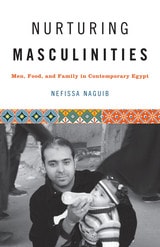
Nurturing Masculinities
Men, Food, and Family in Contemporary EgyptBy Nefissa Naguib
University of Texas Press, 2015
Two structuring concepts have predominated in discussions concerning how Middle Eastern men enact their identity culturally: domination and patriarchy. Nurturing Masculinities dispels the illusion that Arab men can be adequately represented when we speak of them only in these terms. By bringing male perspectives into food studies, which typically focus on the roles of women in the production and distribution of food, Nefissa Naguib demonstrates how men interact with food, in both political and domestic spheres, and how these interactions reflect important notions of masculinity in modern Egypt.
In this classic ethnography, narratives about men from a broad range of educational backgrounds, age groups, and social classes capture a holistic representation of masculine identity and food in modern Egypt on familial, local, and national levels. These narratives encompass a broad range of issues and experiences, including explorations of traditions surrounding food culture; displays of caregiving and love when men recollect the taste, feel, and fragrance of food as they discuss their desires to feed their families well and often; and the role that men, working to ensure the equitable distribution of food, played during the Islamist movement of the Muslim Brotherhood in 2011. At the core of Nurturing Masculinities is the idea that food is a powerful marker of manhood, fatherhood, and family structure in contemporary Egypt, and by better understanding these foodways, we can better understand contemporary Egyptian society as a whole.