Results by title
105 books match the query 'Mind' and 4 start with n
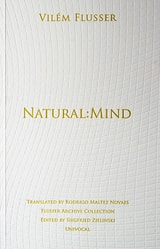
Natural
MindVilém Flusser
University of Minnesota Press, 2013
In Natural:Mind, published for the first time in São Paulo, Brazil, in 1979, Vilém Flusser investigates the paradoxical connection between the concepts of nature and culture through a lively para-phenomenological analysis of natural and cultural phenomena. Can culture be considered natural and nature cultural? If culture is our natural habitat then do we not inhabit nature? These are only some of the questions that are raised in Natural:Mind in order to examine our continual redefinition of both terms and what that means for us existentially.
Always applying his fluid and imagistic Husserlian style of phenomenology, Flusser explores different perspectives and relations of items from everyday life. The book is composed of a series of essays based on close observations of familiar objects such as paths, valleys, cows, meadows, trees, fingers, grass, the moon, and buttons. By focusing on things we mostly take for granted, he manages not only to reveal some aspects of their real and obscured nature but also to radically change how we look at them. The ordinary cow will never be seen in the same way again.
Natural
MindVilém Flusser
University of Minnesota Press, 2027
Philosophical reflections on the relations between nature and culture
In Natural:Mind, published for the first time in São Paulo, Brazil, in 1979, Vilém Flusser investigates the paradoxical connection between the concepts of nature and culture through a lively para-phenomenological analysis of natural and cultural phenomena. Can culture be considered natural and nature considered cultural? If culture is our natural habitat then do we not inhabit nature? These are only some of the questions that are raised in Natural:Mind in order to examine our continual redefinition of both terms and what that means for us existentially.
Always applying his fluid and imagistic Husserlian style of phenomenology, Flusser explores different perspectives and relations of items from everyday life. The book is composed of a series of essays based on close observations of familiar objects such as paths, valleys, cows, meadows, trees, fingers, grass, the moon, and buttons. By focusing on things we mostly take for granted, he manages not only to reveal some aspects of their real and obscured nature but also to radically change how we look at them. The ordinary cow will never be seen in the same way again.
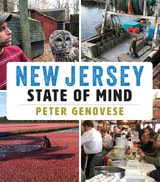
New Jersey State of Mind
Peter Genovese
Rutgers University Press, 2020
For this new book, Genovese spent months scouring the state for rich stories and fascinating locations. New Jersey State of Mind takes us on a journey to over twenty-five of these places and introduces us to the colorful characters who live and work there, from a demolition derby driver to a female craft brewer, and from a Cuban celebrity chef to a Portuguese pig breeder. He also reveals the many natural wonders that have earned New Jersey its “Garden State” nickname, from cranberry bogs to river tours to wild bird sanctuaries.
Collectively, these pieces paint a picture of a diverse state full of hard-working individuals who care for their communities. This book cuts through the myths and stereotypes surrounding the state and reveals the proud beating heart of the real New Jersey.
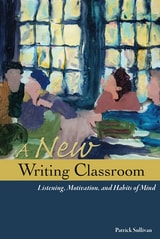
New Writing Classroom
Listening, Motivation, and Habits of MindPatrick Sullivan
Utah State University Press, 2014
In A New Writing Classroom, Patrick Sullivan provides a new generation of teachers a means and a rationale to reconceive their approach to teaching writing, calling into question the discipline's dependence on argument.
Including secondary writing teachers within his purview, Sullivan advocates a more diverse, exploratory, and flexible approach to writing activities in grades six through thirteen. A New Writing Classroom encourages teachers to pay more attention to research in learning theory, transfer of learning, international models for nurturing excellence in the classroom, and recent work in listening to teach students the sort of dialogic stance that leads to higher-order thinking and more sophisticated communication.
The conventional argumentative essay is often a simplistic form of argument, widely believed to be the most appropriate type of writing in English classes, but other kinds of writing may be more valuable to students and offer more important kinds of cognitive challenges. Focusing on listening and dispositions or "habits of mind” as central elements of this new composition pedagogy, A New Writing Classroom draws not just on composition studies but also on cognitive psychology, philosophy, learning theory, literature, and history, making an exciting and significant contribution to the field.