Results by title
491 books match the query 'Moral and ethical aspects' and 10 start with n

Nationalism and Beyond
Introducing Moral Debate about ValuesNenad Mišcevic
Central European University Press, 2001
A very readable introduction to the concepts and principles shaping the philosophical debate around nationalism. The book provides portraits of two kinds of nationalists: the tougher type, more common in everyday life, and the ultra-moderate "liberal nationalist" encountered in academia. The author introduces a debate with a "thoughtful nationalist," one who defends the view that states should be organized around national culture and that individuals have basic obligations to their nation. The author attempts to answer his opponent's standard arguments and presents a fully documented critique of his views.
A passion born from Miscevic's encounter with nationalism in the former Yugoslavia glows from every line of the argument. Questions raised and discussed include: Why is radicalism typical of nationalism? How successful is the nation-state? Does nationalism support liberal-democratic values? Is membership in a nation necessary for human fulfillment and for understanding values? Why might nationalism be immoral?
The book is unique not only because it explains a contemporary moral debate, in terms clear to the non-philosopher reader, but also because it has been written from the perspective of Central and Eastern Europe based on the author's personal experience.
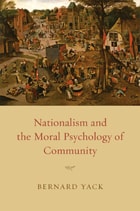
Nationalism and the Moral Psychology of Community
Bernard Yack
University of Chicago Press, 2012
Nationalism is one of modern history’s great surprises. How is it that the nation, a relatively old form of community, has risen to such prominence in an era so strongly identified with the individual? Bernard Yack argues that it is the inadequacy of our understanding of community—and especially the moral psychology that animates it—that has made this question so difficult to answer.
Yack develops a broader and more flexible theory of community and shows how to use it in the study of nations and nationalism. What makes nationalism such a powerful and morally problematic force in our lives is the interplay of old feelings of communal loyalty and relatively new beliefs about popular sovereignty. By uncovering this fraught relationship, Yack moves our understanding of nationalism beyond the oft-rehearsed debate between primordialists and modernists, those who exaggerate our loss of individuality and those who underestimate the depth of communal attachments.
A brilliant and compelling book, Nationalism and the Moral Psychology of Community sets out a revisionist conception of nationalism that cannot be ignored.
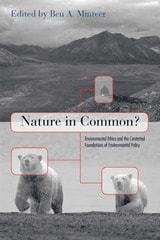
Nature in Common?
Environmental Ethics and the Contested Foundations of Environmental PolicyBen A. Minteer
Temple University Press, 2009
This important book brings together leading environmental thinkers to debate a central conflict within environmental philosophy: Should we appreciate nature mainly for its ability to advance our interests or should we respect it as having a good of its own, apart from any contribution to human well being? Specifically, the fourteen essays collected here discuss the "convergence hypothesis" put forth by Bryan Norton—a controversial thesis in environmental ethics about the policy implications of moral arguments for environmental protection. Historically influential essays are joined with newly commissioned essays to provide the first sustained attempt to reconcile two long-opposed positions. Norton himself offers the book's closing essay.
This seminal volume contains contributions from some of the most respected scholars in the field, including Donald Brown, J. Baird Callicott, Andrew Light, Holmes Rolston III, Laura Westra, and many others. Although Nature in Common? will be especially useful for students and professionals studying environmental ethics and philosophy, it will engage any reader who is concerned about the philosophies underlying contemporary environmental policies.

Near Human
Border Zones of Species, Life, and BelongingMette N. Svendsen
Rutgers University Press, 2022
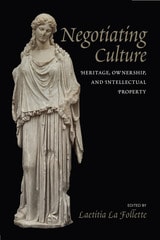
Negotiating Culture
Heritage, Ownership, and Intellectual PropertyLaetitia La Follette
University of Massachusetts Press, 2013
This provocative collection of essays—a series of case studies in cultural ownership by scholars from a range of fields—explores issues of cultural heritage and intellectual property in a variety of contexts, from contests over tangible artifacts as well as more abstract forms of culture such as language and oral traditions to current studies of DNA and genes that combine nature and culture, and even new, nonproprietary models for the sharing of digital technologies. Each chapter sets the debate in its historical and disciplinary context and suggests how the approaches to these issues are changing or should change.
One of the most innovative aspects of the volume is the way each author recognizes the social dimensions of group ownership and demonstrates the need for negotiation and new models. The collection as a whole thus challenges the reader to reevaluate traditional ways of thinking about cultural ownership and to examine the broader social contexts within which negotiation over the ownership of culture is taking place.
In addition to Laetitia La Follette, contributors include David Bollier, Stephen Clingman, Susan DiGiacomo, Oriol Pi-Sunyer, Margaret Speas, Banu Subramaniam, Joe Watkins, and H. Martin Wobst.

New Organs Within Us
Transplants and the Moral EconomyAsl1han Sanal
Duke University Press, 2011

No Longer Patient
Feminist Ethics and Health CareSusan Sherwin
Temple University Press, 1992

No Smoking
The Ethical IssuesRobert E. Goodin
University of Chicago Press, 1990
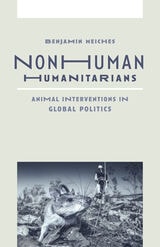
Nonhuman Humanitarians
Animal Interventions in Global PoliticsBenjamin Meiches
University of Minnesota Press, 2023
Examining the appearance of nonhuman animals laboring alongside humans in humanitarian operations
Both critical and mainstream scholarly work on humanitarianism have largely been framed from anthropocentric perspectives highlighting humanity as the rationale for providing care to others. In Nonhuman Humanitarians, Benjamin Meiches explores the role of animals laboring alongside humans in humanitarian operations, generating new ethical possibilities of care in humanitarian practice.
Nonhuman Humanitarians examines how these animals not only improve specific practices of humanitarian aid but have started to transform the basic tenets of humanitarianism. Analyzing case studies of mine-clearance dogs, milk-producing cows and goats, and disease-identifying rats, Nonhuman Humanitarians ultimately argues that nonhuman animal contributions problematize foundational assumptions about the emotional and rational capacities of humanitarian actors as well as the ethical focus on human suffering that defines humanitarianism.
Meiches reveals that by integrating nonhuman animals into humanitarian practice, several humanitarian organizations have effectively demonstrated that care, compassion, and creativity are creaturely rather than human and that responses to suffering and injustice do not—and cannot—stop at the boundaries of the human.

Nullius
The Anthropology of Ownership, Sovereignty, and the Law in IndiaKriti Kapila
HAU, 2022
Nullius is an award-winning anthropological account of the troubled status of ownership in India and its consequences for our understanding of sovereignty and social relations. Though property rights and ownership are said to be a cornerstone of modern law, in the Indian case they are often a spectral presence. Kapila offers a detailed study of paradigms where proprietary relations have been erased, denied, misappropriated.
The book examines three forms of negation, where the Indian state de facto adopted doctrines of terra nullius (in the erasure of indigenous title), res nullius (in acquiring museum objects), and, controversially, corpus nullius (in denying citizens ownership of their bodies under biometrics). The result is a pathbreaking reconnection of questions of property, exchange, dispossession, law, and sovereignty.
Nullius is the winner of the 2024 Bernard S. Cohn Prize, Association of Asian Studies.