99 books match the query 'Muslims' and 3 start with n
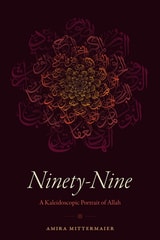
cover of Ninety-Nine: A Kaleidoscopic Portrait of Allah

Ninety-Nine

A Kaleidoscopic Portrait of Allah

Amira Mittermaier

Duke University Press, 2026
According to Islamic tradition, God has at least ninety-nine names. In Ninety-Nine, Amira Mittermaier presents ninety-nine short chapters based on her fieldwork and interviews with over one hundred Egyptians about who God is to them. In Egypt’s turbulent twenty-first century—the Egyptian uprising, a military coup, a pandemic, a climate crisis, wars across the region—God is talked about endlessly yet remains elusive. Ninety-Nine follows Allah into different spaces and conversations without ever claiming to get the full picture. We meet a Cairo beggar, an enigmatic dervish, a queer agnostic, and a Salafi housewife. We meet a depressed God, a cute God, a God who has stopped caring, a loving God, and a God who is a bully. We learn about divine interventions, big and small, and about daily struggles, even fights, with God. An intimate mosaic of Allah, Ninety-Nine celebrates the multiplicity inherent to the Islamic tradition and offers insight into how present-day Muslims grapple with big theological questions amidst their busy lives.
[more]
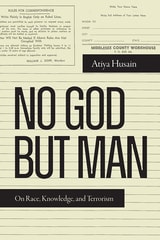
cover of No God but Man: On Race, Knowledge, and Terrorism

No God but Man

On Race, Knowledge, and Terrorism

Atiya Husain

Duke University Press, 2025
Reconceptualizing the relationship between race and Islam in the United States, No God but Man theorizes race as an epistemology using the FBI’s post-9/11 Most Wanted Terrorist list and its posters as its starting point. Atiya Husain traces the origins of the FBI wanted poster form to the work of nineteenth-century social scientist Adolphe Quetelet, specifically his overvalued type of human called “average man.” Husain argues that this notion of the human continues to structure wanted posters, as well as much contemporary social scientific thinking about race. Focusing on the curious representations on the Most Wanted Terrorist list that range from Muslims who lack a race category on their posters to the 2013 addition of Black revolutionary Assata Shakur, Husain demonstrates the ongoing influence of the average man and its relevance even today, proposing a counterweight to the category by engaging Shakur’s turn to Islam in the 1970s in the legal context. In doing so, Husain shows the limitations of race as an analytical category altogether.
[more]
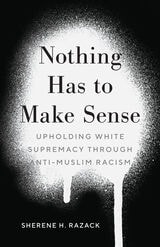
cover of Nothing Has to Make Sense: Upholding White Supremacy through Anti-Muslim Racism

Nothing Has to Make Sense

Upholding White Supremacy through Anti-Muslim Racism

Sherene H. Razack

University of Minnesota Press, 2022

How Western nations have consolidated their whiteness through the figure of the Muslim in the post-9/11 world
 

While much has been written about post-9/11 anti-Muslim racism (often termed Islamophobia), insufficient attention has been given to how anti-Muslim racism operates through law and is a vital part of law’s protection of whiteness. This book fills this gap while also providing a unique new global perspective on white supremacy. Sherene H. Razack, a leading critical race and feminist scholar, takes an innovative approach by situating law within media discourses and historical and contemporary realities. We may think of law as logical, but, argues Razack, its logic breaks down when the subject is Muslim. 

Tracing how white subjects and majority-white nations in the post-9/11 era have consolidated their whiteness through the figure of the Muslim, Razack examines four sites of anti-Muslim racism: efforts by American evangelical Christians to ban Islam in the school curriculum; Canadian and European bans on Muslim women’s clothing; racial science and the sentencing of Muslims as terrorists; and American national memory of the torture of Muslims during wars and occupations. Arguing that nothing has to make sense when the subject is Muslim, she maintains that these legal and cultural sites reveal the dread, phobia, hysteria, and desire that mark the encounter between Muslims and the West. 

Through the prism of racism, Nothing Has to Make Sense argues that the figure of the Muslim reveals a world divided between the deserving and the disposable, where people of European origin are the former and all others are confined in various ways to regimes of disposability. Emerging from critical race theory, and bridging with Islamophobia/critical religious studies, it demonstrates that anti-Muslim racism is a revelatory window into the operation of white supremacy as a global force. 

[more]