Results by title
208 books match the query 'Nation' and 11 start with n
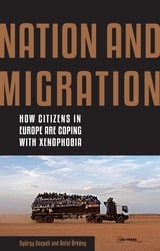
Nation and Migration
How Citizens in Europe Are Coping with XenophobiaGyörgy Csepeli
Central European University Press, 2021
Nation and Migration provides a way to understand recent migration events in Europe that have attracted the world's attention. The emergence of the nations in the West promised homogenization, but instead the imagined national communities have everywhere become places of heterogeneity, and modern nation states have been haunted by the specter of minorities. This study analyses experiences relating to migration in 23 European countries. It is based on data from the International Social Survey Programme, a global cross-national collaborative exercise, with surveys made in 1995, 2003, and 2013. In the authors' view, a critical test for Europe will be its ability to find adequate responses to the challenges of globalization.
The book provides a detailed overview of how citizens in Europe are coping with a xenophobia fueled by their own sense of insecurity. The authors reconstruct the competing sociological reactions to migration in the forms of integration, assimilation and segregation. Hungary receives special attention: the data show that people living there are far less closed and xenophobic than they might seem through the prism of a media-instigated moral panic.

Nation and World, Church and God
The Legacy of Garry WillsEdited by Kenneth L. Vaux and Melanie Baffes
Northwestern University Press, 2014
Garry Wills is the polymathic public intellectual bemoaned as missing from American letters. A professor emeritus at Northwestern University, he has built upon his early studies in classics and patristics, while bringing his considerable intellect to bear on American culture, politics, and religion, notably through provocative articles and books on wars, past and present presidents, and the Catholic Church Wills has distinguished himself in the crowded field of Civil War history; fearlessly taken on the legacies of Richard Nixon and Ronald Reagan, among other presidents; and offered a critical voice in many fraught ethical discussions, especially in the areas of war and peace.
Nation and World, Church and God gathers original critical reflections by leading writers and scholars on Garry Wills’s life work. Organized around the themes of “Classics,” “Civil War,” “War and Peace,” and “Theology, Church, and the Arts,” the book reflects the cultural acumen, fine-grained political analysis, ethical candor, and theological wisdom of one of America’s most prolific writers.
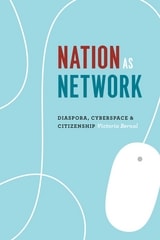
Nation as Network
Diaspora, Cyberspace, and CitizenshipVictoria Bernal
University of Chicago Press, 2014
Bernal argues that Benedict Anderson’s famous concept of nations as “imagined communities” must now be rethought because diasporas and information technologies have transformed the ways nations are sustained and challenged. She traces the development of Eritrean diaspora websites over two turbulent decades that saw the Eritrean state grow ever more tyrannical. Through Eritreans’ own words in posts and debates, she reveals how new subjectivities are formed and political action is galvanized online. She suggests that “infopolitics”—struggles over the management of information—make politics in the 21st century distinct, and she analyzes the innovative ways Eritreans deploy the internet to support and subvert state power. Nation as Network is a unique and compelling work that advances our understanding of the political significance of digital media.
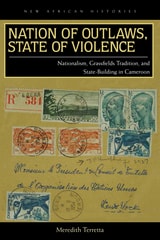
Nation of Outlaws, State of Violence
Nationalism, Grassfields Tradition, and State Building in CameroonMeredith Terretta
Ohio University Press, 2014
Nation of Outlaws, State of Violence is the first extensive history of Cameroonian nationalism to consider the global and local influences that shaped the movement within the French and British Cameroons and beyond. Drawing on the archives of the United Nations, France, Great Britain, Ghana, and Cameroon, as well as oral sources, Nation of Outlaws, State of Violence chronicles the spread of the Union des populations du Cameroun (UPC) nationalist movement from the late 1940s into the first postcolonial decade. It shows how, in the French and British Cameroon territories administered as UN Trusteeships after the Second World War, notions of international human rights, the promise of Third World independence, Pan-African federation, and national citizenship blended with local political and spiritual practices that resurfaced as the period of European rule came to a close. After French and British administrators banned the party in the mid-1950s, UPC nationalists adopted violence as a revolutionary strategy. In the 1960s, the nationalist vision disintegrated. The postcolonial regime labeled UPC nationalists “outlaws” and rounded them up for imprisonment or execution as the state shifted to single-party rule in 1966.
Nation of Outlaws, State of Violence traces the connection between local and transregional politics in the age of Africa’s decolonization and the early decades of the Cold War. Rather than stop at official independence as most conventional histories of African nationalist movements do, this book considers postindependence events as crucial to the history of Cameroonian nationalism and to an understanding of the postcolonial government that came to power on 1 January 1960. While the history of the UPC is a story that ends with the party’s failure to gain access to political power with independence, it is also a story of the postcolonial state’s failure to become a nation.
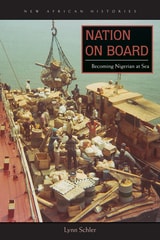
Nation on Board
Becoming Nigerian at SeaLynn Schler
Ohio University Press, 2016
In the 1940s, British shipping companies began the large-scale recruitment of African seamen in Lagos. On colonial ships, Nigerian sailors performed menial tasks for low wages and endured discrimination as cheap labor, while countering hardships by nurturing social connections across the black diaspora. Poor employment conditions stirred these seamen to identify with the nationalist sentiment burgeoning in postwar Nigeria, while their travels broadened and invigorated their cultural identities.
Working for the Nigerian National Shipping Line, they encountered new forms of injustice and exploitation. When mismanagement, a lack of technical expertise, and pillaging by elites led to the NNSL’s collapse in the early 1990s, seamen found themselves without prospects. Their disillusionment became a broader critique of corruption in postcolonial Nigeria.
In Nation on Board: Becoming Nigerian at Sea, Lynn Schler traces the fate of these seamen in the transition from colonialism to independence. In so doing, she renews the case for labor history as a lens for understanding decolonization, and brings a vital transnational perspective to her subject. By placing the working-class experience at the fore, she complicates the dominant view of the decolonization process in Nigeria and elsewhere.
Nation, Language, Islam
Tatarstan's Sovereignty MovementHelen M. Faller
Central European University Press, 2011
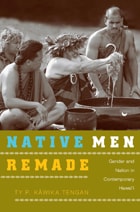
Native Men Remade
Gender and Nation in Contemporary Hawai'iTy P. Kawika Tengan
Duke University Press, 2008
The sharing of personal stories is an integral part of Hale Mua fellowship, and Tengan’s account is filled with members’ first-person narratives. At the same time, Tengan explains how Hale Mua rituals and practices connect to broader projects of cultural revitalization and Hawaiian nationalism. He brings to light the tensions that mark the group’s efforts to reclaim indigenous masculinity as they arise in debates over nineteenth-century historical source materials and during political and cultural gatherings held in spaces designated as tourist sites. He explores class status anxieties expressed through the sharing of individual life stories, critiques of the Hale Mua registered by Hawaiian women, and challenges the group received in dialogues with other indigenous Polynesians. Native Men Remade is the fascinating story of how gender, culture, class, and personality intersect as a group of indigenous Hawaiian men work to overcome the dislocations of colonial history.

Native To The Nation
Disciplining Landscapes And Bodies In AustraliaAllaine Cerwonka
University of Minnesota Press, 2004
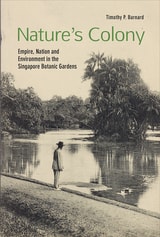
Nature's Colony
Empire, Nation and Environment in the Singapore Botanic GardensTimothy P. Barnard
National University of Singapore Press, 2017
Initially conceived to exploit nature for the benefit of empire, the Gardens were part of a symbolic struggle by administrators, scientists, and gardeners to assert dominance within Southeast Asia’s tropical landscape, reflecting shifting understandings of power, science, and nature among local administrators and distant mentors in Britain. Consequently, as an outpost of imperial science, the Gardens were instrumental in the development of plantation crops, such as rubber and oil palm, which went on to shape landscapes across the globe. Since the independence of Singapore, the Gardens have played a role in the “greening” of the country and have been named as Singapore’s first World Heritage Site. Setting the Gardens alongside the Royal Botanic Gardens, Kew, and botanic gardens in India, Ceylon, Mauritius, and the West Indies, Nature’s Colony provide the first in-depth look at the history of this influential institution.
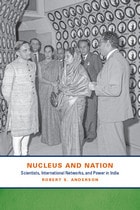
Nucleus and Nation
Scientists, International Networks, and Power in IndiaRobert S. Anderson
University of Chicago Press, 2010
In 1974 India joined the elite roster of nuclear world powers when it exploded its first nuclear bomb. But the technological progress that facilitated that feat was set in motion many decades before, as India sought both independence from the British and respect from the larger world. Over the course of the twentieth century, India metamorphosed from a marginal place to a serious hub of technological and scientific innovation. It is this tale of transformation that Robert S. Anderson recounts in Nucleus and Nation.
Tracing the long institutional and individual preparations for India’s first nuclear test and its consequences, Anderson begins with the careers of India’s renowned scientists—Meghnad Saha, Shanti Bhatnagar, Homi Bhabha, and their patron Jawaharlal Nehru—in the first half of the twentieth century before focusing on the evolution of the large and complex scientific community—especially Vikram Sarabhi—in the later part of the era. By contextualizing Indian debates over nuclear power within the larger conversation about modernization and industrialization, Anderson hones in on the thorny issue of the integration of science into the framework and self-reliant ideals of Indian nationalism. In this way, Nucleus and Nation is more than a history of nuclear science and engineering and the Indian Atomic Energy Commission; it is a unique perspective on the history of Indian nationhood and the politics of its scientific community.
Nursing the Nation
Building the Nurse Labor ForceJean C. Whelan
Rutgers University Press, 2021