Results by title
51 books match the query 'Nicaragua' and 2 start with n
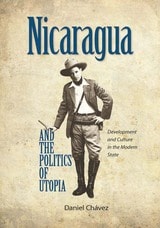
Nicaragua and the Politics of Utopia
Development and Culture in the Modern StateDaniel Chavez
Vanderbilt University Press, 2015
The history of modern Nicaragua is populated with leaders promising a new and better day. Inevitably, as Nicaragua and the Politics of Utopia demonstrates, reality casts a shadow and the community must look to the next leader. As an impoverished state, second only to Haiti in the Americas, Nicaragua has been the scene of cyclical attempts and failures at modern development. Author Daniel Chavez investigates the cultural and ideological bases of what he identifies as the three decisive movements of social reinvention in Nicaragua: the regimes of the Somoza family of much of the early to mid-twentieth century; the governments of the Sandinista party; and the present day struggle to adapt to the global market economy.
For each era, Chavez reveals the ways Nicaraguan popular culture adapted and interpreted the new political order, shaping, critiquing, or amplifying the regime's message of stability and prosperity for the people. These tactics of interpretation, otherwise known as meaning-making, became all-important for the Nicaraguan people, as they opposed the autocracy of Somocismo, or complemented the Sandinistas, or struggled to find their place in the Neoliberal era. In every case, Chavez shows the reflective nature of cultural production and its pursuit of utopian idealism.
[more]
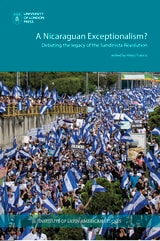
Nicaraguan Exceptionalism? Debating the Legacy of the Sandinista Revolution
Edited by Hilary Francis
University of London Press, 2019
In recent years, child migrants from Central America have arrived in the United States in unprecedented numbers. But whilst minors from Honduras, Guatemala and El Salvador make the perilous journey to the north, their Nicaraguan peers have remained in Central America. Nicaragua also enjoys lower murder rates and far fewer gang problems when compared with her neighbours. Why is Nicaragua so different? The present government has promulgated a discourse of Nicaraguan exceptionalism, arguing that Nicaragua is unique thanks to heritage of the 1979 Sandinista revolution. This volume critically interrogates that claim, asking whether the legacy of the revolution is truly exceptional. An interdisciplinary work, the book brings together historians, anthropologists and sociologists to explore the multifarious ways in which the revolutionary past continues to shape public policy - and daily life - in Nicaragua’s tumultuous present.
[more]