Results by title
91 books match the query 'Nordic Countries' and 6 start with n
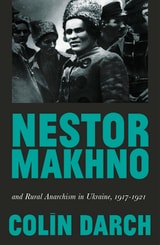
Nestor Makhno and Rural Anarchism in Ukraine, 1917-1921
Colin Darch
Pluto Press, 2020
Between 1917 and 1921, the Makhnovists fought German and Austrian invaders, reactionary monarchist forces, Ukrainian nationalists and sometimes the Bolsheviks themselves. Drawing upon anarchist ideology, the Makhnovists gathered widespread support amongst the Ukrainian peasantry, taking up arms when under attack and playing a significant role - in temporary alliance with the Red Army - in the defeats of the White Generals Denikin and Wrangel. Often dismissed as a kulak revolt, or a manifestation of Ukrainian nationalism, Colin Darch analyses the successes and failures of the Makhnovist movement, emphasising its revolutionary character.
Over 100 years after the revolutions, this book reveals a lesser known side of 1917, contributing both to histories of the period and broadening the narrative of 1917, whilst enriching the lineage of anarchist history.

Nestor Makhno and Rural Anarchism in Ukraine, 1917-1921
Colin Darch
Pluto Press, 2020
Between 1917 and 1921, the Makhnovists fought German and Austrian invaders, reactionary monarchist forces, Ukrainian nationalists and sometimes the Bolsheviks themselves. Drawing upon anarchist ideology, the Makhnovists gathered widespread support amongst the Ukrainian peasantry, taking up arms when under attack and playing a significant role - in temporary alliance with the Red Army - in the defeats of the White Generals Denikin and Wrangel. Often dismissed as a kulak revolt, or a manifestation of Ukrainian nationalism, Colin Darch analyzes the successes and failures of the Makhnovist movement, emphasizing its revolutionary character.
Over 100 years after the revolutions, this book reveals a lesser known side of 1917, contributing both to histories of the period and broadening the narrative of 1917, whilst enriching the lineage of anarchist history.
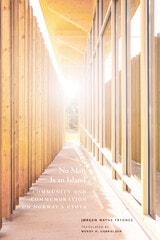
No Man Is An Island
Community and Commemoration on Norway's UtøyaJørgen Watne Frydnes, translated by Wendy H. Gabrielsen
University of Massachusetts Press, 2025
On July 22, 2011, a white supremacist killed eight people at Oslo’s Government Center in Norway and then terrorized the idyllic island of Utøya, where he executed sixty-nine more people, mostly teenagers. The country had never suffered such a massacre, and in the aftermath, the entire population was reeling.
Utøya, the Norwegian Labor Party’s summer camp for youth, a beloved place where many Norwegians learned about democratic values and processes, made lifelong friendships, and developed a vision for a just society, became mired in grief and discord. When Jørgen Watne Frydnes took on the daunting task of rebuilding the island and charting its future, he had to figure out a compassionate and just way forward. He made a radical decision: he set out to talk with each family of a murdered person, seeking to understand their needs and their hopes so that the future of the island could include their wishes and concerns. This emotionally grueling work, which was never considered in the scholarly literature on commemoration, led to a true renewal of Utøya, resulting in a meaningful memorial to those who were lost as well as beautiful surroundings for campers who come there to study democracy and peace.
Frydnes’s narrative, originally published in Norwegian, is structured around the seasons of the year and the landscape of the island, and tracks one person’s account of learning how to remember, commemorate, and honor the dead, and acknowledge a mass tragedy, and yet also create a nurturing, aspirational space for hope.
Nordic Socialism
The Path Toward a Democratic EconomyPelle Dragsted, Translated by William Banks
University of Wisconsin Press, 2025
In Dragsted’s analysis, Denmark and the rest of the Nordic countries are already socialist, but only in part. The dangers come (and here many conservative Americans will disagree) from the unhealthy encroachment of capitalism. His provocative argument is that capitalism and socialism are not in fact mutually exclusive, and already Nordic economies are hybrids, a mix of decommodified, democratically governed sectors and undemocratic, privately controlled enterprises. The relevant question is the degree to which one dominates the other. Currently, undemocratic forces are ascendant, but it need not be so. Dragsted offers both his diagnosis and his proposed solution, a comprehensive plan for a gradual (re)democratization of the economy and a move to fully and firmly embrace, and redefine, “Nordic socialism.”
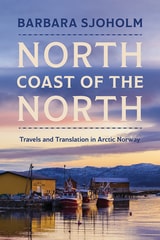
North Coast of the North
Travels and Translation in Arctic NorwayBarbara Sjoholm
University of Minnesota Press, 2027
A traveler and translator explores the multiethnic cultures, histories, and landscapes of Norway's high north
A companionable travel memoir about Arctic Norway, North Coast of the North details Barbara Sjoholm’s trip in the summer of 2024 to the northernmost region of the Scandinavian peninsula, a borderland that is home to a richly multicultural society, an expanding tourist industry, and landscapes bearing the marks of colonization, environmental damage, and climate change. A writer with decades of experience in the Nordic countries, Sjoholm flew from her home in the Pacific Northwest to Norway’s high north to research a collection of Sámi folktales and witness firsthand the settings from which the stories emerged.
Sjoholm’s journey takes her from Kirkenes, the final port on the Hurtigruten coastal route and an outpost on the Russian border, to the fertile farmlands of the Pasvik River Valley and to Indigenous archaeological sites and historic trading posts around the Varangerfjord. She voyages west along the Barents Sea coastline and south to Tromsø, past islands and inlets of surpassing beauty (as well as liquid gas plants and wind farms), and writes about the ongoing resource exploitation and local resistance to Norwegian and global corporate interests. North Coast of the North intertwines Sjoholm’s observations on the tragedies of World War II and the literature and folklore of the Sámi with her own warm memories of Norway, a country that never ceases to intrigue her.
An absorbing and expansive blend of travel writing, memoir, and reflections on translation, history, and literature, North Coast of the North is a vivid look at an often exoticized, frequently overlooked, yet increasingly important environmental and geopolitical region of Northern Europe.
Retail e-book files for this title are screen-reader friendly with images accompanied by short alt text and/or extended descriptions.
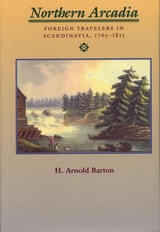
Northern Arcadia
Foreign Travelers in Scandinavia, 1765 - 1815H. Arnold Barton
Southern Illinois University Press, 1998
Northern Arcadia is a comparative study of the accounts of foreign visitors to the Nordic lands during the late eighteenth and early nineteenth centuries.
Before the late eighteenth century, few foreigners ventured as far as Scandinavia. The region seemed a cold hyperborean wilderness and a voyage there a daring adventure. From the mid-1760s on, however, foreigners arrived in the Nordic lands in increasing numbers, leaving numerous accounts that became increasingly popular, satisfying a growing curiosity about regions beyond the traditional grand tour.
The pre-Romantic mood of the period—with its predilection for untamed nature and for peoples uncorrupted by overrefined civilization—further stimulated fascination with the North. European titerati discovered the Nordic sagas, finding them exhilarating, passionate, imaginative, and original. The French Revolution and the ensuing European wars effectively closed off much of the Continent to foreign travel, turning attention to the still neutral northern kingdoms.
Travel literature about Scandinavia thus illuminates the shift in the European intellectual climate from the enlightened rationalism and utilitarianism of the earlier travelers in this period to the pre-Romantic sensibility of those who followed them. In a Europe torn by war and revolution, sensitive souls could find their new Arcadia in the North—at least until the Scandinavian kingdoms themselves became engulfed by the Napoleonic wars after 1805.
The first scholar to examine as a whole the travel literature dealing with Denmark, Schleswig-Holstein, Norway, Sweden, Finland, Iceland, and the Færø Islands, H. Arnold Barton discusses accounts left by both the celebrated and the obscure. Well-known travelers include Vittorio Alfieri, Francisco de Miranda, Mary Wollstonecraft, Thomas Malthus, and Aaron Burr. Literary travelers of the day included Nathanael Wraxall, William Coxe, Charles Gottlob Küttner, Edward Daniel Clarke, and John Carr.
Northern Arcadia brings out contrasts: among the various Nordic lands and regions; among the reactions of travelers of differing nationality; between the earlier as opposed to the later travelers of the time; between native Scandinavian and foreign perceptions of the North; between conditions in Scandinavia and those in other parts of the Western world; between then and now. It incorporates continuity and change, reality and mentality.