Results by title
78 books match the query 'North' and 10 start with n
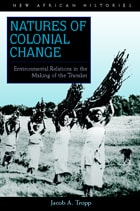
Natures of Colonial Change
Environmental Relations in the Making of the TranskeiJacob A. Tropp
Ohio University Press, 2006
In this groundbreaking study, Jacob A. Tropp explores the interconnections between negotiations over the environment and an emerging colonial relationship in a particular South African context—the Transkei—subsequently the largest of the notorious “homelands” under apartheid.
In the late nineteenth century, South Africa’s Cape Colony completed its incorporation of the area beyond the Kei River, known as the Transkei, and began transforming the region into a labor reserve. It simultaneously restructured popular access to local forests, reserving those resources for the benefit of the white settler economy. This placed new constraints on local Africans in accessing resources for agriculture, livestock management, hunting, building materials, fuel, medicine, and ritual practices.
Drawing from a diverse array of oral and written sources, Tropp reveals how bargaining over resources—between and among colonial officials, chiefs and headmen, and local African men and women—was interwoven with major changes in local political authority, gendered economic relations, and cultural practices as well as with intense struggles over the very meaning and scope of colonial rule itself.
Natures of Colonial Change sheds new light on the colonial era in the Transkei by looking at significant yet neglected dimensions of this history: how both “colonizing” and “colonized” groups negotiated environmental access and how such negotiations helped shape the broader making and meaning of life in the new colonial order.
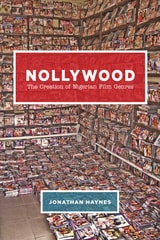
Nollywood
The Creation of Nigerian Film GenresJonathan Haynes
University of Chicago Press, 2016
Haynes describes the major Nigerian film genres and how they relate to Nigerian society—its values, desires, anxieties, and social tensions—as the country and its movies have developed together over the turbulent past two decades. As he shows, Nollywood is a form of popular culture; it produces a flood of stories, repeating the ones that mean the most to its broad audience. He interprets these generic stories and the cast of mythic figures within them: the long-suffering wives, the business tricksters, the Bible-wielding pastors, the kings in their traditional regalia, the glamorous young professionals, the emigrants stranded in New York or London, and all the rest. Based on more than twenty years of research, Haynes’s survey of Nollywood’s history and genres is unprecedented in scope, while his book also vividly describes landmark films, leading directors, and the complex character of this major branch of world cinema.
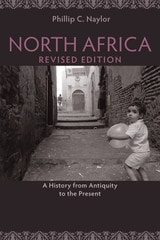
North Africa, Revised Edition
A History from Antiquity to the PresentBy Phillip C. Naylor
University of Texas Press, 2014
North Africa has been a vital crossroads throughout history, serving as a connection between Africa, Asia, and Europe. Paradoxically, however, the region's historical significance has been chronically underestimated. In a book that may lead scholars to reimagine the concept of Western civilization, incorporating the role North African peoples played in shaping "the West," Phillip Naylor describes a locale whose transcultural heritage serves as a crucial hinge, politically, economically, and socially.
Ideal for novices and specialists alike, North Africa begins with an acknowledgment that defining this area has presented challenges throughout history. Naylor's survey encompasses the Paleolithic period and early Egyptian cultures, leading readers through the pharonic dynasties, the conflicts with Rome and Carthage, the rise of Islam, the growth of the Ottoman Empire, European incursions, and the postcolonial prospects for Egypt, Libya, Tunisia, Algeria, Morocco, and Western Sahara.
Emphasizing the importance of encounters and interactions among civilizations, North Africa maps a prominent future for scholarship about this pivotal region.
Now with a new afterword that surveys the “North African Spring” uprisings that roiled the region from 2011 to 2013, this is the most comprehensive history of North Africa to date, with accessible, in-depth chapters covering the pre-Islamic period through colonization and independence.
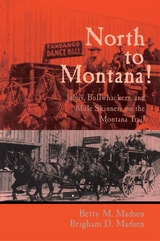
North To Montana
Brigham Madsen
Utah State University Press, 1999
North and South
On Polish Politics, History and CultureMarek A. Cichocki
Angelicum University Press Fundacja Swietego Mik, 2025
North in the World
Selected Poems of Rolf Jacobsen, A Bilingual EditionRolf Jacobsen
University of Chicago Press, 2002
Drawing from all twelve of his books, and including one poem collected posthumously, North in the World offers award-winning English translations of Jacobsen's poems, accompanied by the original Norwegian texts. The translator, the American poet Roger Greenwald, worked with Jacobsen himself to correct errors that had crept into the Norwegian texts over the years. An in-depth introduction by Greenwald highlights the main features of Jacobsen's poetry, and extensive endnotes, as well as indexes to titles and first lines in both languages, enhance the usefulness of the book for general readers and scholars alike. The result is the definitive bilingual edition of Jacobsen's marvelous poetry.
North of 53°
The Wild Days of the Alaska-Yukon Mining Frontier, 1870-1914William R. Hunt
University of Alaska Press, 2009
“Saints and sinners, whores and housewives, swindlers and laborers alike attempted a hasty adjustment to novel conditions in a land that seemed strange and forbidding,” writes William R. Hunt in his narrative history of Alaska mining. Hunt offers an exciting anecdotal account that follows hungry prospectors, canny shopkeepers, hopeful hangers-on, and crafty lawyers through the gold mining camps and temporary towns of nineteenth-century Alaska. Hunt has hiked and mined many of the same claims he writes about in the book, and North of 53 offers a rare glimpse into far-flung communities from Skagway to the Yukon to the deep interior of Alaska to the Ididarod and Nome on the Bering Sea.
North of Empire
Essays on the Cultural Technologies of SpaceJody Berland
Duke University Press, 2009
Berland explores how understandings of space and time, empire and margin, embodiment and technology, and nature and culture are shaped by broadly conceived communications technologies including pianos, radio, television, the Web, and satellite imaging. Along the way, she provides a useful overview of the assumptions driving communications research on both sides of the U.S.-Canadian border, and she highlights the distinctive contributions of the Canadian communication theorists Harold Innis and Marshall McLuhan. Berland argues that electronic mediation is central to the construction of social space and therefore to anti-imperialist critique. She illuminates crucial links between how space is traversed, how it is narrated, and how it is used. Making an important contribution to scholarship on globalization, Berland calls for more sophisticated accounts of media and cultural technologies and their complex “geographies of influence.”
North of Patagonia
Johnny Payne
Northwestern University Press, 2001
North of Slavery
The Negro in the Free StatesLeon F. Litwack
University of Chicago Press, 1965
This book was a landmark when it was published in 1965, and it has remained a crucial source for our understanding of American history ever since.