80 books match the query 'Ontology' and 2 start with n
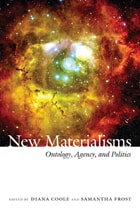
cover of New Materialisms: Ontology, Agency, and Politics

New Materialisms

Ontology, Agency, and Politics

Diana Coole and Samantha Frost, eds.

Duke University Press, 2010

New Materialisms brings into focus and explains the significance of the innovative materialist critiques that are emerging across the social sciences and humanities. By gathering essays that exemplify the new thinking about matter and processes of materialization, this important collection shows how scholars are reworking older materialist traditions, contemporary theoretical debates, and advances in scientific knowledge to address pressing ethical and political challenges. In the introduction, Diana Coole and Samantha Frost highlight common themes among the distinctive critical projects that comprise the new materialisms. The continuities they discern include a posthumanist conception of matter as lively or exhibiting agency, and a reengagement with both the material realities of everyday life and broader geopolitical and socioeconomic structures.

Coole and Frost argue that contemporary economic, environmental, geopolitical, and technological developments demand new accounts of nature, agency, and social and political relationships; modes of inquiry that privilege consciousness and subjectivity are not adequate to the task. New materialist philosophies are needed to do justice to the complexities of twenty-first-century biopolitics and political economy, because they raise fundamental questions about the place of embodied humans in a material world and the ways that we produce, reproduce, and consume our material environment.


Contributors
Sara Ahmed
Jane Bennett
Rosi Braidotti
Pheng Cheah
Rey Chow
William E. Connolly
Diana Coole
Jason Edwards
Samantha Frost
Elizabeth Grosz
Sonia Kruks
Melissa A. Orlie
[more]
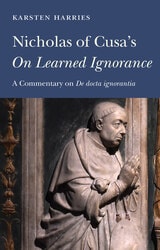
cover of Nicholas of Cusa's <i>On Learned Ignorance</i>: A Commentary on <i>De docta ignorantia</i>

Nicholas of Cusa's <i>On Learned Ignorance</i>

A Commentary on <i>De docta ignorantia</i>

Karsten Harries

Catholic University of America Press, 2024

This is the first commentary to have been written on Nicholas of Cusa's most famous work, On Learned Ignorance. This fact testifies to the difficulty of what has long been recognized to be the most significant philosophical text produced by the Renaissance. While there are many passages in the work that can be cited in support of Cassirer's celebration of Cusanus as the first modern philosopher, that judgment is challenged by the way his work is rooted in a faith and a tradition likely to strike us as thoroughly medieval. This commentary shows how closely the two are linked. Despite the many ways in which what the cardinal has to say belongs to a past that the progress of reason would seem to have left irrecoverably behind, it yet provides us with a continuing challenge. Key to On Learned Ignorance is the incommensurability of the infinite and the finite, of God and creation. Cusanus lets us recognize the essential transcendence of reality, so different from the ontology implied by Descartes' insistence on clear and distinct understanding, which has presided over the progress of science and has helped shape our world. What makes Cusanus’ thought important is not the way it anticipates modernity, but the way it challenges often taken-for-granted presuppositions of our worldview, most importantly a distinctly modern self-assertion or self-elevation that has made our human reason the measure of reality. If it is impossible to deny the countless ways in which our science and technology have given us ever deeper insights into the mysteries of nature and improved our lives, it is equally impossible to deny that this very progress today endangers this fragile earth and the quality of our lives. Cusanus can help us preserve our humanity.
[more]