114 books match the query 'Philadelphia' and 3 start with n
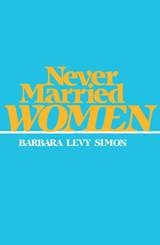
cover of Never Married Women

Never Married Women

Barbara Levy Simon

Temple University Press, 1989
"[Simon] deals seriously and perceptively with lives almost never granted such respect--those of the 'spinster,' the 'old maid.' ...There is also a particular ironic energy." --The Nation "Nothing is more ridiculous than someone who says, upon learning that I never got married, ‘Oh, you would like my Aunt _____ ! She never got married either. You two would have a lot in common.' "--from an interview, August 1984. In this timely and provocative study, Barbara Levy Simon interviews fifty American women, born between 1884 and 1918 who were never married, and examines their emphatic refusal to be "yoked by wifing," as one woman expressed it. A spirit of independence pervades these compelling self-portraits as the women describe the day-to-day activities, options and adaptations, as well as the stigma that shaped lives that defied the spinster stereotype. Simon explains: "I have written this book about them because I want others to learn, as I have, about the diversity of their experiences and perspectives. It is only by immersion in this variety that one can begin to comprehend the discrepancy between popular notions of ‘old maids' and the actualities of single women's daily lives.... Though women who have never married have often been judged, they have seldom been studied." With care and empathy, the author presents women who lived at a time when not being married and being financially independent were considered deviant. From a variety of ethnic, religious, educational, and social groups, and ranging in age from sixty-six to one hundred and one years old, these women discuss the work they have loved or hated and their relations with family and friends. The autobiographical reflections provide insights about the symbolic and material worlds of never-married women and comparisons to the lives of single career women today. In the 1980s, a significantly higher proportion of American women are foregoing marriage than at any point in the past one hundred years. Simon confronts head-on the image of the passive and unhappy old maid, presenting instead a group of independent and self-actualizing women who, in many cases, chose to remain single. "With women choosing to be single in greater numbers than at any other time in this century, a study of single women is most timely.... Although considered deviant by the greater society, these women all manifest a feisty, independent spirit that defies conventional stereotypes of ‘old maids' or ‘spinsters.‘ ... Maybe you should give your mother a copy of this book the next time she asks." --New Directions for Women "An important work on a segment of the female population that has remained single for at least six decades in a society that expected its women to marry and bear children [Simon] evaluates the actualities of these women's lives versus popular images and stereotypes..." --Choice "By offering concrete examples of how the nuclear family is oppressive to those who stand outside of it, Never Married Women breathes life into critiques of the family articulated by...other feminist theorists. And by focusing on the lives of elderly single women, Simon aptly illustrates the injustice of our over reliance on the family--instead of the state--to care for the dependent elderly." --Contemporary Sociology "This book is a paean to women's resilience, adaptability, and courage to live with the consequences of their own decisions." --Readings: A Journal of Reviews and Commentary in Mental Health
[more]
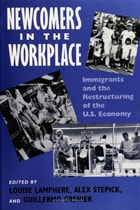
cover of Newcomers In Workplace: Immigrants and the Restructing of the U.S. Economy

Newcomers In Workplace

Immigrants and the Restructing of the U.S. Economy

edited by Louise Lamphere, Alex Stepick and Guillermo Grenier

Temple University Press, 1994

Newcomers in the Workplace documents and dramatizes the changing face of the American workplace, transformed in the 1980s by immigrant workers in all sectors. This collection of excellent ethnographies captures the stench of meatpacking plants, the clatter of sewing machines, the sweat of construction sites, and the strain of management-employee relations in hotels and grocery stores as immigrant workers carve out crucial roles in a struggling economy.

Case studies focus on three geographical regions—Philadelphia, Miami, and Garden City, Kansas—where the active workforce includes increasing numbers of Cubans, Haitians, Koreans, Puerto Ricans, Laotians, Vietnamese, and other new immigrants. The portraits show these newcomers reaching across ethnic boundaries in their determination to retain individualism and to insure their economic survival.


In the series Labor and Social Change, edited by Paula Rayman and Carmen Sirianni.
 

[more]
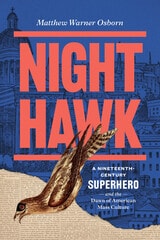
cover of Night Hawk: A Nineteenth-Century Superhero and the Dawn of American Mass Culture

Night Hawk

A Nineteenth-Century Superhero and the Dawn of American Mass Culture

Matthew Warner Osborn

University of Chicago Press, 2026

Unmasks the long-forgotten story of how a flying, superhuman vigilante played a pivotal role in the founding of the American labor movement.

On July 5, 1828, more than a century before Superman arrived on Earth, a superhero took flight in Philadelphia’s night sky. Buried on page three of a small local newspaper, the announcement of his arrival appeared under the title “The Night-Hawk, No. 1” with a cryptic epigraph from Romeo and Juliet: “I’ll be a candleholder and look on.” Who and what was the Night Hawk? As Matthew Warner Osborn reveals, this was the sobriquet of a mysterious columnist for the weekly Mechanics’ Free Press, the first radical socialist newspaper in America. Dressed in a mysterious cloak, the Night Hawk soared over Philadelphia, revealing the evil crimes of prominent gentlemen, fighting murderous criminals, and calling out fraudulent moral authorities. 

The Night Hawk was the ingenious invention of an impoverished actor, Cornelius A. Logan, who created the character as a public champion of Philadelphia’s Working Men’s movement, the first successful American labor party. The Night Hawk’s nocturnal adventures transformed their socialist ideology into an entertaining fantasy that dramatized the struggle against industrial exploitation and the degradation of working people. The success of the character made Logan into a celebrity, and he went on to become a popular and innovative comedian on the antebellum stage.

A harbinger of the superheroes we know today, the Night Hawk promises to illuminate dark secrets from the past, but he can also shed light on our present. He ignites our need to see corrupt elites unmasked and held accountable for their actions, all while protecting the innocent and oppressed. Americans have always loved to fantasize about powerful superheroes who hide behind masks while chasing bad guys, and Osborn shows in this entertaining history how the Night Hawk was perhaps the first standard bearer for that enduring mystique. 

[more]