Results by title
314 books match the query 'Plants' and 9 start with n
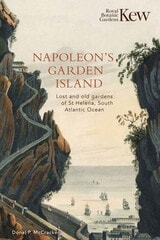
Napoleon’s Garden Island
Lost and Old Gardens of St Helena, South Atlantic OceanDonal P. McCracken
Royal Botanic Gardens, Kew, 2022
Though the South Atlantic island of St. Helena is best known as the site of Napoleon’s exile following his final defeat in 1815, this remote locale also has a rich gardening heritage and a population of highly diverse flora, both exotic and endemic. This is due to St. Helena’s history as a stopover for the vast East India Company fleets on their way to Europe, whose cargo holds carried not only spices but also plants from China, Malaysia, and India. As a result, St. Helena became a botanical hub and the island’s private plantation houses cultivated a number of extraordinarily varied gardens.
Illustrated throughout with drawings, maps, and archival materials, Napoleon’s Garden Island looks to St. Helena’s past and future alike. McCracken explores the island’s native and introduced flora, ultimately appealing for the establishment of a new permanent garden to showcase this singular botanical blend. Turning away from the military matters that characterize most other books about St. Helena’s history, Napoleon’s Garden Island highights how a dazzling assortment of plants have thrived thousands of miles from their nearest neighbors.
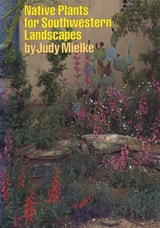
Native Plants for Southwestern Landscapes
By Judy Mielke
University of Texas Press, 1993
Winner, Xeriscape Award of Recognition, Arizona Municipal Water Users Association
Southwest Book Award, Border Regional Library Association
For gardeners who want to conserve water, the color, fragrance, shade, and lush vegetation of a traditional garden may seem like a mirage in the desert. But such gardens can flourish when native plants grow in them. In this book, Judy Mielke, an expert on Southwestern gardening, offers the most comprehensive guide available to landscaping with native plants. Writing simply enough for beginning gardeners, while also providing ample information for landscape professionals, she presents over three hundred trees, shrubs, vines, grasses, groundcovers, wildflowers, cacti, and other native plants suited to arid landscapes.
The heart of the book lies in the complete descriptions and beautiful color photographs of plants native to the Mojave, Sonoran, and Chihuahuan desert regions of the southwestern United States and northern Mexico. Mielke characterizes each plant and gives detailed information on its natural habitat, its water, soil, light, temperature, and pruning requirements, and its possible uses in landscape design.
In addition, Mielke includes informative discussions of desert ecology, growing instructions for native plants and wildflowers, and "how-to" ideas for revegetation of disturbed desert areas using native plants. She concludes the book with an extensive list of plants by type, including those that have specific features such as shade or fragrance. She also supplies a list of public gardens that showcase native plants.
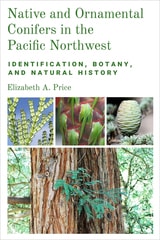
Native and Ornamental Conifers in the Pacific Northwest
Identification, Botany and Natural HistoryElizabeth A. Price
Oregon State University Press, 2022
Based on her experiences teaching workshops on conifer identification and cultivation, Elizabeth Price has developed Jargon-free photographic charts, which allow for side-by-side comparison of conifer features and guide the reader to species identification. The charts are detailed enough for specialists yet accessible to amateurs.
The book includes extensive material on the characteristics, botany, and natural history of conifer plant families, genera, and species, all illustrated with original photographs. Research across many disciplines is blended with direct observation and personal experience, creating a book that goes beyond identification and is both rigorous and engaging.
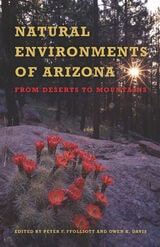
Natural Environments of Arizona
From Desert to MountainsEdited by Peter F. Ffolliott and Owen K. Davis
University of Arizona Press, 2008
Natural Environments of Arizona bridges the gap between coffee-table volumes and scientific literature, offering a nontechnical, single-volume overview that introduces readers to a myriad of topics and provides pointers toward deeper reading. It’s all here: climate, geology, soil and water resources, an amazing variety of flora and fauna—and of course human impacts on the state’s fragile ecosystems.
These chapters show the extent to which Arizona’s natural environments have changed since Lowe first set the stage for their study. They consider changes in forests and grasslands, the effects of soil erosion, questions about water quality, and the evolving status of rivers and wildlife communities. And while the common thread of environments makes the book a complete introduction to the subject, each chapter stands alone as an authoritative synopsis of its particular topic.
Ranging widely over the impacts of drought, floods, and wildfires, this practical guide clearly shows that nature is more than picturesque landscapes, vegetation, and wildlife. For anyone with a dog-eared copy of Lowe, this book will serve as the new standard on the subject—a valuable tool for resource managers, students, and general readers alike.
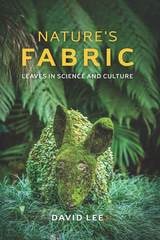
Nature's Fabric
Leaves in Science and CultureDavid Lee
University of Chicago Press, 2017
A lush, incredibly informative tribute to the leaf, Nature’s Fabric offers an introduction to the science of leaves, weaving biology and chemistry with the history of the deep connection we feel with all things growing and green. Leaves come in a staggering variety of textures and shapes: they can be smooth or rough, their edges smooth, lobed, or with tiny teeth. They have adapted to their environments in remarkable, often stunningly beautiful ways—from the leaves of carnivorous plants, which have tiny “trigger hairs” that signal the trap to close, to the impressive defense strategies some leaves have evolved to reduce their consumption. (Recent studies suggest, for example, that some plants can detect chewing vibrations and mobilize potent chemical defenses.) In many cases, we’ve learned from the extraordinary adaptations of leaves, such as the invention of new self-cleaning surfaces inspired by the slippery coating found on leaves. But we owe much more to leaves, and Lee also calls our attention back to the fact that that our very lives—and the lives of all on the planet—depend on them. Not only is foliage is the ultimate source of food for every living thing on land, its capacity to cycle carbon dioxide and oxygen can be considered among evolution’s most important achievements—and one that is critical in mitigating global climate change.
Taking readers through major topics like these while not losing sight of the small wonders of nature we see every day—if you’d like to identify a favorite leaf, Lee’s glossary of leaf characteristics means you won’t be left out on a limb—Nature’s Fabric is eminently readable and full of intriguing research, sure to enhance your appreciation for these extraordinary green machines.
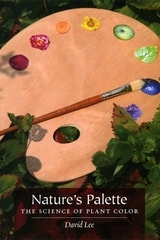
Nature's Palette
The Science of Plant ColorDavid Lee
University of Chicago Press, 2007
Nature’s Palette is the fully ripened fruit of that journey—a highly illustrated, immensely entertaining exploration of the science of plant color. Beginning with potent reminders of how deeply interwoven plant colors are with human life and culture—from the shifting hues that told early humans when fruits and vegetables were edible to the indigo dyes that signified royalty for later generations—Lee moves easily through details of pigments, the evolution of color perception, the nature of light, and dozens of other topics. Through a narrative peppered with anecdotes of a life spent pursuing botanical knowledge around the world, he reveals the profound ways that efforts to understand and exploit plant color have influenced every sphere of human life, from organic chemistry to Renaissance painting to the highly lucrative orchid trade.
Lavishly illustrated and packed with remarkable details sure to delight gardeners and naturalists alike, Nature’s Palette will enchant anyone who’s ever wondered about red roses and blue violets—or green thumbs.
Nelumbonaceae to Vitaceae
Water Lotuses to GrapesRobert H. Mohlenbrock
Southern Illinois University Press, 2010
In this fourth and final installment in the Aquatic and Standing Water Plants of the Central Midwest series, veteran botanist Robert H. Mohlenbrock identifies aquatic and wetland plants in eight central Midwestern states, which include Iowa, Illinois, Indiana, Ohio, Kansas, Kentucky (excluding the Cumberland Mountain region), Missouri, and Nebraska.
Nelumbonaceae to Vitaceae: Water Lotuses to Grapes contains 346 highly informative and technically accurate illustrations as well as ecological information, nomenclature, and keys for plants in the aforementioned families, including white water lily, fireweed, smartweed, mild water pepper, hawthorn, and wild strawberry. Mohlenbrock identifies and describes each plant in concise and readable prose and indicates its usual habitats and the states in which it occurs.
As with previous volumes, Mohlenbrock organizes each species into three groups: truly aquatic plants, which spend their entire life with their vegetative parts either completely submerged or floating on the water’s surface; emergents, which are usually rooted under water with their vegetative parts standing above the water’s surface; and wetland plants, which live most or all of their lives out of water.
With Nelumbonaceae to Vitaceae, Mohlenbrock completes the four-volume series organizing and identifying wetland plants in the central Midwest. The botanical series will aid many, from teachers and students to state and federal employees, focused on conservation efforts and mitigation issues.

New Jersey Ferns and Fern Allies
Montgomery, James D.
Rutgers University Press, 1993
New Jersey is exceptionally rich in ferns, as three centuries of naturalists have recognized. Both amateur and professional botanists will welcome this new, complete, fully illustrated guide to the state's ferns and fern allies (the lycopods and horsetails). After an introduction to fern classification and nomenclature, the history of fern collecting, and the ecology and distribution of ferns within New Jersey, the authors describe eighty-three species, in thirty genera, and thiry-two hybrid forms (more than any other state). They include a fascinating account of the rare curly-grass fern, Schizaea pusilla, "New Jersy's most famous plant."
For each species, the authors provide a detailed drawing and comments on taxonomy, habitat, chromosome counts, habits of growth, and status as endangered species. Distribution maps show not only where plants have been collected, but also the time period for the most recent date of collectionÐÐa convenient way of showing the plant's spread or depletion. Throughout, the book reflects the latest research by fern experts.
An essential field guide and reference for naturalists, botanists, hikers, gardeners, and conservationists in New Jersey and the mid-Atlantic states.
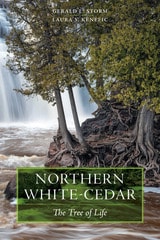
Northern White-Cedar
The Tree of LifeGerald L. Storm
Michigan State University Press, 2022