Results by title
191 books match the query 'Politics and literature' and 5 start with n
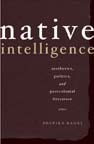
Native Intelligence
Aesthetics, Politics, and Postcolonial LiteratureDeepika Bahri
University of Minnesota Press, 2003
A compelling reclamation of the place of aesthetics in postcolonial literature
Literature though it may be, postcolonial literature is studied and understood largely—and often solely—in social and political terms. In neglecting its aesthetic dimension, as this book forcefully demonstrates, we are overlooking not only an essential aspect of this literature but even a critical perspective on its sociopolitical function and value. In Native Intelligence, Deepika Bahri focuses on postcolonial literature’s formal and aesthetic negotiations with sociopolitical concerns.
How, Bahri asks, do aesthetic considerations contest the social function of postcolonial literature? In answering, her book takes on two tasks: First, it identifies the burden of representation borne by postcolonial literature through its progressive politicization. Second, it draws on Frankfurt School critical theory to reclaim a place for aesthetics in literary representation by closely engaging works of Rohinton Mistry, Salman Rushdie, and Arundhati Roy. Throughout, Bahri shows how attention to the aesthetic innovations and utopian impulses of postcolonial works uncovers their complex and uneven relationship to ideology, reanimating their potential to make novel contributions to the larger project of social liberation.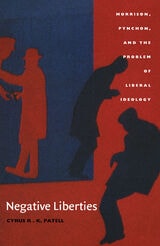
Negative Liberties
Morrison, Pynchon, and the Problem of Liberal IdeologyCyrus R. K. Patell
Duke University Press, 2001
Pynchon and Morrison reveal the official narrative of individualism as encompassing a complex structure of contradiction held in abeyance. This narrative imagines that the goals of the individual are not at odds with the goals of the family or society and in fact obscures the existence of an unholy truce between individual liberty and forms of oppression. By bringing these two fiction writers into a discourse dominated by Ralph Waldo Emerson, Isaiah Berlin, John Rawls, George Kateb, Robert Bellah, and Michael Sandel, Patell unmasks the ways in which contemporary U.S. culture has not fully shed the oppressive patterns of reasoning handed down by the slaveholding culture from which American individualism emerged.
With its interdisciplinary approach, Negative Liberties will appeal to students and scholars of American literature, culture, sociology, and politics.
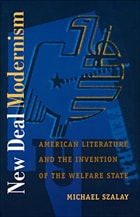
New Deal Modernism
American Literature and the Invention of the Welfare StateMichael Szalay
Duke University Press, 2000
Szalay situates his study within a liberal culture bent on security, a culture galvanized by its imagined need for private and public insurance.
Taking up prominent exponents of social and economic security—such as Franklin Delano Roosevelt, John Maynard Keynes, and John Dewey—Szalay demonstrates how the New Deal’s revision of free-market culture required rethinking the political function of aesthetics. Focusing in particular on the modernist fascination with the relation between form and audience, Szalay offers innovative accounts of Busby Berkeley, Jack London, James M. Cain, Robert Frost, Ayn Rand, Betty Smith, and Gertrude Stein, as well as extended analyses of the works of Ernest Hemingway, John Steinbeck, and Richard Wright.
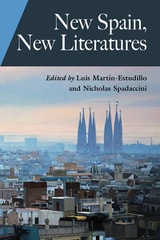
New Spain, New Literatures
Luis Martín-Estudillo
Vanderbilt University Press, 2010
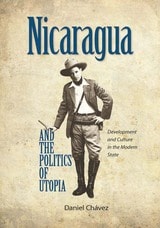
Nicaragua and the Politics of Utopia
Development and Culture in the Modern StateDaniel Chavez
Vanderbilt University Press, 2015
For each era, Chavez reveals the ways Nicaraguan popular culture adapted and interpreted the new political order, shaping, critiquing, or amplifying the regime's message of stability and prosperity for the people. These tactics of interpretation, otherwise known as meaning-making, became all-important for the Nicaraguan people, as they opposed the autocracy of Somocismo, or complemented the Sandinistas, or struggled to find their place in the Neoliberal era. In every case, Chavez shows the reflective nature of cultural production and its pursuit of utopian idealism.