Results by title
1668 books match the query 'Popular culture' and 32 start with n
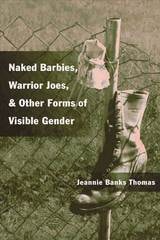
Naked Barbies, Warrior Joes, and Other Forms of Visible Gender
Jeannie Banks Thomas
University of Illinois Press, 2003
Images of females are often emphasized or sexualized, frequently through nudity or partial nudity, whereas those of the male body are not only clothed but also armored in the trappings of action and aggression. Thomas locates these various objects of folk art within a discussion of the post–women's movement discourse on gender.
In addition to the items themselves, Thomas explores the stories and behaviors they generate, including legends of the supernatural about cemetery statues, oral narratives of yard artists and accounts of pranks involving yard art, narratives about children's play with Barbie, Ken, and G.I. Joe, and the electronic folklore (or "e-lore") about Barbie that circulates on the Internet.
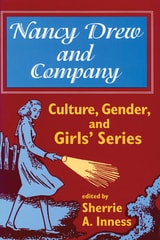
Nancy Drew and Company
Culture, Gender, and Girls’ SeriesEdited by Sherrie A. Inness
University of Wisconsin Press, 1997
Nanovision
Engineering the FutureColin Milburn
Duke University Press, 2008
Milburn illuminates the practices of nanotechnology by examining an enormous range of cultural artifacts, including scientific research articles, engineering textbooks, laboratory images, popular science writings, novels, comic books, and blockbuster films. In so doing, he reveals connections between the technologies of visualization that have helped inaugurate nano research, such as the scanning tunneling microscope, and the prescient writings of Robert A. Heinlein, James Blish, and Theodore Sturgeon. He delves into fictive and scientific representations of “gray goo,” the nightmare scenario in which autonomous nanobots rise up in rebellion and wreak havoc on the world. He shows that nanoscience and “splatterpunk” novels share a violent aesthetic of disintegration: the biological body is breached and torn asunder only to be refabricated as an assemblage of self-organizing machines. Whether in high-tech laboratories or science fiction stories, nanovision deconstructs the human subject and galvanizes the invention of a posthuman future.
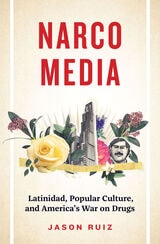
Narcomedia
Latinidad, Popular Culture, and America's War on DrugsJason Ruiz
University of Texas Press, 2023
2024 Honorable Mention — The Victor Villaseñor Best Latino Focused Nonfiction Book Award – English, Empowering Latino Futures’ International Latino Book Awards
Exploring representations of Latinx people from Scarface to Narcos, this book examines how pop culture has framed Latin America as the villain in America’s long and ineffectual War on Drugs.
If there is an enemy in the War on Drugs, it is people of color. That is the lesson of forty years of cultural production in the United States. Popular culture, from Scarface and Miami Vice to Narcos and Better Call Saul, has continually positioned Latinos as an alien people who threaten the US body politic with drugs. Jason Ruiz explores the creation and endurance of this trope, its effects on Latin Americans and Latinx people, and its role in the cultural politics of the War on Drugs.
Even as the focus of drug anxiety has shifted over the years from cocaine to crack and from methamphetamines to opioids, and even as significant strides have been made in representational politics in many areas of pop culture, Latinx people remain an unshakeable fixture in stories narrating the production, distribution, and sale of narcotics. Narcomedia argues that such representations of Latinx people, regardless of the intentions of their creators, are best understood as a cultural front in the War on Drugs. Latinos and Latin Americans are not actually America’s drug problem, yet many Americans think otherwise—and that is in no small part because popular culture has largely refused to imagine the drug trade any other way.
Narrative Co-Construction
Author-Audience Interactions and Their ContextsEdited by Malcah Effron, Margarida McMurry, and Virginia Pignagnoli
The Ohio State University Press, 2026
Advances a new, inclusive, and varied framework for understanding narrative as a product of interplay between authors, audiences, and texts.
In centering the interplay between authors and audiences as the foundation for the narrative act, the innovative and varied collection Narrative Co-Construction makes a resounding argument for the importance of making space for attending to world-building both within the world of the story and out in the world of the audience. Drawing from a range of theoretical orientations, contributors advance a framework that allows multiple points of entry to a given story and welcomes intersectional approaches, both in terms of the embodied identities of its critics and in terms of the theoretical tools they use to identify the methodologies currently active within narrative theory.
Analyzing texts by Jane Austen, André Gide, Mark Z. Danielewski, Ruth Ozeki, Ocean Vuong, and others, as well as interviews and digital (epi)texts, contributors put co-construction in dialogue with digital media studies, empirical studies, cognitive theories, literary history, literary geography, narrative criminology, and more. This inclusive approach puts different viewpoints, identities, and intellectual allegiances in conversation and asserts the value of making context and intersectionality explicit when examining narrative. By highlighting the author-audience collaboration at the heart of narrative vitality, Narrative Co-Construction deepens our understanding of narrative’s world-building power and celebrates how fictions engage readers.
Contributors:
Helen H. Davis, Malcah Effron, Erika Gotfredson, Lindsay Holmgren, Isabell Klaiber, Margaret Love, Margarida McMurry, Rae Muhlstock, Virginia Pignagnoli, Lois Presser, Alexander Scherr, Siim Sorokin, Martha Swift, Anna Torvaldsen, Katherine Weese
Narrative Prosthesis
Disability and the Dependencies of DiscourseDavid T. Mitchell and Sharon L. Snyder
University of Michigan Press, 2001
Narratives, Nerdfighters, and New Media
Jennifer Burek Pierce
University of Iowa Press, 2020
For decades, we’ve been warned that video killed the radio star, and, more recently, that social media has replaced reading. Nerdfighteria, a first-of-its-kind online literary community with nearly three million members, challenges these assumptions. It is the brainchild of brothers Hank and John Green, who provide literary themed programming on their website and YouTube channel, including video clips from John, a best-selling author most famous for his young adult book, The Fault in Our Stars. These clips not only give fans personal insights into his works and the writing process writ large, they also provide unique access to the author, inspiring fans to create their own fan art and make connections with one another.
In the twenty-first century, reading and watching videos are related activities that allow people to engage with authors and other readers. Whether they turn to The Fault in Our Stars or titles by lesser-known authors, Nerdfighters are readers. Incorporating thousands of testimonials about what they read and why, Jennifer Burek Pierce not only sheds light on this particular online community, she also reveals what it tells us about the changing nature of reading in the digital age. In Nerdfighteria, we find a community who shows us that being online doesn’t mean disinterest in books.
Near Black
White-to-Black Passing in American CultureBaz Dreisinger
University of Massachusetts Press, 2008
In the United States, the notion of racial “passing” is usually associated with blacks and other minorities who seek to present themselves as part of the white majority. Yet as Baz Dreisinger demonstrates in this fascinating study, another form of this phenomenon also occurs, if less frequently, in American culture: cases in which legally white individuals are imagined, by themselves or by others, as passing for black.
In Near Black, Dreisinger explores the oft-ignored history of what she calls “reverse racial passing” by looking at a broad spectrum of short stories, novels, films, autobiographies, and pop-culture discourse that depict whites passing for black. The protagonists of these narratives, she shows, span centuries and cross contexts, from slavery to civil rights, jazz to rock to hip-hop. Tracing their role from the 1830s to the present day, Dreisinger argues that central to the enterprise of reverse passing are ideas about proximity. Because “blackness,” so to speak, is imagined as transmittable, proximity to blackness is invested with the power to turn whites black: those who are literally “near black” become metaphorically “near black.”
While this concept first arose during Reconstruction in the context of white anxieties about miscegenation, it was revised by later white passers for whom proximity to blackness became an authenticating badge. As Dreisinger shows, some white-to-black passers pass via self-identification. Jazz musician Mezz Mezzrow, for example, claimed that living among blacks and playing jazz had literally darkened his skin. Others are taken for black by a given community for a period of time. This was the experience of Jewish critic Waldo Frank during his travels with Jean Toomer, as well as that of disc jockey Hoss Allen, master of R&B slang at Nashville's famed WLAC radio. For journalists John Howard Griffin and Grace Halsell, passing was a deliberate and fleeting experiment, while for Mark Twain's fictional white slave in Pudd'nhead Wilson, it is a near-permanent and accidental occurrence.
Whether understood as a function of proximity or behavior, skin color or cultural heritage, self-definition or the perception of others, what all these variants of “reverse passing” demonstrate, according to Dreisinger, is that the lines defining racial identity in American culture are not only blurred but subject to change.

Necessary American Fictions
Popular Literature of the 1950sWilliam Darby
University of Wisconsin Press, 1987
William Darby gives us a comprehensive and (mostly) sympathetic reading of over fifty novels and a few movies from the 1950s. He examines titles such as Mandingo, The Invisible Man, I the Jury, Catcher in the Rye, Battle Cry, The Caine Mutiny, The Revolt of Mamie Stover, The Manchurian Candidate, Hawaii, The Bramble Bush, Peyton Place, Ten North Frederick, A Stone for Danny Fisher, The Bad Seed, Not as a Stranger, The Blackboard Jungle, From Here to Eternity, and Compulsion.
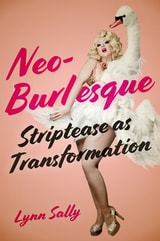
Neo-Burlesque
Striptease as TransformationLynn Sally
Rutgers University Press, 2022
Performance studies scholar and acclaimed burlesque artist Lynn Sally offers an inside look at the history, culture, and philosophy of New York’s neo-burlesque scene. Revealing how twenty-first century neo-burlesque is in constant dialogue with the classic burlesque of the nineteenth and twentieth centuries, she considers how today’s performers use camp to comment on preconceived notions of femininity. She also explores how the striptease performer directs the audience’s gaze, putting on layers of meaning while taking off layers of clothing.
Through detailed profiles of iconic neo-burlesque performers such as Dita Von Teese, Dirty Martini, Julie Atlas Muz, and World Famous *BOB*, this book makes the case for understanding neo-burlesque as a new sexual revolution. Yet it also examines the broader community of “Pro-Am” performers who use neo-burlesque as a liberating vehicle for self-expression. Raising important questions about what feminism looks like, Neo-Burlesque celebrates a revolutionary performing art and participatory culture whose acts have political reverberations, both onstage and off.
Nevada Place Names
A Geographical DictionaryHelen S. Carlson
University of Nevada Press, 1974
Author and researcher Helen Carlson spent almost fourteen years searching for the origins of Nevada’s place names, using the maps of explorers, miners, government surveyors, and city planners and poring through historical accounts, archival documents, county records, and newspaper files. The result of her labors is Nevada Place Names, a fascinating mixture of history spiced with folklore, legend, and obscure facts. Out of print for some years, the book was reprinted in 1999.
Never One Nation
Freaks, Savages, and Whiteness in U.S. Popular Culture, 1850-1877Linda Frost
University of Minnesota Press, 2005
New American Studies
John Carlos Rowe
University of Minnesota Press, 2002
A clarion call for a more theoretically and politically informed approach to American Studies
John Carlos Rowe, a leading American Studies scholar, has examined his field of study and declared it not ready for the twenty-first century. In The New American Studies, Rowe demands a reinvention of the discipline that includes a commitment to making it more theoretically informed, and he draws on the work of cultural critics, postmodernist theorists, and scholars in ethnic, gender, gay, and media studies. Rowe asserts that with American Studies’s strong history of social criticism and practical pedagogy it is an easy leap to the type of progressive commitments characteristic of these areas of scholarship.
The New American Studies is a compelling combination of theory and application, synthesis and polemic. Rowe traces the evolution of American Studies over the last quarter century and looks to the future, placing the field in a postnationalist context that encompasses all of the Americas and the disparate cultural zones within. He then demonstrates the kind of literary and cultural interpretation he calls for, examining subjects ranging from Hawthorne’s and James’s responses to nineteenth-century sexual mores, to the ways television legitimated itself in its first few decades, to the Elián González custody case.New Hard-Boiled Writers
1970s–1990sLeRoy Lad Panek
University of Wisconsin Press, 2000
The author comments both on the way the hard-boiled story has changed over the past three decades and examines the work of ten significant contemporary hard-boiled writers. Chapters on Robert B. Parker, James Crumley, Loren Estleman, Sara Paretsky, Sue Grafton, Carl Hiaasen, Earl Emerson, Robert Crais, James Lee Burke, and Walter Mosley demonstrate how these writers have used the hard-boiled hero to make powerful statements about life in the last quarter of the twentieth century.
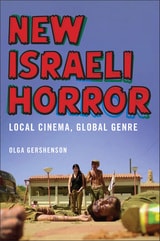
New Israeli Horror
Local Cinema, Global GenreOlga Gershenson
Rutgers University Press, 2024
Before 2010, there were no Israeli horror films. Then distinctly Israeli serial killers, zombies, vampires, and ghosts invaded local screens. The next decade saw a blossoming of the genre by young Israeli filmmakers. New Israeli Horror is the first book to tell their story. Through in-depth analysis, engaging storytelling, and interviews with the filmmakers, Olga Gershenson explores their films from inception to reception. She shows how these films challenge traditional representations of Israel and its people, while also appealing to audiences around the world.
Gershenson introduces an innovative conceptual framework of adaptation, which explains how filmmakers adapt global genre tropes to local reality. It illuminates the ways in which Israeli horror borrows and diverges from its international models. New Israeli Horror offers an exciting and original contribution to our understanding of both Israeli cinema and the horror genre.
A companion website to this book is available at https://websites.umass.edu/newisraelihorror/
Book trailer: https://youtu.be/oVJsD0QCORw (https://youtu.be/oVJsD0QCORw)
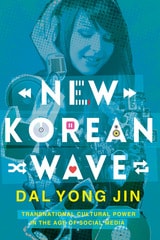
New Korean Wave
Transnational Cultural Power in the Age of Social MediaDal Yong Jin
University of Illinois Press, 2016
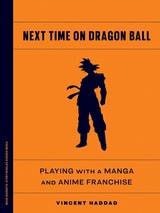
Next Time on Dragon Ball
Playing with a Manga and Anime FranchiseVincent Haddad
University of Minnesota Press, 2026
How media production and fan play interact to shape the aesthetics of a global anime franchise
Since its debut in 1984, Dragon Ball has become one of the most popular, influential, and lucrative media franchises in the world. In Next Time on Dragon Ball, Vincent Haddad investigates how the franchise has maintained huge global demand despite its formulaic plotlines. Examining its exhaustive repetition of storytelling forms across comics, TV series, games, and merchandise, Haddad argues that the convergence of play, fandom, and narrative made Dragon Ball an unlikely success—and a harbinger of broader shifts in the media landscape of franchises from the 1980s to the present.
Haddad conceives of Dragon Ball as a “franchise toy,” a corporate media property that is constantly remixed by its fans in ways that its owners resist but also ultimately embrace: appropriation is essential to the franchise’s popularity. Over the past forty years, Haddad argues, Dragon Ball’s deployment of familiar tropes, cultural references, and narrative forms—from classical Chinese stories and the films of Bruce Lee and Jackie Chan to American franchises like Superman and Star Wars—has invited unique transcultural play. Through diverse examples of how fans use its characters as “playthings,” Haddad shows how Dragon Ball travels across international networked fandoms, highlighting the queer, gendered, and racialized dimensions of this play.
Parsing the dynamics of “sites of conflict” between authorized media and fan content, Next Time on Dragon Ball illuminates how fan engagement across the Americas changes the parameters of what a manga and anime franchise is and can be.
Retail e-book files for this title are screen-reader friendly with images accompanied by short alt text and/or extended descriptions.

Nigerian Video Films
Revised and Expanded EditionJonathan Haynes
Ohio University Press, 2000
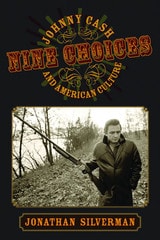
Nine Choices
Johnny Cash and American CultureJonathan Silverman
University of Massachusetts Press, 2010
For much of his career, Johnny Cash opened his shows with the tagline, “Hello, I'm Johnny Cash.” This introduction seemed unnecessary, since everyone in the audience knew who he was—the famous musical artist whose career spanned almost five decades, whose troubled life on and off the stage received wide publicity, and whose cragged face seemed to express a depth and intensity not found in any other artist, living or dead.
For Cash, as for many celebrities, renown was the product of both hard work and luck. Often a visionary and always a tireless performer, he was subject to a whirlwind of social, economic, and cultural countercurrents. Nine Choices explores the tension between Cash's desire for mainstream success, his personal struggles with alcohol and drugs, and an ever-changing cultural landscape that often circumscribed his options.
Drawing on interviews, archival research, and textual analysis, Jonathan Silverman focuses on Cash's personal and artistic choices as a way of understanding his life, his impact on American culture, and the ways in which that culture in turn shaped him. Cash made decisions about where he would live, what he would play, who would produce his albums, whether he would support the Vietnam War, and even if he would flip his famous “bird”—the iconic image of Cash giving the finger which is now plastered on posters and T-shirts everywhere—in the context of cultural forces both visible and opaque. He made other decisions in consultation with a variety of people, many of whom were chiefly concerned with the reaction of his audiences.
Less a conventional biography than a study of the making of an identity, Nine Choices explores how Johnny Cash sought to define who he was, how he was perceived, and what he signified through a series of self-conscious actions. The result, Silverman shows, was a life that was often tumultuous but never uninteresting.
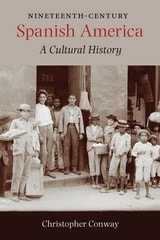
Nineteenth-Century Spanish America
A Cultural HistoryChristopher Conway
Vanderbilt University Press, 2015
The book opens with key themes that will help students and scholars understand the century, such as the civilization and barbarism binary, urbanism, the divide between conservatives and liberals, and transculturation. In the chapters that follow, Conway weaves transnational trends together with brief case studies and compelling snapshots that help us understand the period. How much did books and photographs cost in the nineteenth century? What was the dominant style in painting? What kinds of ballroom dancing were popular? Richly illustrated with striking photographs and lithographs, this is a book that invites the reader to rediscover a past age that is not quite past, still resonating into the present.
Nineteenth-Century Women at the Movies
Adapting Classic Women's Fiction to FilmBarbara Tepa Lupack
University of Wisconsin Press, 1999
This volume’s twelve essays offer critical insights not only into the visions of the novelist and the filmmaker but also into contemporary cultural concerns. The adaptations of novels by eight popular writers are analyzied: Mary Shelley, Jane Austen, Charlotte Brontë, Emily Brontë, Harriet Beecher Stowe, Louisa May Alcott, Ouida, and George Eliot.
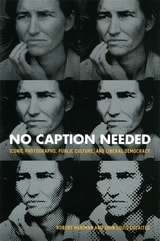
No Caption Needed
Iconic Photographs, Public Culture, and Liberal DemocracyRobert Hariman and John Louis Lucaites
University of Chicago Press, 2007
In No Caption Needed, Robert Hariman and John Louis Lucaites provide the definitive study of the iconic photograph as a dynamic form of public art. Their critical analyses of nine individual icons explore the photographs themselves and their subsequent circulation through an astonishing array of media, including stamps, posters, billboards, editorial cartoons, TV shows, Web pages, tattoos, and more. Iconic images are revealed as models of visual eloquence, signposts for collective memory, means of persuasion across the political spectrum, and a crucial resource for critical reflection.
Arguing against the conventional belief that visual images short-circuit rational deliberation and radical critique, Hariman and Lucaites make a bold case for the value of visual imagery in a liberal-democratic society. No Caption Needed is a compelling demonstration of photojournalism’s vital contribution to public life.
No Equal In The World
An Interpretation Of The Academic PresidencyJoseph N. Crowley
University of Nevada Press, 1994
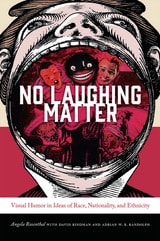
No Laughing Matter
Visual Humor in Ideas of Race, Nationality, and EthnicityEdited by Angela Rosenthal, David Bindman, and Adrian W. B. Randolph
Dartmouth College Press, 2015
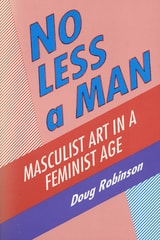
No Less a Man
Masculist Art in a Feminist AgeDoug Robinson
University of Wisconsin Press, 1994
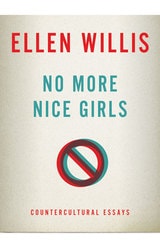
No More Nice Girls
Countercultural EssaysEllen Willis
University of Minnesota Press, 2012
With characteristic intelligence, wit, and feminist insight, Ellen Willis addresses democracy as she sees it: “a commitment to individual freedom and egalitarian self-government in every area of social, economic, and cultural life.” Moving between scholarly and down-to-earth activist writing styles, Willis confronts the conservative backlash that has slowly eroded democratic ideals and advances of the 1960s as well as the internal debates that have frequently splintered the left.
No One Knows Their Names
Screenwriters in HollywoodJorja Prover
University of Wisconsin Press, 1994
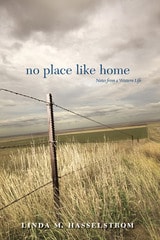
No Place Like Home
Notes from a Western LifeLinda M. Hasselstrom
University of Nevada Press, 2010
In No Place Like Home, Linda Hasselstrom ponders the changing nature of community in the modern West, where old family ranches are being turned into subdivisions and historic towns are evolving into mean, congested cities. Her scrutiny, like her life, moves back and forth between her ranch on the South Dakota prairie and her house in an old neighborhood at the edge of downtown Cheyenne, Wyoming. The vignettes that form the foundation of her consideration are drawn from the communities she has known during her life in the West, reflecting on how they have grown, thrived, failed, and changed, and highlighting the people and decisions that shaped them. Hasselstrom’s ruminations are both intensely personal and universal. She laments the disappearance of the old prairie ranches and the rural sense of community and mutual responsibility that sustained them, but she also discovers that a spirit of community can be found in unlikely places and among unlikely people. The book defines her idea of how a true community should work, and the kind of place she wants to live in. Her voice is unique and honest, both compassionate and cranky, full of love for the harsh, hauntingly beautiful short-grass prairie that is her home, and rich in understanding of the intricacies of the natural world around her and the infinite potentials of human commitment, hope, and greed. For anyone curious about the state of the contemporary West, Hasselstrom offers a report from the front, where nature and human aspirations are often at odds, and where the concepts of community and mutual responsibility are being redefined.
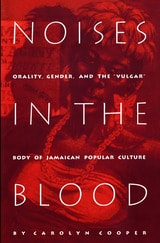
Noises in the Blood
Orality, Gender, and the"Vulgar" Body of Jamaican Popular CultureCarolyn Cooper
Duke University Press, 1995
Cooper’s exploration of Jamaican popular culture covers a wide range of topics, including Bob Marley’s lyrics, the performance poetry of Louise Bennett, Mikey Smith, and Jean Binta Breeze, Michael Thelwell’s novelization of The Harder They Come, the Sistren Theater Collective’s Lionheart Gal, and the vitality of the Jamaican DJ culture. Her analysis of this cultural "noise" conveys the powerful and evocative content of these writers and performers and emphasizes their contribution to an undervalued Caribbean identity. Making the connection between this orality, the feminized Jamaican "mother tongue," and the characterization of this culture as low or coarse or vulgar, she incorporates issues of gender into her postcolonial perspective. Cooper powerfully argues that these contemporary vernacular forms must be recognized as genuine expressions of Jamaican culture and as expressions of resistance to marginalization, racism, and sexism.
With its focus on the continuum of oral/textual performance in Jamaican culture, Noises in the Blood, vividly and stylishly written, offers a distinctive approach to Caribbean cultural studies.
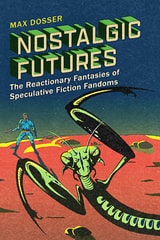
Nostalgic Futures
The Reactionary Fantasies of Speculative Fiction FandomsMax Dosser
Rutgers University Press, 2026
Speculative fiction imagines impossible futures and alternative pasts, alien species and angelic monsters, technological marvels and magical solutions. In recent years, however, many in its fandoms have protested the inclusion of nonwhite, nonmale, and nonheterosexual characters as betrayals of their beloved media for the sake of “wokeness.” Nostalgic Futures: The Reactionary Fantasies of Speculative Fiction Fandoms examines how contemporary fan controversies— particularly those surrounding gender, race, and sexuality in speculative fiction media—intersect with reactionary movements within and beyond fandom. This book explores how the nostalgic fantasies of fans and far-right movements contribute to broader reactionary discourses, shaping not only the past they long for but the future they fear. From the Hugo Awards and PuppyGate to Star Wars’ #NotMyJedi to Mass Effect and The Last of Us boycotts, Nostalgic Futures reveals how speculative fiction fandom has become a site of contestation over our visions of the past, present, and future.
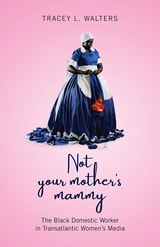
Not Your Mother's Mammy
The Black Domestic Worker in Transatlantic Women’s MediaTracey L Walters
Rutgers University Press, 2021
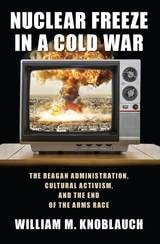
Nuclear Freeze in a Cold War
The Reagan Administration, Cultural Activism, and the End of the Arms RaceWilliam M. Knoblauch
University of Massachusetts Press, 2017
Alarmed, the Reagan administration worked to co-opt the rhetoric of the nuclear freeze and contain antinuclear activism. Recently declassified White House memoranda reveal a concerted campaign to defeat activists' efforts. In this book, William M. Knoblauch examines these new sources, as well as the influence of notable personalities like Carl Sagan and popular culture such as the film The Day After, to demonstrate how cultural activism ultimately influenced the administration's shift in rhetoric and, in time, its stance on the arms race.