Results by title
52 books match the query 'Postcolonialism in literature' and 4 start with n
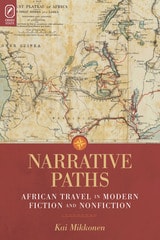
Narrative Paths
African Travel in Modern Fiction and NonfictionKai Mikkonen
The Ohio State University Press, 2015
Narrative Paths contributes to debates in narratology and rhetorical narrative theory about the fiction–nonfiction distinction. With chapters on a wide range of modernist authors—from Pierre Loti, André Gide, Michel Leiris, and Georges Simenon to Blaise Cendrars, Louis-Ferdinand Céline, Joseph Conrad, Graham Greene, Evelyn Waugh, and Isak Dinesen (Karen Blixen)—Mikkonen’s study also contributes to postcolonial approaches to these authors, examining issues of representation, narrative voice, and authority in narratives about colonial Africa.
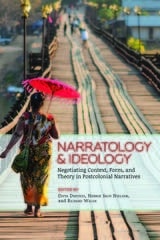
Narratology and Ideology
Negotiating Context, Form, and Theory in Postcolonial NarrativesDivya Dwivedi
The Ohio State University Press, 2018
The thirteen essays in Narratology and Ideology offer compelling readings of individual novels, with a focus upon South Asian literature, that provide a cumulative case study on the value of postcolonial narratology. The essays show not only how narrative theory can be productively applied in service of postcolonial criticism but also how such attention to postcolonial fictions can challenge and refine our theoretical understanding of narrative.
Native Intelligence
Aesthetics, Politics, and Postcolonial LiteratureDeepika Bahri
University of Minnesota Press, 2003
A compelling reclamation of the place of aesthetics in postcolonial literature
Literature though it may be, postcolonial literature is studied and understood largely—and often solely—in social and political terms. In neglecting its aesthetic dimension, as this book forcefully demonstrates, we are overlooking not only an essential aspect of this literature but even a critical perspective on its sociopolitical function and value. In Native Intelligence, Deepika Bahri focuses on postcolonial literature’s formal and aesthetic negotiations with sociopolitical concerns.
How, Bahri asks, do aesthetic considerations contest the social function of postcolonial literature? In answering, her book takes on two tasks: First, it identifies the burden of representation borne by postcolonial literature through its progressive politicization. Second, it draws on Frankfurt School critical theory to reclaim a place for aesthetics in literary representation by closely engaging works of Rohinton Mistry, Salman Rushdie, and Arundhati Roy. Throughout, Bahri shows how attention to the aesthetic innovations and utopian impulses of postcolonial works uncovers their complex and uneven relationship to ideology, reanimating their potential to make novel contributions to the larger project of social liberation.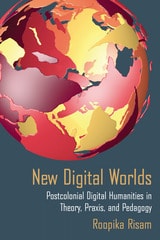
New Digital Worlds
Postcolonial Digital Humanities in Theory, Praxis, and PedagogyRoopika Risam
Northwestern University Press, 2019
New Digital Worlds traces the formation of postcolonial studies and digital humanities as fields, identifying how they can intervene in knowledge production in the digital age. Roopika Risam examines the role of colonial violence in the development of digital archives and the possibilities of postcolonial digital archives for resisting this violence. Offering a reading of the colonialist dimensions of global organizations for digital humanities research, she explores efforts to decenter these institutions by emphasizing the local practices that subtend global formations and pedagogical approaches that support this decentering. Last, Risam attends to human futures in new digital worlds, evaluating both how algorithms and natural language processing software used in digital humanities projects produce universalist notions of the "human" and also how to resist this phenomenon.