Results by title
137 books match the query 'Poverty' and 2 start with n
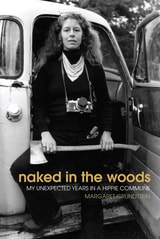
Naked in the Woods
My Unexpected Years in a Hippie CommuneMargaret Grundstein
Oregon State University Press, 2015
In 1970, Margaret Grundstein abandoned her graduate degree at Yale and followed her husband, an Indonesian prince and community activist, to a commune in the backwoods of Oregon. Together with ten friends and an ever-changing mix of strangers, they began to build their vision of utopia.
Naked in the Woods chronicles Grundstein’s shift from reluctant hippie to committed utopian—sacrificing phones, electricity, and running water to live on 160 acres of remote forest with nothing but a drafty cabin and each other. Grundstein, (whose husband left, seduced by “freer love”) faced tough choices. Could she make it as a single woman in man’s country? Did she still want to? How committed was she to her new life? Although she reveled in the shared transcendence of communal life deep in the natural world, disillusionment slowly eroded the dream. Brotherhood frayed when food became scarce. Rifts formed over land ownership. Dogma and reality clashed.
Many people, baby boomers and millennials alike, have romantic notions about the 1960s and 70s. Grundstein’s vivid account offers an unflinching, authentic portrait of this iconic and often misreported time in American history. Accompanied by a collection of distinctive photographs she took at the time, Naked in the Woods draws readers into a period of convulsive social change and raises timeless questions: how far must we venture to find the meaning we seek, and is it ever far out enough to escape our ingrained human nature?
[more]
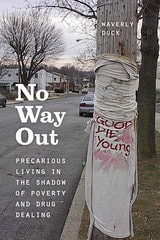
No Way Out
Precarious Living in the Shadow of Poverty and Drug DealingWaverly Duck
University of Chicago Press, 2015
In 2005 Waverly Duck was called to a town he calls Bristol Hill to serve as an expert witness in the sentencing of drug dealer Jonathan Wilson. Convicted as an accessory to the murder of a federal witness and that of a fellow drug dealer, Jonathan faced the death penalty, and Duck was there to provide evidence that the environment in which Jonathan had grown up mitigated the seriousness of his alleged crimes. Duck’s exploration led him to Jonathan’s church, his elementary, middle, and high schools, the juvenile facility where he had previously been incarcerated, his family and friends, other drug dealers, and residents who knew him or knew of him. After extensive ethnographic observations, Duck found himself seriously troubled and uncertain: Are Jonathan and others like him a danger to society? Or is it the converse—is society a danger to them?
Duck’s short stay in Bristol Hill quickly transformed into a long-term study—one that forms the core of No Way Out. This landmark book challenges the common misconception of urban ghettoes as chaotic places where drug dealing, street crime, and random violence make daily life dangerous for their residents. Through close observations of daily life in these neighborhoods, Duck shows how the prevailing social order ensures that residents can go about their lives in relative safety, despite the risks that are embedded in living amid the drug trade. In a neighborhood plagued by failing schools, chronic unemployment, punitive law enforcement, and high rates of incarceration, residents are knit together by long-term ties of kinship and friendship, and they base their actions on a profound sense of community fairness and accountability. Duck presents powerful case studies of individuals whose difficulties flow not from their values, or a lack thereof, but rather from the multiple obstacles they encounter on a daily basis.
No Way Out explores how ordinary people make sense of their lives within severe constraints and how they choose among unrewarding prospects, rather than freely acting upon their own values. What emerges is an important and revelatory new perspective on the culture of the urban poor.
[more]