Results by title
74 books match the query 'Psychopathology' and 2 start with n
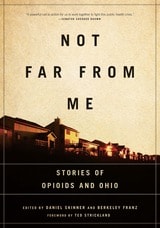
Not Far from Me
Stories of Opioids and OhioEdited by Daniel Skinner and Berkeley FranzForeword by Ted Strickland
The Ohio State University Press, 2019
More and more Americans find themselves in some way touched by the opioid epidemic. But while many have observed the effects of the crisis, Not Far from Me: Stories of Opioids and Ohio is the first book on this public health emergency composed entirely of first-person accounts. The collection unfolds across more than fifty gripping accounts by Ohioans at the center of the national epidemic. Shared through personal stories, poetry, interviews, and photos, these perspectives transcend typical one-dimensional portrayals of the crisis to offer a mosaic of how politics, religion, sports, economics, culture, race, and sexual orientation intersect in and around the epidemic.
Themes of pain and healing, despair and hope are woven throughout accounts of families who have lost loved ones to addiction, stories of survival, and experiences of working on the front lines in communities. In an attempt to give every voice the chance to be heard, Not Far from Me features contributors from across the state as they engage with the pain of opioid abuse and overdose, as well as the hope that personal- and community-level transformation brings. Ultimately, Not Far from Me humanizes the battle against addiction, challenges the stigma surrounding drug users, and unflinchingly faces the reality of the American opioid epidemic.
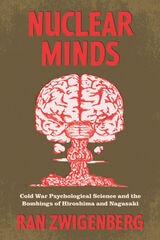
Nuclear Minds
Cold War Psychological Science and the Bombings of Hiroshima and NagasakiRan Zwigenberg
University of Chicago Press, 2023
In 1945, researchers on a mission to Hiroshima with the United States Strategic Bombing Survey canvassed survivors of the nuclear attack. This marked the beginning of global efforts—by psychiatrists, psychologists, and other social scientists—to tackle the complex ways in which human minds were affected by the advent of the nuclear age. A trans-Pacific research network emerged that produced massive amounts of data about the dropping of the bomb and subsequent nuclear tests in and around the Pacific rim.
Ran Zwigenberg traces these efforts and the ways they were interpreted differently across communities of researchers and victims. He explores how the bomb’s psychological impact on survivors was understood before we had the concept of post-traumatic stress disorder. In fact, psychological and psychiatric research on Hiroshima and Nagasaki rarely referred to trauma or similar categories. Instead, institutional and political constraints—most notably the psychological sciences’ entanglement with Cold War science—led researchers to concentrate on short-term damage and somatic reactions or even, in some cases, on denial of victims’ suffering. As a result, very few doctors tried to ameliorate suffering.
But, Zwigenberg argues, it was not only that doctors “failed” to issue the right diagnosis; the victims’ experiences also did not necessarily conform to our contemporary expectations. As he shows, the category of trauma should not be used uncritically in a non-Western context. Consequently, this book sets out, first, to understand the historical, cultural, and scientific constraints in which researchers and victims were acting and, second, to explore how suffering was understood in different cultural contexts before PTSD was a category of analysis.