Results by title
237 books match the query 'Religion, Politics & State' and 5 start with n
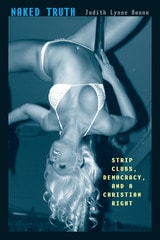
Naked Truth
Strip Clubs, Democracy, and a Christian RightBy Judith Lynne Hanna
University of Texas Press, 2012
Across America, strip clubs have come under attack by a politically aggressive segment of the Christian Right. Using plausible-sounding but factually untrue arguments about the harmful effects of strip clubs on their communities, the Christian Right has stoked public outrage and incited local and state governments to impose onerous restrictions on the clubs with the intent of dismantling the exotic dance industry. But an even larger agenda is at work, according to Judith Lynne Hanna. In Naked Truth, she builds a convincing case that the attack on exotic dance is part of the activist Christian Right’s “grand design” to supplant constitutional democracy in America with a Bible-based theocracy.
Hanna takes readers onstage, backstage, and into the community and courts to reveal the conflicts, charges, and realities that are playing out at the intersection of erotic fantasy, religion, politics, and law. She explains why exotic dance is a legitimate form of artistic communication and debunks the many myths and untruths that the Christian Right uses to fight strip clubs. Hanna also demonstrates that while the fight happens at the local level, it is part of a national campaign to regulate sexuality and punish those who do not adhere to Scripture-based moral values. Ultimately, she argues, the naked truth is that the separation of church and state is under siege and our civil liberties—free speech, women’s rights, and free enterprise—are at stake.

Nearest East
American Millenialism and Mission to the Middle EastAuthored by Hans-Lukas Kieser
Temple University Press, 2012
Long before oil interests shaped American interaction with the Middle East, the U.S. had a strong influence on the late Ottoman and post-Ottoman region. Covering the period from approximately 1800 to the 1970s, Hans-Lukas Kieser’s compelling Nearest East tells the story of this intimate, identity-building relationship between the U.S. and the Near East.
Kieser chronicles how American missionaries worked to implement their belief in Biblical millennialism, enlightened modernity, and a modern Zion-Israel. Millennialism was part of an American identity that constituted itself religiously in the interaction with and the representation of the “cradle of Zion.” As such, "going Near East" was—at least to American evangelical Protestants—in some ways more important than colonizing the American West. However, many Ottoman Muslims felt threatened by the American missionaries perceiving their successful institutions as an estranging challenge from the outside.
Measuring the long twisted road from the missionary Zion-builders of the early 19th century to the privileged US-Israeli partnership in the late 20th century, Nearest East looks carefully on both sides of the relationship. Kieser uses a wide range of Ottoman, Turkish, French, German and other sources, unfamiliar to most Anglophone readers, to tell this story that will appeal to historians of all stripes.
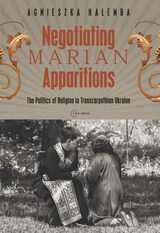
Negotiating Marian Apparitions
The Politics of Religion in Transcarpathian UkraineAgnieszka Halemba
Central European University Press, 2015
No God but Man
On Race, Knowledge, and TerrorismAtiya Husain
Duke University Press, 2025

Not Religion
Liberal Separation in a Christian Brotherhood and a Masonic LodgeGraham Hill
Temple University Press, 2027
In Mexico, a Christian brotherhood invites members to have a religion-free personal relationship with God and practice a particular form of born-again self-transformation. In Switzerland, a Masonic lodge pursues a peculiar blend of enlightenment philosophy and esoteric truth seeking. Both organizations cultivate ethical brotherhoods and ritualized relationships to the sacred. Both organizations also disavow “religion,” sidestepping the divisions in time, space, and personhood that liberal modes of governance typically draw between public and private, as well as civic and conscientious.
In Not Religion, Graham Hill asks why members of these organizations pursue relationships with God, the sacred, and the spiritual while also rejecting the religious character of their engagements. He investigates, and sometimes participates in, the organizational activities of both groups with a view to understanding their respective attempts to bridge civic-conscience divides and pursue everyday life-enchanting practices of self-transformation. Hill finds, in both organizations, reflexive, experimental orientations to language—of very different sorts— animating both types of practice.
Not Religion probes the curious features that the two organizations share despite all the ways in which they differ, examining why these vaguely theistic, mundane-sacralizing, everyday life-enchanting organizations distance themselves, their practices, and their beliefs from the category of “religion.”
In the series Religious Engagement in Democratic Politics