Results by title
175 books match the query 'Rites and ceremonies' and 3 start with n
Neo-Indians
A Religion for the Third MilleniumJacques Galinier
University Press of Colorado, 2013
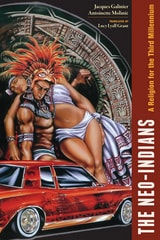
There is no full-time neo-Indian. Both indigenous and non-indigenous practitioners assume Indian identities only when deemed spiritually significant. In their daily lives, they are average members of modern society, dressing in Western clothing, working at middle-class jobs, and retaining their traditional religious identities. As a result of this part-time status the neo-Indians are often overlooked as a subject of study, making this book the first anthropological analysis of the movement.
Galinier and Molinié present and analyze four decades of ethnographic research focusing on Mexico and Peru, the two major areas of the movement’s genesis. They examine the use of public space, describe the neo-Indian ceremonies, provide analysis of the ceremonies’ symbolism, and explore the close relationship between the neo-Indian religion and tourism. The Neo-Indians will be of great interest to ethnographers, anthropologists, and scholars of Latin American history, religion, and cultural studies.
North American Indigenous Warfare and Ritual Violence
Edited by Richard J. Chacon and Rubén G. Mendoza
University of Arizona Press, 2007
The editors argue that a failure to acknowledge the roles of warfare and violence in the lives of indigenous North Americans is itself a vestige of colonial repression—depriving native warriors of their history of armed resistance. These essays document specific acts of Native American violence across the North American continent. Including contributions from anthropologists, archaeologists, historians, and ethnographers, they argue not only that violence existed but also that it was an important and frequently celebrated component of Amerindian life.
CONTENTS
Acknowledgments
Introduction
Richard J. Chacon and Rubén G. Mendoza
1. Traditional Native Warfare in Western Alaska
Ernest S. Burch Jr.
2. Barbarism and Ardour of War from the Tenderest Years”: Cree-Inuit Warfare in the Hudson Bay Region
Charles A. Bishop and Victor P. Lytwyn
3. Aboriginal Warfare on the Northwest Coast: Did the Potlatch Replace Warfare?
Joan A. Lovisek
4. Ethnohistoric Descriptions of Chumash Warfare
John R. Johnson
5. Documenting Conflict in the Prehistoric Pueblo Southwest
Polly Schaafsma
6. Cahokia and the Evidence for Late Pre-Columbian War in the North American Midcontinent
Thomas E. Emerson
7. Iroquois-Huron Warfare
Dean R. Snow
8. Desecrating the Sacred Ancestor Temples: Chiefly Conflict and Violence in the American Southeast
David H. Dye and Adam King
9. Warfare, Population, and Food Production in Prehistoric Eastern North America
George R. Milner
10. The Osteological Evidence for Indigenous Warfare in North America
Patricia M. Lambert
11. Ethical Considerations and Conclusions Regarding Indigenous Warfare and Violence in North America
Richard J. Chacon and Rubén G. Mendoza
References
About the Contributors
Index
Náyari History, Politics, and Violence
From Flowers to AshPhilip E. Coyle
University of Arizona Press, 2001
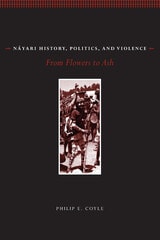
By studying the history of religious practices that legitimate such authority, Philip Coyle shows that a contradiction exists between ceremonially based forms of political authority and the bureaucratic and military modes of power that have been deployed by outside governments in their attempts to administer the region. He then shows how the legitimacy of traditional authority is renewed or undermined through the performance of ceremonies.
Coyle explores linkages between long-term political and economic processes and changes in Náyari ceremonial life from Spanish contact to the present day. As a participant-observer of Náyari ceremonies over a ten-year period, he gained an understanding of the history of their ceremonialism and its connections to practically every other aspect of Náyari life. His descriptions of the Holy Week Festival, mitote ceremonies, and other public performances show how struggles over political legitimacy are intimately tied to the meanings of the ceremonies. With its rich ethnographic descriptions, provocative analyses, and clear links between data and theory, Coyle's study marks a major contribution to the ethnography of the Indians of western Mexico and Latin America more generally. It also provides unusual insight into the violence raging across the Mexican countryside and helps us understand the significance of indigenous people in a globalizing world.