Results by title
140 books match the query 'Science Fiction & Fantasy' and 2 start with n

No Place Else
Explorations in Utopian and Dystopian FictionEric S Rabkin
Southern Illinois University Press, 1983
Writers have created fictions of social perfection at least since Plato’s Republic. Sir Thomas More gave this thread of intellectual history a name when he called his contribution to it Utopia, Greek for noplace.
With each subsequent author cognizant of his predecessors and subject to altered real-world conditions which suggest ever-new causes for hope and alarm, “no place” changed. The fourteen essays presented in this book critically assess man’s fascination with and seeking for “no place.”
“In discussing these central fictions, the contributors see ‘no place’ from diverse perspectives: the sociological, the psychological, the political, the aesthetic. In revealing the roots of these works, the contributors cast back along the whole length of utopian thought. Each essay stands alone; together, the essays make clear what ‘no place’ means today. While it may be true that ‘no place’ has always seemed elsewhere or elsewhen, in fact all utopian fiction whirls contemporary actors through a costume dance no place else but here.”—from the Preface
The contributors are Eric S. Rabkin, B. G. Knepper, Thomas J.Remington, Gorman Beauchamp, William Matter, Ken Davis, Kenneth M. Roemer, William Steinhoff, Howard Segal, Jack Zipes, Kathleen Woodward, Merritt Abrash, and James W. Bittner.
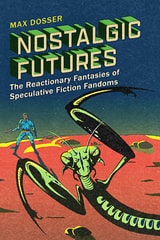
Nostalgic Futures
The Reactionary Fantasies of Speculative Fiction FandomsMax Dosser
Rutgers University Press, 2026
Speculative fiction imagines impossible futures and alternative pasts, alien species and angelic monsters, technological marvels and magical solutions. In recent years, however, many in its fandoms have protested the inclusion of nonwhite, nonmale, and nonheterosexual characters as betrayals of their beloved media for the sake of “wokeness.” Nostalgic Futures: The Reactionary Fantasies of Speculative Fiction Fandoms examines how contemporary fan controversies— particularly those surrounding gender, race, and sexuality in speculative fiction media—intersect with reactionary movements within and beyond fandom. This book explores how the nostalgic fantasies of fans and far-right movements contribute to broader reactionary discourses, shaping not only the past they long for but the future they fear. From the Hugo Awards and PuppyGate to Star Wars’ #NotMyJedi to Mass Effect and The Last of Us boycotts, Nostalgic Futures reveals how speculative fiction fandom has become a site of contestation over our visions of the past, present, and future.