262 books match the query 'Sex role' and 8 start with n
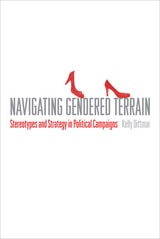
cover of Navigating Gendered Terrain: Stereotypes and Strategy in Political Campaigns

Navigating Gendered Terrain

Stereotypes and Strategy in Political Campaigns

Kelly Dittmar

Temple University Press, 2014

From the presidential level down, men and women who run for political office confront different electoral realities. In her probing study, Navigating Gendered Terrain, Kelly Dittmar investigates how gender influences the campaign strategy and behavior of candidates today. Concurrently, she shows how candidates' strategic and tactical decisions can influence the gendered nature of campaign institutions.
 
Navigating Gendered Terrain addresses how gender is used to shape how campaigns are waged by influencing insider perceptions of and decisions about effective campaign messages, images, and tactics within party and political contexts. Dittmar uses survey information and interviews with candidates, political consultants, and other campaign professionals to reveal how gender-informed advertising, websites, and overall presentation to voters respond to stereotypes and perceptions of female and male candidates.
 
She closes her book by offering a feminist interpretation of women as candidates and explaining how the unintended outcomes of political campaigns reinforce prevailing ideas about gender and candidacy.
[more]
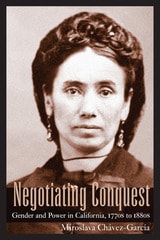
cover of Negotiating Conquest: Gender and Power in California, 1770s to 1880s

Negotiating Conquest

Gender and Power in California, 1770s to 1880s

Miroslava Chávez-García

University of Arizona Press, 2004

Conquest usually has a negative impact on the vanquished, but it can also provide the disenfranchised in conquered societies with new tools for advancement within their families and communities. This study examines the ways in which Mexican and Native women challenged the patriarchal traditional culture of the Spanish, Mexican, and early American eras in California, tracing the shifting contingencies surrounding their lives from the imposition of Spanish Catholic colonial rule in the 1770s to the ascendancy of Euro-American Protestant capitalist society in the 1880s.

Negotiating Conquest begins with an examination of how gender and ethnicity shaped the policies and practices of the Spanish conquest, showing that Hispanic women, marriage, and the family played a central role in producing a stable society on Mexico’s northernmost frontier. It then examines how gender, law, property, and ethnicity shaped social and class relations among Mexicans and native peoples, focusing particularly on how women dealt with the gender-, class-, and ethnic-based hierarchies that gave Mexican men patriarchal authority. With the American takeover in 1846, the text’s focus shifts to how the imposition of foreign legal, economic, linguistic, and cultural norms affected the status of Mexican women, male-female relations, and the family. Addressing such issues as divorce, legitimacy, and inheritance, it describes the manner in which the conquest weakened the economic position of both Mexican women and men while at the same time increasing the leverage of Mexican women in their personal and social relationships with men.

Drawing on archival materials—including dozens of legal cases—that have been largely ignored by other scholars, Chávez-García examines federal, state, and municipal laws across many periods in order to reveal how women used changing laws, institutions, and norms governing property, marriage and sexuality, and family relations to assert and protect their rights. By showing that mexicanas contested the limits of male rule and insisted that patriarchal relationships be based on reciprocity, Negotiating Conquest expands our knowledge of how patriarchy functioned and evolved as it reveals the ways in which conquest can transform social relationships in both family and community.
[more]
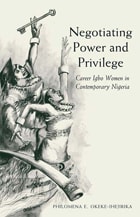
cover of Negotiating Power and Privilege: Career Igbo Women in Contemporary Nigeria

Negotiating Power and Privilege

Career Igbo Women in Contemporary Nigeria

Philomina E. Okeke-Ihejirika

Ohio University Press, 2004
Even with a university education, the Igbo women of southeastern Nigeria face obstacles that prevent them from reaching their professional and personal potentials. Negotiating Power and Privilege is a study of their life choices and the embedded patriarchy and other obstacles in postcolonial Africa barring them from fulfillment. Philomina E. Okeke recorded life-history interviews and discussions during the 1990s with educated women of differing ages and professions. Her interviews expose both familiar and surprising aspects of the women’s experience—their victories and compromise—within their families, marriages, and workplaces. Okeke explores the many factors that have shaped women’s access to sponsorship and promotion in their quest to join men as partners in nation building. Negotiating Power and Privilege captures the voices of African female professionals and vividly portrays the women’s continuous negotiation as wives, mothers, single women, and workers. It shows the inherent limitations of contemporary policies in developing nations that often prescribe secondary and advanced education for women as a panacea for every social ill. It is also an original and important contribution to African studies, gender studies, development studies, education policy, and sociology. This engagingly written book will appeal to a wide audience, ranging from undergraduate students to scholars and professionals.
[more]
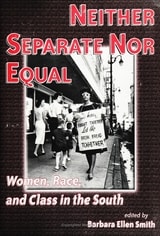
cover of Neither Separate Nor Equal

Neither Separate Nor Equal

edited by Barbara Ellen Smith

Temple University Press, 1999

When she began work on this collection, Barbara Ellen Smith was asked, "Why work on a book about women in the South? Nobody writes books about women in the Midwest." In an era of intensified globalization, when populations, cultures, and capital move across the boundaries of nation-states in multiple forms and directions, the concept of a subnational region seems parochial and out of date. "But," Smith argues, "it is precisely because of the historical construction of the secessionist South as an embattled region when all manners of social problems tend to be blamed on poor women and children and those whose skin is anything but white, that the experiences of racially diverse women in a region legendary for both white supremacy and male supremacy are important to explore."

Collecting in one volume the work of such well-known scholars on Appalachia and the South as Carl Stack, Mab Segrest, and Sally Maggard, among others, Neither Separate Nor Equal analyzes the complex and dramatic developments in the lives of contemporary Southern women. Case studies vividly portray women's diverse circumstances activities: from rural African American women in the Mississippi Delta taking on new roles as community builders to female textile workers in North Carolina contending with automation and reorganization of the mills.

Focusing on the South's historical legacies as they are manifested and contested in the lives of women today, including the tensions between long-lasting patterns of regional distinctiveness and the disruptions of globalizations, this collection approaches differences of race and class not as forms of separation among women, but as social -- be they often contentious, difficult, or exploitive -- relationships. Unifying around a theme of relationally, Neither Separate Nor Equal offers searching empirical studies of Southern women and a conceptual model for feminist scholarship as a whole.
[more]
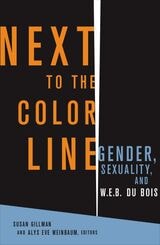
cover of Next to the Color Line: Gender, Sexuality, and W. E. B. Du Bois

Next to the Color Line

Gender, Sexuality, and W. E. B. Du Bois

Susan Gillman

University of Minnesota Press, 2007

Although W. E. B. Du Bois did not often pursue the connections between the “Negro question” that defined so much of his intellectual life and the “woman question” that engaged writers and feminist activists around him, Next to the Color Line argues that within Du Bois’s work is a politics of juxtaposition that connects race, gender, sexuality, and justice.This provocative collection investigates a set of political formulations and rhetorical strategies by which Du Bois approached, used, and repressed issues of gender and sexuality. The essays in Next to the Color Line propose a return to Du Bois, not only to reassess his politics but also to demonstrate his relevance for today’s scholarly and political concerns.Contributors: Hazel V. Carby, Yale U; Vilashini Cooppan, U of California, Santa Cruz; Brent Hayes Edwards, Rutgers U; Michele Elam, Stanford U; Roderick A. Ferguson, U of Minnesota; Joy James, Williams College; Fred Moten, U of Southern California; Shawn Michelle Smith, St. Louis U; Mason Stokes, Skidmore College; Claudia Tate, Princeton U; Paul C. Taylor, Temple U.Susan Gillman is professor of literature at the University of California, Santa Cruz. Alys Eve Weinbaum is associate professor of English at the University of Washington, Seattle.
[more]
cover of No Less a Man: Masculist Art in a Feminist Age

No Less a Man

Masculist Art in a Feminist Age

Doug Robinson

University of Wisconsin Press, 1994
Robert B. Parker's detective Spenser. John Rambo, created by David Morrell and played on the silver screen by Sylvester Stallone. Bruce Springsteen. All three, Douglas Robinson claims, are central figures in a new form of popular men’s art: art that explores what it means to be a man in a feminist age. Robinson develops a three-stage transformation myth out of Joseph Campbell’s studies of hero mythology: the road of trials, on which repressive “normality” is tested and found lacking (Spenser); a symbolic death in which defensive rational ego-structures are surrendered (the Rambo of First Blood); and regeneration and return, the gradual rebirth of masculinity in a redemptive transformation (Springsteen).
[more]
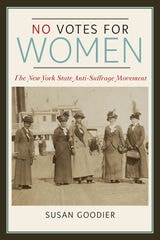
cover of No Votes for Women: The New York State Anti-Suffrage Movement

No Votes for Women

The New York State Anti-Suffrage Movement

Susan Goodier

University of Illinois Press, 2013
No Votes for Women explores the complicated history of the suffrage movement in New York State by delving into the stories of women who opposed the expansion of voting rights to women. Susan Goodier finds that conservative women who fought against suffrage encouraged women to retain their distinctive feminine identities as protectors of their homes and families, a role they felt was threatened by the imposition of masculine political responsibilities. She details the victories and defeats on both sides of the movement from its start in the 1890s to its end in the 1930s, acknowledging the powerful activism of this often overlooked and misunderstood political force in the history of women's equality.

[more]
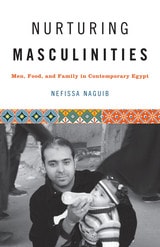
cover of Nurturing Masculinities: Men, Food, and Family in Contemporary Egypt

Nurturing Masculinities

Men, Food, and Family in Contemporary Egypt

By Nefissa Naguib

University of Texas Press, 2015

Two structuring concepts have predominated in discussions concerning how Middle Eastern men enact their identity culturally: domination and patriarchy. Nurturing Masculinities dispels the illusion that Arab men can be adequately represented when we speak of them only in these terms. By bringing male perspectives into food studies, which typically focus on the roles of women in the production and distribution of food, Nefissa Naguib demonstrates how men interact with food, in both political and domestic spheres, and how these interactions reflect important notions of masculinity in modern Egypt.

In this classic ethnography, narratives about men from a broad range of educational backgrounds, age groups, and social classes capture a holistic representation of masculine identity and food in modern Egypt on familial, local, and national levels. These narratives encompass a broad range of issues and experiences, including explorations of traditions surrounding food culture; displays of caregiving and love when men recollect the taste, feel, and fragrance of food as they discuss their desires to feed their families well and often; and the role that men, working to ensure the equitable distribution of food, played during the Islamist movement of the Muslim Brotherhood in 2011. At the core of Nurturing Masculinities is the idea that food is a powerful marker of manhood, fatherhood, and family structure in contemporary Egypt, and by better understanding these foodways, we can better understand contemporary Egyptian society as a whole.

[more]