Results by title
150 books match the query 'Social psychology' and 4 start with n

National Deconstruction
Violence, Identity, and Justice in BosniaDavid Campbell
University of Minnesota Press, 1998
What our response to the Bosnian crisis can tell us about multiculturalism in the United States and beyond.
How did Bosnia, once a polity of intersecting and overlapping identities, come to be understood as an intractable ethnic problem? David Campbell pursues this question-and its implications for the politics of community, democracy, justice, and multiculturalism-through readings of media and academic representations of the conflict in Bosnia. National Deconstruction is a rethinking of the meaning of “ethnic/nationalist” violence and a critique of the impoverished discourse of identity politics that crippled the international response to the Bosnian crisis.
Rather than assuming the preexistence of an entity called Bosnia, Campbell considers the complex array of historical, statistical, cartographic, and other practices through which the definitions of Bosnia have come to be. These practices traverse a continuum of political spaces, from the bodies of individuals and the corporate body of the former Yugoslavia to the international bodies of the world community. Among the book’s many original disclosures, arrived at through a critical reading of international diplomacy, is the shared identity politics of the peacemakers and paramilitaries. Equally significant is Campbell’s conclusion that the international response to the Bosnian war was hamstrung by the poverty of Western thought on the politics of heterogeneous communities. Indeed, he contends that Europe and the United States intervened in Bosnia not to save the ideal of multiculturalism abroad but rather to shore up the nationalist imaginary so as to contain the ideal of multiculturalism at home.By bringing to the fore the concern with ethics, politics, and responsibility contained in more traditional accounts of the Bosnian war, this book is a major statement on the inherently ethical and political assumptions of deconstructive thought-and the reworkings of the politics of community it enables.Awarded “Book of the Year 1999” by the International Forum Bosnia (Sarajevo) and the Human Rights Review (USA).ISBN 0-8166-2936-6 Cloth $62.95xxISBN 0-8166-2937-4 Paper $24.95x382 pages 5 7/8 x 9 SeptemberTranslation inquiries: University of Minnesota Press
Negotiating Responsibility in the Criminal Justice System
Edited by Jack Kamerman. Foreword by Gilbert Geis
Southern Illinois University Press, 1998
With this collection of essays, Jack Kamerman presents the first sustained examination of one of the underpinnings of the operation of the criminal justice system: the issue of responsibility for actions and, as a consequence, the issue of accountability.
Unique in the breadth of its approach, this volume examines the issue of responsibility from the perspectives of criminal justice professionals, sociologists, philosophers, and public administrators from four countries. Attacking the problem on various levels, the essayists look first at the assumptions made by criminal justice institutions regarding offender responsibility, then turn to the views of offenders on the causes of their own actions and to the consequences of offenders either to accept or deny responsibility.
These scholars also examine the social and psychological circumstances under which people in general accept or deny responsibility for what they do, thus providing the basis for understanding the process of social distance as a major precondition for people to commit atrocities without seeing themselves as responsible. Understanding the circumstances under which people either distance themselves from or embrace responsibility enables criminologists to make grounded recommendations for reordering responsibility in the criminal justice system and, more generally, for restoring a sense of responsibility to organizations, occupations, and society.
Aside from Kamerman, the contributors are William C. Collins, Charles Fethe, Gilbert Geis, Robert J. Kelly, Alison Liebling, Jess Maghan, Mark Harrison Moore, Paul Neurath, John Rakis, William Rentzmann, and José E. Sánchez.

Never Saw It Coming
Cultural Challenges to Envisioning the WorstKaren A. Cerulo
University of Chicago Press, 2006
People—especially Americans—are by and large optimists. They're much better at imagining best-case scenarios (I could win the lottery!) than worst-case scenarios (A hurricane could destroy my neighborhood!). This is true not just of their approach to imagining the future, but of their memories as well: people are better able to describe the best moments of their lives than they are the worst.
Though there are psychological reasons for this phenomenon, Karen A.Cerulo, in Never Saw It Coming, considers instead the role of society in fostering this attitude. What kinds of communities develop this pattern of thought, which do not, and what does that say about human ability to evaluate possible outcomes of decisions and events?
Cerulo takes readers to diverse realms of experience, including intimate family relationships, key transitions in our lives, the places we work and play, and the boardrooms of organizations and bureaucracies. Using interviews, surveys, artistic and fictional accounts, media reports, historical data, and official records, she illuminates one of the most common, yet least studied, of human traits—a blatant disregard for worst-case scenarios. Never Saw It Coming, therefore, will be crucial to anyone who wants to understand human attempts to picture or plan the future.
“In Never Saw It Coming, Karen Cerulo argues that in American society there is a ‘positive symmetry,’ a tendency to focus on and exaggerate the best, the winner, the most optimistic outcome and outlook. Thus, the conceptions of the worst are underdeveloped and elided. Naturally, as she masterfully outlines, there are dramatic consequences to this characterological inability to imagine and prepare for the worst, as the failure to heed memos leading up to both the 9/11 and NASA Challenger disasters, for instance, so painfully reminded us.”--Robin Wagner-Pacifici, Swarthmore College
“Katrina, 9/11, and the War in Iraq—all demonstrate the costliness of failing to anticipate worst-case scenarios. Never Saw It Coming explains why it is so hard to do so: adaptive behavior hard-wired into human cognition is complemented and reinforced by cultural practices, which are in turn institutionalized in the rules and structures of formal organizations. But Karen Cerulo doesn’t just diagnose the problem; she uses case studies of settings in which people effectively anticipate and deal with potential disaster to describe structural solutions to the chronic dilemmas she describes so well. Never Saw It Coming is a powerful contribution to the emerging fields of cognitive and moral sociology.”--Paul DiMaggio, Princeton University
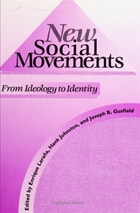
New Social Movements
From Ideology to Identityedited by Enrique Laraña, Hank Johnston and Joseph R. Gusfield
Temple University Press, 1994
Cultural changes over the past two decades have led to a proliferation of new social movements in Europe and the United States. New social movements such as ecology, peace, ethnicity, New Age philosophies, alternative medicine, and gender and sexual identity are among those that are emerging to challenge traditional categories in social movement theory. Synthesizing classic and modern perspectives the contributors help to redefine the field of social movements and advance an understanding of them through cross-cultural research, comparison with older movements, and an examination of the dimensions of identity—individual, collective, and melding of the two.