Results by title
135 books match the query 'Sociological aspects' and 4 start with n
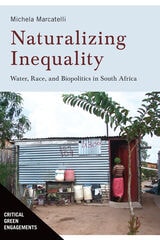
Naturalizing Inequality
Water, Race, and Biopolitics in South AfricaMichela Marcatelli
University of Arizona Press, 2021
Michela Marcatelli unravels this inequality paradox through an ethnography of water in a rural region of the country. The Waterberg Plateau is a space where agriculture, conservation, and extraction coexist and intersect. Marcatelli examines the connections between neoliberalism, race, and the environment by showing that racialized property relations around water and land are still recognized and protected by the post-apartheid state to sustain green growth. She argues that the government depicts growth as the best, if not only, solution to inequality. While white landowners maintain access to water, however, black ex-farmworkers are dispossessed once again of this essential-to-life resource.
If the promise of growth serves to normalize inequality, the call to save nature has the effect of naturalizing it even further.

Networks and Markets
James E. Rauch
Russell Sage Foundation, 2001

Nothing Happened
Charlotte Salomon and an Archive of SuicideDarcy C. Buerkle
University of Michigan Press, 2013
Charlotte Salomon's (1917-43) fantastical autobiography, Life? or Theater?, consists of 769 sequenced gouache paintings, through which the artist imagined the circumstances of the eight suicides in her family, all but one of them women. But Salomon's focus on suicide was not merely a familial idiosyncrasy. Nothing Happened argues that the social history of early-twentieth-century Germany has elided an important cultural and social phenomenon by not including the story of German Jewish women and suicide. This absence in social history mirrors an even larger gap in the intellectual history of deeply gendered suicide studies that have reproduced the notion of women's suicide as a rarity in history. Nothing Happened is a historiographic intervention that operates in conversation and in tension with contemporary theory about trauma and the reconstruction of emotion in history.
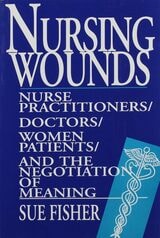
Nursing Wounds
Nurse Practitioners, Doctors, Women Patients, and the Negotiation of MeaningFisher, Sue
Rutgers University Press, 1995
The rise of the nurse practitioner as a new kind of health care professional has blurred the traditional distinction between physicians and nurses. Nurse practitioners argue that they combine both the traditionally male health care delivery of the M.D. and the traditionally female caring attention of the R.N. In her previous work Sue Fisher has analyzed the difficulties that women patients have in getting doctors to listen to their medical concerns. Now she asks whether women fare any better with nurse practitioners.
Nursing Wounds takes us into the examining rooms of nurse practitioners and doctors to listen to how health care professionals and women patients communicate. The nurse practitioners, unlike the doctors, go beyond the medical problem to ask about the social context of the patients' lives. In these exchanges the doctors insist on reinforcing both their professional status and dominant cultural assumptions about women. While the nurse practitioners sometimes do this, they also distance themselves from their professional identities, respond to their patients woman to woman, and undermine traditional understandings about gender arrangements.These differences have important consequences for the delivery of health care.
This compelling and complex analysis employs a range of theoretical perspectives–-from sociolinguistic to postmodern and materialist. Fisher concludes by urging a health care policy that capitalizes on the special strengths of nurse practitioners as providers of primary care who pay real attention to what their patients are saying and who support an alternative, even oppositional, understanding of women's lives.