Results by title
870 books match the query 'Sports & Recreation' and 24 start with n
NFL Football
A History of America's New National PastimeRichard C. Crepeau
University of Illinois Press, 2014
Probing and learned, NFL Football tells an epic American success story peopled by larger-than-life figures and driven by ambition, money, sweat, and dizzying social and technological changes.
NFL Football
A History of America's New National PastimeRichard C. Crepeau
University of Illinois Press, 2020
A multi-billion-dollar entertainment empire, the National Football League is a coast-to-coast obsession that borders on religion and dominates our sports-mad culture. But today's NFL also provides a stage for playing out important issues roiling American society.
The updated and expanded edition of NFL Football observes the league's centennial by following the NFL into the twenty-first century, where off-the-field concerns compete with touchdowns and goal line stands for headlines. Richard Crepeau delves into the history of the league and breaks down the new era with an in-depth look at the controversies and dramas swirling around pro football today:
- Tensions between players and Commissioner Roger Goodell over collusion, drug policies, and revenue;
- The firestorm surrounding Colin Kaepernick and protests of police violence and inequality;
- Andrew Luck and others choosing early retirement over the threat to their long-term health;
- Paul Tagliabue's role in covering up information on concussions;
- The Super Bowl's evolution into a national holiday.

National Greens
The Natures of Korean GolfRachael Miyung Joo
Duke University Press, 2027

Native Sons
Philadelphia Baseball PlayersRich Westcott
Temple University Press, 2003
•Goose Goslin (Salem, NJ)
•Del Ennis (Philadelphia)
•Mickey Vernon (Marcus Hook)
•Eddie Stanky (Philadelphia)
•Jimmy Dykes (Philadelphia)
•Buck Weaver (Pottstown)
•Roy Campanella (Philadelphia)
•Bucky Walters (Philadelphia)
•Herb Pennock (Kennett Square)
•Ray Narleski (Camden, NJ)
•Eddie Miksis (Burlington, NJ)
Net Results
Great Fishing Spots in Southern WisconsinBob Riepenhoff
University of Wisconsin Press, 2004
Includes contour maps of 54 lakes.
Never Ask "Why"
Football Players' Fight for Freedom in the NFLBy Ed Garvey; Edited by Chuck Cascio
Temple University Press, 2023
When pro football players formed a union to stand up against the NFL for their own interests, they chose lawyer Ed Garvey as their Executive Director. The NFL Players Association (NFLPA), would take on the NFL over player contracts, collective bargaining agreements, and antitrust suits. It lobbied for players’ free agency, contract rights, and impartial arbitration of disciplinary disputes. Garvey navigated strikes, lockouts, scabs, stooges, lies, as well as the sports media complex—to maintain players’ dignity. According to the league, the players were to take what they were given and “never ask why.”
In Never Ask “Why,” journalist Chuck Cascio presents the late Garvey’s rich account of the early years of the NFLPA, taking readers among the players as they held the league accountable to play fair. Learning from their mistakes, the NFLPA would succeed in curbing commissioner Pete Rozelle’s disciplinary power and striking down the Rozelle Rule’s absolute control over free agency.
Garvey tells the intimate stories of how pro football players, rivals on the field, rallied together to stand up for themselves. He worked tirelessly to change a system that exploited players and even controlled the media. In the end, Garvey shows how the NFLPA transformed the state of pro sports leagues today and how, even still, they work to keep down the players on whose backs they profit.
Never Easy, Never Pretty
A Fan, A City, A Championship SeasonDean Bartoli Smith
Temple University Press, 2013
When the Ravens won Super Bowl XLVII in New Orleans, it was a joyous moment for fans and team alike. For Dean Bartoli Smith, a lifelong Baltimore football fan and writer for The Baltimore Brew and Press Box, it was especially sweet. In Never Easy, Never Pretty, he recalls the ups and downs and ultimate thrills of a special season while also showing how a football team impacts its fans and its city. Smith recounts the season from start to glorious finish while interweaving Baltimore’s professional football history, telling his own story of growing up with the Colts, then gradually transferring adult loyalties to the new team in town, the Ravens. Family, friends, and other fans share their recollections, too, letting us see how a football team becomes part of a community.
Smith’s game-by-game recounting of an improbable season brings back all the excitement and uncertainty as the team starts strong, wobbles, then finds its inspiration and character in the playoffs. For each game Never Easy, Never Pretty features a diverse array of quotes, interviews, and commentary from players, broadcasters, and executives, including Joe Flacco, Ray Lewis, Art Donovan, Kevin Byrne, Steve Bisciotti, and Ozzie Newsome.
Never Easy, Never Pretty highlights the Ravens’ electrifying season and celebrates a team, a city, and its emotional landscape during an unlikely run to a Super Bowl victory. The result is an insightful and poignant book about much more than a championship season.
Never Easy, Never Pretty includes:
•The 4th & 29 play by Ray Rice against the Chargers
•
The game-saving first down
•
The 70-yard bomb from Joe Flacco to Jacoby Jones known as the “Mile High Miracle”
•Interviews with Rob Burnett, Keith Mills, Lenny Moore, Sean Landeta, Terrell Suggs, Tom Matte, and many others
•Photographs by long-time Ravens photographer Phil Hoffmann
New Jack Jocks
Rebels, Race, And The American AthleteLarry Platt
Temple University Press, 2003

New Jersey Parks, Forests, and Natural Areas
A GuideBrown, Michael P
Rutgers University Press, 2004
Want to know where in New Jersey you can go fossil hunting? How about cranberry harvesting? Perhaps you’d like to find the most accessible Garden State fishing areas for people with disabilities? Or maybe you’ve just been wondering how Double Trouble State Park got its name?
Now in its third edition, this updated guide—the first of its kind for New Jersey—lists over 250 parks, forests, and natural areas in the Garden State, from national, state, city, and county parks to nature preserves run by non-profit groups, arboretums, and undeveloped wildlife management areas. Wherever you live in New Jersey, you can find a beautiful place nearby for picnicking, hiking, camping, hunting, fishing, boating, and a host of other outdoor activities. All are open to the public, and most are free or charge only a small fee. Michael Brown divides the state into six regions along county lines and includes helpful maps, so outdoor enthusiasts can easily plan excursions.
For each park, the guide provides up-to-date, practical information about locations and phone numbers, fees, hours, seasons, acreage, regulations, handicap access, special facilities and activities, campsites, swimming and boat launching sites, restrooms, playgrounds and picnic sites, hunting and fishing, and hiking. Also included in this edition is broadened coverage of mountain biking and horseback riding.
New Orleans Sports
Playing Hard in the Big EasyThomas Aiello
University of Arkansas Press, 2019
Tracing that history from the early nineteenth century to the present, while also surveying the state of the city’s sports historiography, New Orleans Sports places sport in the context of race relations, politics, and civic and business development to expand that historiography—currently dominated by a text that stops at 1900—into the twentieth century, offering a modern examination of sports in the city.
New Way Of The Wilderness
The Classic Guide to Survival in the WildCalvin Rutstrum
University of Minnesota Press, 2000
The complete resource on backcountry camping from a legendary wilderness expert.
In this classic guide, first published in the late 1950s, Rutstrum covers the key elements of a successful camping trip: the proper way to build a raft, chop down a tree, construct a campsite, cook over a campfire, find a way through the woods, and much more. Drawing upon his vast experience in all kinds of weather, Rutstrum provides essential knowledge for every camper, in a lightweight volume perfect for the backpack.
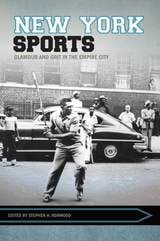
New York Sports
Glamour and Grit in the Empire CityStephen Norwood
University of Arkansas Press, 2018
New York has long been both America’s leading cultural center and its sports capital, with far more championship teams, intracity World Series, and major prizefights than any other city. Pro football’s “Greatest Game Ever Played” took place in New York, along with what was arguably history’s most significant boxing match, the 1938 title bout between Joe Louis and Max Schmeling. As the nation’s most crowded city, basketball proved to be an ideal sport, and for many years it was the site of the country’s most prestigious college basketball tournament. New York boasts storied stadiums, arenas, and gymnasiums and is the home of one of the world’s two leading marathons as well as the Belmont Stakes, the third event in horse racing’s Triple Crown.
New York sportswriters also wield national influence and have done much to connect sports to larger social and cultural issues, and the vitality and distinctiveness of New York’s street games, its ethnic institutions, and its sports-centered restaurants and drinking establishments all contribute to the city’s uniqueness.
New York Sports collects the work of fourteen leading sport historians, providing new insight into the social and cultural history of America’s major metropolis and of the United States. These writers address the topics of changing conceptions of manhood and violence, leisure and social class, urban night life and entertainment, women and athletics, ethnicity and assimilation, and more.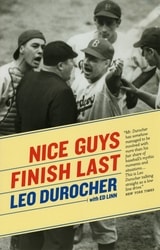
Nice Guys Finish Last
Leo Durocher with Ed Linn
University of Chicago Press, 2009
“I believe in rules. Sure I do. If there weren't any rules, how could you break them?”
The history of baseball is rife with colorful characters. But for sheer cantankerousness, fighting moxie, and will to win, very few have come close to Leo “the Lip” Durocher. Following a five-decade career as a player and manager for baseball’s most storied franchises, Durocher teamed up with veteran sportswriter Ed Linn to tell the story of his life in the game. The resulting book, Nice Guys Finish Last, is baseball at its best, brimming with personality and full of all the fights and feuds, triumphs and tricks that made Durocher such a success—and an outsized celebrity.
Durocher began his career inauspiciously, riding the bench for the powerhouse 1928 Yankees and hitting so poorly that Babe Ruth nicknamed him “the All-American Out.” But soon Durocher hit his stride: traded to St. Louis, he found his headlong play and never-say-die attitude a perfect fit with the rambunctious “Gashouse Gang” Cardinals. In 1939, he was named player-manager of the Brooklyn Dodgers—and almost instantly transformed the underachieving Bums into perennial contenders. He went on to manage the New York Giants, sharing the glory of one of the most famous moments in baseball history, Bobby Thomson’s “shot heard ’round the world,” which won the Giants the 1951 pennant. Durocher would later learn how it felt to be on the other side of such an unforgettable moment, as his 1969 Cubs, after holding first place for 105 days, blew a seemingly insurmountable 8-1/2-game lead to the Miracle Mets.
All the while, Durocher made as much noise off the field as on it. His perpetual feuds with players, owners, and league officials—not to mention his public associations with gamblers, riffraff, and Hollywood stars like George Raft and Larraine Day—kept his name in the headlines and spread his fame far beyond the confines of the diamond.
A no-holds-barred account of a singular figure, Nice Guys Finish Last brings the personalities and play-by-play of baseball’s greatest era to vivid life, earning a place on every baseball fan’s bookshelf.
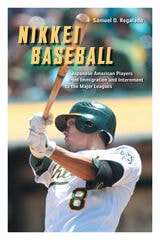
Nikkei Baseball
Japanese American Players from Immigration and Internment to the Major LeaguesSamuel Ragalado
University of Illinois Press, 2013
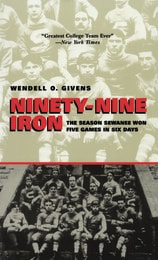
Ninety-Nine Iron
The Season Sewanee Won Five Games in Six DaysWendell Givens
University of Alabama Press, 2003
The fascinating story of the 1899 Sewanee football team’s remarkable, unassailable winning streak.
Ninety-Nine Iron is the story of the 1899 Sewanee football team. The University of the South, as it is formally called, is a small Episcopal college on Mounteagle Mountain in southeastern Tennessee. It is a respected academic institution not known for its athletic programs. But in that final year of the 19th century the Sewanee football team, led by captain “Diddy” Seibels, produced a record that is legendary.
In six days, on a grueling 2,500-mile train trip, the team defeated Texas, Texas A&M, Tulane, Louisiana State University, and Ole Miss—all much larger schools than Sewanee. In addition to this marathon of victory, the 21 members of the Sewanee Iron Men won all 12 of their regular games, and of their 12 opponents, only Auburn managed to score at all against them. Ten of these 12 victories were against Southern Intercollegiate Athletic Association opponents, which put Sewanee in the record books for most conference games played and most won in a season.
In Ninety-Nine Iron, Wendell Givens provides a play-by-play account of that remarkable season. He includes an overview of campus life at Sewanee and profiles of the players, the team’s coach (Billy Suter), the manager (Luke Lea), and the trainer (Cal Burrows). In the five years he researched the work, Givens conducted interviews with Seibels and visited the five cities in which the Iron Men had played—Austin, Houston, New Orleans, Baton Rouge, and Memphis. Givens has written a vivid account of a sports achievement not likely to be seen again.
No Boston Olympics
How and Why Smart Cities Are Passing on the TorchChris Dempsey and Andrew Zimbalist
University Press of New England, 2017
No Minor Accomplishment
The Revival of New Jersey Professional BaseballGolon, Bob
Rutgers University Press, 2008
In No Minor Accomplishment, sports historian and New Jersey native Bob Golon tells the story of the state's baseball scene since the Trenton Thunder arrived in 1994. Drawing on interviews with team owners and employees, industry executives and fans, Golon goes behind the scenes to show how maintaining a minor league ball club can be a risky business venture. Stadiums cost millions to build, and a team full of talented players does not immediately guarantee success. Instead, each of the eight minor league and independent professional teams in the state must tailor themselves to the communities in which they are situated. Shrewd marketing is necessary to attract fans, but Golon also explains how, unlike Major League Baseball, the business aspect of the minor and independent leagues is not something the average spectator notices. For the fans, baseball in New Jersey is wholesome, exciting family entertainment.
No Money, No Beer, No Pennants
The Cleveland Indians and Baseball in the Great DepressionScott H. Longert
Ohio University Press, 2016
The Cleveland Indians of 1928 were a far cry from the championship team of 1920. They had begun the decade as the best team in all of baseball, but over the following eight years, their owner died, the great Tris Speaker retired in the face of a looming scandal, and the franchise was in terrible shape. Seeing opportunity in the upheaval, Cleveland real estate mogul Alva Bradley purchased the ball club in 1927, infused it with cash, and filled its roster with star players such as Bob Feller, Earl Averill, and Hal Trosky. He aligned himself with civic leaders to push for a gigantic new stadium that—along with the team that played in it—would be the talk of the baseball world.
Then came the stock market crash of 1929. Municipal Stadium was built, despite the collapse of the industrial economy in Rust Belt cities, but the crowds did not follow. Always the shrewd businessman, Bradley had engineered a lease agreement with the city of Cleveland that included an out clause, and he exercised that option after the 1934 season, leaving the 80,000-seat, multimillion-dollar stadium without a tenant.
In No Money, No Beer, No Pennants, Scott H. Longert gives us a lively history of the ups and downs of a legendary team and its iconic players as they persevered through internal unrest and the turmoil of the Great Depression, pursuing a pennant that didn’t come until 1948. Illustrated with period photographs and filled with anecdotes of the great players, this book will delight fans of baseball and fans of Cleveland.
No Slam Dunk
Gender, Sport and the Unevenness of Social ChangeCooky, Cheryl
Rutgers University Press, 2018
The chapters in No Slam Dunk show that is this not simply a story of an “unfinished revolution.” Rather, they contend, it is simplistic optimism to assume that we are currently nearing the conclusion of a story of linear progress that ends with a certain future of equality and justice. This book provides important theoretical and empirical insights into the contemporary world of sports to help explain the unevenness of social change and how, despite significant progress, gender equality in sports has been “No Slam Dunk.”
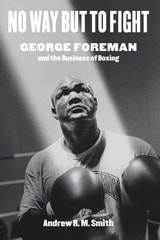
No Way but to Fight
George Foreman and the Business of BoxingBy Andrew R. M. Smith
University of Texas Press, 2020
Olympic gold medalist. Two-time world heavyweight champion. Hall of Famer. Infomercial and reality TV star. George Foreman’s fighting ability is matched only by his acumen for selling. Yet the complete story of Foreman’s rise from urban poverty to global celebrity has never been told until now.
Raised in Houston’s “Bloody Fifth” Ward, battling against scarcity in housing and food, young Foreman fought sometimes for survival and other times just for fun. But when a government program rescued him from poverty and introduced him to the sport of boxing, his life changed forever.
In No Way but to Fight, Andrew R. M. Smith traces Foreman’s life and career from the Great Migration to the Great Society, through the Cold War and culture wars, out of urban Houston and onto the world stage where he discovered that fame brought new challenges. Drawing on new interviews with George Foreman and declassified government documents, as well as more than fifty domestic and international newspapers and magazines, Smith brings to life the exhilarating story of a true American icon. No Way but to Fight is an epic worthy of a champion.
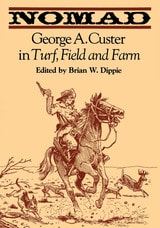
Nomad
George A. Custer in Turf, Field, and FarmEdited by Brian W. Dippie
University of Texas Press, 1980
Between 1867 and 1875, George Armstrong Custer contributed fifteen letters under the apt pseudonym Nomad to the New York-based sportsman's journal Turf, Field and Farm. Previously available only in a collector's typescript edition, the Nomad letters offer valuable insight into the character of the Boy General as he gives expression to his abiding love for hunting, horses, and hounds.
Vivid accounts of days in the field after buffalo and deer alternate with letters that attest to Custer's passion for Kentucky thoroughbreds and trotters and his devotion to his favorite hunting dogs. Moreover, the letters show Custer as a student of literature who constandy alluded to works of fiction and drama and who loved to quote poetry as he self-consciously honed his skills as a writer.
The Nomad letters also open the way to controversy since three of the letters written in 1867, as Brian Dippie's careful annotations make clear, offer a strikingly different account of Custer's ill-starred induction into Indian fighting than the accepted version recorded five years later in his memoirs, My Life on the Plains. Composed only a few months after the abortive Hancock Expedition that led to Custer's court-martial and suspension from rank and pay for one year, the Nomad letters are full of a passion and venom absent from My Life on the Plains. They provide an immediate response to the events of 1867 that will interest all students of the Western Indian wars and of Custer's fascinating career.
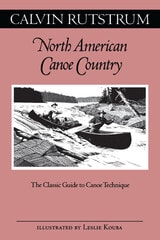
North American Canoe Country
The Classic Guide to Canoe TechniqueCalvin Rutstrum
University of Minnesota Press, 2000
The essential resource on how to canoe, now back in print.
Calvin Rutstrum’s fans have long known about his nuts-and-bolts approach to wilderness living. With this reissue of North American Canoe Country, a new generation of readers has the opportunity to learn time-tested secrets of a safe canoe adventure from a master outdoorsman.
First published in 1964, North American Canoe Country is a complete treatise on the art of canoeing. Written as a guide for travelers who want to embark on self-sufficient trips deep into the wilderness, this book offers readers all the information they need to plan and undertake a canoe trip. Rutstrum gives the essentials on canoes, comparing birch-bark, wood, wood-and-canvas, and aluminum crafts. His paddling techniques are timeless-he describes strategies for rough waters and rapids, for boating alone or in tandem, including stroke diagrams. Portaging, safety procedures, direction finding, towing, and much more are systematically explained.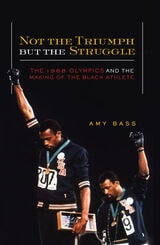
Not the Triumph But the Struggle
The 1968 Olympics and the Making of the Black AthleteAmy Bass
University of Minnesota Press, 2004
A sweeping look at black athletes through the lens of the black power protests at the Mexico City Olympics—now in paperback!
Jesse Owens. Muhammad Ali. Michael Jordan. Tiger Woods. All are iconic black athletes, as are Tommie Smith and John Carlos, the African American track and field medalists who raised black-gloved fists on the victory dais at the Mexico City Olympics and brought the roiling American racial politics of the late 1960s to a worldwide television audience. But few of those viewers fully realized what had led to this demonstration—events that included the assassination of Dr. Martin Luther King Jr., uprisings in American cities, student protests around the world, the rise of the Black Power movement, and decolonization and apartheid in Africa.
In this far-reaching account, Amy Bass offers nothing less than a history of the black athlete. Beginning with the racial eugenics discussions of the early twentieth century and their continuing reverberations in popular perceptions of black physical abilities, Bass explores ongoing African American attempts to challenge these stereotypes. Although Tommie Smith and John Carlos were reviled by Olympic officials for their demonstration, Bass traces how their protest has come to be the defining image of the 1968 Games, with lingering effects in the sports world and on American popular culture generally.
Notes on Fishing
Sergei Aksakov
Northwestern University Press, 1997