Results by title
828 books match the query 'Study and teaching' and 20 start with n
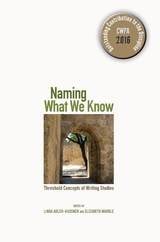
Naming What We Know
Threshold Concepts of Writing StudiesLinda Adler-Kassner
Utah State University Press, 2015
Naming What We Know examines the core principles of knowledge in the discipline of writing studies using the lens of “threshold concepts”—concepts that are critical for epistemological participation in a discipline. The first part of the book defines and describes thirty-seven threshold concepts of the discipline in entries written by some of the field’s most active researchers and teachers, all of whom participated in a collaborative wiki discussion guided by the editors. These entries are clear and accessible, written for an audience of writing scholars, students, and colleagues in other disciplines and policy makers outside the academy. Contributors describe the conceptual background of the field and the principles that run throughout practice, whether in research, teaching, assessment, or public work around writing. Chapters in the second part of the book describe the benefits and challenges of using threshold concepts in specific sites—first-year writing programs, WAC/WID programs, writing centers, writing majors—and for professional development to present this framework in action.
Naming What We Know opens a dialogue about the concepts that writing scholars and teachers agree are critical and about why those concepts should and do matter to people outside the field.
Narrating Their Lives
Examining English Language Teachers' Professional Identities within the ClassroomEdited by Lia Kamhi-Stein
University of Michigan Press, 2013
“…a groundbreaking book that will…engage, inform, and connect with present and future teachers and teacher educators.”
---Stephanie Vandrick, Foreword to Narrating Their Lives
The field of TESOL has called attention to the ways that the issues of race and ethnicity, language status and power, and cultural background affect second language learners’ identities and, to some degree, those of teachers. In Narrating Their Lives, Kamhi-Stein examines the process of identity construction of classroom teachers so as to make connections between their personal and professional identities and their instructional practices. To do that, she has selected six autobiographical narratives from teachers who were once part of her TESL 570 (Educational Sociolinguistics) class in the MA TESOL program at California State University, Los Angeles. These six narratives cover a surprisingly wide range of identity issues but also touch on broader instructional themes that are part of teacher education programs.
Because of the reflective nature of the narratives—with the teachers using their stories to better understand how their experiences shape what they do in the classroom—this volume includes provocative chapter-opening and reflective chapter-closing questions. An informative discussion of the autobiographical narrative assignment and the TESL 570 course (including supplemental course readings and assessment criteria) is also included.
National Healing
Race, State, and the Teaching of CompositionClaude Hurlbert
Utah State University Press, 2013
In National Healing, author Claude Hurlbert persuasively relates nationalism to institutional racism and contends that these are both symptoms of a national ill health afflicting American higher education and found even in the field of writing studies. Teachers and scholars, even in progressive fields like composition, are unwittingly at odds with their own most liberatory purposes, he says, and he advocates consciously broadening our understanding of rhetoric and writing instruction to include rhetorical traditions of non-Western cultures.
Threading a personal narrative of his own experiences as a student, professor, and citizen through a wide ranging discussion of theory, pedagogy, and philosophy in the writing classroom, Hurlbert weaves a vision that moves beyond simple polemic and simplistic multiculturalism. National Healing offers a compelling new aesthetic, epistemological, and rhetorical configuration.
Native Studies Keywords
Edited by Stephanie Nohelani Teves, Andrea Smith, and Michelle Raheja
University of Arizona Press, 2015
Take sovereignty, for example. The word has served as the battle cry for social justice in Indian Country. But what is the meaning of sovereignty? Native peoples with diverse political beliefs all might say they support sovereignty—without understanding fully the meaning and implications packed in the word.
The field of Native studies is filled with many such words whose meanings are presumed, rather than articulated or debated. Consequently, the foundational terms within Native studies always have multiple and conflicting meanings. These terms carry the colonial baggage that has accrued from centuries of contested words.
Native Studies Keywords is a genealogical project that looks at the history of words that claim to have no history. It is the first book to examine the foundational concepts of Native American studies, offering multiple perspectives and opening a critical new conversation.
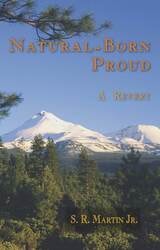
Natural-Born Proud
A ReveryS.R. Martin Jr.
Utah State University Press, 2010
A young man from Monterey and his younger brother go on their first deer hunt with their minister father and his friends. The setting is 1950s northern California, in country where, from the right height, one can see Mt. Shasta in one direction, Mt. Lassen in the other. It is a region of small, insular towns, and although it is a familiar hunting ground for the Reverend and his buddies, not everyone there welcomes black hunters. Father and son both shoulder their pride, and a racial confrontation seems inevitable.
Among the lessons young Satch learns is the sometime advantage of wit and spine. During their days in the wilderness, the brothers are initiated to the right practice of the hunt and camp and to the ribald talk, needling banter, camp tales, and occasional aggravation of sundry friends. Hunting has a primal nature, but as Satch sees, so may the variable interactions of men.
New Approaches to Interpreter Education
Cynthia B. Roy
Gallaudet University Press, 2006
The latest addition to the Interpreter Education series expands the tools available to instructors with six new, vital chapters on new curricula and creative teaching methods. Series editor Cynthia B. Roy leads the way by calling for the use of a discourse-oriented curriculum for educating interpreters. In the following chapter, Claudia Angelelli outlines the bottom-line principles for teaching effective health-care interpreting, postulating a model that depends upon the development of skills in six critical areas: cognitive-processing, interpersonal, linguistics, professional, setting-specific, and sociocultural. Risa Shaw, Steven D. Collins, and Melanie Metzger collaborate on describing the process for establishing a bachelor of arts program in interpreting at Gallaudet University distinct from the already existent masters program.
In the fourth chapter, Doug Bowen-Bailey describes how to apply theories of discourse-based interpreter education in specific contexts by producing customized videos. Jemina Napier blends three techniques for instructing signed language interpreters in Australia: synthesizing sign and spoken language interpreting curricula; integrating various interpreting concepts into a theoretical framework; and combining online and face-to-face instruction. Finally, Helen Slatyer delineates the use of an action research methodology to establish a curriculum for teaching ad hoc interpreters of languages used by small population segments in Australia.
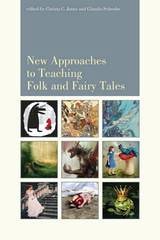
New Approaches to Teaching Folk and Fairy Tales
Christa Jones
Utah State University Press, 2016
This interdisciplinary collection introduces scholarly perspectives on how to teach fairy tales in a variety of courses and academic disciplines, including anthropology, creative writing, children’s literature, cultural studies, queer studies, film studies, linguistics, second language acquisition, translation studies, and women and gender studies, and points the way to other intermedial and intertextual approaches. Challenging the fairy-tale canon as represented by the Brothers Grimm, Charles Perrault, Hans Christian Andersen, and Walt Disney, contributors reveal an astonishingly diverse fairy-tale landscape.
The book offers instructors a plethora of fresh ideas, teaching materials, and outside-the-box teaching strategies for classroom use as well as new and adaptable pedagogical models that invite students to engage with class materials in intellectually stimulating ways. A cutting-edge volume that acknowledges the continued interest in university courses on fairy tales, New Approaches to Teaching Folk and Fairy Tales enables instructors to introduce their students to a new, critical understanding of the fairy tale as well as to a host of new tales, traditions, and adaptations in a range of media.
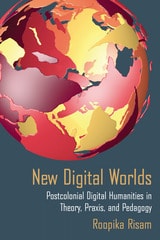
New Digital Worlds
Postcolonial Digital Humanities in Theory, Praxis, and PedagogyRoopika Risam
Northwestern University Press, 2019
New Digital Worlds traces the formation of postcolonial studies and digital humanities as fields, identifying how they can intervene in knowledge production in the digital age. Roopika Risam examines the role of colonial violence in the development of digital archives and the possibilities of postcolonial digital archives for resisting this violence. Offering a reading of the colonialist dimensions of global organizations for digital humanities research, she explores efforts to decenter these institutions by emphasizing the local practices that subtend global formations and pedagogical approaches that support this decentering. Last, Risam attends to human futures in new digital worlds, evaluating both how algorithms and natural language processing software used in digital humanities projects produce universalist notions of the "human" and also how to resist this phenomenon.
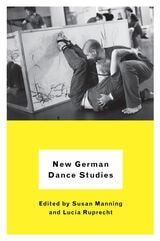
New German Dance Studies
Edited by Susan Manning and Lucia Ruprecht
University of Illinois Press, 2012
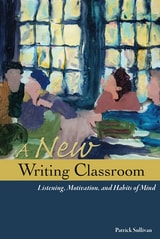
New Writing Classroom
Listening, Motivation, and Habits of MindPatrick Sullivan
Utah State University Press, 2014
In A New Writing Classroom, Patrick Sullivan provides a new generation of teachers a means and a rationale to reconceive their approach to teaching writing, calling into question the discipline's dependence on argument.
Including secondary writing teachers within his purview, Sullivan advocates a more diverse, exploratory, and flexible approach to writing activities in grades six through thirteen. A New Writing Classroom encourages teachers to pay more attention to research in learning theory, transfer of learning, international models for nurturing excellence in the classroom, and recent work in listening to teach students the sort of dialogic stance that leads to higher-order thinking and more sophisticated communication.
The conventional argumentative essay is often a simplistic form of argument, widely believed to be the most appropriate type of writing in English classes, but other kinds of writing may be more valuable to students and offer more important kinds of cognitive challenges. Focusing on listening and dispositions or "habits of mind” as central elements of this new composition pedagogy, A New Writing Classroom draws not just on composition studies but also on cognitive psychology, philosophy, learning theory, literature, and history, making an exciting and significant contribution to the field.
Nineteenth-Century Rhetoric in North America
Nan Johnson
Southern Illinois University Press, 1991
Johnson argues that nineteenth-century rhetoric was primarily synthetic, derived from the combination of classical elements and eighteenth-century belletristic and epistemological approaches to theory and practice. She reveals that nineteenth-century rhetoric supported several rhetorical arts, each conceived systematically from a similar theoretical foundation.

Nineteenth-Century Scottish Rhetoric
The American ConnectionWinifred Bryan Horner
Southern Illinois University Press, 1992
Winifred Bryan Horner argues that an understanding of the changes that occurred in the content of nineteenth-century courses in logic, rhetoric, and belles lettres taught in Scottish universities provides important critical insight into the development of the twentieth-century American composition course, as well as courses in English literature and critical theory.
Because of the inaccessibility of primary materials documenting the changes in courses taught at Scottish universities, the impression remains that the nineteenth century represents a break with the traditional school curriculum rather than a logical transition to a new focus of study. Horner has discovered that the notes of students who attended these classes—meticulously transcribed records of the lectures that professors dictated in lieu of printed texts—provide reliable documentation of the content of courses taught during the period. Using these records, Horner traces the evolution of current traditional composition, developed in the United States in the first part of the twentieth century, from courses taught in nineteenth-century, northern Scottish universities. She locates the beginning of courses in English literature and belletristic composition in the southern schools, particularly Edinburgh.
Horner’s study opens new vistas for the study of the evolution of university curricula, especially the never before acknowledged influence of belletristric rhetoric on the development of the North American composition course.

No Machos or Pop Stars
When the Leeds Art Experiment Went PunkGavin Butt
Duke University Press, 2022
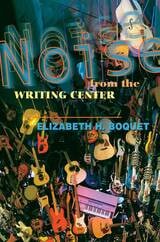
Noise From The Writing Center
Elizabeth H. Boquet
Utah State University Press, 2002
In Noise from the Writing Center, Boquet develops a theory of "noise" and excess as an important element of difference between the pedagogy of writing centers and the academy in general. Addressing administrative issues, Boquet strains against the bean-counting anxiety that seems to drive so much of writing center administration. Pedagogically, she urges a more courageous practice, developed via metaphors of music and improvisation, and argues for "noise," excess, and performance as uniquely appropriate to the education of writers and tutors in the center.
Personal, even irreverent in style, Boquet is also theoretically sophisticated, and she draws from an eclectic range of work in academic and popular culture-from Foucault to Attali to Jimi Hendrix. She includes, as well, the voices of writing center tutors with whom she conducted research, and she finds some of her most inspiring moments in the words and work of those tutors.
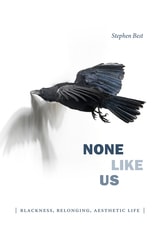
None Like Us
Blackness, Belonging, Aesthetic LifeStephen Best
Duke University Press, 2018
Notes on the Heart
Affective Issues in the Writing ClassroomSusan H. McLeod
Southern Illinois University Press, 1997
It has long been recognized that affect (that is, the noncognitive aspect of mental activity) plays a large role in writing and in learning to write. According to Susan H. McLeod, however, the model that has been most used for empirical research on the writing process is based on cognitive psychology and does not take into account affective phenomena. Nor does the social constructionist view of the writing process acknowledge the affective realm except in a very general way. To understand the complete picture, McLeod insists, we need to explore how cognitive, affective, and social elements interact as people write.
In this book, McLeod follows a group of students through a semester of writing assignments, tracking the students’ progress and examining the affective elements relevant to their writing. To facilitate future discussion of these phenomena, McLeod also provides suggested definitions for terms in the affective domain.
In a very real sense, this book is the result of a collaboration of three Susans: Susan McLeod, who researched and wrote the book; Sue Hallett, an instructor in Washington State University’s composition program whose classes McLeod observed and who helped provide much of the data; and Susan Parker, a graduate student who observed Hallett’s class and who ran a tutorial connected to that class. To provide a narrative structure, McLeod and her two collaborators have constructed a simulated semester, conflating the year and a half of the study into one semester and creating a class that is a composite drawn from seven classrooms over three semesters.
Although philosophers have had much to say about the affective domain, Notes on the Heart is based for the most part on research from the social sciences. Discussions of pedagogy, while meant to have practical value, are suggestive rather than prescriptive. The goal is to help teachers see their practice in new way.
Teachers will be particularly interested in McLeod’s discussion of teacher affect/effect. This section examines both the issue of the "Pygmalion effect" (students becoming better because the teacher believes they are) and perhaps the more common opposite, the "golem effect" (students becoming less capable because their teachers view them that way).
Nothing Begins with N
New Investigations of FreewritingEdited by Pat Belanoff, Peter Elbow, and Sheryl I. Fontaine
Southern Illinois University Press, 1991
The 16 essays in this book provide a theoretical underpinning for freewriting.
Sheryl I. Fontaine opens the book with a description of the organization, purpose, and content of students’ 10-minute unfocused freewriting.
Pat Belanoff discusses the relationship between skilled and unskilled student writers.
Richard H. Haswell analyzes forms of freewriting.
Lynn Hammond describes the focused freewriting strategies used in legal writing and in the analysis of poetry.
Joy Marsella and Thomas L. Hilgers suggest ways of teaching freewriting as a heuristic.
Diana George and Art Young show what teachers learned about the writing abilities of three engineering students through freewriting journals.
Anne E. Mullin seeks to determine whether freewriting lives up to claims made for it.
Barbara W. Cheshire assesses the efficacy of freewriting.
James W. Pennebaker checks the short- and long-term effects of freewriting on students’ emotional lives.
Ken Macrorie notes that freewriting means being freed to use certain powers.
Peter Elbow shows how authors use freewriting.
Robert Whitney tells "why I hate to freewrite."
Karen Ferro considers her own freewriting, showing how it leads to a deeper self-understanding.
Chris Anderson discusses the qualities in freewriting that we should maintain in revision.
Burton Hatlen shows the parallels between writing projective verse and freewriting.
Sheridan Blau describes the results of experiments with invisible writing.
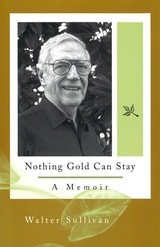
Nothing Gold Can Stay
A MemoirWalter Sullivan
University of Missouri Press, 2006
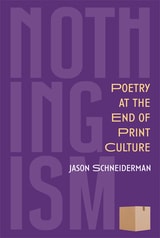
Nothingism
Poetry at the End of Print CultureJason Schneiderman
University of Michigan Press, 2025
In this collection, the essays range from blistering manifesto to deep historical dives to gentle classroom guidance to considerations of the poems of James Merrill and Agha Shahid Ali, moving between the theoretical and the practical. Nothingism is both deeply personal and highly erudite, providing an engaging and scholarly account of reading, writing, and teaching poetry as our world continues its unsupervised lurch toward digital culture.
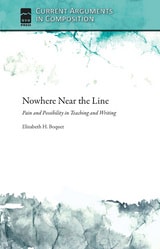
Nowhere Near the Line
Pain and Possibility in Teaching and WritingElizabeth H. Boquet
Utah State University Press, 2016
In this short work, Elizabeth Boquet explores the line Lawrence Schall describes above, tracing the overlaps and intersections of a lifelong education around guns and violence, as a student, a teacher, a feminist, a daughter, a wife, a citizen and across the dislocations and relocations that are part of a life lived in and around school. Weaving narratives of family, the university classroom and administration, her husband’s work as a police officer, and her work with students and the Poetry for Peace effort that her writing center sponsors in the local schools, she recounts her efforts to respond to moments of violence with a pedagogy of peace. “Can we not acknowledge that our experiences with pain anywhere should render us more, not less, capable of responding to it everywhere?” she asks. “Compassion, it seems to me, is an infinitely renewable resource.”