Results by title
1214 books match the query 'Subjects & Themes' and 33 start with n
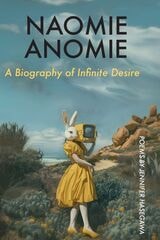
NAOMIE ANOMIE
A Biography of Infinite DesireJennifer Hasegawa
Omnidawn, 2025
Jennifer Hasegawa’s NAOMIE ANOMIE: A Biography of Infinite Desire, is an experimental poetic take on biography, growing increasingly surreal as it follows the truths behind its unreliable narrator through paradoxes rendered in luxurious detail. This book is a portrait of a flawed life, a call for attention to the looming ecological crisis, and a lyrical experiment in truth-telling.
Feeling ever-increasing existential strain leading up to the COVID-19 pandemic and culminating in her decision to no longer venture outside of her apartment, Naomie is not surprised to find her name is an anagram for anomie, a term for the breakdown of social norms. In these pages is a meticulous account of everything that went wrong in Naomie’s five decades of life. We find retellings of a life’s most significant moments—not because they are sources of pride, but because they stand as the only decipherable moments of humanity amid a world of static. This story in verse acts as a survival guide, romance novel, liberation handbook, pulp thriller, and jokebook for those who will live through ongoing plagues, environmental change, total AI integration, water wars, and cyberattacks and who will come out the other side ready to restart.
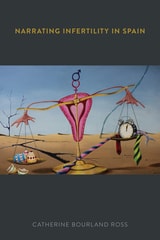
Narrating Infertility in Spain
Catherine Bourland Ross
Bucknell University Press, 2026
The drop in Spanish birth rates in 1998 to their lowest level of 1.1 births per woman was accompanied by a boom in publishing about motherhood. New narrative forms, ranging from blogs to diaries to comics, expressed women’s experiences, including ambivalence about motherhood in the face of societal pressures. Narrating Infertility in Spain, the first study of infertility in post-2008 female-authored texts, analyzes discussions of adoption, assisted reproduction, egg and sperm donation, and the decision not to have children due to economic or social instability. By examining the work of writers and vocal activists Silvia Nanclares, Raquel Sánchez-Silva, Samanta Villar, Laura Freixas, and Diana López Varela, Ross situates infertility in Spain within the cultural context of the Great Recession, while considering it as a business, a crisis, a stigma, and a class issue, and offering broader understandings of contemporary fertility challenges in Spain and beyond.
Published by Bucknell University Press. Distributed worldwide by Rutgers University Press.
Narrating Trauma
Victorian Novels and Modern Stress DisordersGretchen Braun
The Ohio State University Press, 2022
Narrative in the Anthropocene
Erin James
The Ohio State University Press, 2022
Natural Missouri
Working with the LandNapier Shelton
University of Missouri Press, 2005
Nature Fantasies
Decolonization and Biopolitics in Latin AmericaGabriel Horowitz
Bucknell University Press, 2024
In this original study, Gabriel Horowitz examines the work of select nineteenth- and twentieth-century Latin American writers through the lens of contemporary theoretical debates about nature, postcoloniality, and national identity. In the work of José Martí, Gertrudis Gómez de Avellaneda, Jorge Luis Borges, Augusto Roa Bastos, Cesar Aira, and others, he traces historical constructions of nature in regional intellectual traditions and texts as they inform political culture on the broader global stage. By investigating national literary discourses from Cuba, Argentina, and Paraguay, he identifies a common narrative thread that imagines the utopian wilderness of the New World as a symbolic site of independence from Spain. In these texts, Horowitz argues, an expressed desire to return to the nation’s foundational nature contributed to a movement away from political and social engagement and toward a “biopolitical state,” in which nature, traditionally seen as pre-political, conversely becomes its center.
Nature's Panorama
Thoreau on the SeasonsRonald A. Bosco
University of Massachusetts Press, 2005
Sponsored by the Thoreau Society, the brief, handsomely presented books in this series offer the thoughts of a great writer on a variety of topics, some that we readily associate with him, some that may be surprising. Each volume includes selections from his familiar published works as well as from less well known lectures, letters, and journal entries. The books include original engravings by renowned illustrator and book artist Barry Moser.
Negro Mountain
C. S. Giscombe
University of Chicago Press, 2023
In the final section of Negro Mountain, C. S. Giscombe writes, “Negro Mountain—the summit of which is the highest point in Pennsylvania—is a default, a way among others to think about the Commonwealth.” Named for an “incident” in which a Black man was killed while fighting on the side of white enslavers against Indigenous peoples in the eighteenth century, this mountain has a shadow presence throughout this collection; it appears, often indirectly, in accounts of visions, reimaginings of geography, testimonies about the “natural” world, and speculations and observations about race, sexuality, and monstrosity. These poems address location, but Giscombe—who worked for ten years in central Pennsylvania—understands location to be a practice, the continual “action of situating.”
The book weaves through the ranges of thinking that poetic voice itself might trouble. Addressing a gallery of figures, Giscombe probes their impurities and ambivalences as a way of examining what languages “count” or “don’t count” as poetry. Here, he finds that the idea of poetry is visionary, but also investigatory and exploratory.
Neon Nevada
Expanded EditionSheila Swan
University of Nevada Press, 2023
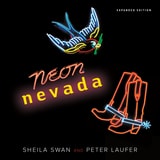
Sheila Swan and Peter Laufer take readers on a journey, not only along the Las Vegas Strip, but down quiet, two-lane rural roads punctuated occasionally by a neon sign—those glistening beacons that represent civilization in our vast Great Basin. The photographers’ stunning work captures the argon violets, krypton purples, helium golds, and xenon blues that glow amidst the nighttime desert sky.
The book makes clear that neon is not just a medium for casino advertising. The colorful images of cowboys and cowgirls, animals, desert landscapes, and countless other creative designs all illuminate an aspect of Americana—the neon sign—that helps define Nevada and its businesses, from bars and casinos to hardware stores, restaurants, motels, and theaters that line the streets of the Silver State’s cities and towns, and those rural areas that are barely a blip on the map. With a compelling blend of striking full-color photographs and fascinating historical commentary, the book celebrates an artform that wholly embraces the state’s unique personality.
First published in 1994, this newly updated and expanded edition of Neon Nevada explores the resurgence of this artform during the last decade, which has resulted in an appreciation of Nevada neon that is not likely to fade. Swan and Laufer’s project, this survey of neon, casts the new edition as a defining source for neon scholars and attracts neon aficionados to what can only be defined as a medium as distinctive and interesting as Nevada itself.
Networks of Improvement
Literature, Bodies, and Machines in the Industrial RevolutionJon Mee
University of Chicago Press, 2023
Working against the stubbornly persistent image of “dark satanic mills,” in many ways so characteristic of literary Romanticism, Jon Mee provides a fresh, revisionary account of the Industrial Revolution as a story of unintended consequences. In Networks of Improvement, Mee reads a wide range of texts—economic, medical, and more conventionally “literary”—with a focus on their circulation through networks and institutions. Mee shows how a project of enlightened liberal reform articulated in Britain’s emerging manufacturing towns led to unexpectedly coercive forms of machine productivity, a pattern that might be seen repeating in the digital technologies of our own time. Instead of treating the Industrial Revolution as Romanticism’s “other,” Mee shows how writing, practices, and institutions emanating from these industrial towns developed a new kind of knowledge economy, one where local literary and philosophical societies served as important transmission hubs for the circulation of knowledge.
New Brunswick, New Jersey
The Decline and Revitalization of Urban AmericaListokin, David
Rutgers University Press, 2016
New Deal Photographs of West Virginia, 1934-1943
Betty Rivard
West Virginia University Press, 2012
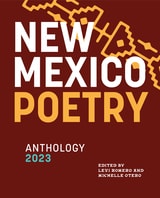
New Mexico Poetry Anthology 2023
Levi Romero
Museum of New Mexico Press, 2023
Best Poetry Books of 2023, Book Riot
“Poetry of Place: A selection of poems from the New Mexico Poetry Anthology 2023 defines the essence of the Land of Enchantment.” —New Mexico Magazine
“Many of the selections are published bilingually in Spanish-English translation and other languages including indigenous tongues and Yiddish are to be found in these pages. It’s all here: Farolitos. Sephardic Jewish rituals. Family traditions. Grief. Recovery. Resilience. Adobes. Santa Fe. Albuquerque. Taos. Los Lunas. Espanola. Mesilla. Cities, villages, ranches, farms. The homeless. Asylum-seekers. Outlaws. Dancers. Matanzas. Basketball. Mountains. Llanos. Guns. Syringes. Rattlesnakes. Scorpions. Roadrunners. Sandhill cranes. Coyotes. Cattle. Horses. Babies. Abuelitos. Ghosts. Elders. Gringas. Sunsets …. This grand book could come from nowhere else BUT New Mexico, and, arguably only from the present time, the third decade of this 21st century Southwestern/Norteño soul. It’s that special.”— Bill Nevins, Enchanted Circle
“The poems…can be enjoyed in brief, bite-sized readings or in longer sittings. Read them silently or aloud.”— David Steinberg, Albuquerque Journal
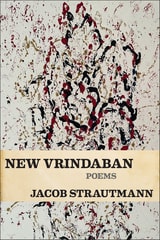
New Vrindaban
Jacob Strautmann
Four Way Books, 2024
New Vrindaban lives in the disputed territory between the past and present, between the idealistic hopes and complicated reality of creating a better world. An electrifying collision of uniquely Appalachian cultural forces, the formal division of poems into “Side One” and “Side Two” pay homage to the concept albums of 1970s garage rock, while the book’s title alludes to the intentional Hare Krishna community in West Virginia founded in the same era.
Jacob Strautmann’s latest collection builds an extraordinary temple on the compromised ground — it houses the compressed narratives of varied characters, monumentalizes the beautiful illusions of failed ideas, and remembers the irretrievable innocent love of youth. The music of New Vrindaban is both a ballad of survivor’s guilt and the raucous soundtrack of a record party among friends. It is the “black swift-moving waters,” “the bright clouds unmoored in the wind.”
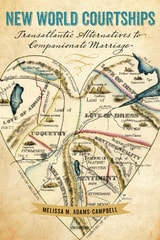
New World Courtships
Transatlantic Alternatives to Companionate MarriageMelissa M. Adams-Campbell
Dartmouth College Press, 2015
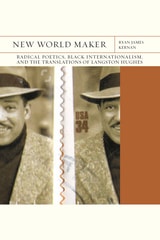
New World Maker
Radical Poetics, Black Internationalism, and the Translations of Langston HughesRyan James Kernan, foreword by Robin D. G. Kelley
Northwestern University Press, 2022
Through original research and close readings alert to the foreign prosody underlying Hughes’s work, New World Maker recuperates his political writing, which had been widely maligned by Cold War detractors and adherents of New Criticism, and affirms his place as a progenitor of African diasporic literature and within the pantheon of US modernists. Demonstrating the integral part translation played in Hughes’s creative process, this book challenges a number of common assumptions about this canonical thinker and offers important insights for scholars of African diasporic literature, comparative literature, and American, Caribbean, and translation studies.
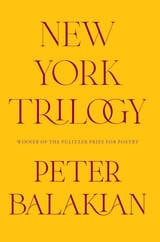
New York Trilogy
Peter Balakian
University of Chicago Press, 2025
In an inventive, elliptical language, New York Trilogy explores one man’s journey from the late 1960s to the twenty-first century, as he moves through a series of experiences centered in New York City and the surrounding New Jersey Palisades. Throughout this long poem in three parts, the protagonist’s life is impacted by historical events including the Armenian Genocide, the bombing of Hiroshima, the Vietnam War, the AIDS epidemic, the attacks of September 11th, the US war in Iraq, and the climate crisis.
Comprised of three multi-sequence poems originally included in Peter Balakian’s collections No Sign, Ozone Journal, and Ziggurat, the sections of New York Trilogy come together to form a poetry that embraces interior and aesthetic experiences, celebrates human intimacy, and bears witness to history. The historical power and psychological depth of Balakian’s work expands on the tradition of the American long poem with a lyrical narrative that weaves intimate personal moments into the vastness of shared history.
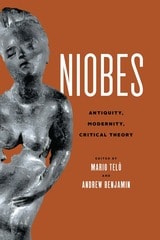
Niobes
Antiquity, Modernity, Critical TheoryEdited by Mario Telò and Andrew Benjamin
The Ohio State University Press, 2024
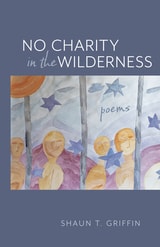
No Charity in the Wilderness
PoemsShaun T. Griffin
University of Nevada Press, 2024
Griffin has spent many decades in the high desert trying to find the way forward—when what he knows has been challenged and still there is breath on the horizon. One day an ancient Chinese poet comes to visit: "Snow deepens/ to quiet what I once believed, and Wang Wei stoops from the spine:/ this is how you become silence." Even if you doubt the old poet's counsel, like Griffin, you want to journey with him into the wilderness.
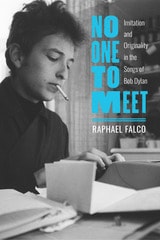
No One to Meet
Imitation and Originality in the Songs of Bob DylanRaphael Falco
University of Alabama Press, 2022
WINNER OF THE ELIZABETH AGEE PRIZE IN AMERICAN LITERATURE
A groundbreaking appreciation of Dylan as a literary practitioner.
The literary establishment tends to regard Bob Dylan as an intriguing, if baffling, outsider. That changed overnight when Dylan was awarded the 2016 Nobel Prize in Literature, challenging us to think of him as an integral part of our national and international literary heritage. No One to Meet: Imitation and Originality in the Songs of Bob Dylan places Dylan the artist within a long tradition of literary production and offers an innovative way to understand his unique and often controversial methods of composition.
Dylan expert Raphael Falco traces the similarities between the way Dylan borrows, digests, and transforms traditional songs and what Renaissance writers called imitatio. Although Dylan’s lyrical postures may suggest an avant-garde consciousness, No One to Meet shows that Dylan’s creative process creatively expands methods used by classical and Renaissance authors.
Drawing on numerous examples, including Dylan’s previously unseen manuscript excerpts and archival materials, Raphael Falco illuminates how the ancient process of poetic imitation, handed down from Greco-Roman antiquity, allows us to make sense of Dylan’s musical and lyrical technique. By placing Dylan firmly in the context of an age-old poetic practice, No One to Meet deepens our appreciation of Dylan’s songs and allows us to celebrate him as what he truly is: a great writer.
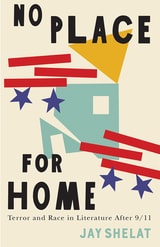
No Place for Home
Terror and Race in Literature After 9/11Jay Shelat
University of Minnesota Press, 2027
Exploring contemporary literature to expose how post-9/11 counterterror strategies are used to unhome families of color
More than a quarter of a century after 9/11, the global war on terror continues to rage in the name of homeland security. Through literature and archival research, Jay Shelat shows how war, Islamophobia, police brutality, and other state-sponsored legal and social maneuvers are used to revoke and control Brown and Black families and their belonging, and why the empire always starts at home.
By exploring insurgent narratives in fiction and poetry by writers of color such as Kamila Shamsie, N. K. Jemisin, and Dur e Aziz Amna, No Place for Home traces the long history of white supremacy infiltrating family life. Shelat expands this picture to include records, laws, brochures, executive orders, and other forms of documentation to illuminate how domesticity is posited as conditional—dependent on racial permission—in the United States. Woven through this nuanced exploration of radicalized violence in the US since the attacks are discussions of stubborn identity, queer kinship, and community organizing.
No Place for Home analyzes post-9/11 literature as a crucial informant for our understanding of how the war on terror has evolved into its current state. In doing so, Shelat charts a radical, healing way forward.
Retail e-book files for this title are screen-reader friendly with images accompanied by short alt text and/or extended descriptions.
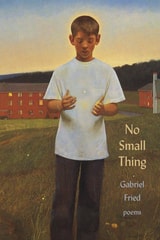
No Small Thing
Gabriel Fried
Four Way Books, 2025
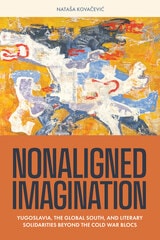
Nonaligned Imagination
Yugoslavia, the Global South, and Literary Solidarities Beyond the Cold War BlocsNataša Kovacevic
Northwestern University Press, 2026
Recovering the literary and intellectual history of anticolonial collaborations
Preoccupied with developing a multiethnic, postcolonial culture and seeking an alternative to Cold War–bloc politics, socialist Yugoslavia turned to the decolonizing countries of the Global South. It forged political, economic, and cultural links with postcolonial states and anticolonial liberation movements through the Non-Aligned Movement, of which it was a founding member in 1961. NAM spanned political and economic systems, uniting members in opposition to superpower politics and around policies of nuclear disarmament, active peaceful coexistence, anticolonialism, and respect for national sovereignty.
Nataša Kovačević reconstructs the forgotten literary and cultural history of this movement, tracing the development of new networks of intellectual engagement and cultural exchange between writers, journalists, and scholars who connected postwar Yugoslavia with 1950s India, 1960s Algeria and Guinea, 1970s Vietnam, and beyond. Nonaligned narratives attempted to reconfigure the understanding of the globe outside Eurocentric tropes and hegemonic political stratifications and to articulate Yugoslavs’ own internationalist sensibility. With Cold War–era rhetoric intensifying again in the twenty-first century, Nonaligned Imagination assumes the urgent task of unearthing a history of engaged writing and cultural diplomacy that imagined alternatives to superpower conflicts and a bipolar vision of the world.
Nonbinary Jane Austen
Chris Washington
University of Minnesota Press, 2025
A bold and provocative analysis of Jane Austen as an early gender abolitionist
Chris Washington reads Jane Austen differently than we have classically understood her: rather than the doyen of the cisheteronormative marriage plot, the author theorizes how Austen envisions a nonbinary future that traverses the two-sex model of gender that we can supposedly see solidifying in the eighteenth century. Instead, Washington argues, Austen leverages the generic restraints of the novel to write a disguised autofiction in which Austen imagines herself as transgender and works to abolish gender exclusivity altogether. In doing so, she establishes a politics that ushers in a future beyond the cisheteronormative binary, one built on plurality and possibility.
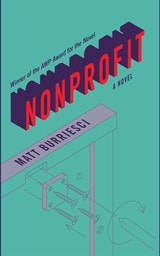
Nonprofit
Matt Burriesci
New Issues Poetry and Prose, 2015
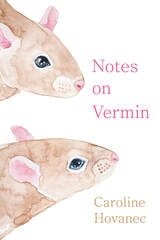
Notes on Vermin
Caroline Hovanec
University of Michigan Press, 2025
Notes on Vermin is an atlas of the literary vermin that appear in modern and contemporary literature, from Franz Kafka’s gigantic insect to Richard Wright’s city rats to Namwali Serpell’s storytelling mosquitoes. As parasites, trespassers, and collectives, vermin animals prove useful to writers who seek to represent life in the margins of power. Drawing on psychoanalysis, cultural studies, eco-Marxism, and biopolitics, this book explores four uses for literary vermin: as figures for the repressed thought, the uncommitted fugitive, the freeloading parasite, and the surplus life. In a series of short, accessible, interlinked essays, Notes on Vermin explores what animal pests can show us about our cultures, our environments, and ourselves.
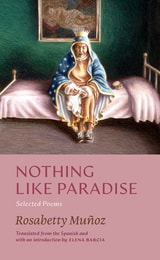
Nothing Like Paradise
Selected PoemsRosabetty Muñoz, Elena Barcia
Northwestern University Press, 2027
The first English-language translation of Rosabetty Muñoz’s vital and innovative poetry from across her extraordinary body of work
Rosabetty Muñoz is one of Chile’s most acclaimed and innovative contemporary poets. Her poems highlight the lives of girls and women on the islands of the Chilean archipelago, portraying the hardships they encounter in this often-overlooked region of the world. In this meticulous and compelling translation from Elena Barcia, Nothing Like Paradise offers a collection of selected works from across Muñoz’s oeuvre, offering a close look into the breadth and emotional intensity of her poetry.
These poems depict the wounds inflicted by the Pinochet dictatorship, foreign invasions, sexual exploitation, the incursions of global capitalism, and political exile. Renowned for her powerful use of multiple voices and striking images, Muñoz channels the thoughts and emotions of the islands’ female inhabitants, bringing immediacy and drama to their stories and transforming readers into their witnesses and confidants. Her poems invite us to confront pain and injustice with empathy and to turn understanding into a collective act of compassion and resistance.
Notorious Facts
Publicity in Romantic England, 1780–1830James Mulvihill
University of Delaware Press, 2012
Notorious Facts examines the sensationalistic confounding of persons and principles in the public life of Romantic England (1780–1830). Its purview is limited to five decades straddling the late eighteenth and early nineteenth centuries, but its trajectory, moving from a politics rendered in personal terms to a politics of personality, describes a shift still in process today. The study’s chapters draw on a motley body of literature (pamphlets, secret histories, and the like) that at first glance seems uncharacteristic of what literary historians call the English Romantic period. Viewed in the context of something called late Georgian England, these texts seem more indigenous, but if the canonical revisionism of the last few decades should teach us anything, it is that a Romanticism encompassing all romanticisms ideally excludes nothing.
In its heroic Enlightenment sense, publicity is concerned with exposing the workings of power for all to see. A good deal may be inferred about publicity in Romantic England from primary texts in which this salutary function is at once espoused and subverted. These texts—the mostly nameless or pseudonymous authors of the age’s pamphlet literature are the heroes and villains of the piece—almost invariably claim to speak from a disinterested conception of publicity while putting its methods of critical exposure to wholly self-interested purposes. This study examines well-known authors of the period like Jeremy Bentham, Samuel Taylor Coleridge, and William Hazlitt, as well as pamphleteers like John Horne Tooke, Philip Withers, and Nathaniel Jefferys. Other figures include authors of secret history like Thomas Ashe, Mary Anne Clarke, Lewis Goldsmith, and Joseph Haslewood in addition to notorious figures in their own right such as the Prince and Princess of Wales, Mrs. Fitzherbert, and the Reverend Edward Irving. Among the topics treated are treasonous libel, royal scandal, secret history, and celebrity.
Published by University of Delaware Press. Distributed worldwide by Rutgers University Press.

Now and Then
England 1970-2015Daniel Meadows
Bodleian Library Publishing, 2019
This book includes important work from Meadows’s groundbreaking projects, drawing on the archives now held at the Bodleian Library. It follows the maverick documentarian as he ran a free portrait studio in Manchester’s Moss Side in 1972 and then traveled 10,000 miles to make a national portrait from his converted double-decker, the Free Photographic Omnibus, a project he revisited a quarter-of-a-century later. The book goes on to show how, at the turn of the millennium, Meadows adopted new “kitchen table” technologies to make digital stories, which he dubbed “multimedia sonnets from the people.” Through the unique voices of his subjects, Meadows has made and continues to make moving and insightful commentaries on life in Britain.
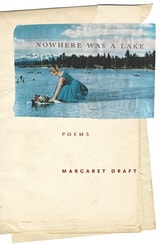
Nowhere Was a Lake
Margaret Draft
Four Way Books, 2024
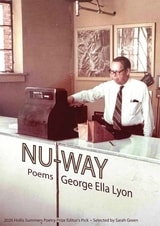
Nu-Way
PoemsGeorge Ella Lyon
Ohio University Press, 2027
Nu-Way traces the evolution of a writer from a three-year-old sitting on the counter of her daddy’s dry cleaner's to a fully developed poet. George Ella Lyon journeys from her role as the keeper of family stories to the teller of her own. This is a book of becoming, of claiming a self.
Growing up in the mountains of eastern Kentucky, near all four of her grandparents, Lyon was schooled in secrets and learned, of necessity, to keep her own. In Nu-Way, her sixth collection, she takes up both sides of the family tapestry: the scenes intentionally stitched and the tangle on the other side. This is not a process of power, but of inner transformation, of coming to terms with herself as well as the people who made her. It holds the tension of opposites—the individual and the collective—without sacrificing either. Highly sharable, Nu-Way will appeal to readers who often feel shut out of poetry.
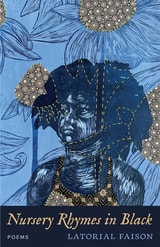
Nursery Rhymes in Black
PoemsLatorial Faison
University of Alaska Press, 2025
The collection highlights family, overcoming adversity, and endurance from the Black female perspective and celebrates the individuals and experiences that shape life and have catapulted the author into a unique existence. Narrative poems give voice to the Black Southern girlhood experience of being saved, nurtured, inspired, and even challenged by plight and circumstance. Strengthened by her experiences, Faison provides power, courage, and wisdom that resonate deeply. These poems walk in naked truth on a lyrical, musical tightrope as each brings wisdom and honesty in the intimacy of arranged words. Faison takes readers along the development of her own identity, considering stories of unsung heroes, the hands that feed us, the ancestors and traditions that form us, and the challenging ways that race, history, education, and culture intersect. With this spiritually moving collection, Faison joins all poets and writers who have come to prolifically amplify Black voices, to tell Black stories, to continue the Black literary tradition we have been gifted.
In these poems, Faison calls readers into poetic fellowship with the memories, the legacies, the truths of Black women in the South. There is reverence, history, and glory on these pages celebrating the hands, hearts, work, trouble, and ways of Black women and all the ways they teach, become, fascinate, struggle, survive, and exist in the world. Nursery Rhymes in Black lulls us—but not to sleep—rather, to wake up, to speak out, to take a stand, to advocate as we pause to remember, understand, and celebrate.
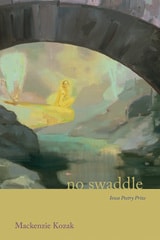
no swaddle
Mackenzie Kozak
University of Iowa Press, 2025
Brockman-Campbell Book Award for Poetry, Honorable Mention
Mackenzie Kozak examines the complex question of whether or not to bear children. Through a series of untitled American sonnets, the poems speak to themes of origin and desire, noting the shame that can accompany such a decision. Many poetry collections speak to the varied griefs of becoming a mother, losing a child, or being unable to have a child, but this collection gives specific voice to another grief that feels unspeakable: the possible conclusion of not wanting to be a mother.
no swaddle reads as a sort of meditation on theme, its repeated form mirroring the spiraling nature of indecision and reconsideration of the same major question alongside its continuous struggle to name. In the end, this grappling with elements of grief and shame becomes a way of moving toward greater agency and fulfillment.