Results by title
151 books match the query 'Tales' and 3 start with n
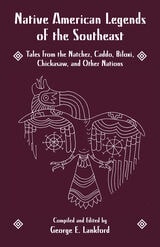
Native American Legends of the Southeast
Tales from the Natchez, Caddo, Biloxi, Chickasaw, and Other NationsGeorge E. Lankford
University of Alabama Press, 2011
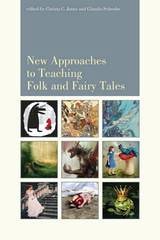
New Approaches to Teaching Folk and Fairy Tales
Christa Jones
Utah State University Press, 2016
This interdisciplinary collection introduces scholarly perspectives on how to teach fairy tales in a variety of courses and academic disciplines, including anthropology, creative writing, children’s literature, cultural studies, queer studies, film studies, linguistics, second language acquisition, translation studies, and women and gender studies, and points the way to other intermedial and intertextual approaches. Challenging the fairy-tale canon as represented by the Brothers Grimm, Charles Perrault, Hans Christian Andersen, and Walt Disney, contributors reveal an astonishingly diverse fairy-tale landscape.
The book offers instructors a plethora of fresh ideas, teaching materials, and outside-the-box teaching strategies for classroom use as well as new and adaptable pedagogical models that invite students to engage with class materials in intellectually stimulating ways. A cutting-edge volume that acknowledges the continued interest in university courses on fairy tales, New Approaches to Teaching Folk and Fairy Tales enables instructors to introduce their students to a new, critical understanding of the fairy tale as well as to a host of new tales, traditions, and adaptations in a range of media.
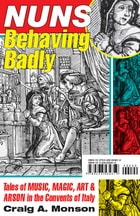
Nuns Behaving Badly
Tales of Music, Magic, Art, and Arson in the Convents of ItalyCraig A. Monson
University of Chicago Press, 2010
Witchcraft. Arson. Going AWOL. Some nuns in sixteenth- and seventeenth-century Italy strayed far from the paradigms of monastic life. Cloistered in convents, subjected to stifling hierarchy, repressed, and occasionally persecuted by their male superiors, these women circumvented authority in sometimes extraordinary ways. But tales of their transgressions have long been buried in the Vatican Secret Archive. That is, until now.
In Nuns Behaving Badly, Craig A. Monson resurrects forgotten tales and restores to life the long-silent voices of these cloistered heroines. Here we meet nuns who dared speak out about physical assault and sexual impropriety (some real, some imagined). Others were only guilty of misjudgment or defacing valuable artwork that offended their sensibilities. But what unites the women and their stories is the challenges they faced: these were women trying to find their way within the Catholicism of their day and through the strict limits it imposed on them. Monson introduces us to women who were occasionally desperate to flee cloistered life, as when an entire community conspired to torch their convent and be set free. But more often, he shows us nuns just trying to live their lives. When they were crossed—by powerful priests who claimed to know what was best for them—bad behavior could escalate from mere troublemaking to open confrontation.
In resurrecting these long-forgotten tales and trials, Monson also draws attention to the predicament of modern religious women, whose “misbehavior”—seeking ordination as priests or refusing to give up their endowments to pay for priestly wrongdoing in their own archdioceses—continues even today. The nuns of early modern Italy, Monson shows, set the standard for religious transgression in their own age—and beyond.