Results by title
270 books match the query 'Technology' and 3 start with n

Narrative Experiments
The Discursive Authority of Science and TechnologyGayle L. Ormiston and Raphael Sassower
University of Minnesota Press, 1989
Narrative Experiments was first published in 1989. Minnesota Archive Editions uses digital technology to make long-unavailable books once again accessible, and are published unaltered from the original University of Minnesota Press editions.
In Narrative Experiments, Gayle Ormiston and Ralph Sassower bring a refreshing perspective to the domains of inquiry we call "science" and "technology," asserting that traditional definitions (like classical idealism and materialism) fail to suggest the rich and complex cultural/linguistic interplay occurring between them. This context is not merely a background, nor is Ormiston and Sassower's just one more interdisciplinary approach to the subject. Instead, their book argues, science, technology, and the humanities developed in concert with one another, and their reciprocity obliterates all traditional disciplinary boundaries.
Ormiston and Sassower build their case by devoting a chapter to each of the four themes emerging from the etymological introduction. First, they look at the role fiction and other literary modes play in developing our attitudes toward science and technology -- how the visions of Bacon, Hobbes, Galileo, Rousseau, Mary Shelley, and Orwell evoke both anxiety and hope. Next, they examine a series of eighteenth-century "fictions" -- the Enlightenment texts of Kant, Rousseau, and Hume -- and the elevated (but ambiguous) status science and technology associated with them. The last two chapters evaluate modes of discursive authority and its dissemination -- classical and modern extralinguistic approaches; the contemporary-linguistic view espoused by Rorty, Quine, and others; and their own avowedly experimental journey through the labyrinths of cultural and linguistic usage.
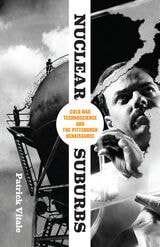
Nuclear Suburbs
Cold War Technoscience and the Pittsburgh RenaissancePatrick Vitale
University of Minnesota Press, 2021
From submarines to the suburbs—the remaking of Pittsburgh during the Cold War
During the early Cold War, research facilities became ubiquitous features of suburbs across the United States. Pittsburgh’s eastern and southern suburbs hosted a constellation of such facilities that became the world’s leading center for the development of nuclear reactors for naval vessels and power plants. The segregated communities that surrounded these laboratories housed one of the largest concentrations of nuclear engineers and scientists on earth. In Nuclear Suburbs, Patrick Vitale uncovers how the suburbs shaped the everyday lives of these technology workers.
Using oral histories, Vitale follows nuclear engineers and scientists throughout and beyond the Pittsburgh region to understand how the politics of technoscience and the Cold War were embedded in daily life. At the same time that research facilities moved to Pittsburgh’s suburbs, a coalition of business and political elites began an aggressive effort, called the Pittsburgh Renaissance, to renew the region. For Pittsburgh’s elite, laboratories and researchers became important symbols of the new Pittsburgh and its postindustrial economy. Nuclear Suburbs exposes how this coalition enrolled technology workers as allies in their remaking of the city.
Offering lessons for the present day, Nuclear Suburbs shows how race, class, gender, and the production of urban and suburban space are fundamental to technoscientific networks, and explains how the “renewal” of industrial regions into centers of the tech economy is rooted in violence and injustice.
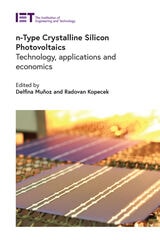
n-Type Crystalline Silicon Photovoltaics
Technology, applications and economicsDelfina Muñoz
The Institution of Engineering and Technology, 2022