Results by title
134 books match the query 'Transformation' and 2 start with n
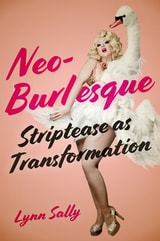
Neo-Burlesque
Striptease as TransformationLynn Sally
Rutgers University Press, 2022
Performance studies scholar and acclaimed burlesque artist Lynn Sally offers an inside look at the history, culture, and philosophy of New York’s neo-burlesque scene. Revealing how twenty-first century neo-burlesque is in constant dialogue with the classic burlesque of the nineteenth and twentieth centuries, she considers how today’s performers use camp to comment on preconceived notions of femininity. She also explores how the striptease performer directs the audience’s gaze, putting on layers of meaning while taking off layers of clothing.
Through detailed profiles of iconic neo-burlesque performers such as Dita Von Teese, Dirty Martini, Julie Atlas Muz, and World Famous *BOB*, this book makes the case for understanding neo-burlesque as a new sexual revolution. Yet it also examines the broader community of “Pro-Am” performers who use neo-burlesque as a liberating vehicle for self-expression. Raising important questions about what feminism looks like, Neo-Burlesque celebrates a revolutionary performing art and participatory culture whose acts have political reverberations, both onstage and off.
Nineteenth-Century Geographies
The Transformation of Space from the Victorian Age to the American CenturyThomas, Ronald R
Rutgers University Press, 2002
The nineteenth century was a time of unprecedented discovery and exploration throughout the globe, a period when the “blank spaces” of the earth were systematically investigated, occupied, and exploited by the major imperial powers of Western Europe and the United States. The lived experience of space was also changing in dramatic ways for people as a result of new developments in technology, communication, and transportation. As a result, the century was characterized by a new and intense interest in place, both local and global.
The collection is comprised of seventeen essays from various disciplines organized into four areas of geographic concern. The first, “Time Zones,” examines several ways that place gets expressed as time during the period, how geography becomes history. A second grouping, “Commodities and Exchanges,” explores the role of geographic origin as it was embodied in particular objects, from the souvenir map to imported tea. The set of essays on “Domestic Fronts” moves the discussion from the public to the private sphere by looking at how domestic space became defined in terms of its boundary with the foreign. The final section, “Orientations,” takes up the changing relations of bodies, identities, and the spaces they inhabit and through which they moved. The collection as a whole also traces the development of the discipline of geography with its different institutional and political trajectories in the United States and Great Britain.