Results by title
141 books match the query 'Twentieth Century' and 4 start with n
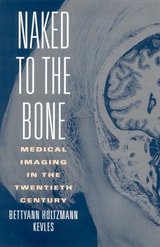
Naked to the Bone
Medical Imaging in the Twentieth CenturyKevles, Bettyann Holtzman
Rutgers University Press, 1996
X-rays, fluoroscopy, ultrasound, CT, MRI, and PET scans--medical imaging has become a familiar part of modern health care today. A century ago, however, the idea of looking inside the living body seemed absurd. Wilhelm Roentgen's X-ray image of his wife's shadowy hand--with her wedding band "floating" around a white bone--convinced doctors to rush the new tool into use for diagnosis and treatment.
By the 1920s, the technology was a commonplace wonder: army recruits had routinely lined up for chest X-rays during World War I, and children delighted in seeing the bones of their feet in the green glow of shoestore fluoroscopes. By the late 1960s, the computer and television were linked to produce medical images that were as startling as Roentgen's original X-rays. Computerized tomography (CT) and magnetic resonance imaging (MR) made it possible to picture soft tissues invisible to ordinary X-rays. Ultrasound allowed expectant parents to see their unborn children. Positron emission tomography (PET) enabled neuroscientists to map the brain.
In this lively history of medical imaging, the first to cover the full scope of the field from X-rays to MR-assistant surgery, Bettyann Kevles explores the consequences of these developments for medicine and society. Through lucid prose, vivid anecdotes, and more than seventy striking illustrations, she shows how medical imaging has transformed the practice of medicine--from pediatrics to dentistry, neurosurgery to geriatrics, gynecology to oncology.
Despite their formidable power to reveal the inner secrets of the body, no form of medical imaging can claim to be the product of a technological imperative. As Kevles points out, few of these costly inventions made it easily to the marketplace, and all are vulnerable to the changing economics of the health-care system. In the early years of X-rays, many doctors, technicians, and patients died from overexposure to the invisible radiation. Although we may still find delayed repercussions from these newer technologies, a different kind of danger may lie in our conviction that an early diagnosis is equivalent to a cure.
Beyond medicine, Kevles describes how X-rays and the newer technologies have become part of the texture of modern life and culture. They helped undermine Victorian sexual sensibilities, gave courts new forensic tools, provided plots for novels and movies, and offered artists from Picasso to Warhol new ways to depict the human form.
Naked to the Bone offers readers an unparalled picture of a key technology of the twentieth century.
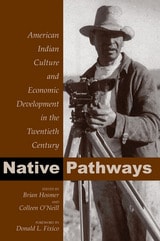
Native Pathways
American Indian Culture and Economic Development in the Twentieth CenturyBrian Hosmer
University Press of Colorado, 2004
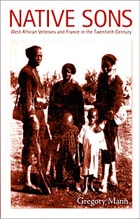
Native Sons
West African Veterans and France in the Twentieth CenturyGregory Mann
Duke University Press, 2006
Focusing on the period between World War I and 1968, Mann draws on archival research and extensive interviews with surviving Malian veterans of French wars to explore the experiences of the African soldiers. He describes the effects their long absences and infrequent homecomings had on these men and their communities, he considers the veterans’ status within contemporary Malian society, and he examines their efforts to claim recognition and pensions from France. Mann contends that Mali is as much a postslavery society as it is a postcolonial one, and that specific ideas about reciprocity, mutual obligation, and uneven exchange that had developed during the era of slavery remain influential today, informing Malians’ conviction that France owes them a “blood debt” for the military service of African soldiers in French wars.
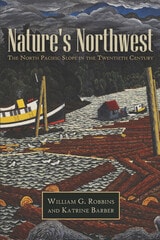
Nature's Northwest
The North Pacific Slope in the Twentieth CenturyWilliam G. Robbins and Katrine Barber
University of Arizona Press, 2011
With an emphasis on the region’s political economy, its environmental history, and its cultural and social heritage, this lively and colorful history of the Pacific Northwest—defined here as Oregon, Washington, Idaho, Montana, and southern British Columbia—places the narrative of this dynamic region within a national and international context.
Embracing both Canadian and American stories in looking at the larger region, renowned historians William Robbins and Katrine Barber offer us a fascinating regional history through the lens of both the environment and society. Understanding the physical landscape of the greater Pacific Northwest—and the watersheds of the Columbia, Fraser, Snake, and Klamath rivers—sets the stage for understanding the development of the area. Examining how this landscape spawned sawmills, fish canneries, railroads, logging camps, agriculture, and shared immigrant and ethnic traditions reveals an intricate portrait of the twentieth-century Northwest.
Impressive in its synthesis of myriad historical facts, this first-rate regional history will be of interest to historians studying the region from a variety of perspectives and an informative read for anyone fascinated by the story of a landscape rich in diversity, natural resources, and Native culture.