Results by title
97 books match the query 'Urbanization' and 4 start with n

Nagara and Commandery
Origins of the Southeast Asian Urban TraditionsPaul Wheatley
University of Chicago Press, 1983
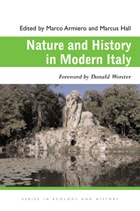
Nature and History in Modern Italy
Marco Armiero
Ohio University Press, 2010
Is Italy il bel paese—the beautiful country—where tourists spend their vacations looking for art, history, and scenery? Or is it a land whose beauty has been cursed by humanity’s greed and nature’s cruelty? The answer is largely a matter of narrative and the narrator’s vision of Italy. The fifteen essays in Nature and History in Modern Italy investigate that nation’s long experience in managing domesxadtixadcated rather than wild natures and offer insight into these conflicting visions. Italians shaped their land in the most literal sense, producing the landscape, sculpting its heritage, embedding memory in nature, and rendering the two different visions inseparxadable. The interplay of Italy’s rich human history and its dramatic natural diversity is a subject with broad appeal to a wide range of readers.
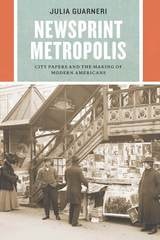
Newsprint Metropolis
City Papers and the Making of Modern AmericansJulia Guarneri
University of Chicago Press, 2017
At the turn of the twentieth century, ambitious publishers like Joseph Pulitzer, William Randolph Hearst, and Robert McCormick produced the most spectacular newspapers Americans had ever read. Alongside current events and classified ads, publishers began running comic strips, sports sections, women’s pages, and Sunday magazines. Newspapers’ lavish illustrations, colorful dialogue, and sensational stories seemed to reproduce city life on the page.
Yet as Julia Guarneri reveals, newspapers did not simply report on cities; they also helped to build them. Metropolitan sections and civic campaigns crafted cohesive identities for sprawling metropolises. Real estate sections boosted the suburbs, expanding metropolitan areas while maintaining cities’ roles as economic and information hubs. Advice columns and advertisements helped assimilate migrants and immigrants to a class-conscious, consumerist, and cosmopolitan urban culture.
Newsprint Metropolis offers a tour of American newspapers in their most creative and vital decades. It traces newspapers’ evolution into highly commercial, mass-produced media, and assesses what was gained and lost as national syndicates began providing more of Americans’ news. Case studies of Philadelphia, New York, Chicago, and Milwaukee illuminate the intertwined histories of newspapers and the cities they served. In an era when the American press is under attack, Newsprint Metropolis reminds us how papers once hosted public conversations and nurtured collective identities in cities across America.
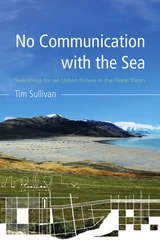
No Communication with the Sea
Searching for an Urban Future in the Great BasinTim Sullivan
University of Arizona Press, 2010
No Communication with the Sea is a journey through this urbanizing Great Basin landscape. Here, the land fosters illusions of limitless space and resources, but its space and resources are severely limited; its people live clustered in cities but are often reluctant to embrace urbanity. These tensions led journalist and urban planner Tim Sullivan to explore the developing centers and edges of the Great Basin cities and the ways some are trying to build livable and sustainable urban environments.
In this highly readable book of creative nonfiction, Sullivan employs a variety of methods—including interviews, research, travelogues, and narrative—to survey the harsh landscape for clues to the ways cities can adapt to their geography, topography, ecology, hydrography, history, and culture. No Communication with the Sea embarks on a quest for a livable future for the heart of the interior West. In the process, it both unearths the past and ponders the present and future Great Basin cities.