22279 books match the query 'Social Science' and 509 start with n
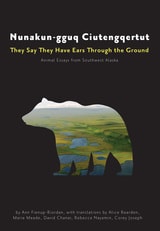
cover of Nunakun-gguq Ciutengqertut/They Say They Have Ears Through the Ground: Animal Essays from Southwest Alaska

Nunakun-gguq Ciutengqertut/They Say They Have Ears Through the Ground

Animal Essays from Southwest Alaska

Ann Fienup-Riordan

University of Alaska Press, 2020
Lifeways in Southwest Alaska today remains inextricably bound to the seasonal cycles of sea and land. Community members continue to hunt, fish, and make products from the life found in the rivers and sea. Based on a wealth of oral histories collected over decades of research, this book explores the ancestral relationship between Yup’ik people and the natural world of Southwest Alaska. Nunakun-gguq Ciutengqertut studies the overlapping lives of the Yup’ik with native plants, animals, and birds, and traces how these relationships transform as more Yup’ik people relocate to urban areas and with the changing environment. The book will be hailed as a milestone work in the anthropological study of contemporary Alaska.
[more]
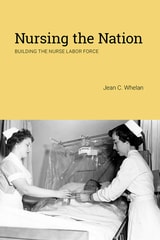
cover of Nursing the Nation: Building the Nurse Labor Force

Nursing the Nation

Building the Nurse Labor Force

Jean C. Whelan

Rutgers University Press, 2021
.
[more]
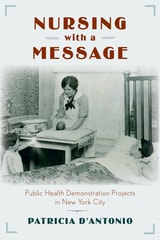
cover of Nursing with a Message: Public Health Demonstration Projects in New York City

Nursing with a Message

Public Health Demonstration Projects in New York City

D'Antonio, Patricia

Rutgers University Press, 2017

Mandated by the Affordable Care Act, public health demonstration projects have been touted as an innovative solution to the nation’s health care crisis. Yet, such projects actually have a long but little-known history, dating back to the 1920s. This groundbreaking new book reveals the key role that these local health programs—and the nurses who ran them—influenced how Americans perceived both their personal health choices and the well-being of their communities. 
 
Nursing with a Message transports readers to New York City in the 1920s and 1930s, charting the rise and fall of two community health centers, in the neighborhoods of East Harlem and Bellevue-Yorkville. Award-winning historian Patricia D’Antonio examines the day-to-day operations of these clinics, as well as the community outreach work done by nurses who visited schools, churches, and homes encouraging neighborhood residents to adopt healthier lifestyles, engage with preventive physical exams, and see to the health of their preschool children. As she reveals, these programs relied upon an often-contentious and fragile alliance between various healthcare providers, educators, social workers, and funding agencies, both public and private. Assessing both the successes and failures of these public health demonstration projects, D’Antonio also traces their legacy in shaping both the best and worst elements of today’s primary care system. 

This book is also freely available online as an open access digital edition.
Download the open access ebook here.
 
[more]
cover of Nurturing Dads: Fatherhood Initiatives Beyond the Wallet

Nurturing Dads

Fatherhood Initiatives Beyond the Wallet

William Marsiglio

Russell Sage Foundation, 2012

American fathers are a highly diverse group, but the breadwinning, live-in, biological dad prevails as the fatherhood ideal. Consequently, policymakers continue to emphasize marriage and residency over initiatives that might help foster healthy father-child relationships and creative co-parenting regardless of marital or residential status. In Nurturing Dads, William Marsiglio and Kevin Roy explore the ways new initiatives can address the social, cultural, and economic challenges men face in contemporary families and foster more meaningful engagement between many different kinds of fathers and their children. What makes a good father? The firsthand accounts in Nurturing Dads show that the answer to this question varies widely and in ways that counter the mainstream "provide and reside" model of fatherhood. Marsiglio and Roy document the personal experiences of more than 300 men from a wide range of socioeconomic backgrounds and diverse settings, including fathers-to-be, young adult fathers, middle-class dads, stepfathers, men with multiple children in separate families, and fathers in correctional facilities. They find that most dads express the desire to have strong, close relationships with their children and to develop the nurturing skills to maintain these bonds. But they also find that disadvantaged fathers, including young dads and those in constrained financial and personal circumstances, confront myriad structural obstacles, such as poverty, inadequate education, and poor job opportunities. Nurturing Dads asserts that society should help fathers become more committed and attentive caregivers and that federal and state agencies, work sites, grassroots advocacy groups, and the media all have roles to play. Recent efforts to introduce state-initiated paternity leave should be coupled with social programs that encourage fathers to develop unconditional commitments to children, to co-parent with mothers, to establish partnerships with their children's other caregivers, and to develop parenting skills and resources before becoming fathers via activities like volunteering and mentoring kids. Ultimately, Marsiglio and Roy argue, such combined strategies would not only change the policy landscape to promote engaged fathering but also change the cultural landscape to view nurturance as a fundamental aspect of good fathering. Care is a human experience—not just a woman's responsibility—and this core idea behind Nurturing Dads holds important implications for how society supports its families and defines manhood. The book promotes the progressive notion that fathers should provide more than financial support and, in the process, bring about a better start in life for their children. A Volume in the American Sociological Association's Rose Series in Sociology
[more]
cover of Nurturing Doubt: From Mennonite Missionary to Anthropologist in the Argentine Chaco

Nurturing Doubt

From Mennonite Missionary to Anthropologist in the Argentine Chaco

Elmer S. Miller

University of Illinois Press, 1995
Unique in ethnography, Nurturing Doubt documents the transforming effects of field experiences on a young Mennonite who went to Argentina to work with the Toba, first as a missionary and later as an anthropologist. Elmer Miller insightfully probes the documents--diaries, field journals, and letters--of both his lives, revealing as he does the ways in which his perceptions of the Toba--and theirs of him--changed when his role changed. Deeply affected by an upbringing in which he had been taught that doubting was "sinful," Miller gradually found that he doubted not only the validity of the missionary mandate but also his ethnographic mandate and the whole practice of anthropology. His exploration of how his doubt was transformed from a negative activity into a positive philosophical attitude underscores the richness of his relationships with the Toba. In depicting the move from theological to anthropological discourse, Miller contributes to current debates over the form and purpose of ethnographic investigation and reporting.
 
 
[more]
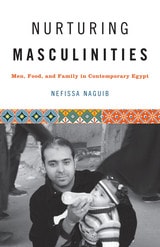
cover of Nurturing Masculinities: Men, Food, and Family in Contemporary Egypt

Nurturing Masculinities

Men, Food, and Family in Contemporary Egypt

By Nefissa Naguib

University of Texas Press, 2015

Two structuring concepts have predominated in discussions concerning how Middle Eastern men enact their identity culturally: domination and patriarchy. Nurturing Masculinities dispels the illusion that Arab men can be adequately represented when we speak of them only in these terms. By bringing male perspectives into food studies, which typically focus on the roles of women in the production and distribution of food, Nefissa Naguib demonstrates how men interact with food, in both political and domestic spheres, and how these interactions reflect important notions of masculinity in modern Egypt.

In this classic ethnography, narratives about men from a broad range of educational backgrounds, age groups, and social classes capture a holistic representation of masculine identity and food in modern Egypt on familial, local, and national levels. These narratives encompass a broad range of issues and experiences, including explorations of traditions surrounding food culture; displays of caregiving and love when men recollect the taste, feel, and fragrance of food as they discuss their desires to feed their families well and often; and the role that men, working to ensure the equitable distribution of food, played during the Islamist movement of the Muslim Brotherhood in 2011. At the core of Nurturing Masculinities is the idea that food is a powerful marker of manhood, fatherhood, and family structure in contemporary Egypt, and by better understanding these foodways, we can better understand contemporary Egyptian society as a whole.
[more]
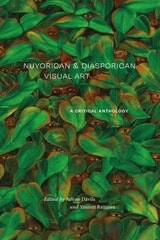
cover of Nuyorican and Diasporican Visual Art: A Critical Anthology

Nuyorican and Diasporican Visual Art

A Critical Anthology

Arlene Dávila and Yasmin Ramirez, editors

Duke University Press, 2025

Although Puerto Rican artists have always been central figures in contemporary American and international art worlds, they have largely gone unrecognized and been excluded from art history canons. Nuyorican and Diasporican Visual Art provides a critical survey of Puerto Rican art production in the United States from the 1960s to the present. The contributors assert the importance and contemporaneity of the Nuyorican art movement by tracing its emergence alongside other American vanguardist movements, highlighting its innovations, and exploring it as an expression of Puerto Rican culture beyond New York to include cities such as Chicago, Philadelphia, and Orlando. They also foreground the contributions and radical aesthetics of female, Black, and queer Puerto Rican artists. Following the expansion and decentralization of the Puerto Rican diaspora and its artistic output, this volume is a call to action for scholars, curators, and artists to address the historical inequalities that have marginalized Diasporican artists and reassess the presence of Puerto Rican artists.

With: Néstor David Pastor, Gabriel Magraner, and Nikki Myers

Contributors. Joseph Anthony Cáceres, Taína Caragol, Arnaldo M. Cruz-Malavé, Deborah Cullen-Morales, Arlene Dávila, Kerry Doran, Elizabeth Ferrer, Yomaira C. Figueroa-Vásquez, Al Hoyos-Twomey, Teréz Iacovino, Johnny Irizarry, Johana Londoño, Urayoán Noel, Néstor David Pastor, Yasmin Ramirez, Melissa M. Ramos Borges, Raquel Reichard, Rojo Robles, Abdiel D. Segarra Ríos, Wilson Valentín-Escobar

[more]
cover of Náyari History, Politics, and Violence: From Flowers to Ash

Náyari History, Politics, and Violence

From Flowers to Ash

Philip E. Coyle

University of Arizona Press, 2001

In recent years the Náyari (Cora) people of northwestern Mexico have experienced violence at the hands of drug producers and traffickers. Although a drug economy may seem potentially lucrative to such peasants, spreading violence tied to this trade threatens to destroy their community. This book argues that the source of the problem lies not solely in drug trafficking but also in the breakdown of traditional political authority.

By studying the history of religious practices that legitimate such authority, Philip Coyle shows that a contradiction exists between ceremonially based forms of political authority and the bureaucratic and military modes of power that have been deployed by outside governments in their attempts to administer the region. He then shows how the legitimacy of traditional authority is renewed or undermined through the performance of ceremonies.

Coyle explores linkages between long-term political and economic processes and changes in Náyari ceremonial life from Spanish contact to the present day. As a participant-observer of Náyari ceremonies over a ten-year period, he gained an understanding of the history of their ceremonialism and its connections to practically every other aspect of Náyari life. His descriptions of the Holy Week Festival, mitote ceremonies, and other public performances show how struggles over political legitimacy are intimately tied to the meanings of the ceremonies. With its rich ethnographic descriptions, provocative analyses, and clear links between data and theory, Coyle's study marks a major contribution to the ethnography of the Indians of western Mexico and Latin America more generally. It also provides unusual insight into the violence raging across the Mexican countryside and helps us understand the significance of indigenous people in a globalizing world.

[more]
cover of north by north/west: (an attention to frequency)

north by north/west

(an attention to frequency)

Chris Campanioni

West Virginia University Press, 2025

2025 Foreword Indies Finalist, Nonfiction (Multicultural)

north by north/west is a hybrid work of creative nonfiction assembled as several iterative sequences—a discontinuous itinerary—of exile. Harnessing both montage and collage to represent the incohesive experience of being between cultures, categories, and language, this book is a personal, critical, and autoethnographic exploration of diasporic identity formation and creative expression amidst the cultural and political impacts of Cold War colonialism and fragmentation. As the narrator begins work on a rough translation of the 1959 film North by Northwest, focal points surface through textual correspondences with distant coordinates, shifting between close readings of Whitney Houston’s early music videos, current events reportage, illness journals, eighties spy movies, the most recent solar eclipse, Alfred Hitchcock’s unproduced films, Cold War “stay-behind operations,” an ill-fated party at the Festival de Cannes, and family accounts of migration. These meticulously arranged narrative threads—harnessing elements of a novel alongside poetry, photographs, and field notes—attempt to discompose the epistemology of the West/Global North in order to conceptualize a genre of work by the children of exiles who have been called “the post-dictatorship generation.”

[more]