Results by title
4413 books match the query 'Anthropology' and 102 start with n
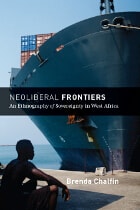
Neoliberal Frontiers
An Ethnography of Sovereignty in West AfricaBrenda Chalfin
University of Chicago Press, 2010
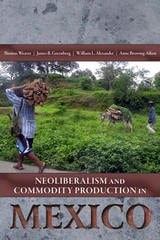
Neoliberalism and Commodity Production in Mexico
Thomas Weaver
University Press of Colorado, 2012
Detailed ethnographic fieldwork shows how foreign investment, privatization, deregulation, and elimination of welfare benefits have devastated national industries and natural resources and threatened agriculture, driving the campesinos and working class deeper into poverty. Focusing on specific commodity chains and the changes to production and marketing under neoliberalism, the contributors highlight the detrimental impacts of policies by telling the stories of those most affected by these changes. They detail the complex interplay of local and global forces, from the politically mediated systems of demand found at the local level to the increasingly powerful municipal and state governments and the global trade and banking institutions.
Sharing a common theoretical perspective and method throughout the chapters, Neoliberalism and Commodity Production in Mexico is a multi-sited ethnography that makes a significant contribution to studies of neoliberal ideology in practice.
Nested Ecologies
A Multilayered Ethnography of Functional MedicineRosalynn A. Vega
University of Texas Press, 2023
How functional medicine leverages systems biology and epigenetic science to treat the microbiome and reverse chronic disease.
Each body is a system within a system—an ecology within the larger context of social, political, economic, cultural, and environmental factors. This is one of the lessons of epigenetics, whereby structural inequalities are literally encoded in our genes. But our ecological embeddedness extends beyond DNA, for each body also teems with trillions of bacteria, yeast, and fungi, all of them imprints of our individual milieus. Nested Ecologies asks what it would mean to take seriously our microbial being, given that our internal ecologies are shaped by inequalities embedded in our physical and social environments.
Further, Rosalynn Vega argues that health practices focused on patients’ unique biology inadvertently reiterate systemic inequities. In particular, functional medicine—which attempts to heal chronic disease by leveraging epigenetic science and treating individual microbiomes—reduces illness to problems of “lifestyle,” principally diet, while neglecting the inability of poor people to access nutrition. Functional medicine thus undermines its own critique of the economics of health care. Drawing on novel digital ethnographies and reflecting on her own experience of chronic illness, Vega challenges us to rethink not only the determinants of well-being but also what it is to be human.
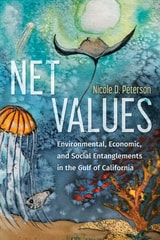
Net Values
Environmental, Economic, and Social Entanglements in the Gulf of CaliforniaNicole D. Peterson
University of Arizona Press, 2025
In Loreto, Baja California Sur, Mexico, artisanal fishing families and staff of Loreto Bay National Park face an array of choices as tourism, environmental concerns, and economic precarity challenge livelihoods and natural resource availability. In Net Values, Nicole D. Peterson offers a critical examination of how the idea of “choice” is understood, and what it means for policies, planning, and programs to ignore the social, political, economic, and cultural contexts surrounding these choices.
Anchored by more than twenty years of research, Peterson provides insight into the fishing community of Loreto and reveals an important role in decision-making that diverges from previous studies. She argues that decisions about fishing, natural resource management, and other aspects of life are influenced by context, values, and expectations in ways that go beyond the typical psychological or cognitive theories of choice. Instead, Net Values highlights the ways that choices are constrained and enabled by values and expectations of cultures, histories, relationships, and experiences, both personal and shared. Peterson answers questions such as “why do the fishermen fish?” or “what is the marine park staff doing?” These decisions and choices are related to the larger implication addressed by this book: that in order to make effective policies around natural resource management and other issues, we must understand how those potential policies interact with the decision processes already underway.
Divided into five chapters, Net Values is rich in ethnographic detail, drawing from real people to inform the narratives, chapters, and theoretical elaboration. Peterson’s interactions with fishers such as Don Javier and his family and friends support the ideas offered around choice, values, and strategies, connecting ideas to real experiences.

Networking Futures
The Movements against Corporate GlobalizationJeffrey S. Juris
Duke University Press, 2008
In an account full of activist voices and on-the-ground detail, Juris provides a history of anti–corporate globalization movements, an examination of their connections to local dynamics in Barcelona, and an analysis of movement-related politics, organizational forms, and decision-making. Depicting spectacular direct action protests in Barcelona and other cities, he describes how far-flung activist networks are embodied and how networking politics are performed. He further explores how activists have used e-mail lists, Web pages, and free software to organize actions, share information, coordinate at a distance, and stage “electronic civil disobedience.” Based on a powerful cultural logic, anti–corporate globalization networks have become models of and for emerging forms of radical, directly democratic politics. Activists are not only responding to growing poverty, inequality, and environmental devastation; they are also building social laboratories for the production of alternative values, discourses, and practices.
Networks of Power
Political Relations in the Late Postclassic Naco ValleyEdward Schortman
University Press of Colorado, 2011
Describing the material and behavioral patterns pertaining to the Late Postclassic period using components of three settlements in the Naco Valley of northwestern Honduras, the book focuses on how contests for power shaped political structures. Power-seeking individuals, including but not restricted to ruling elites, depended on networks of allies to support their political objectives. Ongoing and partially successful competitions waged within networks led to the incorporation of exotic ideas and imported items into the daily practices of all Naco Valley occupants. The result was a fragile hierarchical structure forever vulnerable to the initiatives of agents operating on local and distant stages.
Networks of Power describes who was involved in these competitions and in which networks they participated; what resources were mustered within these webs; which projects were fueled by these assets; and how, and to what extent, they contributed to the achievement of political aims.
Networks, Labour and Migration Among Indian Muslim Artisans
Thomas Chambers
University College London, 2020

Neutral Accent
How Language, Labor, and Life Become GlobalA. Aneesh
Duke University Press, 2015
New Approaches to Resistance in Brazil and Mexico
John Gledhill and Patience A. Schell, eds.
Duke University Press, 2012
Contributors. Helga Baitenmann, Marcus J. M. de Carvalho, Guillermo de la Peña, John Gledhill, Matthew Gutmann, Maria Gabriela Hita, Alan Knight, Ilka Boaventura Leite, Jean Meyer, John Monteiro, Luis Nicolau Parés, Patricia R. Pessar, Patience A. Schell, Robert Slenes, Juan Pedro Viqueira, Margarita Zárate
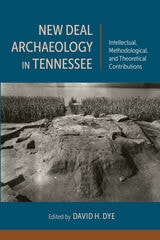
New Deal Archaeology in Tennessee
Intellectual, Methodological, and Theoretical ContributionsEdited by David H. Dye
University of Alabama Press, 2016
Exploring how New Deal innovation transformed archaeology in the American South.
New Deal Archaeology in Tennessee tells the engrossing story of Southeastern archaeology in the 1930s. The Tennessee Valley Authority Act of May 1933 initiated an ambitious program of flood control and power generation by way of a chain of hydroelectric dams on the Tennessee River. The construction of these dams flooded hundreds of thousands of square miles of river bottoms, campsites, villages, and towns that had been homes to Native Americans for centuries. This triggered an urgent need to undertake extensive archaeological fieldwork throughout the region. Those studies continue to influence contemporary archaeology.
The state of Tennessee and the Tennessee Valley were especially well suited research targets thanks to their mild climate and long field seasons. A third benefit in the 1930s was the abundance of labor supplied by Tennesseans unemployed during the Great Depression. Within months of the passage of the Tennessee Valley Authority Act, teams of archaeologists fanned out across the state and region under the farsighted direction of Smithsonian Institution curators Neil M. Judd, Frank H. H. Roberts, and Frank M. Setzler. The early months of 1934 would become the busiest period of archaeological fieldwork in US history.
The twelve insightful essays in New Deal Archaeology in Tennessee document and explore this unique peak in archaeological study. Chapters highlight then-new techniques such as mound “peeling” and stratigraphic excavation adapted from the University of Chicago; the four specific New Deal sites of Watts Bar Reservoir, Mound Bottom, Pack, and Chickamauga Basin; bioarchaeology in the New Deal; and the enduring impact of the New Deal on contemporary fieldwork.
The challenges of the 1930s in recruiting skilled labor, training unskilled ancillary labor, developing and improvising new field methods, and many aspects of archaeological policies, procedures, and best-practices laid much of the foundation of contemporary archaeological practice. New Deal Archaeology in Tennessee offers an invaluable record of that pivotal time for professional, student, and amateur archaeologists.

New Directions in Economic Anthropology
Susana Narotzky
Pluto Press, 1997
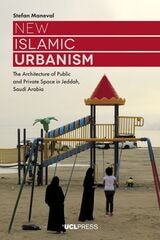
New Islamic Urbanism
The Architecture of Public and Private Space in Jeddah, Saudi ArabiaStefan Maneval
University College London, 2019
Combining Michael Warner’s concepts of publics and counterpublics with theories of space and sociological approaches to architecture, Stefan Maneval explores the concept of New Islamic Urbanism in Saudi Arabia, arguing that this architectural trend, which is characterized by an emphasis on privacy protection through high enclosures, gates, blinds, and tinted windows, constitutes for some an important element of piety. At the same time, it enables different conceptions of privacy, banned social practices, as well as the formation of publics and counterpublics.
Based on rich ethnographic data collected by the author, New Islamic Urbanism challenges normative assumptions on gender segregation in Muslim societies and provides a nuanced account of the meaning of publicness and privacy in Muslim contexts in general. It will be of particular interest to an academic readership in Middle East and Islamic studies, as well as in architecture, urban planning and anthropology.
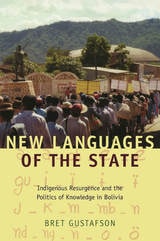
New Languages of the State
Indigenous Resurgence and the Politics of Knowledge in BoliviaBret Gustafson
Duke University Press, 2009
Gustafson shows that bilingual education is an issue that extends far beyond the classroom. Public schools are at the center of a broader battle over territory, power, and knowledge as indigenous movements across Latin America actively defend their languages and knowledge systems. In attempting to decolonize nation-states, the indigenous movements are challenging deep-rooted colonial racism and neoliberal reforms intended to mold public education to serve the market. Meanwhile, market reformers nominally embrace cultural pluralism while implementing political and economic policies that exacerbate inequality. Juxtaposing Guarani life, language, and activism with intimate portraits of reform politics among academics, bureaucrats, and others in and beyond La Paz, Gustafson illuminates the issues, strategic dilemmas, and imperfect alliances behind bilingual intercultural education.
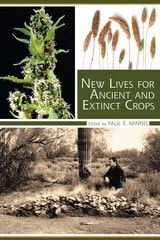
New Lives for Ancient and Extinct Crops
Edited by Paul E. Minnis
University of Arizona Press, 2014
New Lives for Ancient and Extinct Crops profiles nine plant species that were important contributors to human diets and had medicinal uses in antiquity: maygrass, chenopod, marshelder, agave, little barley, chia, arrowroot, little millet, and bitter vetch. Each chapter is written by a well-known scholar, who illustrates the global value of the ancient crop record to inform the present. From eastern and western North America, Mesoamerica, South America, western Asia, and south-central Asia, the contributors provide examples of the unexpected wealth of information available in the archaeological record about ancient and extinct crops.
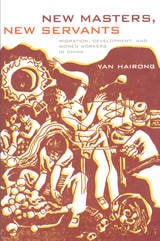
New Masters, New Servants
Migration, Development, and Women Workers in ChinaYan Hairong
Duke University Press, 2008
Yan analyzes how the migrant women workers are subjected to, make sense of, and reflect on a range of state and neoliberal discourses about development, modernity, consumption, self-worth, quality, and individual and collective longing and struggle. She offers keen insight into the workers’ desire and efforts to achieve suzhi (quality) through self-improvement, the way workers are treated by their employers, and representations of migrant domestic workers on television and the Internet and in newspapers and magazines. In so doing, Yan demonstrates that contestations over the meanings of migrant workers raise broad questions about the nature of wage labor, market economy, sociality, and postsocialism in contemporary China.

New Mexico and the Pimería Alta
The Colonial Period in the American SouthwestJohn G. Douglass
University Press of Colorado, 2017
Focusing on the two major areas of the Southwest that witnessed the most intensive and sustained colonial encounters, New Mexico and the Pimería Alta compares how different forms of colonialism and indigenous political economies resulted in diverse outcomes for colonists and Native peoples. Taking a holistic approach and studying both colonist and indigenous perspectives through archaeological, ethnohistoric, historic, and landscape data, contributors examine how the processes of colonialism played out in the American Southwest.
Although these broad areas—New Mexico and southern Arizona/northern Sonora—share a similar early colonial history, the particular combination of players, sociohistorical trajectories, and social relations within each area led to, and were transformed by, markedly diverse colonial encounters. Understanding these different mixes of players, history, and social relations provides the foundation for conceptualizing the enormous changes wrought by colonialism throughout the region. The presentations of different cultural trajectories also offer important avenues for future thought and discussion on the strategies for missionization and colonialism.
The case studies tackle how cultures evolved in the light of radical transformations in cultural traits or traditions and how different groups reconciled to this change. A much needed up-to-date examination of the colonial era in the Southwest, New Mexico and the Pimería Alta demonstrates the intertwined relationships between cultural continuity and transformation during a time of immense change and highlights contemporary thought on the colonial experience.
Contributors: Joseph Aguilar, Jimmy Arterberry, Heather Atherton, Dale Brenneman, J. Andrew Darling, John G. Douglass, B. Sunday Eiselt, Severin Fowles, William M. Graves, Lauren Jelinek, Kelly L. Jenks, Stewart B. Koyiyumptewa, Phillip O. Leckman, Matthew Liebmann, Kent G. Lightfoot, Lindsay Montgomery, Barnet Pavao-Zuckerman, Robert Preucel, Matthew Schmader, Thomas E. Sheridan, Colleen Strawhacker, J. Homer Thiel, David Hurst Thomas, Laurie D. Webster

New Migrants in the Marketplace
Boston's Ethnic EntrepreneursMarilyn Halter
University of Massachusetts Press, 2013
Using an ethnographic, comparative approach, New Migrants in the Marketplace: Boston's Ethnic Entrepreneurs examines the economic culture and small business activity of a range of new migrant groups in the Greater Boston Area, including Jews from the former Soviet Union, British West Indians, Greeks, Puerto Ricans, Dominicans, Khmers, and Haitians.
Contributors are Mehdi Bozorgmehr, Claudia Der-Martirosian, Marilyn Halter, Violet Johnson, Peggy Levitt, Ivan Light, Caesar Mavratsas, Georges Sabagh, and Nancy Smith-Hefner. The book includes a photo essay by Steven J. Gold.

New Organs Within Us
Transplants and the Moral EconomyAsl1han Sanal
Duke University Press, 2011
New Perspectives on Environmental Justice
Gender, Sexuality, and ActivismStein, Rachel
Rutgers University Press, 2004
Women make up the vast majority of activists and organizers of grassroots movements fighting against environmental ills that threaten poor and people of color communities. New Perspectives on Environmental Justice is the first collection of essays that pays tribute to the enormous contributions women have made in these endeavors.
The writers offer varied examples of environmental justice issues such as children's environmental health campaigns, cancer research, AIDS/HIV activism, the Environmental Genome Project, and popular culture, among many others. Each one focuses on gender and sexuality as crucial factors in women's or gay men's activism and applies environmental justice principles to related struggles for sexual justice. The contributors represent a wide variety of activist and scholarly perspectives including law, environmental studies, sociology, political science, history, medical anthropology, American studies, English, African and African American studies, women's studies, and gay and lesbian studies, offering multiple vantage points on gender, sexuality, and activism.
Feminist/womanist impulses shape and sustain environmental justice movements around the world, making an understanding of gender roles and differences crucial for the success of these efforts.
New Perspectives on the Origins of Americanist Archaeology
Edited by David L. Browman and Stephen Williams
University of Alabama Press, 2002
In this landmark book, experienced scholars take a retrospective look at the developing routes that have brought American archaeologists into the 21st century.
In 1996, the Society for American Archaeology's Committee on the History of Archaeology established a biennial symposium
named after Gordon R. Willey, one of the fathers of American archaeology, to focus on the history of the discipline. This volume grew out of the
second symposium, presented at the 1998 meeting of the Society for American Archaeology.
Interest in the intellectual history of the field is certainly nothing new—the first such volume appeared in 1856—but previously, focus has been on individuals and their theories and methods, or on various government agencies that supported, developed, or mandated
excavations in North America. This volume, however, focuses on the roots of Americanist archaeology, including its pre-1915 European connections, and on some of the earliest work by women archaeologists, which has been largely overlooked.
Full of valuable insights for archaeologists and anthropologists—both professional and amateur—into the history and
development of Americanist archaeology, New Perspectives will also inspire and serve as a model for future research.
David Browman is Professor of Anthropology and Chair of the Interdisciplinary Program in Archaeology at Washington University. Stephen Williams is Professor Emeritus of Anthropology at Harvard University.

New Politics Of Race
Globalism, Difference, JusticeHoward Winant
University of Minnesota Press, 2004

New Thoughts on the Black Arts Movement
Edited by Lisa Gail Collins and Margo Natalie Crawford
Rutgers University Press, 2006

New World Orderings
China and the Global SouthLisa Rofel and Carlos Rojas, editors
Duke University Press, 2022
Contributors. Andrea Bachner, Luciano Damián Bolinaga, Nellie Chu, Rachel Cypher, Mingwei Huang, T. Tu Huynh, Yu-lin Lee, Ng Kim Chew, Lisa Rofel, Carlos Rojas, Shuang Shen, Derek Sheridan, Nicolai Volland
Newberry Crater
Anthropological Papers Number 121Thomas Connolly
University of Utah Press, 1999
The research in this volume derives from investigations conducted in connection with proposed widening and realignment of the Paulina-East Lake Highway, located within the caldera of Newberry Volcano. Formal evaluation of 13 localities and data recovers at four sites produced a wealth of information regarding human uses of the caldera and vicinity throughout the Holocene.

Nicaragua's Mosquito Shore
The Years of British and American PresenceCraig L. Dozier
University of Alabama Press, 1985
An essential interdisciplinary study of culture, history, and identity on Nicaragua’s Caribbean frontier.
Separated from Nicaragua’s Pacific plain by mountains, the Atlantic coastal plain extends between 70 and 100 miles into the interior. Early Spanish settlers were ousted by the British, who engaged in the mahogany trade, and who also hoped for trade with Americans seeking a short route to California. In 1850, with the signing of the Clayton-Bulwer Treaty, the U.S. and Britain agreed that neither country would seek to acquire exclusive control over a Nicaraguan canal. Plans for the development of a Nicaraguan canal had a marked influence on the region for the next 100 years.
During the second half of the 19th century both rubber and bananas were produced commercially in eastern Nicaragua, and the Standard Fruit Company of New Orleans became the larges single commercial influence in the region. The first over American intervention in eastern Nicaragua occurred in 1912, when a contingent of Marines was dispatched to protect American commercial interests. The Marines remained for thirteen years.
Dozier develops the history of the current political troubles in Nicaragua, which had their origin in the early 1930s and which center about the control of the rich area inhabited by the Mosquitos. His book presents the historical background for the tragic events that are taking place in that region.
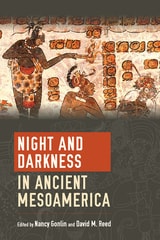
Night and Darkness in Ancient Mesoamerica
Nancy Gonlin
University Press of Colorado, 2021
The anthropological study of night and darkness enriches and strengthens the understanding of human behavior, power, economy, and the supernatural. In eleven case studies featuring the residents of Teotihuacan, the Classic period Maya, inhabitants of Rio Ulúa, and the Aztecs, the authors challenge archaeologists to consider the influence of the ignored dimension of the night and the role and expression of darkness on ancient behavior. Chapters examine the significance of eclipses, burials, tombs, and natural phenomena considered to be portals to the underworld; animals hunted at twilight; the use and ritual meaning of blindfolds; night-blooming plants; nocturnal foodways; fuel sources and lighting technology; and other connected practices.
Night and Darkness in Ancient Mesoamerica expands the scope of published research and media on the archaeology of the night. The book will be of interest to those who study the humanistic, anthropological, and archaeological aspects of the Aztec, Maya, Teotihuacanos, and southeastern Mesoamericans, as well as sensory archaeology, art history, material culture studies, anthropological archaeology, paleonutrition, socioeconomics, sociopolitics, epigraphy, mortuary studies, volcanology, and paleoethnobotany.
Contributors: Jeremy Coltman, Christine Dixon, Rachel Egan, Kirby Farah, Carolyn Freiwald, Nancy Gonlin, Julia Hendon, Cecelia Klein, Jeanne Lopiparo, Brian McKee, Jan Marie Olson, David M. Reed, Payson Sheets, Venicia Slotten, Michael Thomason, Randolph Widmer, W. Scott Zeleznik

Nightmarch
Among India’s Revolutionary GuerrillasAlpa Shah
University of Chicago Press, 2019
Winner of the 2020 Association for Political and Legal Anthropology Book Prize
Shortlisted for the Orwell Prize
Shortlisted for the New India Foundation Book Prize
Anthropologist Alpa Shah found herself in an active platoon of Naxalites—one of the longest-running guerrilla insurgencies in the world. The only woman, and the only person without a weapon, she walked alongside the militants for seven nights across 150 miles of dense, hilly forests in eastern India. Nightmarch is the riveting story of Shah's journey, grounded in her years of living with India’s tribal people, an eye-opening exploration of the movement’s history and future and a powerful contemplation of how disadvantaged people fight back against unjust systems in today’s world.
The Naxalites have fought for a communist society for the past fifty years, caught in a conflict that has so far claimed at least forty thousand lives. Yet surprisingly little is known about these fighters in the West. Framed by the Indian state as a deadly terrorist group, the movement is actually made up of Marxist ideologues and lower-caste and tribal combatants, all of whom seek to overthrow a system that has abused them for decades. In Nightmarch, Shah shares some of their gritty untold stories: here we meet a high-caste leader who spent almost thirty years underground, a young Adivasi foot soldier, and an Adivasi youth who defected. Speaking with them and living for years with villagers in guerrilla strongholds, Shah has sought to understand why some of India’s poor have shunned the world’s largest democracy and taken up arms to fight for a fairer society—and asks whether they might be undermining their own aims.
By shining a light on this largely ignored corner of the world, Shah raises important questions about the uncaring advance of capitalism and offers a compelling reflection on dispossession and conflict at the heart of contemporary India.
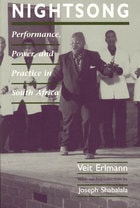
Nightsong
Performance, Power, and Practice in South AfricaVeit Erlmann
University of Chicago Press, 1996
Veit Erlmann provides the first comprehensive interpretation of isicathamiya performance practice and its relation to the culture and consciousness of the Zulu migrant laborers who largely compose its choirs. In songs and dances, the performers oppose the class and racial oppression that reduces them to "labor units." At the same time, Erlmann argues, the performers rework dominant images to symbolically reconstruct their "home," an imagined world of Zulu rural tradition and identity.
By contrasting the live performance of isicathamiya to its reproduction in mass media, recordings, and international concerts, Erlmann addresses important issues in performance studies and anthropology, and looks to the future of isicathamiya live performance in the new South Africa. Featuring an Introduction by Joseph Shabalala, the lead singer and founder of Ladysmith Black Mambazo, this book will be essential reading for anyone interested in the study of music, performance, popular culture, or South Africa.
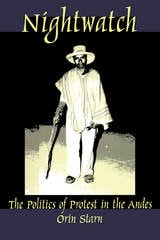
Nightwatch
The Politics of Protest in the AndesOrin Starn
Duke University Press, 1999
Drawing on fieldwork conducted over the course of a decade, Orin Starn chronicles the historical conditions that led to the formation of the rondas, the social and geographical expansion of the movement, and its gradual decline in the 1990s. Throughout this anecdotal yet deeply analytical account, the author relies on interviews with ronda participants, villagers, and Peru’s regional and national leaders to explore the role of women, the involvement of nongovernmental organizations, and struggles for leadership within the rondas. Starn moves easily from global to local contexts and from the fifteenth to the twentieth century, presenting this movement in a straightforward manner that makes it accessible to both specialists and nonspecialists.
An engagingly written story of village mobilization, Nightwatch is also a meditation on the nature of fieldwork, the representation of subaltern people, the relationship between resistance and power, and what it means to be politically active at the end of the century. It will appeal widely to scholars and students of anthropology, Latin American studies, cultural studies, history, subaltern studies, and those interested in the politics of social movements.
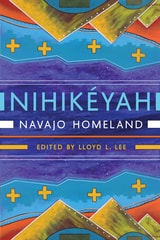
Nihikéyah
Navajo HomelandEdited by Lloyd L. Lee
University of Arizona Press, 2023
While various books have investigated Native American reservations and homelands, this book is from Diné individuals’ experiences, observations, and examinations. Poets, writers, and scholars frame their thoughts on four key questions: What are the thoughts/perspectives on nihikéyah/Navajo homeland? What challenges does nihikéyah face in the coming generations, and what should all peoples know about nihikéyah? And how can nihikéyah build a strong and positive Navajo Nation for the rest of this century and beyond?
The authors come from a variety of backgrounds and use multiple approaches to discuss Diné history in the U.S. Southwest, as well as forward-looking examinations of the Navajo Nation.
Together, the essays shed new light on Diné homeland and the challenges to the Navajo homeland and its peoples.
Contributors
Mario Atencio
Shawn Attakai
Wendy Shelly Greyeyes
Rex Lee Jim
Manny Loley
Jonathan Perry
Jake Skeets
Jennifer Jackson Wheeler
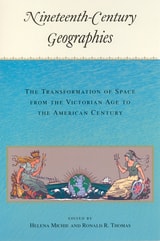
Nineteenth-Century Geographies
The Transformation of Space from the Victorian Age to the American CenturyThomas, Ronald R
Rutgers University Press, 2002
The nineteenth century was a time of unprecedented discovery and exploration throughout the globe, a period when the “blank spaces” of the earth were systematically investigated, occupied, and exploited by the major imperial powers of Western Europe and the United States. The lived experience of space was also changing in dramatic ways for people as a result of new developments in technology, communication, and transportation. As a result, the century was characterized by a new and intense interest in place, both local and global.
The collection is comprised of seventeen essays from various disciplines organized into four areas of geographic concern. The first, “Time Zones,” examines several ways that place gets expressed as time during the period, how geography becomes history. A second grouping, “Commodities and Exchanges,” explores the role of geographic origin as it was embodied in particular objects, from the souvenir map to imported tea. The set of essays on “Domestic Fronts” moves the discussion from the public to the private sphere by looking at how domestic space became defined in terms of its boundary with the foreign. The final section, “Orientations,” takes up the changing relations of bodies, identities, and the spaces they inhabit and through which they moved. The collection as a whole also traces the development of the discipline of geography with its different institutional and political trajectories in the United States and Great Britain.

Ninety-Nine
A Kaleidoscopic Portrait of AllahAmira Mittermaier
Duke University Press, 2026

No Alternative
Childbirth, Citizenship, and Indigenous Culture in MexicoBy Rosalynn A. Vega
University of Texas Press, 2018
Recent anthropological scholarship on “new midwifery” centers on how professional midwives in various countries are helping women reconnect with “nature,” teaching them to trust in their bodies, respecting women’s “choices,” and fighting for women’s right to birth as naturally as possible. In No Alternative, Rosalynn A. Vega uses ethnographic accounts of natural birth practices in Mexico to complicate these narratives about new midwifery and illuminate larger questions of female empowerment, citizenship, and the commodification of indigenous culture, by showing how alternative birth actually reinscribes traditional racial and gender hierarchies.
Vega contrasts the vastly different birthing experiences of upper-class and indigenous Mexican women. Upper-class women often travel to birthing centers to be delivered by professional midwives whose methods are adopted from and represented as indigenous culture, while indigenous women from those same cultures are often forced by lack of resources to use government hospitals regardless of their preferred birthing method. Vega demonstrates that women’s empowerment, having a “choice,” is a privilege of those capable of paying for private medical services—albeit a dubious privilege, as it puts the burden of correctly producing future members of society on women’s shoulders. Vega’s research thus also reveals the limits of citizenship in a neoliberal world, as indigeneity becomes an object of consumption within a transnational racialized economy.
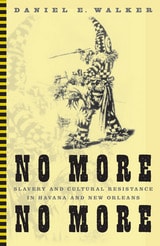
No More, No More
Slavery And Cultural Resistance In Havana And New OrleansDaniel E. Walker
University of Minnesota Press, 2004
An illuminating look at the festival performances of slaves in Havana and New Orleans
However urban slave societies might have differed from their rural counterparts, they still relied on a concerted assault on the psychological, social, and cultural identity of their African-descended inhabitants to maintain power and control. This ambitious book looks at how people of African descent in two such societies—Havana and New Orleans in the nineteenth century—created and maintained their own forms of cultural resistance to the slave regime’s assault and, in the process, put forth autonomous views of self and the social landscape.
In Havana’s annual Día de Reyes festival and in the weekly activities that took place at New Orleans’s Congo Square, author Daniel Walker identifies specific cultural beliefs and activities that Africans brought to the New World and modified in order to withstand and contest the dehumanizing effects of oppression. No More, No More crosses disciplinary boundaries as well, elucidating the economic, social, cultural, and demographic operations at work in two cities and the wide-scale efforts at cultural resistance embodied in public performances.
No Peace, No War
An Anthropology of Contemporary Armed ConflictsPaul Richards
Ohio University Press, 2004
A rash of small wars erupted after the Cold War ended in Africa, the Balkans, and other parts of the former communist world. The wars were in “inter-zones,” the spaces left where weak states had withdrawn or collapsed. Consequently the debate over what constitutes war has returned to basics. No Peace, No War departs from the usual analysis that considers the new wars mindless mass actions to offer the paradoxical idea that to understand war one must deny war special status. Rather than leave war to the security specialists, these writers attempt to grasp its character as one among many aspects of social reality.
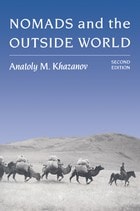
Nomads and the Outside World
Anatoly M. Khazanov; Translated by Julia Crookenden
University of Wisconsin Press, 1994
Hailed by reviewers as “majestic and magisterial,” Nomads and the Outside World was first published in English in 1984. With the author's new introduction and an updated bibliography, this classic is now available in an edition accessible to students.
From reviews of the first edition:
“Magisterial. . . . Combining a phenomenal erudition, a candid judgment, and a subtle sense of irony, Khazanov sets out to challenge the orthodox view of nomadic feudalism and, in the process, has produced the first comparative survey of pastoral societies that can claim to be truly comprehensive, covering their history in Eurasia, the Middle East, and Africa from the origins of pastoralism to the dawn of the modern era.”—Tim Ingold,
Current Anthropology“This is the best study on pastoral nomadism that the reviewer has ever read. At last we have a major attempt to present the whole phenomenon in historical, ecological, spatial and structural perspective. . . . Superb scholarship. It is the kind of work that can only be produced as a result of years of specific research, much deep thinking . . . and a determination to reject cant.”—John C. Wilkinson,
Geographical Journal“Khazanov's book on pastoral nomadism is a heroic endeavor of a kind no one has seriously attempted before. . . . Particularly valuable to western readers are the materials on the numerous peoples of Central Asia and Siberia . . . and their integration with analysis of more familiar societies such as those of North and East Africa and the Middle East. . . . The insights provided by this book are too numerous to list.”—Caroline Humphrey,
Times Literary Supplement
Non-Sovereign Futures
French Caribbean Politics in the Wake of DisenchantmentYarimar Bonilla
University of Chicago Press, 2015
Through a deep ethnography of Guadeloupean labor activism, Bonilla examines how Caribbean political actors navigate the conflicting norms and desires produced by the modernist project of postcolonial sovereignty. Exploring the political and historical imaginaries of activist communities, she examines their attempts to forge new visions for the future by reconfiguring narratives of the past, especially the histories of colonialism and slavery. Drawing from nearly a decade of ethnographic research, she shows that political participation—even in failed movements—has social impacts beyond simple material or economic gains. Ultimately, she uses the cases of Guadeloupe and the Caribbean at large to offer a more sophisticated conception of the possibilities of sovereignty in the postcolonial era.
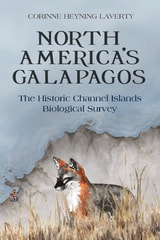
North America's Galapagos
The Historic Channel Islands Biological SurveyCorinne Heyning Laverty
University of Utah Press, 2019
This untold saga of adventure, discovery, and goals abandoned is juxtaposed against the fresh successes of a new generation of Channel Island scholars. Engagingly written, North America’s Galapagos illuminates the scientific process and reveals remarkable modern discoveries that are rewriting archaeological textbooks and unraveling the answer to the age-old question: how and when were the Americas populated?
Anyone interested in the work conducted behind closed museum doors will want to read this book—so will history buffs, environmentalists, scientists, and general readers curious about our world.
Visit the author's website: https://www.channelislandscalifornia.com/
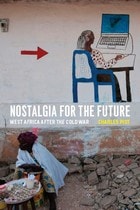
Nostalgia for the Future
West Africa after the Cold WarCharles Piot
University of Chicago Press, 2010
Since the end of the cold war, Africa has seen a dramatic rise in new political and religious phenomena, including an eviscerated privatized state, neoliberal NGOs, Pentecostalism, a resurgence in accusations of witchcraft, a culture of scamming and fraud, and, in some countries, a nearly universal wish to emigrate. Drawing on fieldwork in Togo, Charles Piot suggests that a new biopolitics after state sovereignty is remaking the face of one of the world’s poorest regions.
In a country where playing the U.S. Department of State’s green card lottery is a national pastime and the preponderance of cybercafés and Western Union branches signals a widespread desire to connect to the rest of the world, Nostalgia for the Future makes clear that the cultural and political terrain that underlies postcolonial theory has shifted. In order to map out this new terrain, Piot enters into critical dialogue with a host of important theorists, including Agamben, Hardt and Negri, Deleuze, and Mbembe. The result is a deft interweaving of rich observations of Togolese life with profound insights into the new, globalized world in which that life takes place.
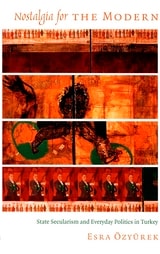
Nostalgia for the Modern
State Secularism and Everyday Politics in TurkeyEsra Özyürek
Duke University Press, 2006
Drawing on her ethnographic research in Istanbul and Ankara during the late 1990s, Özyürek describes how ordinary Turkish citizens demonstrated their affinity for Kemalism in the ways they organized their domestic space, decorated their walls, told their life stories, and interpreted political developments. She examines the recent interest in the private lives of the founding generation of the Republic, reflects on several privately organized museum exhibits about the early Republic, and considers the proliferation in homes and businesses of pictures of Atatürk, the most potent symbol of the secular Turkish state. She also explores the organization of the 1998 celebrations marking the Republic’s seventy-fifth anniversary. Özyürek’s insights into how state ideologies spread through private and personal realms of life have implications for all societies confronting the simultaneous rise of neoliberalism and politicized religion.
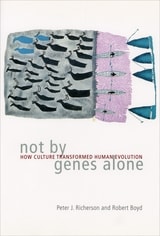
Not By Genes Alone
How Culture Transformed Human EvolutionPeter J. Richerson and Robert Boyd
University of Chicago Press, 2004
Not by Genes Alone offers a radical interpretation of human evolution, arguing that our ecological dominance and our singular social systems stem from a psychology uniquely adapted to create complex culture. Richerson and Boyd illustrate here that culture is neither superorganic nor the handmaiden of the genes. Rather, it is essential to human adaptation, as much a part of human biology as bipedal locomotion. Drawing on work in the fields of anthropology, political science, sociology, and economics—and building their case with such fascinating examples as kayaks, corporations, clever knots, and yams that require twelve men to carry them—Richerson and Boyd convincingly demonstrate that culture and biology are inextricably linked, and they show us how to think about their interaction in a way that yields a richer understanding of human nature.
In abandoning the nature-versus-nurture debate as fundamentally misconceived, Not by Genes Alone is a truly original and groundbreaking theory of the role of culture in evolution and a book to be reckoned with for generations to come.
“I continue to be surprised by the number of educated people (many of them biologists) who think that offering explanations for human behavior in terms of culture somehow disproves the suggestion that human behavior can be explained in Darwinian evolutionary terms. Fortunately, we now have a book to which they may be directed for enlightenment . . . . It is a book full of good sense and the kinds of intellectual rigor and clarity of writing that we have come to expect from the Boyd/Richerson stable.”—Robin Dunbar, Nature
“Not by Genes Alone is a valuable and very readable synthesis of a still embryonic but very important subject straddling the sciences and humanities.”—E. O. Wilson, Harvard University

Not Hollywood
Independent Film at the Twilight of the American DreamSherry B. Ortner
Duke University Press, 2013
Not Only the Market
Martin Potucek
Central European University Press, 1999
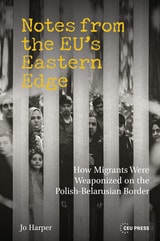
Notes from the EU’s Eastern Edge
How Migrants Were Weaponized on the Polish-Belarusian BorderJo Harper
Central European University Press, 2026

Nourishing Victory
Food Shortages and Post-Imperial Transition in the Bohemian Lands and SloveniaRok Stergar
Central European University Press, 2026
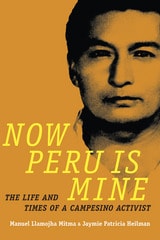
Now Peru Is Mine
The Life and Times of a Campesino ActivistManuel Llamojha Mitma and Jaymie Patricia Heilman
Duke University Press, 2016
Nuer Conquest
The Structure and Development of an Expansionist SystemRaymond C. Kelly
University of Michigan Press, 1985
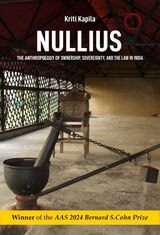
Nullius
The Anthropology of Ownership, Sovereignty, and the Law in IndiaKriti Kapila
HAU, 2022
Nullius is an award-winning anthropological account of the troubled status of ownership in India and its consequences for our understanding of sovereignty and social relations. Though property rights and ownership are said to be a cornerstone of modern law, in the Indian case they are often a spectral presence. Kapila offers a detailed study of paradigms where proprietary relations have been erased, denied, misappropriated.
The book examines three forms of negation, where the Indian state de facto adopted doctrines of terra nullius (in the erasure of indigenous title), res nullius (in acquiring museum objects), and, controversially, corpus nullius (in denying citizens ownership of their bodies under biometrics). The result is a pathbreaking reconnection of questions of property, exchange, dispossession, law, and sovereignty.
Nullius is the winner of the 2024 Bernard S. Cohn Prize, Association of Asian Studies.
Nunakun-gguq Ciutengqertut/They Say They Have Ears Through the Ground
Animal Essays from Southwest AlaskaAnn Fienup-Riordan
University of Alaska Press, 2020

Nurturing Doubt
From Mennonite Missionary to Anthropologist in the Argentine ChacoElmer S. Miller
University of Illinois Press, 1995