Results by title
3071 books match the query 'Business & Economics' and 89 start with n

Nearly Nuclear
A Mismanaged Energy Transitionleroy smith
Michigan State University Press, 2021
Negotiated Reform
The Multilevel Governance of Financial RegulationEdited by Renate Mayntz
Campus Verlag, 2016
Negotiation Analysis
H. Peyton Young, Editor
University of Michigan Press, 1991

Negotiation Skills in the Workplace
A Practical HandbookLarry Cairns
Pluto Press, 1996
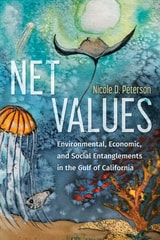
Net Values
Environmental, Economic, and Social Entanglements in the Gulf of CaliforniaNicole D. Peterson
University of Arizona Press, 2025
In Loreto, Baja California Sur, Mexico, artisanal fishing families and staff of Loreto Bay National Park face an array of choices as tourism, environmental concerns, and economic precarity challenge livelihoods and natural resource availability. In Net Values, Nicole D. Peterson offers a critical examination of how the idea of “choice” is understood, and what it means for policies, planning, and programs to ignore the social, political, economic, and cultural contexts surrounding these choices.
Anchored by more than twenty years of research, Peterson provides insight into the fishing community of Loreto and reveals an important role in decision-making that diverges from previous studies. She argues that decisions about fishing, natural resource management, and other aspects of life are influenced by context, values, and expectations in ways that go beyond the typical psychological or cognitive theories of choice. Instead, Net Values highlights the ways that choices are constrained and enabled by values and expectations of cultures, histories, relationships, and experiences, both personal and shared. Peterson answers questions such as “why do the fishermen fish?” or “what is the marine park staff doing?” These decisions and choices are related to the larger implication addressed by this book: that in order to make effective policies around natural resource management and other issues, we must understand how those potential policies interact with the decision processes already underway.
Divided into five chapters, Net Values is rich in ethnographic detail, drawing from real people to inform the narratives, chapters, and theoretical elaboration. Peterson’s interactions with fishers such as Don Javier and his family and friends support the ideas offered around choice, values, and strategies, connecting ideas to real experiences.
Networking China
The Digital Transformation of the Chinese EconomyYu Hong
University of Illinois Press, 2017

Networks and Markets
James E. Rauch
Russell Sage Foundation, 2001
Nevada's Great Recession
Looking Back, Moving ForwardElliott Parker
University of Nevada Press, 2017
This is a different kind of economics book. Parker uses his expertise from doing research on the East Asian fiscal crisis to give profound insights into what happened and how to avoid future catastrophes. Marshall personalizes it by providing vignettes of what it was actually like to be in the trenches and fighting the inevitable political battles that came up, and counteracting some of the falsehoods that certain politicians were spreading about the recession.
Parker and Marshall’s book should be required reading for not only every single elected official in Nevada, but for any private citizen who cares about the public good.
Never Done
A History of Women’s Work in Media ProductionHill, Erin
Rutgers University Press, 2016
Histories of women in Hollywood usually recount the contributions of female directors, screenwriters, designers, actresses, and other creative personnel whose names loom large in the credits. Yet, from its inception, the American film industry relied on the labor of thousands more women, workers whose vital contributions often went unrecognized.
For more information: http://erinhill.squarespace.com
New Brunswick, New Jersey
The Decline and Revitalization of Urban AmericaListokin, David
Rutgers University Press, 2016
New Deal Radio
The Educational Radio ProjectDavid Goodman
Rutgers University Press, 2022
Contextualizing the different series aired by the Educational Radio Project as part of a unified project about radio and citizenship is crucial to understanding them. New Deal Radio argues that this distinctive government commercial partnership amounted to a critical intervention in US broadcasting and an important chapter in the evolution of public radio in America.
New Developments in Productivity Analysis
Edited by Charles R. Hulten, Edwin R. Dean, and Michael J. Harper
University of Chicago Press, 2001
Charles R. Hulten is professor of economics at the University of Maryland. He has been a senior research associate at the Urban Institute and is chair of the Conference on Research in Income and Wealth of the National Bureau of Economic Research. Michael Harper is chief of the Division of Productivity Research at the Bureau of Labor Statistics. Edwin R. Dean, formerly associate commissioner for Productivity and Technology at the Bureau of Labor Statistics, is adjunct professor of economics at The George Washington University.
New Directions in Market Design
Edited by Irene Lo, Michael Ostrovsky, Parag A. Pathak
University of Chicago Press, 2026
A comprehensive survey of the evolution of market design over the past three decades.
In the mid-1990s, the first Federal Communications Commission spectrum auction and the redesign of the National Residency Matching Program collectively helped to jumpstart the field of market design. Since then, extensive research has improved auction design and broken new conceptual ground in addressing multi-agent matching problems. This volume summarizes key discoveries and advances in market design over the past three decades and explores contemporary challenges—from climate policy and electricity markets to AI-mediated exchanges and hospital resource allocation.
Contributors examine how to design efficient, incentive-compatible mechanisms that are robust to shifting conditions and increasing complexity. They consider a wide variety of applications that could benefit from the market design viewpoint, such as environmental markets, school choice, and organ exchange. Together, the chapters illustrate the important interactions between economic theory, computational tools, and institutional insight.
New Directions in Trade Theory
Alan V. Deardorff, James A. Levinsohn, and Robert M. Stern, Editors
University of Michigan Press, 1995
This book is a collection of ten essays with discussant commentaries originating from an October 1993 conference at the University of Michigan. Aiming to push international trade theory beyond traditional comparative static analysis, the volume focuses on dynamic modeling, endogenizing trade policy, and analyzing complex interactions among countries, governments, and eco-endogenizing. The collected papers tackle a diverse array of modern economic topics, including complexity theory applied to transport costs and trade structure (Paul Krugman), game-theoretic frameworks examining protectionist lobbying (Gene Grossman and Elhanan Helpman) and results-oriented trade sanctions (Mark Cronshaw and James Markusen), the "Bicycle theory" of gradual trade liberalisation (Robert Staiger), rules of origin as protectionist mechanisms within free trade areas like NAFTA (Kala Krishna and Anne Krueger), technological dynamics and comparative advantage shifts (Michihiro Ohyama and Ronald Jones), and export subsidisation case studies (Dani Rodrik). The title is a stimulating and forward-looking contribution that demonstrates how international trade theory is evolving to address multifaceted real-world challenges.

New Economics and Its History, Volume 29
John B. Davis, ed.
Duke University Press, 0
This new focus requires new methods of analysis—historiographic strategies involving far greater archival resources, for instance, and often nontraditional resources, such as electronic records. Essays collected here address these changes and examine how this new emphasis on the work of living economists can and will entail interaction between the producer of theory and the historian, complicating the latter’s role. Chapters discuss topics such as the emergence of subdisciplines in economics, social-contextual perspectives on the writing of economics, the dynamics of idea development, and the recent incursion of noneconomic thinking—such as engineering methods and mathematical models—into economics.
New Economics and Its Writing shows that attention to recent, ongoing economics from historians of economics has the potential to revitalize and transform the history of economics as an area of investigation.
This volume is the 1997 Annual Supplement to the journal History of Political Economy. All 1997 subscribers will receive a copy of this book as part of their annual subscription.
Contributors. Timothy L. Alborn, Marcel Boumans, Joshua Cohen, John B. Davis, Ross B. Emmett, Paul Harrison, Daniel M. Hausman, Mary L. Hirschfeld, S. Todd Lowry, Steven G. Medema, Philip Mirowski, Philippe Mongin, S. Abu Turab Rizvi, Esther-Mirjam Sent
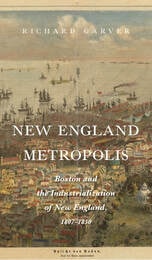
New England Metropolis
Boston and the Industrialization of New England, 1807–1850Richard Garver
University of Massachusetts Press, 2026
At the outset of the nineteenth century, Boston was at its zenith as a maritime city even as New England was in decline. Many struggling farmers abandoned the area for more promising opportunities to the west. Yet by 1850, New England had been transformed into one of the most industrialized regions in the world. Former agricultural villages had become specialized manufacturing towns producing consumer goods for sale, and Boston merchant capitalists had established textile complexes that produced fabrics in huge quantities. Although Boston had been superseded by New York as a trading center, it thrived not only as a financial market but as an exchange hub in which these hinterland manufacturers acquired raw materials, capital, sales services, and transportation. With Boston at its metropolitan center, New England was transformed into an industrial geography that was unique nationally and internationally.
New England Metropolis demonstrates that, in contrast to the course of industrialization in other regions of the country, New England’s transformation was driven by entrepreneurs in hundreds of rural villages and towns and by and Boston merchant capitalists who recruited underemployed agricultural household members to produce consumer goods for sale beyond the region, including in the slave economies of the South and the Caribbean. As Boston merchants adapted commercial, financial and transportation infrastructure they had developed to serve overseas trade to the needs of the region's manufacturers, industrialization halted New England’s decline and, by 1850, had propelled it to prosperity.

New Jersey's Postsuburban Economy
James W. Hughes and Joseph J. Seneca
Rutgers University Press, 2015
From the rural agricultural and natural resource based economy and lifestyle of the seventeenth century to today’s postindustrial, suburban-dominated, automobile-dependent economy, the economic drivers which were considered to be an asset are now viewed by many to be the state’s greatest disadvantage. On the brink of yet another transformation, this one driven by a new technology and an internet based global economy, New Jersey will have to adapt itself yet again—this time to a postsuburban digital economy.
Hughes and Seneca describe the forces that are now propelling the state into yet another economic era. They do this in the context of historical economic transformations of New Jersey, setting out the technological, demographic, and transportation shifts that defined and drove them.
New Perspectives on Keynes, Volume 27
Allin F. Cottrell and Michael S. Lawlor, eds.
Duke University Press, 0
Several of these essays look at Keynes not simply as an economist, but more broadly as a philosopher. Special attention is directed to his views on aesthetics and moral philosophy, as well as his contributions as a probability theorist. The development of the Keynesian heritage is also considered: How did Keynesian ideas become assimilated and domesticated into the mainstream of economic thought—to the point of becoming dominant as the orthodoxy of the economics profession? What was the relationship between postwar British conservatives, Keynes’s work, and Britain’s relative economic decline? The archivist in charge of Keynes’s papers provides an additional vantage point on Keynes’s working methods and the broad range of scholars interested in his writings. Finally, all of the essays are followed by a responder’s comments, thus providing an exchange of viewpoints.
Contributors. A. W. Coats, Allin F. Cottrell, Jacqueline Cox, William Darity, John Davis, Robert Dimand, Peter Groenewegen, Kevin Hoover, Henry E. Kyburg Jr., David Laidler, Michael S. Lawlor, Greg Lilly, D. E. Moggridge, R. M. O’Donnell, Kerry Pearce, Jochen Runde, Teddy Seidenfeld, J. D. Tomlinson
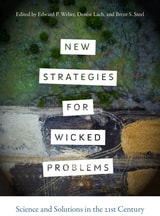
New Strategies for Wicked Problems
Science and Solutions in the 21st CenturyEdward P. Weber
Oregon State University Press, 2017
We now live in a world full of wicked problems, most of them urgent challenges calling out for creative, democratic, and effective solutions. Ed Weber, Denise Lach, and Brent Steele, of the Oregon State University School of Public Policy, solicited papers from a wide variety of accomplished scholars in the fields of science, politics, and policy with significant research experience to address this challenge. The resultant collection focuses on major contemporary environmental and natural resource policy issues, and proposes an assortment of alternative problem-solving methodologies to tackle such problems.
New Strategies for Wicked Problems will appeal to scholars, students, and decision-makers wrestling with wicked problems and “post-normal” science settings beyond simply environmental and natural resource-based issues. It will provide much needed guidance to policymakers, citizens, public managers, and various stakeholders who are struggling with wicked problems in their professional lives.
Other Contributors:
Tanya Heikkila
Helen Ingram
Ann C. Keller
Bob Lackey
Anna Pakenham Stevenson
Christopher M. Weible
Daniel R. Williams
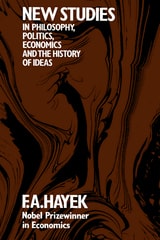
New Studies in Philosophy, Politics, Economics, and the History of Ideas
F. A. Hayek
University of Chicago Press, 1978
Following on F. A. Hayek's previous work Studies in Philosophy, Politics, and Economics (1967), New Studies in Philosophy, Politics, Economics and the History of Ideas collects some of Hayek's most notable essays and lectures dealing with problems of philosophy, politics and economics, with many of the essays falling into more than one of these categories. Expanding upon the previous volume the present work also includes a fourth part collecting a series of Hayek's writings under the heading 'History of Ideas.'
Of the articles contained in this volume the lectures on 'The Errors of Constructivism' (chapter 1) and 'Competition as a Discovery Procedure' (chapter 12) have been published before only in German, while the article on 'Liberalism' (chapter 9) was written in English to be published in an Italian translation in the Enciclopedia del Novicento by the Istituto della Enciclopedia Italiana at Rome.

New Urban Development
Looking Back to See ForwardGruen, Claude
Rutgers University Press, 2010
New Urban Development traces how locally induced housing cost increases led federal policy-makers to toss out the safeguards against lending excesses that had been put in place during the 1930s. But the story begins much earlier, during the colonial era, continuing up through the mortgage collapse that ushered in the recession of 2008. In his sweeping history of these issues, Gruen considers gentrification, environmentalism, sprawl, anti-sprawl movements, and more. His clarification of how urban development change occurs backs up his recommendations for increasing the production of housing and replacing obsolete commercial and industrial spaces with development that serves the twenty-first-century economy. New Urban Development specifies thirteen changes to policies at the federal, state, and local levels to provide better and less expensive urban housing, desirable neighborhoods, and thriving workplaces across the country.

New World Gold
Cultural Anxiety and Monetary Disorder in Early Modern SpainElvira Vilches
University of Chicago Press, 2010
The discovery of the New World was initially a cause for celebration. But the vast amounts of gold that Columbus and other explorers claimed from these lands altered Spanish society. The influx of such wealth contributed to the expansion of the Spanish empire, but also it raised doubts and insecurities about the meaning and function of money, the ideals of court and civility, and the structure of commerce and credit. New World Gold shows that, far from being a stabilizing force, the flow of gold from the Americas created anxieties among Spaniards and shaped a host of distinct behaviors, cultural practices, and intellectual pursuits on both sides of the Atlantic.
Elvira Vilches examines economic treatises, stories of travel and conquest, moralist writings, fiction, poetry, and drama to reveal that New World gold ultimately became a problematic source of power that destabilized Spain’s sense of trust, truth, and worth. These cultural anxieties, she argues, rendered the discovery of gold paradoxically disastrous for Spanish society. Combining economic thought, social history, and literary theory in trans-Atlantic contexts, New World Gold unveils the dark side of Spain’s Golden Age.
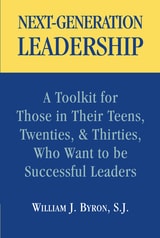
Next-Generation Leadership
A Toolkit for Those in Their Teens, Twenties, & Thirties, Who Want to be Successful LeadersWilliam J. Byron
University of Scranton Press, 2010
Drawing on his five decades of leadership experience, William Byron outlines in this volume the theory, practice, and purpose of leadership. Intuition, humility, empathy, simplicity of lifestyle, and sound speaking and writing skills are all essential for effective leadership, and Byron devotes separate, in-depth chapters to each. Aimed at an audience now largely overlooked by leadership literature, Next Generation Leadership will appeal to the business, government, religion, and nonprofit leaders of tomorrow.

No Collar
The Humane Workplace And Its Hidden CostsAndrew Ross
Temple University Press, 2004
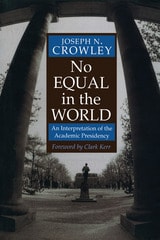
No Equal In The World
An Interpretation Of The Academic PresidencyJoseph N. Crowley
University of Nevada Press, 1994
No Way to Run an Economy
Why the System Failed and How to Put It RightGraham Turner
Pluto Press, 2009
In The Credit Crunch, Graham Turner predicted that banks would be nationalised and interest rates would be reduced too slowly to halt the crisis. His predictions were correct. His new book, No Way to Run an Economy, is the essential guide to the turbulent times ahead.
Turner recommended radical measures, such as quantitative easing, in early 2008 but argues that action has been taken too late and been too timid to make a real difference. He dissects the policy mistakes of the last 12 months including Obama's doomed market-led response to the crisis and the obsession of central banks with the red herring of inflation.
There is no doubt the economy is still in serious trouble, but Turner shows that learning from the mistakes made so far can prevent a situation worse than that of the 1930s crisis.

Noise
Living and Trading in Electronic FinanceAlex Preda
University of Chicago Press, 2017
In Noise, Alex Preda explores the world of the people who trade even when by all measures they would be better off not trading. Based on firsthand observations, interviews with traders and brokers, and on international direct trading experience, Preda’s fascinating ethnography investigates how ordinary people take up financial trading, how they form communities of their own behind their computer screens, and how electronic finance encourages them to trade more and more frequently. Along the way, Preda finds the answer to the paradox of amateur trading—the traders aren’t so much seeking monetary rewards in the financial markets, rather the trading itself helps them to fulfill their own personal goals and aspirations.
Noncognitive Skills and Their Development
Special Issue of Journal of Human Resources 43:4 (Fall 2008)Edited by Thomas J. Kniesner and Bas ter Weel
University of Wisconsin Press, 2010
These articles include recent research on ways to incorporate the noncognitive side of ability in economic theory and to empirically assess and explain its role in labor market and behavioral outcomes. Contributions investigate the extent to which assignment of workers is determined by traditional cognitive variables and by personality traits. Also presented in this collection is research on the role of noncognitive skills in explaining the labor market position of underrepresented groups and research that integrates the economic and psychological theory and evidence on noncognitive skills.
Nonfuel Minerals
Foreign Dependence and National SecurityRaymond F. Mikesell
University of Michigan Press, 1987
Nonprofit Governance
The Why, What, and How of Nonprofit BoardshipJohn Tropman and Thomas J. Harvey
University of Scranton Press, 2009
This thorough volume offers up-to-date information and practical guidelines for board members and executives of nonprofit organizations large and small. Among the topics addressed are the historical roots of the voluntary sector in America, a complete discussion of the key responsibilities of nonprofit boards, suggestions for board organization, appropriate protocol for meetings, legal issues affecting nonprofit groups, and useful tools for self-assessment. This guide will be indispensable to the almost two million nonprofit organizations existing in the United States today.

Normal and Abnormal International Capital Transfers
Marco Fanno
University of Minnesota Press, 1939
Normal and Abnormal International Capital Transfers was first published in 1939. Minnesota Archive Editions uses digital technology to make long-unavailable books once again accessible, and are published unaltered from the original University of Minnesota Press editions.

Northern Frontiers of Qing China and Tokugawa Japan
A Comparative Study of Frontier PolicyRichard Louis Edmonds
University of Chicago Press, 1985
Not Only the Market
Martin Potucek
Central European University Press, 1999

Not Quite a Cancer Vaccine
Selling HPV and Cervical CancerS.D. Gottlieb
Rutgers University Press, 2018
Prior to its market debut, Gardasil seemed to offer female empowerment, touting protection against HPV and its potential for cervical cancer. Gottlieb questions the marketing pitch’s vaunted promise and asks why vaccine marketing unnecessarily gendered the vaccine’s utility, undermining Gardasil’s benefit for men and women alike. This book demonstrates why in the ten years since Gardasil’s U.S. launch its low rates of public acceptance have their origins in the early days of the vaccine dissemination. Not Quite a Cancer Vaccine addresses the on-going expansion in U.S. healthcare of patients-as-consumers and the ubiquitous, and sometimes insidious, health marketing of large pharma.
Not Slave, Not Free
The African American Economic Experience Since the Civil WarJay R. Mandle
Duke University Press, 1992
Not Slave, Not Free focuses first on rural southern society before World War II and the role played by African Americans in that setting. The South was the least developed part of the United States, a fact that Mandle considers fundamental in accounting for the poverty of African Americans in the years before the War. At the same time, however, the concentration of the black labor force in plantation work significantly retarded the South’s economic growth. Tracing the postwar migration of blacks from the South, Mandle shifts attention to the problems and opportunities that confronted African Americans in cities. He shows how occupational segregation and income growth accelerated this migration.
Instrumental to an understanding of the history of the political economy of the United States, this book also directs readers and policymakers to the central issues confronting African Americans today.

Not Your Mother's Mammy
The Black Domestic Worker in Transatlantic Women’s MediaTracey L Walters
Rutgers University Press, 2021
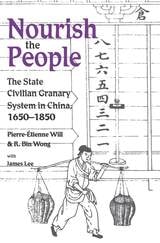
Nourish the People
The State Civilian Granary System in China, 1650–1850Pierre-Etienne Will and R. Bin Wong; With James Lee; Contributions by Jean Oi and Peter Perdue
University of Michigan Press, 1991
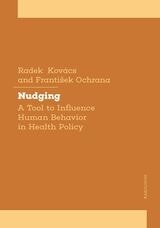
Nudging towards Health
A Tool to Influence Human Behavior in Health PolicyRadek Kovács and František Ochrana
Karolinum Press, 2023
Behavioral economics sees “nudges” as ways to encourage people to re-evaluate their priorities in such a way that they voluntarily change their behavior, leading to personal and social benefits. This book examines nudging as a tool for influencing human behavior in health policy. The authors investigate the contemporary scientific discourse on nudging and enrich it with an ontological, epistemological, and praxeological analysis of human behavior. Based on analyses of the literature and a systemic review, the book defines nudging tools within the paradigm of prospect theory. In addition to the theoretical contribution, Nudging also examines and offers suggestions on the practice of health policy regarding obesity, malnutrition, and especially type 2 diabetes mellitus.

Nursing the Nation
Building the Nurse Labor ForceJean C. Whelan
Rutgers University Press, 2021