Results by title
4531 books match the query 'Cultural & Ethnic Studies' and 99 start with n
New South African Keywords
Nick Shepherd
Ohio University Press, 2008
New Thoughts on the Black Arts Movement
Edited by Lisa Gail Collins and Margo Natalie Crawford
Rutgers University Press, 2006
New Visions of Community in Contemporary American Fiction
Tan, Kingsolver, Castillo, MorrisonMagali Cornier Michael
University of Iowa Press, 2006
New Work of Writing Across the Curriculum
Diversity and Inclusion, Collaborative Partnerships, and Faculty DevelopmentStaci M. Perryman-Clark
Utah State University Press, 2023
Many of these initiatives are created in isolation, reinforcing institutional silos that are not used strategically to gain the attention of senior administrators, particularly those working at state-supported public institutions who must manage shrinking institutional budgets. Yet teaching and learning centers and WAC programs gain tremendously from one another by building explicit partnerships on campus-wide diversity initiatives that emphasize cultural competence. In addition, both cultural competence and written proficiency enhance the transferable skills necessary for completing undergraduate education requirements, and this work can be leveraged to draw the attention of senior administrative leadership.
Faculty development and WAC need to make diversity and inclusion initiatives a priority for professional development. The New Work of Writing Across the Curriculum reviews initiatives that point to increased understanding of diversity and inclusion that will be of significance to administrators, WAC specialists, faculty developers, and diversity officers across the spectrum of institutions of higher learning.

Newark's Little Italy
The Vanished First WardImmerso, Michael
Rutgers University Press, 1997
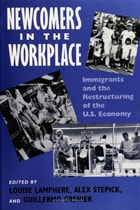
Newcomers In Workplace
Immigrants and the Restructing of the U.S. Economyedited by Louise Lamphere, Alex Stepick and Guillermo Grenier
Temple University Press, 1994
Newcomers in the Workplace documents and dramatizes the changing face of the American workplace, transformed in the 1980s by immigrant workers in all sectors. This collection of excellent ethnographies captures the stench of meatpacking plants, the clatter of sewing machines, the sweat of construction sites, and the strain of management-employee relations in hotels and grocery stores as immigrant workers carve out crucial roles in a struggling economy.
Case studies focus on three geographical regions—Philadelphia, Miami, and Garden City, Kansas—where the active workforce includes increasing numbers of Cubans, Haitians, Koreans, Puerto Ricans, Laotians, Vietnamese, and other new immigrants. The portraits show these newcomers reaching across ethnic boundaries in their determination to retain individualism and to insure their economic survival.
In the series Labor and Social Change, edited by Paula Rayman and Carmen Sirianni.
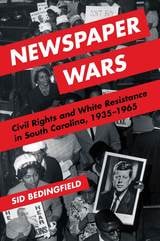
Newspaper Wars
Civil Rights and White Resistance in South Carolina, 1935-1965Sid Bedingfield
University of Illinois Press, 2017
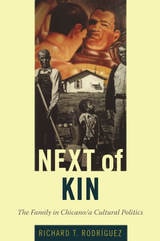
Next of Kin
The Family in Chicano/a Cultural PoliticsRichard T. Rodríguez
Duke University Press, 2009
Describing how la familia came to be adopted as an organizing strategy for communitarian politics, Rodríguez looks at foundational texts including Rodolfo Gonzales’s well-known poem “I Am Joaquín,” the Chicano Liberation Youth Conference’s manifesto El Plan Espiritual de Aztlán, and José Armas’s La Familia de La Raza. Rodríguez analyzes representations of the family in the films I Am Joaquín, Yo Soy Chicano, and Chicana; the Los Angeles public affairs television series ¡Ahora!; the experimental videos of the artist-activist Harry Gamboa Jr.; and the work of hip-hop artists such as Kid Frost and Chicano Brotherhood. He reflects on homophobia in Chicano nationalist thought, and examines how Chicano gay men have responded to it in works including Al Lujan’s video S&M in the Hood, the paintings of Eugene Rodríguez, and a poem by the late activist Rodrigo Reyes. Next of Kin is both a wide-ranging assessment of la familia’s symbolic power and a hopeful call for a more inclusive cultural politics.
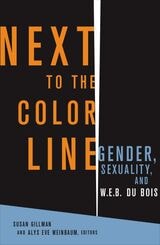
Next to the Color Line
Gender, Sexuality, and W. E. B. Du BoisSusan Gillman
University of Minnesota Press, 2007

Nicaragua's Mosquito Shore
The Years of British and American PresenceCraig L. Dozier
University of Alabama Press, 1985
An essential interdisciplinary study of culture, history, and identity on Nicaragua’s Caribbean frontier.
Separated from Nicaragua’s Pacific plain by mountains, the Atlantic coastal plain extends between 70 and 100 miles into the interior. Early Spanish settlers were ousted by the British, who engaged in the mahogany trade, and who also hoped for trade with Americans seeking a short route to California. In 1850, with the signing of the Clayton-Bulwer Treaty, the U.S. and Britain agreed that neither country would seek to acquire exclusive control over a Nicaraguan canal. Plans for the development of a Nicaraguan canal had a marked influence on the region for the next 100 years.
During the second half of the 19th century both rubber and bananas were produced commercially in eastern Nicaragua, and the Standard Fruit Company of New Orleans became the larges single commercial influence in the region. The first over American intervention in eastern Nicaragua occurred in 1912, when a contingent of Marines was dispatched to protect American commercial interests. The Marines remained for thirteen years.
Dozier develops the history of the current political troubles in Nicaragua, which had their origin in the early 1930s and which center about the control of the rich area inhabited by the Mosquitos. His book presents the historical background for the tragic events that are taking place in that region.
Nightsong
Performance, Power, and Practice in South AfricaVeit Erlmann
University of Chicago Press, 1996
Veit Erlmann provides the first comprehensive interpretation of isicathamiya performance practice and its relation to the culture and consciousness of the Zulu migrant laborers who largely compose its choirs. In songs and dances, the performers oppose the class and racial oppression that reduces them to "labor units." At the same time, Erlmann argues, the performers rework dominant images to symbolically reconstruct their "home," an imagined world of Zulu rural tradition and identity.
By contrasting the live performance of isicathamiya to its reproduction in mass media, recordings, and international concerts, Erlmann addresses important issues in performance studies and anthropology, and looks to the future of isicathamiya live performance in the new South Africa. Featuring an Introduction by Joseph Shabalala, the lead singer and founder of Ladysmith Black Mambazo, this book will be essential reading for anyone interested in the study of music, performance, popular culture, or South Africa.

Nikkei Baseball
Japanese American Players from Immigration and Internment to the Major LeaguesSamuel Ragalado
University of Illinois Press, 2013
Nimrods
a fake-punk self-hurt anti-memoirKawika Guillermo
Duke University Press, 2023
Nineteenth-Century China
Five Imperialist PerspectivesSelected by Dilip Basu. Edited with an introduction by Rhoads Murphey
University of Michigan Press, 1972
Ninety Degrees in the Shade
Clarence E. Cason
University of Alabama Press, 2001
A candid, courageous portrait of the South as told by a writer unafraid to confront its heat, its history, and its humanity.
Clarence Cason belonged to that restless generation of southern intellectuals who, between the world wars, questioned the South's stubborn traditionalism, even as they tried to explain and defend its distinctiveness. From his professorial perch at The University of Alabama, Cason wrote polished essays for leading national publications while contributing weekly editorials for newspaper readers. As a journalist in academia, he cultivated a broad audience for his eloquent though tentative observations about the "character" of a region that seemed to be a separate province of the nation.
In 1935, Cason collected his thoughts in a small book of essays titled 90° in the Shade. In it, he declared that climate and the relaxation afforded by field and stream had given southerners excellent reasons for their notoriously slow pace of life. Still, he wrote, "there is much work that ought to be done below the Potomac." Cason captured the pathos of race relations and other persistent problems and declared that the abominable practice of lynching would end when the best people of the South risked their personal and commercial standing to denounce it. Just days before the book's publication, however, Cason shot himself in his campus office. He left no explanation, but apparently he feared angry reaction from fellow citizens to his mild criticisms and gentle suggestions for change.
The University of Alabama Press brought the book back into print in 1983. This new edition of Cason's classic features an introduction by journalist and UA professor H. Bailey Thomson, allowing yet another generation the enjoyment of Cason's perceptive writing, not so much for any remedy he proposed but rather for the open-minded and loving way in which he addressed the region's tragic experience.
This second reprint edition of a classic work on southern culture will allow a new generation of readers to enjoy Cason's observant, graceful writing.

Ninety-Nine
A Kaleidoscopic Portrait of AllahAmira Mittermaier
Duke University Press, 2026

Nisei Sansei
Jere Takahashi
Temple University Press, 1998
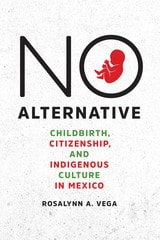
No Alternative
Childbirth, Citizenship, and Indigenous Culture in MexicoBy Rosalynn A. Vega
University of Texas Press, 2018
Recent anthropological scholarship on “new midwifery” centers on how professional midwives in various countries are helping women reconnect with “nature,” teaching them to trust in their bodies, respecting women’s “choices,” and fighting for women’s right to birth as naturally as possible. In No Alternative, Rosalynn A. Vega uses ethnographic accounts of natural birth practices in Mexico to complicate these narratives about new midwifery and illuminate larger questions of female empowerment, citizenship, and the commodification of indigenous culture, by showing how alternative birth actually reinscribes traditional racial and gender hierarchies.
Vega contrasts the vastly different birthing experiences of upper-class and indigenous Mexican women. Upper-class women often travel to birthing centers to be delivered by professional midwives whose methods are adopted from and represented as indigenous culture, while indigenous women from those same cultures are often forced by lack of resources to use government hospitals regardless of their preferred birthing method. Vega demonstrates that women’s empowerment, having a “choice,” is a privilege of those capable of paying for private medical services—albeit a dubious privilege, as it puts the burden of correctly producing future members of society on women’s shoulders. Vega’s research thus also reveals the limits of citizenship in a neoliberal world, as indigeneity becomes an object of consumption within a transnational racialized economy.
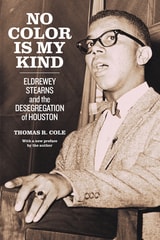
No Color Is My Kind
Eldrewey Stearns and the Desegregation of HoustonThomas R. Cole
University of Texas Press, 2021
In 1959, a Black man named Eldrewey Stearns was beaten by Houston police after being stopped for a traffic violation. He was not the first to suffer such brutality, but the incident sparked Stearns’s conscience and six months later he was leading the first sit-in west of the Mississippi River. No Color Is My Kind, first published in 1997, introduced readers to Stearns, including his work as a civil rights leader and lawyer in Houston’s desegregation movement between 1959 and 1963. This remarkable and important history, however, was nearly lost to bipolar affective disorder. Stearns was a fifty-two-year-old patient in a Galveston psychiatric hospital when Thomas Cole first met him in 1984. Over the course of a decade, Cole and Stearns slowly recovered the details of Stearns’s life before his slide into mental illness, writing a story that is more relevant today than ever.
In this new edition, Cole fills in the gaps between the late 1990s and now, providing an update on the progress of civil rights in Houston and Stearns himself. He also reflects on his tumultuous and often painful collaboration with Stearns, challenging readers to be part of his journey to understand the struggles of a Black man’s complex life. At once poignant, tragic, and emotionally charged, No Color Is My Kind is essential reading as the current movement for racial reconciliation gathers momentum.
No Color Is My Kind
The Life of Eldrewey Stearns and the Integration of HoustonBy Thomas R. Cole
University of Texas Press, 1997
No God but Man
On Race, Knowledge, and TerrorismAtiya Husain
Duke University Press, 2025
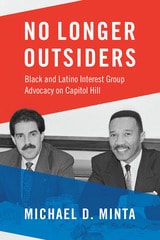
No Longer Outsiders
Black and Latino Interest Group Advocacy on Capitol HillMichael D. Minta
University of Chicago Press, 2021
In No Longer Outsiders, Minta provides a comprehensive account of the effectiveness of minority civil rights organizations and their legislative allies. He finds that the organizations’ legislative priorities are consistent with black and Latino preferences for stronger enforcement of civil rights policy and immigration reform. Although these groups focus mainly on civil rights for blacks and immigration issues for Latinos, their policy agendas extend into other significant areas. Minta concludes with an examination of how diversity in Congress helps groups gain greater influence and policy success despite many limits placed upon them.
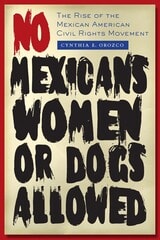
No Mexicans, Women, or Dogs Allowed
The Rise of the Mexican American Civil Rights MovementBy Cynthia E. Orozco
University of Texas Press, 2009
Founded by Mexican American men in 1929, the League of United Latin-American Citizens (LULAC) has usually been judged according to Chicano nationalist standards of the late 1960s and 1970s. Drawing on extensive archival research, including the personal papers of Alonso S. Perales and Adela Sloss-Vento, No Mexicans, Women, or Dogs Allowed presents the history of LULAC in a new light, restoring its early twentieth-century context.
Cynthia Orozco also provides evidence that perceptions of LULAC as a petite bourgeoisie, assimilationist, conservative, anti-Mexican, anti-working class organization belie the realities of the group's early activism. Supplemented by oral history, this sweeping study probes LULAC's predecessors, such as the Order Sons of America, blending historiography and cultural studies. Against a backdrop of the Mexican Revolution, World War I, gender discrimination, and racial segregation, No Mexicans, Women, or Dogs Allowed recasts LULAC at the forefront of civil rights movements in America.
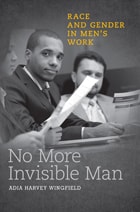
No More Invisible Man
Race and Gender in Men's WorkAdia Harvey Wingfield
Temple University Press, 2012
The “invisible men” of sociologist Adia Harvey Wingfield’s urgent and timely No More Invisible Man are African American professionals who fall between extremely high status, high-profile black men and the urban underclass. Her compelling interview study considers middle-class, professional black men and the challenges, obstacles, and opportunities they encounter in white male–dominated occupations.
No More Invisible Man chronicles these men’s experiences as a tokenized minority in the workplace to show how issues of power and inequality exist—especially as they relate to promotion, mobility, and developing occupational networks. Wingfield’s intersectional analysis deftly charts the ways that gender, race, and class collectively shape black professional men’s work experiences.
In its examination of men’s interactions with women and other men, as well as men’s performances of masculinity and their emotional demeanors in these jobs, No More Invisible Man extends our understanding of racial- and gender-based dynamics in professional work.
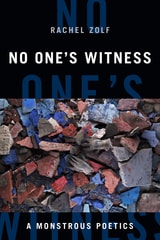
No One's Witness
A Monstrous PoeticsSyd Zolf
Duke University Press, 2021
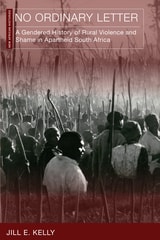
No Ordinary Letter
A Gendered History of Rural Violence and Shame in Apartheid South AfricaJill E. Kelly
Ohio University Press, 0
No Ordinary Letter reconstructs the intellectual world of rural South African women who, in 1959, mounted determined campaigns across Natal to resist the expanding policies of apartheid. Challenging Bantu Authorities, detrimental agricultural schemes, restrictions on movement, and the extension of pass laws to women, these organizers drew on knowledge rooted in the lived experience of farmwork, household management, and community governance. The book shows how women assessed their political circumstances and crafted strategies—some peaceful, some destructive—to make themselves heard in a system structured to ignore them.
Foregrounding women as thinkers as well as activists, No Ordinary Letter reveals how rural organizers theorized their positions under apartheid law and within patriarchal households and communities. Their repertoire of political understanding encompassed the daily violence of apartheid, local cultures of honor that enabled them to shame others into action, and finely honed skills for navigating the authority of elders, in-laws, and traditional leaders. When the Camperdown Native Commissioner asked why a group had destroyed government property, they replied, “We were really writing a letter to the authorities which they could read. If we had written an ordinary letter, you would not have replied.” Their explanation captures how an underlying logic of violence became a vehicle for extraordinary political communication.
At the same time, the book underscores the profound constraints shaping women’s choices: poverty, state repression, and the multiple patriarchies embedded within both the apartheid state and African communities. These overlapping systems meant that the immediate enforcers of apartheid policy were often African men with their own stakes in patriarchal arrangements. No Ordinary Letter offers a groundbreaking account of how rural women understood, navigated, and contested these entangled structures of power, providing a fresh view on political thought and resistance in apartheid South Africa.
No Peace Without Freedom
Race and The Women's International League For Peace and Freedom 1915-1975Joyce Blackwell
Southern Illinois University Press, 2004
Just as women changed the direction and agenda of the peace movement when they became progressively more involved in an all-male club, black women altered a cause that had previously lacked racial diversity when they were first granted admission to the Women’s International League for Peace and Freedom in 1915. As Joyce Blackwell illustrates in this first study of collective black peace activism, the increased presence of black women in the WILPF over the next sixty years brought to the movement historical experiences shaped by societal racism.
No Peace Without Freedom: Race and the Women’s International League for Peace and Freedom, 1915–1975 explores how black women, fueled by the desire to eradicate racial injustice, compelled the white leadership of the WILPF to revisit its own conceptions of peace and freedom. Blackwell offers a renewed examination of peace movements in American history, one that points out the implications of black women’s participation for the study of social activism, African American history, and women’s history. This new perspective on interracial and black female global activism helps redefine the often-covert systemic violence necessary to maintain systems of social and economic hierarchy, moving peace and war discourse away from its narrow focus on European and European-American issues.
Blackwell looks closely at the reasons why white women organized their own peace group at the start of World War I and assesses several bold steps taken by these groups in their first ten years. Addressing white peace activists’ continuous search for the “perfect” African American woman, Blackwell considers when and why black women joined the WILPF, why so few of them were interested in the organization, and what the small number who did join had in common with their white counterparts. She also shows how the WILPF, frustrated at its inability to successfully appeal to black women, established a controversial interracial committee to deal with the dilemma of recruiting black women while attempting to maintain all of its white members.
Tracing the black activists’ peace reform activities on an international level from World War I to the end of the Vietnam War, No Peace Without Freedom examines the links black activists established within the African American community as well as the connections they made with peoples of the black Diaspora and later with colonized people irrespective of race. The volume is complemented by eighteen illustrations.
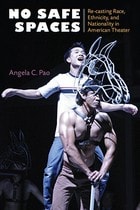
No Safe Spaces
Re-casting Race, Ethnicity, and Nationality in American TheaterAngela C. Pao
University of Michigan Press, 2010
"No Safe Spaces opens up a conversation beyond narrow polemics . . . Although cross-racial casting has been the topic of heated discussion, little sustained scholarship addresses both the historical precedents and theoretical dimensions. Pao illustrates the tensions and contradictions inherent not only in stage representations, but also in the performance of race in everyday life. A wonderful book whose potential readership goes well beyond theater and performance scholars."
---Josephine Lee, University of Minnesota
"Non-traditional casting, increasingly practiced in American theater, is both deeply connected to our country's racial self-image(s) and woefully under-theorized. Pao takes on the practice in its entirety to disentangle the various strands of this vitally important issue."
---Karen Shimakawa, New York University
No Safe Spaces looks at one of the most radical and enduring changes introduced during the Civil Rights era---multiracial and cross-racial casting practices in American theater. The move to cast Latino/a, African American, and Asian American actors in classic stage works by and about white Europeans and Americans is viewed as both social and political gesture and artistic innovation. Nontraditionally cast productions are shown to have participated in the national dialogue about race relations and ethnic identity and served as a source of renewed creativity for the staging of the canonical repertory.
Multiracial casting is explored first through its history, then through its artistic, political, and pragmatic dimensions. Next, the book focuses on case studies from the dominant genres of contemporary American theater: classical tragedy and comedy, modern domestic drama, antirealist drama, and the Broadway musical, using a broad array of archival source materials to enhance and illuminate its arguments.
Angela C. Pao is Associate Professor of Comparative Literature at Indiana University.
A volume in the series Theater: Theory/Text/Performance
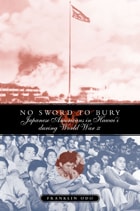
No Sword To Bury
Japanese Americans In HawaiiFranklin S. Odo
Temple University Press, 2004

No Tea, No Shade
New Writings in Black Queer StudiesE. Patrick Johnson, editor
Duke University Press, 2016
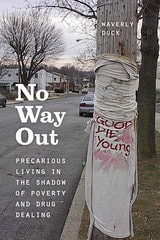
No Way Out
Precarious Living in the Shadow of Poverty and Drug DealingWaverly Duck
University of Chicago Press, 2015
Duck’s short stay in Bristol Hill quickly transformed into a long-term study—one that forms the core of No Way Out. This landmark book challenges the common misconception of urban ghettoes as chaotic places where drug dealing, street crime, and random violence make daily life dangerous for their residents. Through close observations of daily life in these neighborhoods, Duck shows how the prevailing social order ensures that residents can go about their lives in relative safety, despite the risks that are embedded in living amid the drug trade. In a neighborhood plagued by failing schools, chronic unemployment, punitive law enforcement, and high rates of incarceration, residents are knit together by long-term ties of kinship and friendship, and they base their actions on a profound sense of community fairness and accountability. Duck presents powerful case studies of individuals whose difficulties flow not from their values, or a lack thereof, but rather from the multiple obstacles they encounter on a daily basis.
No Way Out explores how ordinary people make sense of their lives within severe constraints and how they choose among unrewarding prospects, rather than freely acting upon their own values. What emerges is an important and revelatory new perspective on the culture of the urban poor.
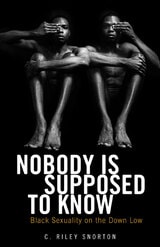
Nobody Is Supposed to Know
Black Sexuality on the Down LowC. Riley Snorton
University of Minnesota Press, 2014
Since the early 2000s, the phenomenon of the “down low”—black men who have sex with men as well as women and do not identify as gay, queer, or bisexual—has exploded in news media and popular culture, from the Oprah Winfrey Show to R & B singer R. Kelly’s hip hopera Trapped in the Closet. Most down-low stories are morality tales in which black men are either predators who risk infecting their unsuspecting female partners with HIV or victims of a pathological black culture that repudiates openly gay identities. In both cases, down-low narratives depict black men as sexually dangerous, duplicitous, promiscuous, and contaminated.
In Nobody Is Supposed to Know, C. Riley Snorton traces the emergence and circulation of the down low in contemporary media and popular culture to show how these portrayals reinforce troubling perceptions of black sexuality. Reworking Eve Sedgwick’s notion of the “glass closet,” Snorton advances a new theory of such representations in which black sexuality is marked by hypervisibility and confinement, spectacle and speculation. Through close readings of news, music, movies, television, and gossip blogs, Nobody Is Supposed to Know explores the contemporary genealogy, meaning, and functions of the down low.
Snorton examines how the down low links blackness and queerness in the popular imagination and how the down low is just one example of how media and popular culture surveil and police black sexuality. Looking at figures such as Ma Rainey, Bishop Eddie L. Long, J. L. King, and Will Smith, he ultimately contends that down-low narratives reveal the limits of current understandings of black sexuality.
None Like Us
Blackness, Belonging, Aesthetic LifeStephen Best
Duke University Press, 2018
Nonprofits and Their Networks
Cleaning the Waters along Mexico’s Northern BorderDaniel M. Sabet
University of Arizona Press, 2008
Finding that these organizations do have a positive impact, Daniel Sabet seeks to understand how autonomous nonprofit organizations have emerged and developed along the border. He employs data from more than 250 interviews with members of civil society organizations and public officials, surveys of neighborhood association leaders, observations at public meetings, and many secondary sources. His research compares the experiences of third-sector organizations in four prominent Mexican border cities: Tijuana, Nogales, Ciudad Juárez, and Nuevo Laredo.
Sabet finds that political change is a necessary precondition for the establishment of an independent third sector. The demise of one-party rule in Mexico has given nonprofit organizations greater opportunities to flourish, he finds, but persistent informal rules still obstruct their emergence and development. Sabet concludes that the success of the third sector will depend on the organizations’ networks. He examines organizational ties to three key groups—U.S. nonprofits, the business community, and government-created methods for public participation—and evaluates the importance of these connections for the future.
Normalizing Inequality
How Californians Make Sense of the Growing DivideG. Cristina Mora
Russell Sage Foundation, 2026
California has long been mythologized as the quintessential land of opportunity and reinvention—a place where anyone, regardless of origin, can forge a new life and realize their aspirations. Yet beneath this gilded narrative lies a starker reality: California ranks among the most unequal states in one of the world's most unequal countries, where the middle class finds itself increasingly squeezed. Economic inequality is not an anomaly but part of a broader global phenomenon, as disparities deepen across the world. While we know a lot about its contours, its evolution over time and its intersections with race and immigration, we understand far less about how ordinary people interpret and internalize it. In Normalizing Inequality, sociologists G. Cristina Mora and Tianna S. Paschel illuminate how middle-class Californians perceive and come to accept the inequalities that surround them.
Drawing on extensive interviews and surveys, Mora and Paschel uncover a profound paradox at the heart of middle-class consciousness. They find that Californians are keenly aware of the systemic causes of inequality—they recognize policies engineered to benefit the wealthy, they acknowledge how structural racism makes it hard for some groups to get ahead—yet they consistently minimize these forces. Instead, they gravitate toward explanations rooted in individualism, moral character, and the idea that things are worse in other places. Racism and racial inequality in California become palatable when framed as "not as bad as the South." Immigrant exploitation, however severe, transforms into evidence of the American Dream fulfilled simply upon arrival. Economic pressures that displace others become surmountable through personal industriousness and forbearance.
These beliefs about inequality grow more troubling still. Middle-class Californians sometimes blame disempowered people for their circumstances—acknowledging structural barriers facing homeless and undocumented populations while simultaneously faulting them for insufficient drive or criminal behavior that compounds their difficulties. When contemplating California's future, interviewees envision economic prosperity propelled by technological innovation, yet remain curiously unconcerned with how present inequalities might shape that tomorrow. Their imagined future is one where White and Asian American populations thrive, while Black, Latino, and economically marginalized Californians either vanish through displacement or fade into irrelevance. As respondents use these interpretive frameworks to make sense of inequality, they lean heavily on California's foundational narratives of opportunity, sanctuary and multiracial promise.
Normalizing Inequality offers an incisive examination of how ordinary citizens make sense of inequality and, through that very process of sense-making, how they tolerate and passively reproduce the conditions they often claim to deplore.
Nosotros
A Study of Everyday Meanings in Hispano New MexicoAlvin O. Korte
Michigan State University Press, 2012
Much knowledge and understanding can be generated from the experiences of everyday life. In this engaging study, Alvin O. Korte examines how this concept applies to Spanish-speaking peoples adapted to a particular locale, specifically the Hispanos and Hispanas of northern New Mexico. Drawing on social philosopher Alfred Schutz’s theory of typification, Korte looks at how meaning and identity are crafted by quotidian activities. Incorporating phenomenological and ethnomethodological strategies, the author investigates several aspects of local Hispano culture, including the oral tradition, leave-taking, death and remembrances of the dead, spirituality, and the circle of life. Although avoiding a social-problems approach, the book devotes necessary attention to mortificación (the death of the self), desmadre (chaos and disorder), and mancornando (cuckoldry). Nosotros is a vivid and insightful exploration with applications in numerous fields.
Not One More!
Feminicidio on the BorderNina Maria Lozano
The Ohio State University Press, 2019
Finding theories of new materialism inadequate to explain the feminicidios, Lozano critiques and extends this approach—advancing instead a new theoretical framework, border materialism, to argue that capitalist systems of neoliberalism and free trade are directly correlated to the killing of women on the US–Mexico border. Through the author’s fifteen-plus years of on-the-ground fieldwork, readers are presented with firsthand accounts, testimonies, and new social movement strategies from family members and activists attempting to stop these gendered crimes.
By offering concrete case studies—including analysis of maquiladoras/factories and free trade zones, public monuments and murals memorializing the victims, rastreos/searches by family members for victims’ DNA remains, and testimony from Mothers, family members, and activists—Not One More! lays bare the socioeconomic and geopolitical forces at work in the killing of women in Juárez.
Not White Enough, Not Black Enough
Racial Identity in the South African Coloured CommunityMohamed Adhikari
Ohio University Press, 2005
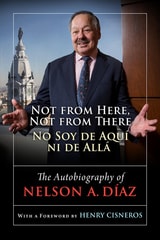
Not from Here, Not from There/No Soy de Aquí ni de Allá
The Autobiography of Nelson DíazNelson A. Díaz
Temple University Press, 2018
Raised in the squalor of a New York tenement until he was 10 years old, Nelson Díaz saw his life change when his family moved to a brand-new high-rise project in West Harlem in the 1950s. That experience, along with lessons learned as the only Latino law student at Temple University, would drive him throughout his life as a lawyer and activist, fighting for the expansion of rights for all Americans.
“No soy de aquí ni de allá” is a mantra for Puerto Ricans who feel like foreigners wherever they are and who seek a place for themselves. In his inspiring autobiography, Not from Here, Not from There, Díaz tells the story of his struggles and triumphs as his perspective widened from the New York streets and law school classrooms to the halls of power in Philadelphia and Washington, DC. Whether as a leader in economic development, a pioneer in court reform, or a champion of fair housing, Díaz has never stopped advocating for others. Díaz was happy to be the first Latino to “do something,” but he never wanted to be the last. This story of an outsider who worked his way to the inside offers powerful lessons on finding a place in the world by creating spaces where everyone is welcome.
Not in Our Lifetimes
The Future of Black PoliticsMichael C. Dawson
University of Chicago Press, 2011
For all the talk about a new postracial America, the fundamental realities of American racism—and the problems facing black political movements—have not changed. Michael C. Dawson lays out a nuanced analysis of the persistence of racial inequality and structural disadvantages, and the ways that whites and blacks continue to see the same problems—the disastrous response to Katrina being a prime example—through completely different, race-inflected lenses. In fact, argues Dawson, the new era heralded by Barack Obama’s election is more racially complicated, as the widening class gap among African Americans and the hot-button issue of immigration have the potential to create new fissures for conservative and race-based exploitation. Through a thoughtful analysis of the rise of the Tea Party and the largely successful “blackening” of President Obama, Dawson ultimately argues that black politics remains weak—and that achieving the dream of racial and economic equality will require the sort of coalition-building and reaching across racial divides that have always marked successful political movements.
Polemical but astute, passionate but pragmatic, Not in Our Lifetimes forces us to rethink easy assumptions about racial progress—and begin the hard work of creating real, lasting change.

Notes on Vermin
Caroline Hovanec
University of Michigan Press, 2025
Notes on Vermin is an atlas of the literary vermin that appear in modern and contemporary literature, from Franz Kafka’s gigantic insect to Richard Wright’s city rats to Namwali Serpell’s storytelling mosquitoes. As parasites, trespassers, and collectives, vermin animals prove useful to writers who seek to represent life in the margins of power. Drawing on psychoanalysis, cultural studies, eco-Marxism, and biopolitics, this book explores four uses for literary vermin: as figures for the repressed thought, the uncommitted fugitive, the freeloading parasite, and the surplus life. In a series of short, accessible, interlinked essays, Notes on Vermin explores what animal pests can show us about our cultures, our environments, and ourselves.
Nothing, Nobody
The Voices of the Mexico City EarthquakeElena Poniatowska, translated by Aurora Camacho de Schmidt, foreword by Arthur Schmidt
Temple University Press, 1995
September 19, 1985: A powerful earthquake hits Mexico City in the early morning hours. As the city collapses, the government fails to respond. Long a voice of social conscience, prominent Mexican journalist Elena Poniatowska chronicles the disintegration of the city's physical and social structure, the widespread grassroots organizing against government corruption and incompetence, and the reliency of the human spirit. As a transformative moment in the life of mexican society, the earthquake is as much a component of the country's current crisis as the 1982 debt crisis, the problematic economic of the last ten years, and the recent elections.
In masterfully weaving together a multiplicity of voices, Poniatowska has reasserted the inherent value and latent power of people working together. Punctuated by Poniatowska's own experiences and observations, these post disaster testimonies speak of the disruption of families and neighborhoods, of the destruction of homes and hospitals, of mutilation and death—the collective loss of a city. Drawing the reader dramatically into the scene of national horror through dozens of personal stories, Poniatowska demonstrates the importance of courage and self-reliance in redeeming life from chaos.

Nourish the People
The State Civilian Granary System in China, 1650–1850Pierre-Etienne Will and R. Bin Wong; With James Lee; Contributions by Jean Oi and Peter Perdue
University of Michigan Press, 1991
Now Is the Time!
Detroit Black Politics and Grassroots ActivismTodd C. Shaw
Duke University Press, 2009
Shaw uses the tools of social movement analysis, including the quantitative analysis of budgets, electoral data, and housing statistics, as well as historical research and personal interviews, to better understand the dilemmas, innovations, and dynamics of grassroots activism. He begins with a history of discriminatory housing practices and racial divisions that deeply affected Detroit following the Second World War and set the stage for the election of the city’s first black mayor, Coleman Young. By emphasizing downtown redevelopment, Mayor Young’s administration often collided with low-income housing advocates. Only through grassroots activism were those advocates able to delay or derail governmental efforts to demolish low-income housing in order to make way for more upscale development. Shaw then looks at present-day public housing activism, assessing the mixed success of the nationally sponsored HOPE VI project aimed at fostering home ownership in low-income areas. Descriptive and prescriptive, Now Is the Time! traces the complicated legacy of community activism to illuminate what is required for grassroots activists to be effective in demanding public accountability to poor and marginalized citizens.

Nowaki
Natsume Soseki; Translated and with an Afterword and Chronology by William N. Ridgeway
University of Michigan Press, 2011
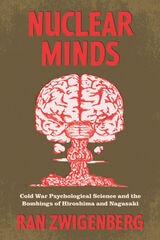
Nuclear Minds
Cold War Psychological Science and the Bombings of Hiroshima and NagasakiRan Zwigenberg
University of Chicago Press, 2023
In 1945, researchers on a mission to Hiroshima with the United States Strategic Bombing Survey canvassed survivors of the nuclear attack. This marked the beginning of global efforts—by psychiatrists, psychologists, and other social scientists—to tackle the complex ways in which human minds were affected by the advent of the nuclear age. A trans-Pacific research network emerged that produced massive amounts of data about the dropping of the bomb and subsequent nuclear tests in and around the Pacific rim.
Ran Zwigenberg traces these efforts and the ways they were interpreted differently across communities of researchers and victims. He explores how the bomb’s psychological impact on survivors was understood before we had the concept of post-traumatic stress disorder. In fact, psychological and psychiatric research on Hiroshima and Nagasaki rarely referred to trauma or similar categories. Instead, institutional and political constraints—most notably the psychological sciences’ entanglement with Cold War science—led researchers to concentrate on short-term damage and somatic reactions or even, in some cases, on denial of victims’ suffering. As a result, very few doctors tried to ameliorate suffering.
But, Zwigenberg argues, it was not only that doctors “failed” to issue the right diagnosis; the victims’ experiences also did not necessarily conform to our contemporary expectations. As he shows, the category of trauma should not be used uncritically in a non-Western context. Consequently, this book sets out, first, to understand the historical, cultural, and scientific constraints in which researchers and victims were acting and, second, to explore how suffering was understood in different cultural contexts before PTSD was a category of analysis.
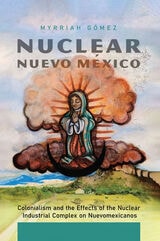
Nuclear Nuevo México
Colonialism and the Effects of the Nuclear Industrial Complex on NuevomexicanosMyrriah Gómez
University of Arizona Press, 2022
Contrary to previous works that suppress Nuevomexicana/o presence throughout U.S. nuclear history, Nuclear Nuevo México focuses on recovering the voices and stories that have been lost or ignored in the telling of this history. By recuperating these narratives, Myrriah Gómez tells a new story of New Mexico, one in which the nuclear history is not separate from the collective colonial history of Nuevo México but instead demonstrates how earlier eras of settler colonialism laid the foundation for nuclear colonialism in New Mexico.
Gómez examines the experiences of Nuevomexicanas/os who have been impacted by the nuclear industrial complex, both the weapons industry and the commercial industry. Gómez argues that Los Alamos was created as a racist project that targeted poor and working-class Nuevomexicana/o farming families, along with their Pueblo neighbors, to create a nuclear empire. The resulting imperialism has left a legacy of disease and distress throughout New Mexico that continues today.
Nuyorican and Diasporican Visual Art
A Critical AnthologyArlene Dávila and Yasmin Ramirez, editors
Duke University Press, 2025
With: Néstor David Pastor, Gabriel Magraner, and Nikki Myers
Contributors. Joseph Anthony Cáceres, Taína Caragol, Arnaldo M. Cruz-Malavé, Deborah Cullen-Morales, Arlene Dávila, Kerry Doran, Elizabeth Ferrer, Yomaira C. Figueroa-Vásquez, Al Hoyos-Twomey, Teréz Iacovino, Johnny Irizarry, Johana Londoño, Urayoán Noel, Néstor David Pastor, Yasmin Ramirez, Melissa M. Ramos Borges, Raquel Reichard, Rojo Robles, Abdiel D. Segarra Ríos, Wilson Valentín-Escobar
north by north/west
(an attention to frequency)Chris Campanioni
West Virginia University Press, 2025
2025 Foreword Indies Finalist, Nonfiction (Multicultural)
north by north/west is a hybrid work of creative nonfiction assembled as several iterative sequences—a discontinuous itinerary—of exile. Harnessing both montage and collage to represent the incohesive experience of being between cultures, categories, and language, this book is a personal, critical, and autoethnographic exploration of diasporic identity formation and creative expression amidst the cultural and political impacts of Cold War colonialism and fragmentation. As the narrator begins work on a rough translation of the 1959 film North by Northwest, focal points surface through textual correspondences with distant coordinates, shifting between close readings of Whitney Houston’s early music videos, current events reportage, illness journals, eighties spy movies, the most recent solar eclipse, Alfred Hitchcock’s unproduced films, Cold War “stay-behind operations,” an ill-fated party at the Festival de Cannes, and family accounts of migration. These meticulously arranged narrative threads—harnessing elements of a novel alongside poetry, photographs, and field notes—attempt to discompose the epistemology of the West/Global North in order to conceptualize a genre of work by the children of exiles who have been called “the post-dictatorship generation.”