Results by title
4030 books match the query 'Language Arts & Disciplines' and 87 start with n

Newspaper Reference Methods
Robert W. Desmond
University of Minnesota Press, 1933
Newspaper Reference Methods was first published in 1933. Minnesota Archive Editions uses digital technology to make long-unavailable books once again accessible, and are published unaltered from the original University of Minnesota Press editions.
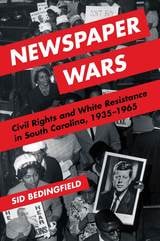
Newspaper Wars
Civil Rights and White Resistance in South Carolina, 1935-1965Sid Bedingfield
University of Illinois Press, 2017
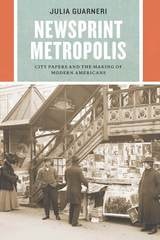
Newsprint Metropolis
City Papers and the Making of Modern AmericansJulia Guarneri
University of Chicago Press, 2017
At the turn of the twentieth century, ambitious publishers like Joseph Pulitzer, William Randolph Hearst, and Robert McCormick produced the most spectacular newspapers Americans had ever read. Alongside current events and classified ads, publishers began running comic strips, sports sections, women’s pages, and Sunday magazines. Newspapers’ lavish illustrations, colorful dialogue, and sensational stories seemed to reproduce city life on the page.
Yet as Julia Guarneri reveals, newspapers did not simply report on cities; they also helped to build them. Metropolitan sections and civic campaigns crafted cohesive identities for sprawling metropolises. Real estate sections boosted the suburbs, expanding metropolitan areas while maintaining cities’ roles as economic and information hubs. Advice columns and advertisements helped assimilate migrants and immigrants to a class-conscious, consumerist, and cosmopolitan urban culture.
Newsprint Metropolis offers a tour of American newspapers in their most creative and vital decades. It traces newspapers’ evolution into highly commercial, mass-produced media, and assesses what was gained and lost as national syndicates began providing more of Americans’ news. Case studies of Philadelphia, New York, Chicago, and Milwaukee illuminate the intertwined histories of newspapers and the cities they served. In an era when the American press is under attack, Newsprint Metropolis reminds us how papers once hosted public conversations and nurtured collective identities in cities across America.
Next Steps
New Directions for/in Writing about WritingBarbara Bird
Utah State University Press, 2019
For more than ten years, WAW approaches have been emerging in all these sites and scenes of college writing instruction, and Next Steps offers an original look at the breadth of ways WAW pedagogy has been taken up by writing instructors and into an array of writing courses. Organized by some of the key foci of WAW instruction—writerly identity, process, and engagement—the book takes readers into thick classroom descriptions as well as vignettes offering shorter takes on particular strategies. The classroom descriptions are fleshed out in more personal ways by student vignettes, reflections on encountering writing about writing in college writing classes. As its theoretical basis, Next Steps includes chapters on threshold concepts, transfer of writing-related learning, and the history of WAW pedagogies.
As the first extensive look into WAW pedagogies across courses and institutions, Next Steps is ideal for writing instructors looking for new approaches to college composition instruction or curious about what “writing about writing” pedagogy actually is, for graduate students in composition pedagogy and their faculty, and for those researching composition pedagogy, threshold concepts, and learning transfer.
Contributors:
Linda Adler-Kassner, Olga Aksakalova, Joy Arbor, Matthew Bryan, Shawn Casey, Gabriel Cutrufello, Jennifer deWinter, Kristen di Gennaro, Emma Gaier, Christina Grant, Gwen Hart, Kimberly Hoover, Rebecca Jackson, Frances Johnson, Elizabeth Kleinfeld, Katie Jo LaRiviere, Andrew Lucchesi, Cat Mahaffey, Michael Michaud, Rebecca S. Nowacek, Andrew Ogilvie, Sarah Read, Rebecca Robinson, Kevin Roozen, Mysti Rudd, Christian Smith, Nichole Stack, Samuel Stinson, Hiroki Sugimoto, Lisa Tremain, Valerie Vera, Megan Wallace, Elizabeth Wardle, Christy I. Wenger, Nancy Wilson, Dominique Zino
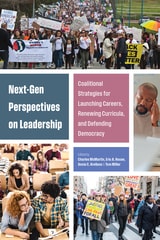
Next-Gen Perspectives on Leadership
Coalitional Strategies for Launching Careers, Renewing Curricula, and Defending DemocracyCharles McMartin
Utah State University Press, 2026
Next-gen faculty are leading now. Through coalition-building, care work, and equity-driven initiatives, they are transforming institutions from the ground up. From labor organizing and culturally responsive curriculum design to the care-work of academic parents and the leadership of writing program administrators, the contributors in this collection model the type of coalitional leadership needed in our institutions. Structured around intergenerational dialogues, the book brings together early-career scholars with mid-career leaders—Jennifer Sano-Franchini, Christina Cedillo, and Staci Perryman-Clark—who offer sharp, reflective responses to each section, and culminates in a powerful closing essay by Carmen Kynard. These voices trace a lineage of resistance and renewal, showing how the leadership strategies of today’s emerging scholars echo and evolve the activist traditions that have long shaped writing studies. Next-gen leaders are moving beyond individualistic models of success and embracing collective, justice-oriented leadership practices. This collection invites scholars to study and teach forms of leadership that help faculty and students step into the challenging opportunities they face.
For graduate students and early-career faculty, this book offers a model of leadership that creates meaningful change outside designated leadership roles or institutional metrics. For mid-career and senior faculty, it provides a framework for recognizing and supporting the ground-level leadership already happening in their contexts. This collection is for anyone committed to leading more inclusive and sustainable academic communities and encourages faculty across generations to reimagine how to mentor, collaborate, and lead in ways that reflect the values of equity, care, and coalition.
Contributors: Felicita Arzu-Carmichael, Amerdeep Bajwa, Christina Cedillo, Alexandra Chapa, Anicca Cox, Tom Do, Mena Hannakachl, Alice Hays, Charisse Iglesias, Brad Jacobson, Carmen Kynard, Adele Leon, Shaylyn Marks, Sean Moxley-Kelly, Abigail Oakley, Staci Perryman-Clark, Ana Milena Ribero, Jennifer Sano-Franchini
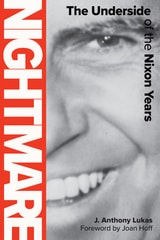
Nightmare
The Underside of the Nixon YearsJ. Anthony Lukas
Ohio University Press, 1999
In July 1973, for the first time in its history, the New York Times Magazine devoted a full issue to a single article: Pulitzer Prize–winning journalist J. Anthony Lukas’s account of the Watergate story to date. Six months later, a second installment ran in another full issue. Later the Times asked him to write a third issue, on the impeachment, which never appeared because of Nixon’s intervening resignation. But all of Lukas’s painstaking reporting on Nixon’s last months in office appears here, along with added information on every aspect of Watergate.
Widely acclaimed as a major text of the Watergate saga, J. Anthony Lukas’s Nightmare is a masterwork of investigation, highlighted by in-depth character sketches of the key players. For students of history coming to these events for the first time, this book reveals in depth the particular trauma of a nation in turmoil; for those who remember, the upheaval and what was at stake are once more brought to life.
Nineteenth-Century English
Richard W. Bailey
University of Michigan Press, 1998
Nineteenth-Century Rhetoric in North America
Nan Johnson
Southern Illinois University Press, 1991
Johnson argues that nineteenth-century rhetoric was primarily synthetic, derived from the combination of classical elements and eighteenth-century belletristic and epistemological approaches to theory and practice. She reveals that nineteenth-century rhetoric supported several rhetorical arts, each conceived systematically from a similar theoretical foundation.

Nineteenth-Century Scottish Rhetoric
The American ConnectionWinifred Bryan Horner
Southern Illinois University Press, 1992
Winifred Bryan Horner argues that an understanding of the changes that occurred in the content of nineteenth-century courses in logic, rhetoric, and belles lettres taught in Scottish universities provides important critical insight into the development of the twentieth-century American composition course, as well as courses in English literature and critical theory.
Because of the inaccessibility of primary materials documenting the changes in courses taught at Scottish universities, the impression remains that the nineteenth century represents a break with the traditional school curriculum rather than a logical transition to a new focus of study. Horner has discovered that the notes of students who attended these classes—meticulously transcribed records of the lectures that professors dictated in lieu of printed texts—provide reliable documentation of the content of courses taught during the period. Using these records, Horner traces the evolution of current traditional composition, developed in the United States in the first part of the twentieth century, from courses taught in nineteenth-century, northern Scottish universities. She locates the beginning of courses in English literature and belletristic composition in the southern schools, particularly Edinburgh.
Horner’s study opens new vistas for the study of the evolution of university curricula, especially the never before acknowledged influence of belletristric rhetoric on the development of the North American composition course.
Nivaclé Grammar
Lyle Campbell, Luis Díaz, and Fernando Ángel
University of Utah Press, 2020
This book offers an extensive description of Nivaclé, an indigenous language spoken in the Gran Chaco region of Argentina and Paraguay. Nivaclé’s phonology, morphology, and syntax are complex; the language has no tenses marked on verbs, essentially no prepositions, and a sizable number of lexical suffixes whose content is so concrete they would be expected to be independent words in most other languages. Nivaclé has a unique speech sound, /k͡ l/, known nowhere else. In some locations where it is spoken, multilingual conversations are the norm. These and other rare traits make Nivaclé an especially fascinating language for linguists, with many implications for language typology and linguistic theory. The book is based on dozens of audio and video recordings of narratives and on hundreds of hours of elicitation and analysis with native speakers. Four lengthy texts are included here to demonstrate the language in action. Scholars—whether in anthropology, folklore, geography, history, or language—will find value in the narratives included here and in the insights into Nivaclé life and culture found throughout the book.

No Shelf Required 2
Use and Management of Electronic BooksSue American Library Association
American Library Association, 2022

No Shelf Required 3
The New Era for E-Books and Digital ContentMirela Roncevic
American Library Association, 2022
Many claim that the presence and importance of e-books in the library world have reached a saturation point, but the truth is that experimentation with new models, as well as refinement of existing ones, continues apace. Delving into the latest developments among the varied players in the e-book marketplace, including publishers, libraries, and vendors, the latest volume in the best-selling No Shelf Required series is written from a strong international perspective. Such cutting-edge contributors as Michael Blackwell, Mary Minow, Neil Butcher, and Tonya McQuade discuss a range of groundbreaking initiatives that tap into the potential of digital content to be omnipresent. Positive, uplifting, instructive, and goal-oriented, this volume’s coverage includes
- the DPLA national e-book platform;
- ReadersFirst, a movement to improve e-book access from libraries;
- the AudiobookSYNC project, a free summer audiobook program for teens;
- using e-books to teach poetry and publishing processes;
- the Multnomah County Library Library Writers project;
- the Internet Archive and e-books; and
- e-books and sustainable literacy in Africa.
No Shelf Required
E-Books in LibrariesSue American Library Association
American Library Association, 2011
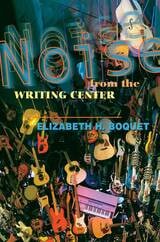
Noise From The Writing Center
Elizabeth H. Boquet
Utah State University Press, 2002
In Noise from the Writing Center, Boquet develops a theory of "noise" and excess as an important element of difference between the pedagogy of writing centers and the academy in general. Addressing administrative issues, Boquet strains against the bean-counting anxiety that seems to drive so much of writing center administration. Pedagogically, she urges a more courageous practice, developed via metaphors of music and improvisation, and argues for "noise," excess, and performance as uniquely appropriate to the education of writers and tutors in the center.
Personal, even irreverent in style, Boquet is also theoretically sophisticated, and she draws from an eclectic range of work in academic and popular culture-from Foucault to Attali to Jimi Hendrix. She includes, as well, the voices of writing center tutors with whom she conducted research, and she finds some of her most inspiring moments in the words and work of those tutors.
Nominal Constructions in Modern Greek
Implications for the Architecture of GrammarDimitra Kolliakou
CSLI, 2003
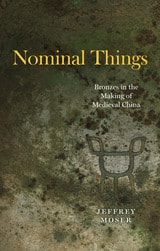
Nominal Things
Bronzes in the Making of Medieval ChinaJeffrey Moser
University of Chicago Press, 2023
This book opens in eleventh-century China, where scholars were the first in world history to systematically illustrate and document ancient artifacts. As Jeffrey Moser argues, the visual, technical, and conceptual mechanisms they developed to record these objects laid the foundations for methods of visualizing knowledge that scholars throughout early modern East Asia would use to make sense of the world around them.
Of the artifacts these scholars studied, the most celebrated were bronze ritual vessels that had been cast nearly two thousand years earlier. While working to make sense of the relationship between the bronzes’ complex shapes and their inscribed glyphs, they came to realize that the objects were “nominal things”—objects inscribed with names that identified their own categories and uses. Eleventh-century scholars knew the meaning of these glyphs from hallowed Confucian writings that had been passed down through centuries, but they found shocking disconnects between the names and the bronzes on which they were inscribed. Nominal Things traces the process by which a distinctive system of empiricism was nurtured by discrepancies between the complex materiality of the bronzes and their inscriptions. By revealing the connections between the new empiricism and older ways of knowing, the book explains how scholars refashioned the words of the Confucian classics into material reality.
Nominals
Inside and OutEdited by Miriam Butt and Tracy Holloway King
CSLI, 2003
Nonfiction in Motion
Connecting Preschoolers with Nonfiction Books through MovementJulie Dietzel-Glair
American Library Association, 2016

Nonfiction, the Teaching of Writing, and the Influence of Richard Lloyd-Jones
Doug Hesse
University Press of Colorado, 2023
Nonnative English-Speaking Teachers of U.S. College Composition
Exploring Identities and Negotiating DifferenceMariya Tseptsura
University Press of Colorado, 2024
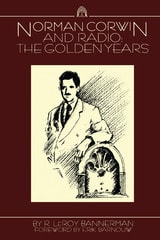
Norman Corwin and Radio
The Golden YearsR. Leroy Bannerman
University of Alabama Press, 1986
Norman Corwin is regarded as the most acclaimed creative artist of radio’s Golden Age (mid 1930s to late 1940s). Corwin worked as a producer for CBS at a time when radio was the centerpiece of American family life. His programs brought high moments to the medium during a period when exceptional creativity and world crisis shaped its character and conviction. Bannerman’s book is more than biography: it is also social history—the story of network radio, its great achievements and ultimate decline. Many of Corwin’s programs are considered radio classics. During World War II his programs energized the people and marshaled morale. We Hold These Truths, commemorating the 150th anniversary of the American Bill of Rights, was broadcast eight days after the attack on Pearl Harbor, and On a Note of Triumph, a VE-Day special for CBS, marked the historic culmination of a momentous conflict. Bannerman’s work is a portrayal of a remarkable man, who led an influential fight for the art and integrity of broadcasting, who endured unfounded accusations during the blacklisting period of the McCarthy era, and who by his dedication accomplished significant programs of historic dimensions.
Normative Theories of the Media
Journalism in Democratic SocietiesClifford G. Christians, Theodore Glasser, Denis McQuail, Kaarle Nordenstreng, Ro
University of Illinois Press, 2008

North American Icelandic
The Life of a LanguageBirna Arnbjornsdottir
University of Manitoba Press, 2006

Northwest Voices
Language and Culture in the Pacific NorthwestKristin Denham
Oregon State University Press, 2019
Although not often considered a bastion of diversity, linguistic or otherwise, in fact the Pacific Northwest has had a surprising number of influences on the English language, and a great number of other languages have left their mark on the region in a variety of ways. Individual essays examine the region's linguistic diversity, explore the origins and use of place names, and detail efforts to revive indigenous languages.
Written for both general readers and language scholars, Northwest Voices brings together research and perspectives from linguistics, history, and cultural studies to help readers understand how and why the language of our region is of utmost importance to our pasts, presents, and futures.
CONTRIBUTORS
Edwin Battistella
Kara Becker
Kathy Cole
Kristin Denham
Betsy Evans
Russell Hugo
Danica Sterud Miller
David Pippin
Allan Richardson
Jordan B. Sandoval
Alicia Beckford Wassink
Henry Zenk
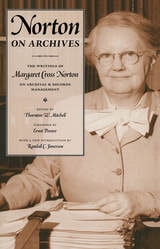
Norton on Archives
Thornton W. Mitchell
Society of American Archivists, 2003
Not Just Where To Click
Teaching Students (Pil #68)Heather Jagman
American Library Association, 2015

Not Just Where to Click
Teaching Students How to Think About InformationTroy A. Swanson
Assoc of College & Research Libraries, 2015
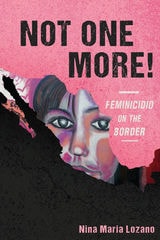
Not One More!
Feminicidio on the BorderNina Maria Lozano
The Ohio State University Press, 2019
Finding theories of new materialism inadequate to explain the feminicidios, Lozano critiques and extends this approach—advancing instead a new theoretical framework, border materialism, to argue that capitalist systems of neoliberalism and free trade are directly correlated to the killing of women on the US–Mexico border. Through the author’s fifteen-plus years of on-the-ground fieldwork, readers are presented with firsthand accounts, testimonies, and new social movement strategies from family members and activists attempting to stop these gendered crimes.
By offering concrete case studies—including analysis of maquiladoras/factories and free trade zones, public monuments and murals memorializing the victims, rastreos/searches by family members for victims’ DNA remains, and testimony from Mothers, family members, and activists—Not One More! lays bare the socioeconomic and geopolitical forces at work in the killing of women in Juárez.
Notes on Nuance
Volume 1Patrick Barry
Michigan Publishing Services, 2020
To succeed in law, business, education, government, health care, and many other fields, it is becoming increasingly important to distinguish yourself as a savvy communicator. Social media has only accelerated the ways in which we all must learn to use our words to connect, compete, and create. There are features of the English language, however, that many of us haven’t taken full advantage of yet. Notes on Nuance is designed to help change that.
Drawing on a diverse collection of authors—from novelists to physicists, from ancient Greek historians to modern-day CEOs—it reveals the hidden mechanics that skilled writers use to add style and sophistication to their sentences and slogans. It’s the perfect resource for people who are looking to do more with their written words.
This book includes materials from a popular course called “Good with Words: Writing and Editing” that Professor Patrick Barry created at both the University of Michigan Law School and the University of Chicago Law School. An online version of that course is now available through the educational platform Coursera.
Notes on the Heart
Affective Issues in the Writing ClassroomSusan H. McLeod
Southern Illinois University Press, 1997
It has long been recognized that affect (that is, the noncognitive aspect of mental activity) plays a large role in writing and in learning to write. According to Susan H. McLeod, however, the model that has been most used for empirical research on the writing process is based on cognitive psychology and does not take into account affective phenomena. Nor does the social constructionist view of the writing process acknowledge the affective realm except in a very general way. To understand the complete picture, McLeod insists, we need to explore how cognitive, affective, and social elements interact as people write.
In this book, McLeod follows a group of students through a semester of writing assignments, tracking the students’ progress and examining the affective elements relevant to their writing. To facilitate future discussion of these phenomena, McLeod also provides suggested definitions for terms in the affective domain.
In a very real sense, this book is the result of a collaboration of three Susans: Susan McLeod, who researched and wrote the book; Sue Hallett, an instructor in Washington State University’s composition program whose classes McLeod observed and who helped provide much of the data; and Susan Parker, a graduate student who observed Hallett’s class and who ran a tutorial connected to that class. To provide a narrative structure, McLeod and her two collaborators have constructed a simulated semester, conflating the year and a half of the study into one semester and creating a class that is a composite drawn from seven classrooms over three semesters.
Although philosophers have had much to say about the affective domain, Notes on the Heart is based for the most part on research from the social sciences. Discussions of pedagogy, while meant to have practical value, are suggestive rather than prescriptive. The goal is to help teachers see their practice in new way.
Teachers will be particularly interested in McLeod’s discussion of teacher affect/effect. This section examines both the issue of the "Pygmalion effect" (students becoming better because the teacher believes they are) and perhaps the more common opposite, the "golem effect" (students becoming less capable because their teachers view them that way).
Nothing Begins with N
New Investigations of FreewritingEdited by Pat Belanoff, Peter Elbow, and Sheryl I. Fontaine
Southern Illinois University Press, 1991
The 16 essays in this book provide a theoretical underpinning for freewriting.
Sheryl I. Fontaine opens the book with a description of the organization, purpose, and content of students’ 10-minute unfocused freewriting.
Pat Belanoff discusses the relationship between skilled and unskilled student writers.
Richard H. Haswell analyzes forms of freewriting.
Lynn Hammond describes the focused freewriting strategies used in legal writing and in the analysis of poetry.
Joy Marsella and Thomas L. Hilgers suggest ways of teaching freewriting as a heuristic.
Diana George and Art Young show what teachers learned about the writing abilities of three engineering students through freewriting journals.
Anne E. Mullin seeks to determine whether freewriting lives up to claims made for it.
Barbara W. Cheshire assesses the efficacy of freewriting.
James W. Pennebaker checks the short- and long-term effects of freewriting on students’ emotional lives.
Ken Macrorie notes that freewriting means being freed to use certain powers.
Peter Elbow shows how authors use freewriting.
Robert Whitney tells "why I hate to freewrite."
Karen Ferro considers her own freewriting, showing how it leads to a deeper self-understanding.
Chris Anderson discusses the qualities in freewriting that we should maintain in revision.
Burton Hatlen shows the parallels between writing projective verse and freewriting.
Sheridan Blau describes the results of experiments with invisible writing.
Nothingism
Poetry at the End of Print CultureJason Schneiderman
University of Michigan Press, 2025
In this collection, the essays range from blistering manifesto to deep historical dives to gentle classroom guidance to considerations of the poems of James Merrill and Agha Shahid Ali, moving between the theoretical and the practical. Nothingism is both deeply personal and highly erudite, providing an engaging and scholarly account of reading, writing, and teaching poetry as our world continues its unsupervised lurch toward digital culture.
Novel Competition
American Fiction and the Cultural Economy, 1965-1999Evan Brier
University of Iowa Press, 2024
Now Don't Try to Reason with Me
Essays and Ironies for a Credulous AgeWayne C. Booth
University of Chicago Press, 1970
“Professor Booth’s earnestness is graced by wit, irony, and generous humor.”—Louis Coxe, New Republic
Now You're a Manager
Quick and Practical Strategies for New Mid-Level Managers in Academic LibrariesLeslie Madden
Assoc of College & Research Libraries, 2017
Nowhere Near the Line
Pain and Possibility in Teaching and WritingElizabeth H. Boquet
Utah State University Press, 2016
In this short work, Elizabeth Boquet explores the line Lawrence Schall describes above, tracing the overlaps and intersections of a lifelong education around guns and violence, as a student, a teacher, a feminist, a daughter, a wife, a citizen and across the dislocations and relocations that are part of a life lived in and around school. Weaving narratives of family, the university classroom and administration, her husband’s work as a police officer, and her work with students and the Poetry for Peace effort that her writing center sponsors in the local schools, she recounts her efforts to respond to moments of violence with a pedagogy of peace. “Can we not acknowledge that our experiences with pain anywhere should render us more, not less, capable of responding to it everywhere?” she asks. “Compassion, it seems to me, is an infinitely renewable resource.”
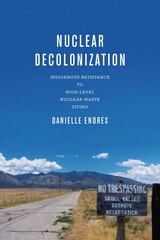
Nuclear Decolonization
Indigenous Resistance to High-Level Nuclear Waste SitingDanielle Endres
The Ohio State University Press, 2023
Honorable Mention, 2024 NCA Public Address Division’s Marie Hochmuth Nichols Award
Honorable Mention, 2025 Association for the Rhetoric of Science, Technology, and Medicine Book Award
While research demonstrates how Indigenous populations have been disproportionately affected by the global nuclear production complex, less attention has been given to tactics that have successfully resisted such projects. Danielle Endres’s Nuclear Decolonization shifts the conversation around nuclear colonialism in important ways, offering an account of how the Western Shoshone, Southern Paiute, and Skull Valley Goshute peoples and nations prevented two high-level nuclear waste sites from being built on their lands.
Using a decolonial approach, Endres highlights two sets of rhetorical tactics—Indigenous Lands rhetorics and national interest rhetorics—used to fight nuclear colonialism. The book reframes nuclear decolonization as fundamentally a struggle for the return of Indigenous lands while also revealing how Native activists selectively move between Indigenous nationhood and US citizenship in order to resist settler decision-making. Working at the intersection of Indigenous antinuclear advocacy, Indigenized environmental justice, and decolonization, Nuclear Decolonization centers Native activism and voices while amplifying the power and resilience of Indigenous peoples and nations.