Results by title
8113 books match the query 'Literary Criticism' and 191 start with n
Nationalism, Colonialism, and Literature
Terry Eagleton
University of Minnesota Press, 1990
The three essays constituting this volume were originally published as individual pamphlets by the Field Day Theatre Company, in Derry, Northern Ireland. Each deals with the question of nationalism and the role of cultural production as a force in understanding and analyzing the aftermath of colonization. The authors’ diverse perspectives are demonstrated by the essays’ respective titles: Eagleton, Nationalism: Irony and Commitment; Jameson, Modernism and Imperialism; and Said, Yeats and Decolonization. The essays have implication beyond their immediate topics, bearing upon questions of feminism, decolonization, and modernism to illuminate problems that belong to other groups and regions.
Nationalists and Nomads
Essays on Francophone African Literature and CultureChristopher L. Miller
University of Chicago Press, 1999
Miller ranges from the beginnings of francophone African literature—which he traces not to the 1930s Negritude movement but to the largely unknown, virulently radical writings of Africans in Paris in the 1920s—to the evolving relations between African literature and nationalism in the 1980s and 1990s. Throughout he aims to offset the contemporary emphasis on the postcolonial at the expense of the colonial, arguing that both are equally complex, with powerful ambiguities. Arguing against blanket advocacy of any one model (such as nationalism or hybridity) to explain these ambiguities, Miller instead seeks a form of thought that can read and recognize the realities of both identity and difference.
Native Intelligence
Aesthetics, Politics, and Postcolonial LiteratureDeepika Bahri
University of Minnesota Press, 2003
A compelling reclamation of the place of aesthetics in postcolonial literature
Literature though it may be, postcolonial literature is studied and understood largely—and often solely—in social and political terms. In neglecting its aesthetic dimension, as this book forcefully demonstrates, we are overlooking not only an essential aspect of this literature but even a critical perspective on its sociopolitical function and value. In Native Intelligence, Deepika Bahri focuses on postcolonial literature’s formal and aesthetic negotiations with sociopolitical concerns.
How, Bahri asks, do aesthetic considerations contest the social function of postcolonial literature? In answering, her book takes on two tasks: First, it identifies the burden of representation borne by postcolonial literature through its progressive politicization. Second, it draws on Frankfurt School critical theory to reclaim a place for aesthetics in literary representation by closely engaging works of Rohinton Mistry, Salman Rushdie, and Arundhati Roy. Throughout, Bahri shows how attention to the aesthetic innovations and utopian impulses of postcolonial works uncovers their complex and uneven relationship to ideology, reanimating their potential to make novel contributions to the larger project of social liberation.
Native Land Talk
Indigenous and Arrivant Rights TheoriesYael Ben-zvi
Dartmouth College Press, 2018
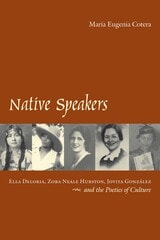
Native Speakers
Ella Deloria, Zora Neale Hurston, Jovita Gonzalez, and the Poetics of CultureBy María Eugenia Cotera
University of Texas Press, 2008
Gloria Anzaldua Book Prize, National Women's Studies Association, 2009
In the early twentieth century, three women of color helped shape a new world of ethnographic discovery. Ella Cara Deloria, a Sioux woman from South Dakota, Zora Neale Hurston, an African American woman from Florida, and Jovita González, a Mexican American woman from the Texas borderlands, achieved renown in the fields of folklore studies, anthropology, and ethnolinguistics during the 1920s and 1930s. While all three collaborated with leading male intellectuals in these disciplines to produce innovative ethnographic accounts of their own communities, they also turned away from ethnographic meaning making at key points in their careers and explored the realm of storytelling through vivid mixed-genre novels centered on the lives of women.
In this book, Cotera offers an intellectual history situated in the "borderlands" between conventional accounts of anthropology, women's history, and African American, Mexican American and Native American intellectual genealogies. At its core is also a meditation on what it means to draw three women—from disparate though nevertheless interconnected histories of marginalization—into conversation with one another. Can such a conversation reveal a shared history that has been erased due to institutional racism, sexism, and simple neglect? Is there a mode of comparative reading that can explore their points of connection even as it remains attentive to their differences? These are the questions at the core of this book, which offers not only a corrective history centered on the lives of women of color intellectuals, but also a methodology for comparative analysis shaped by their visions of the world.
Natives against Nativism
Antiracism and Indigenous Critique in Postcolonial FranceOlivia C. Harrison
University of Minnesota Press, 2023
Examining the intersection of Palestine solidarity movements and antiracist activism in France from the 1970s to the present
For the pasty fifty years, the Palestinian question has served as a rallying cry in the struggle for migrant rights in postcolonial France, from the immigrant labor associations of the 1970s and Beur movements of the 1980s to the militant decolonial groups of the 2000s. In Natives against Nativism, Olivia C. Harrison explores the intersection of anticolonial solidarity and antiracist activism from the 1970s to the present.
Natives against Nativism analyzes a wide range of texts—novels, memoirs, plays, films, and militant archives—that mobilize the twin figures of the Palestinian and the American Indian in a crossed critique of Eurocolonial modernity. Harrison argues that anticolonial solidarity with Palestinians and Indigenous Americans has been instrumental in developing a sophisticated critique of racism across imperial formations—in this case, France, the United States, and Israel.
Serving as the first relational study of antiracism in France, Natives against Nativism observes how claims to indigeneity have been deployed in multiple directions, both in the ongoing struggle for migrant rights and racial justice, and in white nativist claims in France today.
Natural Aristocracy
History, Ideology, and the Production of William FaulknerKevin Railey
University of Alabama Press, 1999
Natural Histories of Discourse
Edited by Michael Silverstein and Greg Urban
University of Chicago Press, 1996
Eleven original essays of "natural history" range in focus from nuptial poetry of insult among Wolof griots to case-based teaching methods in first-year law-school classrooms. Stage by stage, they give an idea of the cultural processes of "entextualization" and "contextualization" of discourse that they so richly illustrate. The contributors' varied backgrounds include anthropology, psychiatry, education, literary criticism, and law, making this collection invaluable not only to anthropologists and linguists, but to all analysts of culture.
Nature Fantasies
Decolonization and Biopolitics in Latin AmericaGabriel Horowitz
Bucknell University Press, 2024
In this original study, Gabriel Horowitz examines the work of select nineteenth- and twentieth-century Latin American writers through the lens of contemporary theoretical debates about nature, postcoloniality, and national identity. In the work of José Martí, Gertrudis Gómez de Avellaneda, Jorge Luis Borges, Augusto Roa Bastos, Cesar Aira, and others, he traces historical constructions of nature in regional intellectual traditions and texts as they inform political culture on the broader global stage. By investigating national literary discourses from Cuba, Argentina, and Paraguay, he identifies a common narrative thread that imagines the utopian wilderness of the New World as a symbolic site of independence from Spain. In these texts, Horowitz argues, an expressed desire to return to the nation’s foundational nature contributed to a movement away from political and social engagement and toward a “biopolitical state,” in which nature, traditionally seen as pre-political, conversely becomes its center.
Nature and Culture in the Iliad
The Tragedy of HectorJames M. Redfield
Duke University Press, 1994

Nature's Kindred Spirits
Aldo Leopold, Joseph Wood Krutch, Edward Abbey, Annie Dillard, and Gary SnyderJames I. McClintock
University of Wisconsin Press, 1994
In Nature's Kindred Spirits James McClintock shows how their mystical experiences with the wild led to dramatic conversions in their thinking and behavior. By embracing the ecstasy of nature, they reject modern alienation and spiritual confusion.
From Aldo Leopold, America’s most important conservationist and author of the classic A Sand County Almanac, to Pulitzer Prize winners Annie Dillard and Gary Snyder and defenders of the desert Joseph Wood Krutch and Edward Abbey, these writers share a common vision that harkens back to Henry David Thoreau and John Muir. To nineteenth-century Romantic ideals, they add the authority of modern ecological science. Collectively they have elevated nature’s importance in American culture, shaping the growth of the environmental movement and influencing American environmental policies.
Widely admired among educated readers but relatively neglected by the literary establishment, these writers unite the experiential with the metaphysical, the ordinary with the sacred, the personal with the public, and the natural with the social. Using ecology as a touchstone, McClintock further draws connections among science, politics, religion, and philosophy to create an enlightening overview of the work of these “kindred spirits.”

Nature's Panorama
Thoreau on the SeasonsRonald A. Bosco
University of Massachusetts Press, 2005
Sponsored by the Thoreau Society, the brief, handsomely presented books in this series offer the thoughts of a great writer on a variety of topics, some that we readily associate with him, some that may be surprising. Each volume includes selections from his familiar published works as well as from less well known lectures, letters, and journal entries. The books include original engravings by renowned illustrator and book artist Barry Moser.
Navigating CHamoru Poetry
Indigeneity, Aesthetics, and DecolonizationCraig Santos Perez
University of Arizona Press, 2021
This book shows that CHamoru poetry has been an inspiring and empowering act of protest, resistance, and testimony in the decolonization, demilitarization, and environmental justice movements of Guåhan. Perez roots his intersectional cultural and literary analyses within the fields of CHamoru studies, Pacific Islands studies, Native American studies, and decolonial studies, using his research to assert that new CHamoru literature has been—and continues to be—a crucial vessel for expressing the continuities and resilience of CHamoru identities. This book is a vital contribution that introduces local, national, and international readers and scholars to contemporary CHamoru poetry and poetics.
Neapolitan Brothers, The
A Newly Discovered Short StoryAda Lovelace
Bodleian Library Publishing, 2020

Near Black
White-to-Black Passing in American CultureBaz Dreisinger
University of Massachusetts Press, 2008
In the United States, the notion of racial “passing” is usually associated with blacks and other minorities who seek to present themselves as part of the white majority. Yet as Baz Dreisinger demonstrates in this fascinating study, another form of this phenomenon also occurs, if less frequently, in American culture: cases in which legally white individuals are imagined, by themselves or by others, as passing for black.
In Near Black, Dreisinger explores the oft-ignored history of what she calls “reverse racial passing” by looking at a broad spectrum of short stories, novels, films, autobiographies, and pop-culture discourse that depict whites passing for black. The protagonists of these narratives, she shows, span centuries and cross contexts, from slavery to civil rights, jazz to rock to hip-hop. Tracing their role from the 1830s to the present day, Dreisinger argues that central to the enterprise of reverse passing are ideas about proximity. Because “blackness,” so to speak, is imagined as transmittable, proximity to blackness is invested with the power to turn whites black: those who are literally “near black” become metaphorically “near black.”
While this concept first arose during Reconstruction in the context of white anxieties about miscegenation, it was revised by later white passers for whom proximity to blackness became an authenticating badge. As Dreisinger shows, some white-to-black passers pass via self-identification. Jazz musician Mezz Mezzrow, for example, claimed that living among blacks and playing jazz had literally darkened his skin. Others are taken for black by a given community for a period of time. This was the experience of Jewish critic Waldo Frank during his travels with Jean Toomer, as well as that of disc jockey Hoss Allen, master of R&B slang at Nashville's famed WLAC radio. For journalists John Howard Griffin and Grace Halsell, passing was a deliberate and fleeting experiment, while for Mark Twain's fictional white slave in Pudd'nhead Wilson, it is a near-permanent and accidental occurrence.
Whether understood as a function of proximity or behavior, skin color or cultural heritage, self-definition or the perception of others, what all these variants of “reverse passing” demonstrate, according to Dreisinger, is that the lines defining racial identity in American culture are not only blurred but subject to change.
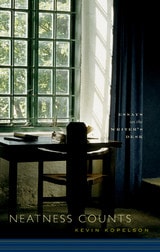
Neatness Counts
Essays on the Writer’s DeskKevin Kopelson Kopelson
University of Minnesota Press, 2006
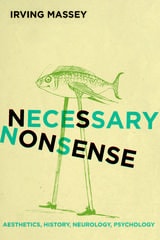
Necessary Nonsense
Aesthetics, History, Neurology, PsychologyIrving Massey
The Ohio State University Press, 2018
In Necessary Nonsense, Massey explores a range of literary and philosophical subjects, from Immanuel Kant to Lewis Carroll—parsing the ways in which nonsense permeates their writing and dialectics—including an exploration of the inability of those who suffer from Asperger's syndrome to distinguish between metaphor and nonsense, and an investigation of the neural signature of the nonsense words and phrases that occur during the transition from waking to sleep. Massey argues that while nonsense may be the “archenemy of reason,” it is also tied to the intrinsic nature of reason; the two, simply put, cannot exist without each other. Through a stunning array of exploratory topics, Massey concludes that we all live under a canopy of nonsense.
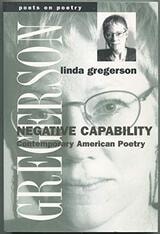
Negative Capability
Contemporary American PoetryLinda Gregerson
University of Michigan Press, 2001
In a wide-ranging and fiercely intelligent series of readings, Linda Gregerson presents an eloquent overview of the contemporary American lyric. This lyric is distinguished, she argues, not only by its unprecedented variety and abundance, but by its persistent and supple engagement with form. In detailed examinations of work by John Ashbery, Mark Strand, Louis Gluck, James Schuyler, Muriel Rukeyser, C. K. Williams, Rita Dove, Philip Levine, Heather McHugh, William Meredith, John Hollander, and a host of other recent and contemporary poets, Gregerson documents the depth and richness of American lyric production at the turn of the twenty-first century. In its scruples and reservations as in its discriminating explanations, Negative Capability unearths the contours of a distinctive American poetic tradition. This book is a rich symbiosis of critical and poetic intelligence. It is also a work of passionate advocacy. The book will appeal to those interested in the current state of American poetry: practicing poets, readers and students of literature and literary criticism, and professional critics.
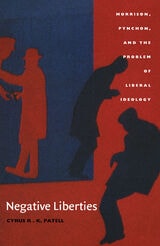
Negative Liberties
Morrison, Pynchon, and the Problem of Liberal IdeologyCyrus R. K. Patell
Duke University Press, 2001
Pynchon and Morrison reveal the official narrative of individualism as encompassing a complex structure of contradiction held in abeyance. This narrative imagines that the goals of the individual are not at odds with the goals of the family or society and in fact obscures the existence of an unholy truce between individual liberty and forms of oppression. By bringing these two fiction writers into a discourse dominated by Ralph Waldo Emerson, Isaiah Berlin, John Rawls, George Kateb, Robert Bellah, and Michael Sandel, Patell unmasks the ways in which contemporary U.S. culture has not fully shed the oppressive patterns of reasoning handed down by the slaveholding culture from which American individualism emerged.
With its interdisciplinary approach, Negative Liberties will appeal to students and scholars of American literature, culture, sociology, and politics.

Negative Life
The Cinema of ExtinctionSteven Swarbrick and Jean-Thomas Tremblay
Northwestern University Press, 2024
How films help us understand the inevitable death of Earth and humanity
Negative Life: The Cinema of Extinction brings cinema studies, queer theory, and psychoanalysis into novel configuration around the concept of negative life, a sundering of human and nonhuman relations. Engaging a philosophical and cinematic corpus that rejects the pastoralism of “entanglement” or “enmeshment,” Steven Swarbrick and Jean-Thomas Tremblay counter ecocritical pieties and cut a new path for theory. They examine films by Julian Pölsler, Kelly Reichardt, Lee Isaac Chung, Mahesh Mathai, Paul Schrader, and others that exemplify the existential contradictions currently intensifying amid the sixth mass extinction. Each case study testifies formally and thematically to negative life as a structural condition of thought and film. Together, the cases reveal the unlivable dimension of life and art, where form, desire, and nonbelonging tarry with the future-oriented promise of ecostudies—where all that lives connects. Negative Life militates against this promise, showing that faith in connection is a dead end.

Negative Poetics
Edward Jayne
University of Iowa Press, 1992
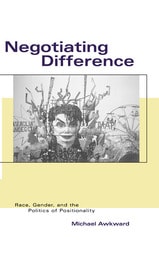
Negotiating Difference
Race, Gender, and the Politics of PositionalityMichael Awkward
University of Chicago Press, 1995
From Spike Lee's She's Gotta Have It to Michael Jackson's physical transmutations, from Toni Morrison's Song of Solomon to August Wilson's Fences, from male scholars' investments in feminism to white scholars' in black texts—Awkward explores cultural moments that challenge the exclusive critical authority of race and gender. In each instance he confronts the question: What do artists, scholars, and others concerned with representations of Afro-American life make of the view that gender, race, and sexuality circumscribe their own and others' lives and narratives? Throughout he demonstrates the perils and merits of the sort of "boundary crossing" this book ultimately makes: a black male feminism.
In pursuing a black male feminist criticism, Awkward's study acknowledges the complexities of interpretation in an age when a variety of powerful discourses have proliferated on the subject of racial, gendered, and sexual difference; at the same time, it identifies this proliferation as an opportunity to negotiate seemingly fixed cultural and critical positions.
Negotiating Disability
Disclosure and Higher EducationStephanie L. Kerschbaum, Laura T. Eisenman, and James M. Jones, Editors
University of Michigan Press, 2017
Negotiating Performance
Gender, Sexuality, and Theatricality in Latin/o AmericaDiana Taylor and Juan Villegas, ed.
Duke University Press, 1994
The Latin/o America examined here stretches from Patagonia to New York City, bridging the political and geographical divides between U.S. Latinos and Latin Americans. Moving from Nuyorican casitas in the South Bronx, to subversive street performances in Buenos Aires, to border art from San Diego/Tijuana, this volume negotiates the borders that bring Americans together and keep them apart, while at the same time debating the use of the contested term "Latino/a." In the emerging dialogue, contributors reenvision an inclusive "América," a Latin/o America that does not pit nationality against ethnicity—in other words, a shared space, and a home to all Latin/o Americans.
Negotiating Performance opens up the field of Latin/o American theater and performance criticism by looking at performance work by Mayans, women, gays, lesbians, and other marginalized groups. In so doing, this volume will interest a wide audience of students and scholars in feminist and gender studies, theater and performance studies, and Latin American and Latino cultural studies.
Contributors. Judith Bettelheim, Sue-Ellen Case, Juan Flores, Jean Franco, Donald H. Frischmann, Guillermo Gómez-Peña, Jorge Huerta, Tiffany Ana López, Jacqueline Lazú, María Teresa Marrero, Cherríe Moraga, Kirsten F. Nigro, Patrick O’Connor, Jorge Salessi, Alberto Sandoval, Cynthia Steele, Diana Taylor, Juan Villegas, Marguerite Waller

Negotiating a Perilous Empowerment
Appalachian Women’s LiteraciesErica Abrams Locklear
Ohio University Press, 2011
In many parts of Appalachia, family ties run deep, constituting an important part of an individual’s sense of self. In some cases, when Appalachian learners seek new forms of knowledge, those family ties can be challenged by the accusation that they have gotten above their raisings, a charge that can have a lasting impact on family and community acceptance. Those who advocate literacy sometimes ignore an important fact — although empowering, newly acquired literacies can create identity conflicts for learners, especially Appalachian women. In Negotiating a Perilous Empowerment, Erica Abrams Locklear explores these literacy-initiated conflicts, analyzing how authors from the region portray them in their fiction and creative nonfiction.
Abrams Locklear blends literacy studies with literary criticism to analyze the central female characters in the works of Harriette Simpson Arnow, Linda Scott DeRosier, Denise Giardina, and Lee Smith. She shows how these authors deftly overturn stereotypes of an illiterate Appalachia by creating highly literate characters, women who not only cherish the power of words but also push the boundaries of what literacy means.
Negotiating a Perilous Empowerment includes in-depth interviews with Linda Scott DeRosier and Lee Smith, making this an insightful study of an important literary genre.
Neo-Passing
Performing Identity after Jim CrowEdited by Mollie Godfrey and Vershawn Ashanti Young: Foreword by Gayle Wald Afterword by Michele Elam
University of Illinois Press, 2018
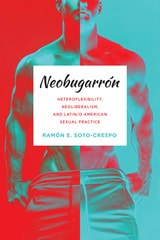
Neobugarrón
Heteroflexibility, Neoliberalism, and Latin/o American Sexual PracticeRamón E. Soto-Crespo
The Ohio State University Press, 2023
How should we understand the bugarrón, a man who has sex with other men while regarding himself as heterosexual? Reaching beyond queer and gay studies, Ramón E. Soto-Crespo’s research suggests that this paradoxical figure mutated into what he calls the “neobugarrón,” a neoliberal market-oriented actor who used the traditional sexual practice as an optimizing strategy for manipulating the forces of globalization during the 1990s. In Neobugarrón: Heteroflexibility, Neoliberalism, and Latin/o American Sexual Practice, Soto-Crespo chronicles the cultural modifications of bugarrón, a distinct male-male sexual practice in Latin/o America and the Caribbean, during the twentieth and twenty-first centuries. Working with and against Foucault and Kinsey to examine diverse works from anthropology, literature, cinema, and social media, he investigates a wide array of bugarrón sources, ranging from previously underexamined multimedia to ethnographies, fiction, films, and beyond. These works constitute a neobugarrón archive and attest to a sexual practice currently metamorphosing on the cusp of extinction. Soto-Crespo’s analysis challenges conventional understandings of “heteroflexible” sex between men and reveals a hitherto unnoticed transformation in neoliberal ecologies of bugarrón sexual practice.
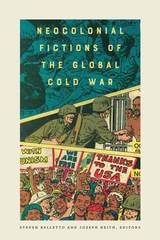
Neocolonial Fictions of the Global Cold War
Steven Belletto and Joseph Keith
University of Iowa Press, 2019
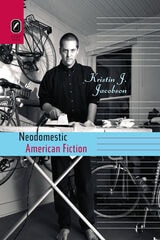
Neodomestic American Fiction
Kristin J. Jacobson
The Ohio State University Press, 2010
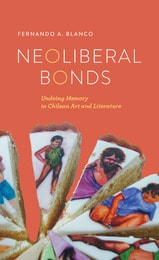
Neoliberal Bonds
Undoing Memory in Chilean Art and LiteratureFernando A. Blanco
The Ohio State University Press, 2015
Neoliberal Bonds vehemently criticizes how Chile’s transition governments, through a series of political and legal maneuvers, created the state’s official memory narratives. Blanco argues that the state, the media, academia, and the neoliberal market colluded to colonize and mediatize the “memory scene.” In contrast to these official narratives, Neoliberal Bonds analyzes alternative memory accounts within the visual arts and literature that push back against the state, its institutions, and its economic allies. These alternative memory narratives highlight the ontological fracture of the new neoliberal subjects; they also bring into sharp relief the urgent need for democratization that still poses a challenge to Chile a quarter century after its “transition to democracy” began.
Neoliberalism and Contemporary American Literature
Edited by Liam Kennedy and Stephen Shapiro
Dartmouth College Press, 2019
Network Aesthetics
Patrick Jagoda
University of Chicago Press, 2016
Each chapter considers how popular media and artistic forms make sense of decentralized network metaphors and infrastructures. Patrick Jagoda first examines narratives from the 1990s and 2000s, including the novel Underworld, the film Syriana, and the television series The Wire, all of which play with network forms to promote reflection on domestic crisis and imperial decline in contemporary America. Jagoda then looks at digital media that are interactive, nonlinear, and dependent on connected audiences to show how recent approaches, such as those in the videogame Journey, open up space for participatory and improvisational thought.
Contributing to fields as diverse as literary criticism, digital studies, media theory, and American studies, Network Aesthetics brilliantly demonstrates that, in today’s world, networks are something that can not only be known, but also felt, inhabited, and, crucially, transformed.
Networked Poetics
The Digital Turn in Southern African PoetrySusanna L. Sacks
University of Massachusetts Press, 2024
Winner of the 2025 MLA Scaglione Prize for African Studies
Simultaneously transnational and local, poetry in the twenty-first century is produced across digital networks, shaped through local communities, and evaluated on a global scale. It might start on social media, where a video of a poet circulates and goes viral, gaining international attention without ever going through traditional modes of publication. In Networked Poetics, Susanna L. Sacks introduces readers to the southern African poetry scene in Malawi, Zimbabwe, and South Africa, illustrating how contemporary poetry is shaped, from inception to canonization, by the influence of digital media publication.
Interweaving ethnographic observation and extensive literary analysis, Sacks demonstrates that, as more artists in Africa reach wider audiences through online publication, poetic form has shifted to reflect social media’s aesthetic norms of urgency, immediacy, and populism. These changes have, in turn, challenged elite processes of valuation, forcing literary institutions like prizes, festivals, and curricula to accommodate the digital turn.
Networking
Communicating with Bodies and Machines in the Nineteenth CenturyLaura Otis
University of Michigan Press, 2011
The interdisciplinary sweep of this book is impressive. Otis focuses simultaneously on literary works by such authors as George Eliot, Bram Stoker, Henry James, and Mark Twain and on the scientific and technological achievements of such pioneers as Luigi Galvani, Hermann von Helmholtz, Charles Babbage, Samuel Morse, and Werner von Siemens.
This unique juxtaposition of physiology, engineering, and literature reveals the common thoughts shared by writers in widely diverse fields and suggests that our current comparisons of nerve and computer networks may not only enhance but shape our understanding of both neurobiology and technology.
Highly accessible and jargon-free, Networking will appeal to general readers as well as to scholars in the fields of interdisciplinary studies, nineteenth-century literature, and the history of science and technology.
Laura Otis is Associate Professor of English, Hofstra University. In 2000, she was awarded a MacArthur Foundation Fellowship for her interdisciplinary studies of literature and science. Her previous books include Membranes: Metaphors of Invasion in Nineteenth-Century Literature, Science, and Politics and Organic Memory: History and the Body in the Late Nineteenth and Early Twentieth Centuries.
Networks of Improvement
Literature, Bodies, and Machines in the Industrial RevolutionJon Mee
University of Chicago Press, 2023
Working against the stubbornly persistent image of “dark satanic mills,” in many ways so characteristic of literary Romanticism, Jon Mee provides a fresh, revisionary account of the Industrial Revolution as a story of unintended consequences. In Networks of Improvement, Mee reads a wide range of texts—economic, medical, and more conventionally “literary”—with a focus on their circulation through networks and institutions. Mee shows how a project of enlightened liberal reform articulated in Britain’s emerging manufacturing towns led to unexpectedly coercive forms of machine productivity, a pattern that might be seen repeating in the digital technologies of our own time. Instead of treating the Industrial Revolution as Romanticism’s “other,” Mee shows how writing, practices, and institutions emanating from these industrial towns developed a new kind of knowledge economy, one where local literary and philosophical societies served as important transmission hubs for the circulation of knowledge.
Networks of Modernism
Reorganizing American NarrativeWesley Beal
University of Iowa Press, 2015
In this ferment of social upheaval and technological change, the moderns found what we would today term “the network,” though they did not have the vocabulary for it that we do now, to be a versatile model for their aesthetic experiments in representing social space and social relations. Whether they used the figuration of the network as a kind of formal experiment to negotiate the tensions between dispersal and unity, fragment and totality, or took the network as a subject in itself, as seen when dealing with crowds or public spaces, the network was a way for writers and artists to conceptualize and explore their rapidly changing society. Through readings of the works of Randolph Bourne, Jean Toomer, Anita Loos, John Dos Passos, and Nathanael West, Networks of Modernism positions the network as the defining figure of American modernist aesthetics and explores its use as a conceptual tool used to think through the rapid changes in American society.
Never Better!
The Modern Jewish PicaresqueMiriam Udel
University of Michigan Press, 2016
The characters defined by this dual consciousness constitute a new kind of protagonist: a distinctively Jewish scapegrace whom Udel denominates the polit or refugee. Cousin to the Golden Age Spanish pícaro, the polit is a socially marginal figure who narrates his own story in discrete episodes, as if stringing beads on a narrative necklace. A deeply unsettled figure, the polit is allergic to sentimentality and even routine domesticity. His sequential misadventures point the way toward the heart of the picaresque, which Jewish authors refashion as a vehicle for modernism—not only in Yiddish, but also in German, Russian, English and Hebrew. Udel draws out the contours of the new Jewish picaresque by contrasting it against the nineteenth-century genre of progress epitomized by the Bildungsroman.
While this book is grounded in modern Jewish literature, its implications stretch toward genre studies in connection with modernist fiction more generally. Udel lays out for a diverse readership concepts in the history and theory of the novel while also explicating the relevant particularities of Jewish literary culture. In addressing the literary stylistics of a “minor” modernism, this study illuminates how the adoption of a picaresque sensibility allowed minority authors to write simultaneously within and against the literary traditions of Europe.
Never Say I
Sexuality and the First Person in Colette, Gide, and ProustMichael Lucey
Duke University Press, 2006
Considering novels along with journalism, theatrical performances, correspondences, and face-to-face encounters, Lucey focuses on the interlocking social and formal dimensions of using the first person. He argues for understanding the first person not just as a grammatical category but also as a collectively produced social artifact, demonstrating that Proust’s, Gide’s, and Colette’s use of the first person involved a social process of assuming the authority to speak about certain issues, or on behalf of certain people. Lucey reveals these three writers as both practitioners and theorists of the first person; he traces how, when they figured themselves or other first persons in certain statements regarding same-sex identity, they self-consciously called attention to the creative effort involved in doing so.
Never on Time, Always in Time
Narrative Form and the Queer SensoriumKate McCullough
The Ohio State University Press, 2024
New American Studies
John Carlos Rowe
University of Minnesota Press, 2002
A clarion call for a more theoretically and politically informed approach to American Studies
John Carlos Rowe, a leading American Studies scholar, has examined his field of study and declared it not ready for the twenty-first century. In The New American Studies, Rowe demands a reinvention of the discipline that includes a commitment to making it more theoretically informed, and he draws on the work of cultural critics, postmodernist theorists, and scholars in ethnic, gender, gay, and media studies. Rowe asserts that with American Studies’s strong history of social criticism and practical pedagogy it is an easy leap to the type of progressive commitments characteristic of these areas of scholarship.
The New American Studies is a compelling combination of theory and application, synthesis and polemic. Rowe traces the evolution of American Studies over the last quarter century and looks to the future, placing the field in a postnationalist context that encompasses all of the Americas and the disparate cultural zones within. He then demonstrates the kind of literary and cultural interpretation he calls for, examining subjects ranging from Hawthorne’s and James’s responses to nineteenth-century sexual mores, to the ways television legitimated itself in its first few decades, to the Elián González custody case.
New Black Feminist Criticism, 1985-2000
Barbara Christian. Edited by Gloria Bowles, M. Giulia Fabi, and Arlene Keizer
University of Illinois Press, 2007
New Critical Approaches to the Short Stories of Ernest Hemingway
Jackson J. Benson, ed.
Duke University Press, 1990
New Critical Approaches to the Short Stories of Ernest Hemingway is an all-new sequel to Benson’s highly acclaimed 1975 book, which provided the first comprehensive anthology of criticism of Ernest Hemingway’s masterful short stories. Since that time the availability of Hemingway’s papers, coupled with new critical and theoretical approaches, has enlivened and enlarged the field of American literary studies. This companion volume reflects current scholarship and draws together essays that were either published during the past decade or written for this collection.
The contributors interpret a variety of individual stories from a number of different critical points of view—from a Lacanian reading of Hemingway’s “After the Storm” to a semiotic analysis of “A Very Short Story” to an historical-biographical analysis of “Old Man at the Bridge.” In identifying the short story as one of Hemingway’s principal thematic and technical tools, this volume reaffirms a focus on the short story as Hemingway’s best work. An overview essay covers Hemingway criticism published since the last volume, and the bibliographical checklist to Hemingway short fiction criticism, which covers 1975 to mid-1989, has doubled in size.
Contributors. Debra A. Moddelmog, Ben Stotzfus, Robert Scholes, Hubert Zapf, Susan F. Beegel, Nina Baym, William Braasch Watson, Kenneth Lynn, Gerry Brenner, Steven K. Hoffman, E. R. Hagemann, Robert W. Lewis, Wayne Kvam, George Monteiro, Scott Donaldson, Bernard Oldsey, Warren Bennett, Kenneth G. Johnston, Richard McCann, Robert P. Weeks, Amberys R. Whittle, Pamela Smiley, Jeffrey Meyers, Robert E. Fleming, David R. Johnson, Howard L. Hannum, Larry Edgerton, William Adair, Alice Hall Petry, Lawrence H. Martin Jr., Paul Smith
New Critical Essays
Roland Barthes
Northwestern University Press, 2009
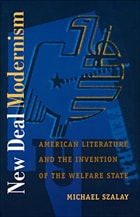
New Deal Modernism
American Literature and the Invention of the Welfare StateMichael Szalay
Duke University Press, 2000
Szalay situates his study within a liberal culture bent on security, a culture galvanized by its imagined need for private and public insurance.
Taking up prominent exponents of social and economic security—such as Franklin Delano Roosevelt, John Maynard Keynes, and John Dewey—Szalay demonstrates how the New Deal’s revision of free-market culture required rethinking the political function of aesthetics. Focusing in particular on the modernist fascination with the relation between form and audience, Szalay offers innovative accounts of Busby Berkeley, Jack London, James M. Cain, Robert Frost, Ayn Rand, Betty Smith, and Gertrude Stein, as well as extended analyses of the works of Ernest Hemingway, John Steinbeck, and Richard Wright.
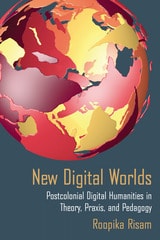
New Digital Worlds
Postcolonial Digital Humanities in Theory, Praxis, and PedagogyRoopika Risam
Northwestern University Press, 2019
New Digital Worlds traces the formation of postcolonial studies and digital humanities as fields, identifying how they can intervene in knowledge production in the digital age. Roopika Risam examines the role of colonial violence in the development of digital archives and the possibilities of postcolonial digital archives for resisting this violence. Offering a reading of the colonialist dimensions of global organizations for digital humanities research, she explores efforts to decenter these institutions by emphasizing the local practices that subtend global formations and pedagogical approaches that support this decentering. Last, Risam attends to human futures in new digital worlds, evaluating both how algorithms and natural language processing software used in digital humanities projects produce universalist notions of the "human" and also how to resist this phenomenon.
New Hope
Ruth Suckow
University of Iowa Press, 1998
A writer of wide experience, Ruth Suckow nevertheless remained focused on small-town life; one could even call her the Jane Austen of small-town America. Many of her characters were the “sparrows of Iowa,” ordinary folks whom she made extraordinary by writing about them. In her 1942 novel about the little community of New Hope, written during the desperate days of World War II, life is marked by unusual optimism, openness, mutual care, trust, communal spirit, democracy, and above all light.
Life in New Hope recaptures a feeling of youth that would seem overly idealistic if it were not for Suckow's unflinching realism. As seen through the eyes of its Edenic main characters—Clarence Miller, son of the town's banker and chief booster, and Delight Greenwood, daughter of the Congregational minister who serves New Hope during the two years of the novel—the town itself is the protagonist. Death, crime, and heartbreak intervene, but a sense of freedom and possibility, “where all were to share equally in the boundlessness of light and hope,” always illuminates the town. This sunlit novel, with its blend of romance and reality, reintroduces a regional writer whom H. L. Mencken called “unquestionably the most remarkable woman …writing stories in the republic.”

New Israel / New England
Jews and Puritans in Early AmericaMichael Hoberman
University of Massachusetts Press, 2011
More often than not, Michael Hoberman shows, Puritans thought and wrote about Jews in order to resolve their own theological and cultural dilemmas. A number of prominent New Englanders, including Roger Williams, Increase Mather, Samuel Sewall, Benjamin Colman, Cotton Mather, Jonathan Edwards, and Ezra Stiles, wrote extensively about post-biblical Jews, in some cases drawing on their own personal acquaintance with Jewish contemporaries.
Among the intriguing episodes that Hoberman investigates is the recruitment and conversion of Harvard's first permanent instructor of Hebrew, the Jewish-born Judah Monis. Later chapters describe the ecumenical friendship between Newport minister Ezra Stiles and Haim Carigal, an itinerant rabbi from Palestine, as well as the life and career of Moses Michael Hays, the prominent freemason who was Boston's first permanently established Jewish businessman, a founder of its insurance industry, an early sponsor of the Bank of Massachusetts, and a personal friend of Paul Revere.
New Latina Narrative
The Feminine Space of Postmodern EthnicityEllen McCracken
University of Arizona Press, 1999
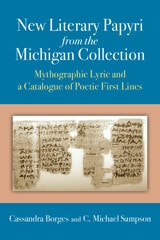
New Literary Papyri from the Michigan Collection
Mythographic Lyric and a Catalogue of Poetic First LinesCassandra Borges and C. Michael Sampson
University of Michigan Press, 2012
New texts from Greek antiquity continue to emerge on scraps of papyrus from the sands of Egypt, not only adding to the surviving corpus of classical and Hellenistic literature, but also occasionally offering a glimpse into how these poems were studied in antiquity. New Literary Papyri from the Michigan Collection: Mythographic Lyric and a Catalogue of Poetic First Lines presents three such new texts: an innovative lyric poem on the Trojan cycle, a scholarly anthology of lyric verses, and a brief but enigmatic third text. Cassandra Borges and C. Michael Sampson offer the original Greek text of these pieces, along with their scholarly commentary, analyzing their features in a variety of contexts—historical, cultural, poetic, mythological, religious, and scholarly.
The fragments collected here are of considerable antiquity (late third to second century BCE) a fact that is significant inasmuch as it places them among the oldest Greek papyri, but all the more so because in this period, a scholarly community was thriving in Ptolemaic Alexandria, the political and cultural capital of Hellenistic Egypt. The fragments bear witness to that scholarly activity: not only is their anthology of poetic verses consistent with other scholarly selections, but the very survival of these texts may well be at least partially indebted to the work of the Alexandrians in studying and propagating Greek literature in Egypt.
This edition supplements the 1970s work of Reinhold Merkelbach and Denys Page. Recent digitizing for the APIS project revealed a previously unsuspected join with other material, however, which alone warrants a new, comprehensive edition and analysis.
New Materialisms
Ontology, Agency, and PoliticsDiana Coole and Samantha Frost, eds.
Duke University Press, 2010
Coole and Frost argue that contemporary economic, environmental, geopolitical, and technological developments demand new accounts of nature, agency, and social and political relationships; modes of inquiry that privilege consciousness and subjectivity are not adequate to the task. New materialist philosophies are needed to do justice to the complexities of twenty-first-century biopolitics and political economy, because they raise fundamental questions about the place of embodied humans in a material world and the ways that we produce, reproduce, and consume our material environment.
Contributors
Sara Ahmed
Jane Bennett
Rosi Braidotti
Pheng Cheah
Rey Chow
William E. Connolly
Diana Coole
Jason Edwards
Samantha Frost
Elizabeth Grosz
Sonia Kruks
Melissa A. Orlie