Results by title
4155 books match the query 'State & Local' and 117 start with n
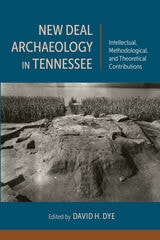
New Deal Archaeology in Tennessee
Intellectual, Methodological, and Theoretical ContributionsEdited by David H. Dye
University of Alabama Press, 2016
Exploring how New Deal innovation transformed archaeology in the American South.
New Deal Archaeology in Tennessee tells the engrossing story of Southeastern archaeology in the 1930s. The Tennessee Valley Authority Act of May 1933 initiated an ambitious program of flood control and power generation by way of a chain of hydroelectric dams on the Tennessee River. The construction of these dams flooded hundreds of thousands of square miles of river bottoms, campsites, villages, and towns that had been homes to Native Americans for centuries. This triggered an urgent need to undertake extensive archaeological fieldwork throughout the region. Those studies continue to influence contemporary archaeology.
The state of Tennessee and the Tennessee Valley were especially well suited research targets thanks to their mild climate and long field seasons. A third benefit in the 1930s was the abundance of labor supplied by Tennesseans unemployed during the Great Depression. Within months of the passage of the Tennessee Valley Authority Act, teams of archaeologists fanned out across the state and region under the farsighted direction of Smithsonian Institution curators Neil M. Judd, Frank H. H. Roberts, and Frank M. Setzler. The early months of 1934 would become the busiest period of archaeological fieldwork in US history.
The twelve insightful essays in New Deal Archaeology in Tennessee document and explore this unique peak in archaeological study. Chapters highlight then-new techniques such as mound “peeling” and stratigraphic excavation adapted from the University of Chicago; the four specific New Deal sites of Watts Bar Reservoir, Mound Bottom, Pack, and Chickamauga Basin; bioarchaeology in the New Deal; and the enduring impact of the New Deal on contemporary fieldwork.
The challenges of the 1930s in recruiting skilled labor, training unskilled ancillary labor, developing and improvising new field methods, and many aspects of archaeological policies, procedures, and best-practices laid much of the foundation of contemporary archaeological practice. New Deal Archaeology in Tennessee offers an invaluable record of that pivotal time for professional, student, and amateur archaeologists.
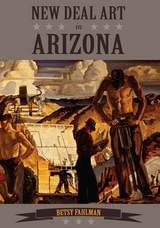
New Deal Art in Arizona
Betsy Fahlman
University of Arizona Press, 2009
Art is a powerful instrument of historical record and cultural construction, and many of the issues captured by the Farm Security Administration photographers remain significant issues today: migratory labor, the economic volatility of the mining industry, tourism, and water usage. Art tells important stories, too, including the work of Japanese American photographer Toyo Miyatake in Arizona’s internment camps, murals by Native American artist Gerald Nailor for the Navajo Nation Council Chamber in Window Rock, and African American themes at Fort Huachuca. Illustrated with 100 black-andwhite photographs and covering a wide range of both media and themes, this fascinating and accessible volume reclaims a richly textured story of Arizona history with potent lessons for today.
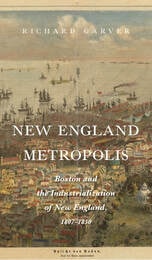
New England Metropolis
Boston and the Industrialization of New England, 1807–1850Richard Garver
University of Massachusetts Press, 2026
At the outset of the nineteenth century, Boston was at its zenith as a maritime city even as New England was in decline. Many struggling farmers abandoned the area for more promising opportunities to the west. Yet by 1850, New England had been transformed into one of the most industrialized regions in the world. Former agricultural villages had become specialized manufacturing towns producing consumer goods for sale, and Boston merchant capitalists had established textile complexes that produced fabrics in huge quantities. Although Boston had been superseded by New York as a trading center, it thrived not only as a financial market but as an exchange hub in which these hinterland manufacturers acquired raw materials, capital, sales services, and transportation. With Boston at its metropolitan center, New England was transformed into an industrial geography that was unique nationally and internationally.
New England Metropolis demonstrates that, in contrast to the course of industrialization in other regions of the country, New England’s transformation was driven by entrepreneurs in hundreds of rural villages and towns and by and Boston merchant capitalists who recruited underemployed agricultural household members to produce consumer goods for sale beyond the region, including in the slave economies of the South and the Caribbean. As Boston merchants adapted commercial, financial and transportation infrastructure they had developed to serve overseas trade to the needs of the region's manufacturers, industrialization halted New England’s decline and, by 1850, had propelled it to prosperity.
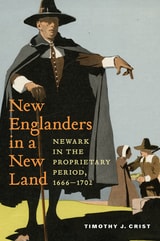
New Englanders in a New Land
Newark in the Proprietary Period, 1666-1702Timothy J. Crist
Rutgers University Press, 2027
New England Puritans from the former New Haven Colony settled Newark in 1666. Their fierce determination to establish scripture-based government in a close-knit township, with community control over admitting new inhabitants, often put them in direct conflict with New Jersey's proprietary government. Newark's egalitarian system for allocating land diverged sharply from the proprietors' headright approach, adapted from the West Indies and Carolina, that rewarded settler use of indentured servants and enslaved labor with larger distributions of land.
This study provides a fresh interpretation of the founding and settlement of Newark as a self-contained New England community, including their negotiations with Native Americans, formation of godly self-government, gradual allocation of township land, and introduction of slavery. To implement their New England way, Newarkers resisted the proprietary government to the point of rebellion, bringing into stark relief the inherent conflict between two sources of authority, one scriptural and community-based and the other royal and proprietary, and two systems of land distribution.

New Jersey Anthology
Lurie, Maxine N
Rutgers University Press, 2002
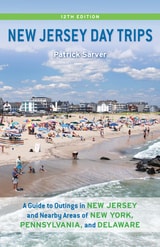
New Jersey Day Trips
A Guide to Outings in New Jersey and Nearby Areas of New York, Pennsylvania, and DelawareSarver, Patrick
Rutgers University Press, 0
Shades of F. Scott Fitzgerald roam Princeton as lads and lasses walk the well-clipped paths between venerable university halls, while russet leaves flutter overhead from rows of sturdy trees. Visions of knights and their fair maidens come to mind as explorers wander around Lambert Castle, an 1892 sandstone and granite mansion that looms like a medieval fortress with rounded towers and turrets on a hillside below the cliffs of the Garret Mountain Reservation. For art lovers who like to stroll on lush lawns and enjoy the beauty around them, Grounds for Sculpture is the place to be seen in New Jersey. And, then there's always the 127 miles of beach along the state's east coast that make perfect day trips for swimming, boating, fishing, and other fun activities.
Now in a revised and expanded 12th edition, New Jersey Day Trips offers everyone a fascinating journey through hundreds of tourist attractions in all corners of the Garden State. Plus, this comprehensive resource explores the most popular points just beyond the state's borders. Patrick Sarver has updated most entries and added more than twenty new points of interest to an already extensive list of destinations, making this the most sought-after guidebook about New Jersey. Attractions can be located easily by subject category, letting travelers zero in on places that appeal to them. Entries include descriptions, hours of operation, location, price range, telephone numbers, and Web sites, making this best seller a one-stop source of discovery for day trippers of all ages--an ideal travel guide for adults or families who live in or plan to visit New Jersey..

New Jersey Fan Club
Artists and Writers Celebrate the Garden StateKerri Sullivan
Rutgers University Press, 2022
Despite the many jokes and stereotypes about New Jersey and its residents, in reality the state is a wildly diverse place, home to a vast variety of landscapes, cultures, and people. There is no singular New Jersey experience, and the stories that its residents have to share about the state will surprise you.
New Jersey Fan Club: Artists and Writers Celebrate the Garden State is an eclectic anthology featuring personal essays, interviews, and comics from a broad group of established and emerging writers and artists who have something to say about New Jersey. It offers a multifaceted look at the state’s history and significance, told through narrative nonfiction, photographs, and illustrations.
New Jersey Fan Club is edited by Kerri Sullivan, founder of the popular Instagram account Jersey Collective (@jerseycollective), which features weekly takeovers by different New Jerseyans. This book functions the same way: it gives dozens of different contributors the chance to share what New Jersey looks like to them. The book is an exploration of how the same locale can shape people in different ways, and it will inspire readers to look at the Garden State with fresh eyes and appreciate its bounty of beautiful places and vibrant spaces.
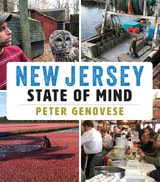
New Jersey State of Mind
Peter Genovese
Rutgers University Press, 2020
For this new book, Genovese spent months scouring the state for rich stories and fascinating locations. New Jersey State of Mind takes us on a journey to over twenty-five of these places and introduces us to the colorful characters who live and work there, from a demolition derby driver to a female craft brewer, and from a Cuban celebrity chef to a Portuguese pig breeder. He also reveals the many natural wonders that have earned New Jersey its “Garden State” nickname, from cranberry bogs to river tours to wild bird sanctuaries.
Collectively, these pieces paint a picture of a diverse state full of hard-working individuals who care for their communities. This book cuts through the myths and stereotypes surrounding the state and reveals the proud beating heart of the real New Jersey.

New Jersey's Natures
Environmental Histories of the Garden StateRaechel Lutz
Rutgers University Press, 2026
New Jersey’s Natures takes up the challenge of expanding academic and popular conceptions of New Jersey and its landscapes through the lens of environmental history. Scholars’ essays showcase the ways in which nature is integral to understandings of the state and its past as well as its future. These essays show that New Jersey should no longer solely be known as a place where pollution and suburbanization run amok but rather a place where history happens.
The contributors investigate how nature and history are intertwined within this small but mighty state, covering topics from the colonial period to the present across North, South, and Central Jersey. They investigate natural features like the Delaware River and Bay, the Pinelands, and the unforgettable Jersey Shore. In this book, you will find Indigenous Americans making meaning as settlers threaten their ways of life, Governor William Livingston considering Central Jersey’s features as he fights in the American Revolution, farmers building the state’s industrial agriculture, a foreign diplomat planting an arboretum, squatters in the swampy Meadowlands subverting social and economic norms, activists fighting for parks, forests, and beaches across two centuries, and much more.
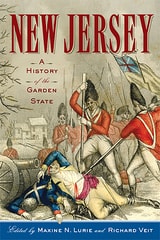
New Jersey
A History of the Garden StateLurie, Maxine N
Rutgers University Press, 2012
New Jersey: A History of the Garden State presents a fresh, comprehensive overview of New Jersey’s history from the prehistoric era to the present. The findings of archaeologists, political, social, and economic historians provide a new look at how the Garden State has evolved.
The state has a rich Native American heritage and complex colonial history. It played a pivotal role in the American Revolution, early industrialization, and technological developments in transportation, including turnpikes, canals, and railroads. The nineteenth century saw major debates over slavery. While no Civil War battles were fought in New Jersey, most residents supported it while questioning the policies of the federal government.
Next, the contributors turn to industry, urbanization, and the growth of shore communities. A destination for immigrants, New Jersey continued to be one of the most diverse states in the nation. Many of these changes created a host of social problems that reformers tried to minimize during the Progressive Era. Settlement houses were established, educational institutions grew, and utopian communities were founded. Most notably, women gained the right to vote in 1920. In the decades leading up to World War II, New Jersey benefited from back-to-work projects, but the rise of the local Ku Klux Klan and the German American Bund were sad episodes during this period.
The story then moves to the rise of suburbs, the concomitant decline of the state’s cities, growing population density, and changing patterns of wealth. Deep-seated racial inequities led to urban unrest as well as political change, including such landmark legislation as the Mount Laurel decision. Today, immigration continues to shape the state, as does the tension between the needs of the suburbs, cities, and modest amounts of remaining farmland.
Well-known personalities, such as Jonathan Edwards, George Washington, Woodrow Wilson, Dorothea Dix, Thomas Edison, Frank Hague, and Albert Einstein appear in the narrative. Contributors also mine new and existing sources to incorporate fully scholarship on women, minorities, and immigrants. All chapters are set in the context of the history of the United States as a whole, illustrating how New Jersey is often a bellwether for the nation..
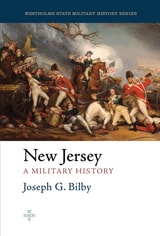
New Jersey
A Military HistoryJoseph G. Bilby
Westholme Publishing, 2017
New Jersey: A Military History by military historian Joseph G. Bilby tells the long, diverse, and sometimes complicated story of New Jersey’s citizens and their significant and continuing role in America’s defense. Over more than 350 years as a colony and state, hundreds of thousands of New Jersey residents have served in regular armed forces, militia, and National Guard units or in direct support of those organizations. New Jerseyans in the military include General “Scotch Willie” Maxwell of Sussex County, an unappreciated Revolutionary War master tactician; First Sergeant George Ashby of Allentown, of Company H, 45th United States Colored Infantry, the state’s last surviving Civil War veteran; Clara Maas of Newark, a nurse who sacrificed her life in the effort to eradicate Yellow Fever; Captain William J. Reddan, who led his company into hell during the Meuse-Argonne offensive in 1918; and Medal of Honor winner John Basilone, whose sense of duty and honor led him to return to combat and death in World War II.
Complete with maps, an annotated list of historical sites in the state, and further reading, New Jersey: A Military History is an important reference for those interested in the role of the Garden State in our nation’s wars.
New Jerseyans in the Civil War
For Union and LibertyJackson, William J
Rutgers University Press, 2006
The Civil War divided New Jersey just as it did the nation. As a small state sandwiched between two large and powerful neighbors, New Jersey had always enthusiastically supported the creation of a strong central government. On the other hand, many New Jersey citizens did not share the anti-slavery sentiments of the North; they supported property rights of slave owners and believed in the natural inferiority of blacks. Subsequently, when southern states began to secede from the Union to form the Confederacy, New Jerseyans were left divided and confused.
William J. Jackson examines the ironies, paradoxes, and contradictions that characterized New Jersey's unique historical role in the war. This is the only book to incorporate social and political history with that of military history and strategy. Civil War aficionados and historians will also welcome Jackson's analysis of the participation of New Jersey African Americans on the home front and in the military.

New Media Futures
The Rise of Women in the Digital ArtsEdited by Donna J. Cox, Ellen Sandor, and Janine Fron
University of Illinois Press, 2018
New Mexico's Buffalo Soldiers
1866-1900Monroe Lee Billington
University Press of Colorado, 1991

New Orleans Sports
Playing Hard in the Big EasyThomas Aiello
University of Arkansas Press, 2019
Tracing that history from the early nineteenth century to the present, while also surveying the state of the city’s sports historiography, New Orleans Sports places sport in the context of race relations, politics, and civic and business development to expand that historiography—currently dominated by a text that stops at 1900—into the twentieth century, offering a modern examination of sports in the city.

New Orleans and the Creation of Transatlantic Opera, 1819–1859
Charlotte Bentley
University of Chicago Press, 2022
New Orleans and the Creation of Transatlantic Opera, 1819–1859 explores the thriving operatic life of New Orleans in the first half of the nineteenth century, drawing out the transatlantic connections that animated it. By focusing on a variety of individuals, their extended webs of human contacts, and the materials that they moved along with them, this book pieces together what it took to bring opera to New Orleans and the ways in which the city’s operatic life shaped contemporary perceptions of global interconnection. The early chapters explore the process of bringing opera to the stage, taking a detailed look at the management of New Orleans’s Francophone theater, the Théâtre d’Orléans, as well as the performers who came to the city and the reception they received. But opera’s significance was not confined to the theater, and later chapters of the book examine how opera permeated everyday life in New Orleans, through popular sheet music, novels, magazines and visual culture, and dancing in its many ballrooms. Just as New Orleans helped to create transatlantic opera, opera in turn helped to create the city of New Orleans.
New York City Politics
Governing GothamBerg, Bruce F
Rutgers University Press, 2018
New York City Politics focuses on the impact of these three forces on the governance of New York City’s political system including the need to promote democratic accountability, service delivery equity, as well as the maintenance of civil harmony. This second edition updates the discussion with examples from the Bloomberg and de Blasio administrations as well as current public policy issues including infrastructure, housing and homelessness, land use regulations, and education.
New York Recentered
Building the Metropolis from the ShoreKara Murphy Schlichting
University of Chicago Press, 2019
The history of New York City’s urban development often centers on titanic municipal figures like Robert Moses and on prominent inner Manhattan sites like Central Park. New York Recentered boldly shifts the focus to the city’s geographic edges—the coastlines and waterways—and to the small-time unelected locals who quietly shaped the modern city. Kara Murphy Schlichting details how the vernacular planning done by small businessmen and real estate operators, performed independently of large scale governmental efforts, refigured marginal locales like Flushing Meadows and the shores of Long Island Sound and the East River in the late nineteenth and early twentieth centuries. The result is a synthesis of planning history, environmental history, and urban history that recasts the story of New York as we know it.
New York Sports
Glamour and Grit in the Empire CityStephen Norwood
University of Arkansas Press, 2018
New York has long been both America’s leading cultural center and its sports capital, with far more championship teams, intracity World Series, and major prizefights than any other city. Pro football’s “Greatest Game Ever Played” took place in New York, along with what was arguably history’s most significant boxing match, the 1938 title bout between Joe Louis and Max Schmeling. As the nation’s most crowded city, basketball proved to be an ideal sport, and for many years it was the site of the country’s most prestigious college basketball tournament. New York boasts storied stadiums, arenas, and gymnasiums and is the home of one of the world’s two leading marathons as well as the Belmont Stakes, the third event in horse racing’s Triple Crown.
New York sportswriters also wield national influence and have done much to connect sports to larger social and cultural issues, and the vitality and distinctiveness of New York’s street games, its ethnic institutions, and its sports-centered restaurants and drinking establishments all contribute to the city’s uniqueness.
New York Sports collects the work of fourteen leading sport historians, providing new insight into the social and cultural history of America’s major metropolis and of the United States. These writers address the topics of changing conceptions of manhood and violence, leisure and social class, urban night life and entertainment, women and athletics, ethnicity and assimilation, and more.
New York in Quotations
Compiled by Jaqueline Mitchell
Bodleian Library Publishing, 2014
Newark's Little Italy
The Vanished First WardImmerso, Michael
Rutgers University Press, 1997

Newport In Rockies
Life & Good Times OfMarshall Sprague
Ohio University Press, 1988
In the town's early years, rich easterners and Englishmen came seeking adventure, romance, and gentility. But when gold was discovered at nearby Cripple Creek in 1900, Colorado Springs became an instant boom town. A second major boom came several decades later, when local boosters persuaded the Army to choose Colorado Springs as the site for Fort Carson, a training center for 30,000 troops. Other military projects followed, including Peterson Field, Ent Air Force Base, the underground North American Air Defense Command Combat Operations Center, and in 1954, the U.S. Air Force Academy. More recent projects, discussed in a new final chapter, include the Olympic Training Center and the Olympic Hall of Fame, as well as high-tech industries and advances in culture, education, and recreation.
As the city sprawls eastward onto the prairie, it bears little resemblance to General Palmer's 1871 village. Yet the general's dream of a quality town in a quality environment has continued to inspire generations of administrators and boosters who have made Colorado Springs a model of urban prosperity.

News to Me
Adventures of an Accidental JournalistLaurie Hertzel
University of Minnesota Press, 2010
The story of a journalist’s coming of age in Duluth during the boom days of print
Laurie Hertzel wasn't yet a teenager in Duluth, Minnesota, when she started her first newspaper, which she appropriately christened Newspaper. Complete with the most sensational headlines of the day-MARGO FLUEGEL HAS ANOTHER BIRTHDAY!-and with healthy competition from her little brothers and their rival publication, Magapaper (a magazine and a newspaper), this venture would become Hertzel's first step toward realizing what her heart was already set on: journalism as her future.
News to Me is the adventurous story of Hertzel's journey into the bustling world of print journalism in the mid-1970s, a time when copy was still banged out on typewriters by chain-smoking men in fedoras and everybody read the paper. A coming-of-age tale in more ways than one, Hertzel's eighteen-year career at the Duluth News Tribune began when journalism was a predominantly male profession. And while the newspaper trade was booming, Duluth had fallen on difficult times as factories closed and more and more people moved away. Hertzel describes her climb up the ranks of the paper against the backdrop of a Midwestern city during a time of extraordinary change. She was there during major events like the Congdon murders, the establishment of the BWCA, and the rise of Indian treaty rights, and eventually follows the biggest story of her life to Soviet Russia-and completely blows her deadline.
Written with the insight and humor of someone who makes a living telling stories, News to Me is the chronicle of a small-city newspaper on the cusp of transformation, an affectionate portrait of Duluth and its people, and the account of a talented, persistent journalist who witnessed it all and was changing right along with it-whether she wanted to or not.
(Oh, Newspaper doggedly outlasted the full-color Magapaper).
Next Time We Strike
Allan Kent Powell
Utah State University Press, 1992
A sensitive and in-depth portrayal of the efforts to unionize Utah's coal miners, The Next Time We Strike explores the ethnic tensions and nativistic sentiments that hampered unionization efforts even in the face of mine explosions and economic exploitation. Powell utilizes oral interviews, coal company reports, newspapers, letters, and union records to tell the story from the miners' perspective.
Next to Godliness
Confronting Dirt and Despair in Progressive Era New York CityDaniel Burnstein
University of Illinois Press, 2010
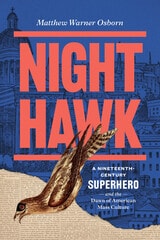
Night Hawk
A Nineteenth-Century Superhero and the Dawn of American Mass CultureMatthew Warner Osborn
University of Chicago Press, 2026
Unmasks the long-forgotten story of how a flying, superhuman vigilante played a pivotal role in the founding of the American labor movement.
On July 5, 1828, more than a century before Superman arrived on Earth, a superhero took flight in Philadelphia’s night sky. Buried on page three of a small local newspaper, the announcement of his arrival appeared under the title “The Night-Hawk, No. 1” with a cryptic epigraph from Romeo and Juliet: “I’ll be a candleholder and look on.” Who and what was the Night Hawk? As Matthew Warner Osborn reveals, this was the sobriquet of a mysterious columnist for the weekly Mechanics’ Free Press, the first radical socialist newspaper in America. Dressed in a mysterious cloak, the Night Hawk soared over Philadelphia, revealing the evil crimes of prominent gentlemen, fighting murderous criminals, and calling out fraudulent moral authorities.
The Night Hawk was the ingenious invention of an impoverished actor, Cornelius A. Logan, who created the character as a public champion of Philadelphia’s Working Men’s movement, the first successful American labor party. The Night Hawk’s nocturnal adventures transformed their socialist ideology into an entertaining fantasy that dramatized the struggle against industrial exploitation and the degradation of working people. The success of the character made Logan into a celebrity, and he went on to become a popular and innovative comedian on the antebellum stage.
A harbinger of the superheroes we know today, the Night Hawk promises to illuminate dark secrets from the past, but he can also shed light on our present. He ignites our need to see corrupt elites unmasked and held accountable for their actions, all while protecting the innocent and oppressed. Americans have always loved to fantasize about powerful superheroes who hide behind masks while chasing bad guys, and Osborn shows in this entertaining history how the Night Hawk was perhaps the first standard bearer for that enduring mystique.
Night Riders of Reelfoot Lake
Paul Vanderwood
University of Alabama Press, 2003
Reelfoot Lake has been a hunting and fishing paradise from the time of its creation in 1812, when the New Madrid earthquake caused the Mississippi River to flow backward into low-lying lands. Situated in the northwestern corner of the state of Tennessee, it attracted westward-moving pioneers, enticing some to settle permanently on its shores.
Threatened in 1908 with the loss of their homes and livelihoods to aggressive, outsider capitalists, rural folk whose families had lived for generations on the bountiful lake donned hoods and gowns and engaged in “night riding,” spreading mayhem and death throughout the region as they sought vigilante justice. They had come to regard the lake as their own, by “squatters’ rights,” but now a group of entrepreneurs from St. Louis had bought the titles to the land beneath the shallow lake and were laying legal claim to Reelfoot in its entirety. People were hanged, beaten, and threatened and property destroyed before the state militia finally quelled the uprising. A compromise that made the lake public property did not entirely heal the wounds which continue to this day.
Paul Vanderwood reconstructs these harrowing events from newspapers and other accounts of the time. He also obtained personal interviews with participants and family members who earlier had remained mum, still fearing prosecution. The Journal of American History declares his book “the complete and authentic treatment” of the horrific dispute and its troubled aftermath.

Night Riders
Defending Community in the Black Patch, 1890–1915Christopher Waldrep
Duke University Press, 1993
Christopher Waldrep shows that, contrary to many accounts, these wealthy tobacco planters did not resist these new forces simply because of a nostalgia for a bygone time. Instead, many sought to become modern capitalists themselves--but on their own terms. The South's rural elite found their ability to hire and control black labor--the established racial practice of the community--threatened by the low prices offered by big companies for their raw materials. In response, farmers organized and demanded better prices for their tobacco. The tobacco companies then attempted to divide the farmers by offering higher prices to those willing to break with the others. When some cultivators succumbed, their betrayal awakened a deeply rooted vigilante tradition that called for the protection of community at all costs. Waldrep analyzes the spasm of violence that ensued in which horsemen, riding at night, destroyed tobacco barns and the warehouses where the companies stored their tobacco. But despite this fierce upheaval, the Black Patch community endured.
The most thorough treatment ever given to the Black Patch war, Night Riders illuminates a moment in history in which the traditional and the modern, the rural and the industrial, fought for the future--and past--of a community.
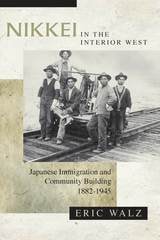
Nikkei in the Interior West
Japanese Immigration and Community Building, 1882–1945Eric Walz
University of Arizona Press, 2012
Eric Walz's Nikkei in the Interior West tells the story of more than twelve thousand Japanese immigrants who settled in the interior West--Arizona, Colorado, Idaho, Nebraska, and Utah. They came inland not as fugitives forced to relocate after Pearl Harbor but arrived decades before World War II as workers searching for a job or as picture brides looking to join husbands they had never met.
Despite being isolated from their native country and the support of larger settlements on the West Coast, these immigrants formed ethnic associations, language schools, and religious institutions. They also experienced persecution and discrimination during World War II in dramatically different ways than the often-studied immigrants living along the Pacific Coast. Even though they struggled with discrimination, these interior communities grew both in size and in permanence to become an integral part of the American West.
Using oral histories, journal entries, newspaper accounts, organization records, and local histories, Nikkei in the Interior West explores the conditions in Japan that led to emigration, the immigration process, the factors that drew immigrants to the interior, the cultural negotiation that led to ethnic development, and the effects of World War II. Examining not only the formation and impact of these Japanese communities but also their interaction with others in the region, Walz demonstrates how these communities connect with the broader Japanese diaspora.
Nine Months Is a Year
At Baboquívari SchoolEulalia Bourne
University of Arizona Press, 1968

Ninety Degrees In The Shade
Clarence E. Cason
University of Alabama Press, 1983
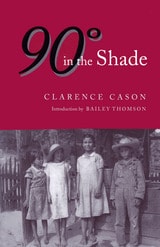
In 1935, Cason collected his thoughts in a small book of essays titled 90° in the Shade. In it, he declared that climate and the relaxation afforded by field and stream had given southerners excellent reasons for their notoriously slow pace of life. Still, he wrote, "there is much work that ought to be done below the Potomac." Cason captured the pathos of race relations and other persistent problems and declared that the abominable practice of lynching would end when the best people of the South risked their personal and commercial standing to denounce it. Just days before the book's publication, however, Cason shot himself in his campus office. He left no explanation, but apparently he feared angry reaction from fellow citizens to his mild criticisms and gentle suggestions for change.
The University of Alabama Press brought the book back into print in 1983. This new edition of Cason's classic features an introduction by journalist and UA professor H. Bailey Thomson, allowing yet another generation the enjoyment of Cason's perceptive writing, not so much for any remedy he proposed but rather for the open-minded and loving way in which he addressed the region's tragic experience.
Ninety Degrees in the Shade
Clarence E. Cason
University of Alabama Press, 2001
A candid, courageous portrait of the South as told by a writer unafraid to confront its heat, its history, and its humanity.
Clarence Cason belonged to that restless generation of southern intellectuals who, between the world wars, questioned the South's stubborn traditionalism, even as they tried to explain and defend its distinctiveness. From his professorial perch at The University of Alabama, Cason wrote polished essays for leading national publications while contributing weekly editorials for newspaper readers. As a journalist in academia, he cultivated a broad audience for his eloquent though tentative observations about the "character" of a region that seemed to be a separate province of the nation.
In 1935, Cason collected his thoughts in a small book of essays titled 90° in the Shade. In it, he declared that climate and the relaxation afforded by field and stream had given southerners excellent reasons for their notoriously slow pace of life. Still, he wrote, "there is much work that ought to be done below the Potomac." Cason captured the pathos of race relations and other persistent problems and declared that the abominable practice of lynching would end when the best people of the South risked their personal and commercial standing to denounce it. Just days before the book's publication, however, Cason shot himself in his campus office. He left no explanation, but apparently he feared angry reaction from fellow citizens to his mild criticisms and gentle suggestions for change.
The University of Alabama Press brought the book back into print in 1983. This new edition of Cason's classic features an introduction by journalist and UA professor H. Bailey Thomson, allowing yet another generation the enjoyment of Cason's perceptive writing, not so much for any remedy he proposed but rather for the open-minded and loving way in which he addressed the region's tragic experience.
This second reprint edition of a classic work on southern culture will allow a new generation of readers to enjoy Cason's observant, graceful writing.
Ninety Years Crossing Lake Michigan
The History of the Ann Arbor Car FerriesGrant Brown, Jr.
University of Michigan Press, 2008
"A must buy for anyone interested in the Great Lakes."
---Frederick Stonehouse, maritime historian
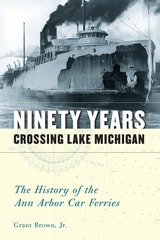
In 1892, the Ann Arbor Car Ferries shook the transportation world by doing what was then deemed impossible---carrying loaded railroad cars by ship across the sixty-two miles of open water between Frankfort, Michigan and Kewaunee, Wisconsin. With passion, acuity, and remarkable detail, Grant Brown describes the nearly 100-year crossings---from their beginnings with James Ashley's bold new idea of car ferrying down to the last fight for survival until the Michigan Interstate Rail Company finally closed in 1982.
Crossing the lake with loaded freight cars was a treacherous task that presented daily obstacles. Knowledgeable people believed it was impossible to secure rail cars from tipping over and sinking the ship. Weather and ice presented two near-insurmountable hurdles, making car ferrying doubly difficult in the winter when nearly all shipping on the Great Lakes shut down. This vivid history gives voice to the ships and their crews as they battled the storms without modern navigational aids or adequate power.
This spirited account of the Ann Arbor car ferries draws on ships' logs from various museums, over 2,000 newspaper articles, annual reports from 1889 through 1976, and interviews with former employees. The result is a living history of the ships, the crews, and their adventures; of the men who built and ran the business; and of the enormous influence the vessels had on the communities they served.
Grant Brown, Jr., worked for S.D. Warren Company, a paper manufacturer, for 37 years. He raced sailboats on Crystal Lake in northern Michigan for ten years while growing up, continued in Boston and St. Louis, and has since returned to living and racing in Frankfort, Michigan. He spent eight years in the U.S. Coast Guard Reserve, where he learned navigation and shipboard procedure.

Ninety Years Crossing Lake Michigan
The History of the Ann Arbor Car FerriesGrant Brown, Jr.
University of Michigan Press, 2008
"A must buy for anyone interested in the Great Lakes."
---Frederick Stonehouse, maritime historian
In 1892, the Ann Arbor Car Ferries shook the transportation world by doing what was then deemed impossible---carrying loaded railroad cars by ship across the sixty-two miles of open water between Frankfort, Michigan and Kewaunee, Wisconsin. With passion, acuity, and remarkable detail, Grant Brown describes the nearly 100-year crossings---from their beginnings with James Ashley's bold new idea of car ferrying down to the last fight for survival until the Michigan Interstate Rail Company finally closed in 1982.
Crossing the lake with loaded freight cars was a treacherous task that presented daily obstacles. Knowledgeable people believed it was impossible to secure rail cars from tipping over and sinking the ship. Weather and ice presented two near-insurmountable hurdles, making car ferrying doubly difficult in the winter when nearly all shipping on the Great Lakes shut down. This vivid history gives voice to the ships and their crews as they battled the storms without modern navigational aids or adequate power.
This spirited account of the Ann Arbor car ferries draws on ships' logs from various museums, over 2,000 newspaper articles, annual reports from 1889 through 1976, and interviews with former employees. The result is a living history of the ships, the crews, and their adventures; of the men who built and ran the business; and of the enormous influence the vessels had on the communities they served.
Grant Brown, Jr., worked for S.D. Warren Company, a paper manufacturer, for 37 years. He raced sailboats on Crystal Lake in northern Michigan for ten years while growing up, continued in Boston and St. Louis, and has since returned to living and racing in Frankfort, Michigan. He spent eight years in the U.S. Coast Guard Reserve, where he learned navigation and shipboard procedure.

No Money, No Beer, No Pennants
The Cleveland Indians and Baseball in the Great DepressionScott H. Longert
Ohio University Press, 2016
The Cleveland Indians of 1928 were a far cry from the championship team of 1920. They had begun the decade as the best team in all of baseball, but over the following eight years, their owner died, the great Tris Speaker retired in the face of a looming scandal, and the franchise was in terrible shape. Seeing opportunity in the upheaval, Cleveland real estate mogul Alva Bradley purchased the ball club in 1927, infused it with cash, and filled its roster with star players such as Bob Feller, Earl Averill, and Hal Trosky. He aligned himself with civic leaders to push for a gigantic new stadium that—along with the team that played in it—would be the talk of the baseball world.
Then came the stock market crash of 1929. Municipal Stadium was built, despite the collapse of the industrial economy in Rust Belt cities, but the crowds did not follow. Always the shrewd businessman, Bradley had engineered a lease agreement with the city of Cleveland that included an out clause, and he exercised that option after the 1934 season, leaving the 80,000-seat, multimillion-dollar stadium without a tenant.
In No Money, No Beer, No Pennants, Scott H. Longert gives us a lively history of the ups and downs of a legendary team and its iconic players as they persevered through internal unrest and the turmoil of the Great Depression, pursuing a pennant that didn’t come until 1948. Illustrated with period photographs and filled with anecdotes of the great players, this book will delight fans of baseball and fans of Cleveland.

No More Dual City
The Fate of Atlantic CityChristina Jackson
Rutgers University Press, 2027
No More Dual City: The Fate of Atlantic City examines Atlantic City as a vivid case study of how Black communities endure and resist the forces of economic redevelopment, racialized planning, and environmental vulnerability. Drawing on five years of ethnographic research, Jackson reveals how the city’s famed tourism and casino economy depends upon, yet marginalizes, the historically Black Northside neighborhood. Through the concept of dualness, Jackson explores how racial capitalism produces both material and emotional divides, between growth and decay, visibility and exclusion, and belonging and dispossession. Combining first-person narrative, theory, and community storytelling, the book illuminates the “slow violence” of urban inequality and the creativity of residents who build rooted futures amid instability. No More Dual City reframes Atlantic City not as an anomaly but as a microcosm of racialized urban America, offering a compelling new way to think about sustainability, justice, and the right to stay in place.
No One Ailing Except a Physician
Medicine in the Mining West, 1848-1919Duane A. Smith
University Press of Colorado, 2001
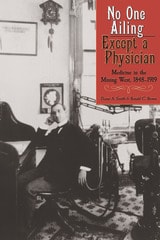
From burying scurvy victims up to their necks in the earth to drinking kerosene mixed with sugar to treat influenza, mid-nineteenth century medicine in the mining communities of the West usually consisted of home remedies that were often remarkable for their inventiveness but tragically random in their effectiveness. Only as a desperate last resort would people turn to the medical community, which had developed a deplorable reputation for quackery and charlatanism because of its lack of licensing regulations and uniform educational standards. No One Ailing Except a Physician takes readers back to those free-wheeling days in the mining towns and the dark recesses of the mines themselves, a time when illness or injury was usually survived more due to sheer luck than the interventions of medicine.
In this important new contribution to both mining and medical history, historians Duane A. Smith and Ronald C. Brown present a detailed analysis of the ailments that confronted the miners and the methods with which they and their doctors attempted to "cure" them. The occupational hazards of mining, with its strenuous labor and exposure to the elements, contributed to the miners' vulnerability to disease and injury, which was further worsened by the typical miner's refusal to heed prevailing medical wisdom and common sense, often leading to easily preventable diseases such as scurvy. And because medical science of the era had not progressed much beyond that of the ancient Greeks, such debilitating diseases such as cholera, influenza, dysentery, and malaria proved to be virtual death sentences, to say nothing of occupational accidents with fires and explosions, mine collapses, and safety cage mishaps.
No Place Like Home
Notes from a Western LifeLinda M. Hasselstrom
University of Nevada Press, 2010
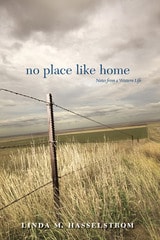
In No Place Like Home, Linda Hasselstrom ponders the changing nature of community in the modern West, where old family ranches are being turned into subdivisions and historic towns are evolving into mean, congested cities. Her scrutiny, like her life, moves back and forth between her ranch on the South Dakota prairie and her house in an old neighborhood at the edge of downtown Cheyenne, Wyoming. The vignettes that form the foundation of her consideration are drawn from the communities she has known during her life in the West, reflecting on how they have grown, thrived, failed, and changed, and highlighting the people and decisions that shaped them. Hasselstrom’s ruminations are both intensely personal and universal. She laments the disappearance of the old prairie ranches and the rural sense of community and mutual responsibility that sustained them, but she also discovers that a spirit of community can be found in unlikely places and among unlikely people. The book defines her idea of how a true community should work, and the kind of place she wants to live in. Her voice is unique and honest, both compassionate and cranky, full of love for the harsh, hauntingly beautiful short-grass prairie that is her home, and rich in understanding of the intricacies of the natural world around her and the infinite potentials of human commitment, hope, and greed. For anyone curious about the state of the contemporary West, Hasselstrom offers a report from the front, where nature and human aspirations are often at odds, and where the concepts of community and mutual responsibility are being redefined.

No Place To Call Home
The 1807-1857 Life Writings of Caroline Barnes Crosby, Chronicler of Outlying Mormon CommunitiesEdward Leo Lyman, Susan Ward Payne, and S. George Ellsworth
Utah State University Press, 2020
Caroline Crosby's life took a wandering course between her 1834 marriage to Jonathan Crosby and conversion to the infant Mormon Church and her departure for her final home, Utah, on New Year's Day, 1858. In the intervening years, she lived in many places but never long enough to set firm roots. Her adherence to a frontier religion on the move kept her moving, even after the church began to settle down in Utah. Despite the impermanence of her situation—perhaps even because of it—Caroline Crosby left a remarkably rich record of her life and travels, thereby telling us not only much about herself and her family but also about times and places of which her documentary record provides a virtually unparalleled view. A notable aspect of her memoirs and journals is what they convey of the character of their author, who, despite the many challenges of transience and poverty she faced, appears to have remained curious, dedicated, observant, and optimistic.
From Caroline's home in Canada, she and Jonathan Crosby first went to the headquarters of Joseph Smith's new church in Kirtland, Ohio. She recounts, in a memoir, the early struggles of his followers there. As the church moved west, the Crosbys did as well, but, as became characteristic, they did not move immediately with the main body to the center of the religion. For a while they settled in Indiana, finally reaching the new Mormon center of Nauvoo in 1842. Fleeing Nauvoo with the last of the Mormons in 1846, they spent two years in Iowa and set out for Utah in 1848, the account of which is the first of Caroline Crosby's vivid trail journals. The Crosbys were able to rest in Salt Lake City for less than two years before Brigham Young sent them on a church mission to the Society and Austral Islands in the South Pacific. She recorded, in detail, their overland travel to San Francisco and then by sea to French Polynesia and their service on the islands. In late 1852 the Crosbys returned to California, beginning what is probably the most historically significant time recorded in her writings, her diaries of life. First, in immediately post-Gold-Rush San Francisco and, second, in the new Mormon village of San Bernardino in southern California. There is no comparable record by a woman of 1850s life in these growing communities. The Crosbys responded in 1857 to Brigham Young's call for church members to gather in Utah and again abandoned a new home—the nicest one they had built and one of the finest houses in San Bernardino—again displaying their unquestioning loyalty to the Mormon church.
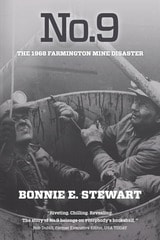
No.9
The 1968 Farmington Mine DisasterBonnie E. Stewart
West Virginia University Press, 2011
Ninety-nine men entered the cold, dark tunnels of the Consolidation Coal Company’s No.9 Mine in Farmington, West Virginia, on November 20, 1968. Some were worried about the condition of the mine. It had too much coal dust, too much methane gas. They knew that either one could cause an explosion. What they did not know was that someone had intentionally disabled a safety alarm on one of the mine’s ventilation fans. That was a death sentence for most of the crew. The fan failed that morning, but the alarm did not sound. The lack of fresh air allowed methane gas to build up in the tunnels. A few moments before 5:30 a.m., the No.9 blew up. Some men died where they stood. Others lived but suffocated in the toxic fumes that filled the mine. Only 21 men escaped from the mountain.
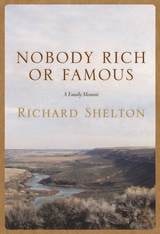
Nobody Rich or Famous
A Family MemoirRichard Shelton
University of Arizona Press, 2016
Known for his storytelling, Shelton crafts a tale of poverty and its attendant sorrows: alcoholism, neglect, and abuse. But the tenacity of the human spirit shines through. This is an epic tale of Steinbeckian proportions, but it is not fiction. This is memoir in its finest tradition, illuminating today’s cultural chasm between the haves and have-nots. In the author’s words, Nobody Rich or Famous is “the story of a family and how it got that way.”
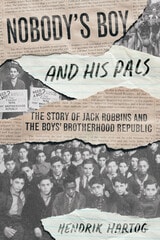
Nobody's Boy and His Pals
The Story of Jack Robbins and the Boys’ Brotherhood RepublicHendrik Hartog
University of Chicago Press, 2024
In 1914, social reformer Jack Robbins and a group of adolescent boys in Chicago founded the Boys’ Brotherhood Republic, an unconventional and unusual institution. During a moral panic about delinquent boys, Robbins did not seek to rehabilitate and/or punish wayward youths. Instead, the boys governed themselves, democratically and with compassion for one another, and lived by their mantra “So long as there are boys in trouble, we too are in trouble.” For nearly thirty years, Robbins was their “supervisor,” and the will he drafted in the late 1950s suggests that he continued to care about forgotten boys, even as the political and legal contexts that shaped children’s lives changed dramatically.
Nobody’s Boy and His Pals is a lively investigation that challenges our ideas about the history of American childhood and the law. Scouring the archives for traces of the elusive Jack Robbins, Hendrik Hartog examines the legal histories of Progressive reform, childhood, criminality, repression, and free speech. The curiosity of Robbins’s story is compounded by the legal challenges to his will, which wound up establishing the extent to which last wishes must conform to dominant social values. Filled with persistent mysteries and surprising connections, Nobody’s Boy and His Pals illuminates themes of childhood and adolescence, race and ethnicity, sexuality, wealth and poverty, and civil liberties, across the American Century.

North America's Galapagos
The Historic Channel Islands Biological SurveyCorinne Heyning Laverty
University of Utah Press, 2019
This untold saga of adventure, discovery, and goals abandoned is juxtaposed against the fresh successes of a new generation of Channel Island scholars. Engagingly written, North America’s Galapagos illuminates the scientific process and reveals remarkable modern discoveries that are rewriting archaeological textbooks and unraveling the answer to the age-old question: how and when were the Americas populated?
Anyone interested in the work conducted behind closed museum doors will want to read this book—so will history buffs, environmentalists, scientists, and general readers curious about our world.
Visit the author's website: https://www.channelislandscalifornia.com/
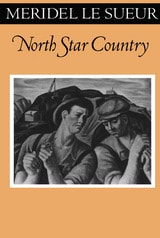
North Star Country
Meridel Le Sueur
University of Minnesota Press, 1998
North Woods River
The St. Croix River in Upper Midwest HistoryEileen M. McMahon and Theodore J. Karamanski
University of Wisconsin Press, 2009
North Woods River is a thoughtful biography of the river over the course of more than three hundred years. Eileen McMahon and Theodore Karamanski track the river’s social and environmental transformation as newcomers changed the river basin and, in turn, were changed by it. The history of the St. Croix revealed here offers larger lessons about the future management of beautiful and fragile wild waters.
North of 53°
The Wild Days of the Alaska-Yukon Mining Frontier, 1870-1914William R. Hunt
University of Alaska Press, 2009
“Saints and sinners, whores and housewives, swindlers and laborers alike attempted a hasty adjustment to novel conditions in a land that seemed strange and forbidding,” writes William R. Hunt in his narrative history of Alaska mining. Hunt offers an exciting anecdotal account that follows hungry prospectors, canny shopkeepers, hopeful hangers-on, and crafty lawyers through the gold mining camps and temporary towns of nineteenth-century Alaska. Hunt has hiked and mined many of the same claims he writes about in the book, and North of 53 offers a rare glimpse into far-flung communities from Skagway to the Yukon to the deep interior of Alaska to the Ididarod and Nome on the Bering Sea.
Northern Arizona University
Buildings as HistoryLee C. Drickamer and Peter J. Runge
University of Arizona Press, 2011
This book looks at the buildings that have graced the campus of Northern Arizona University from its opening in 1898 to the present. The school began with a single building, Old Main, and it was joined by five other structures prior to World War I. In the following decades the campus remained relatively small, expanding to approximately twenty-five structures by the late 1950s. During the tenure of President J. Lawrence Walkup (1957–1979), the university effectively doubled in size, spreading southward and adding more than forty buildings, including an entire south campus academic center. Since 1979 the campus has witnessed the addition of more than thirty structures, most as infill within the existing campus layout.
Arranged chronologically, this extensively illustrated volume briefly describes the history of every building that has been a part of the university’s physical layout. The authors describe various structural aspects of each building and provide entertaining and informative anecdotes about events and people associated with the structures. By combing the university’s archives, Drickamer and Runge have turned up photographs of each building as it looked shortly after construction and at present, providing a fascinating visual time lapse.
With more than two hundred images of campus buildings, many of them never before published, Northern Arizona University: Buildings as History provides a wonderful pictorial chronicle of the campus that will interest architectural historians as well as all those who have called NAU home.

Northern Hospitality
Cooking by the Book in New EnglandKeith Stavely
University of Massachusetts Press, 2011
Beginning with four chapters placing the region's best-known cookbook authors and their works in nuanced historical context, Keith Stavely and Kathleen Fitzgerald then proceed to offer a ten-chapter cornucopia of culinary temptation. Readers can sample regional offerings grouped into the categories of the liquid one-pot meal, fish, fowl, meat and game, pie, pudding, bread, and cake. Recipes are presented in their original textual forms and are accompanied by commentaries designed to make them more accessible to the modern reader. Each chapter, and each section within each chapter, is also prefaced by a brief introductory essay. From pottage to pie crust, from caudle to calf's head, historic methods and obscure meanings are thoroughly—sometimes humorously—explained.
Going beyond reprints of single cookbooks and bland adaptations of historic recipes, this richly contextualized critical anthology puts the New England cooking tradition on display in all its unexpected--and delicious--complexity. Northern Hospitality will equip readers with all the tools they need for both historical understanding and kitchen adventure.
Northern Navajo Frontier 1860 1900
Robert S. McPherson
Utah State University Press, 2001
The Navajo nation is one of the most frequently researched groups of Indians in North America. Anthropologists, sociologists, historians, and others have taken turns explaining their views of Navajo history and culture. A recurrent theme throughout is that the U.S. government defeated the Navajos so soundly during the early 1860s that after their return from incarceration at Bosque Redondo, they were a badly shattered and submissive people.
The next thirty years saw a marked demographic boom during which the Navajo population doubled. Historians disagree as to the extent of this growth, but the position taken by many historians is that because of this growth and the rapidly expanding herds of sheep, cattle, and horses, the government beneficently gave more territory to its suffering wards.
While this interpretation is partly accurate, it centers on the role of the government, the legislation that was passed, and the frustrations of the Indian agents who rotated frequently through the Navajo Agency in Fort Defiance, New Mexico, and ignores or severely limits one of the most important actors in this process of land acquisition-the Navajos themselves. Instead of being a downtrodden group of prisoners, defeated militarily in the 1860s and dependent on the U.S. government for protection and guidance in the 1870s and 80s, they were vigorously involved in defending and expanding the borders of their homelands. This was accomplished not through war and as a concerted effort, but by an aggressive defensive policy built on individual action that varied with changing circumstances. Many Navajos never made the Long Walk to Bosque Redondo. Instead they eluded capture in northern and western hinterlands and thereby pushed out their frontier. This book focuses on the events and activities in one part of the Navajo borderlands-the northern frontier-where between 1860 and 1900 the Navajos were able to secure a large portion of land that is still part of the reservation. This expansion was achieved during a period when most Native Americans were losing their lands.

Northern New Spain
A Research GuideThomas C. Barnes, Thomas H. Naylor, and Charles W. Polzer
University of Arizona Press, 1981