Results by title
18316 books match the query 'United states' and 397 start with n
Native American Performance and Representation
Edited by S. E. Wilmer
University of Arizona Press, 2009
This volume examines Native performance using a variety of lenses, such as feminism, literary and film theory, and postcolonial discourse. Through the many unique voices of the contributors, major themes are explored, such as indigenous self-representations in performance, representations by nonindigenous people, cultural authenticity in performance and representation, and cross-fertilization between cultures. Authors introduce important, though sometimes controversial, issues as they consider the effects of miscegenation on traditional customs, racial discrimination, Native women’s position in a multicultural society, and the relationship between authenticity and hybridity in Native performance.
An important addition to the new and growing field of Native performance, Wilmer’s book cuts across disciplines and areas of study in a way no other book in the field does. It will appeal not only to those interested in Native American studies but also to those concerned with women’s and gender studies, literary and film studies, and cultural studies.
Native American Place Names of Indiana
Michael McCafferty
University of Illinois Press, 2007
A linguistic history of Native American place-names in Indiana
In tracing the roots of Indiana place names, Michael McCafferty focuses on those created and used by local Native Americans. Drawing from exciting new sources that include three Illinois dictionaries from the eighteenth century, the author documents the language used to describe landmarks essential to fur traders in Les Pays d’en Haut and settlers of the Old Northwest territory. Impeccably researched, this study details who created each name, as well as when, where, how and why they were used. The result is a detailed linguistic history of lakes, streams, cities, counties, and other Indiana names. Each entry includes native language forms, translations, and pronunciation guides, offering fresh historical insight into the state of Indiana.

Native American Slavery in the Seventeenth Century
Arne Bialuschewski, special issue editor
Duke University Press, 2017
Contributors. Carolyn Arena, Arne Bialuschewski, Linford D. Fisher, George Edward Milne, Andrés Reséndez
Native Americans and Pennsylvania
Daniel K. Richter
Temple University Press, 2026
Engagingly written, deeply researched, and thoroughly revised to reflect the most recent interdisciplinary scholarship, this new edition of Native Americans and Pennsylvania focuses on Indigenous actors, voices, and landscapes, while tracing interconnections among local, continental, and global trends.
The story begins thousands of years before there was such a thing as “Pennsylvania.” William Penn did not paint his colony on a blank canvas. Colonists adapted ancient patterns of trade and cultural interaction created by the ancestors of Lenape, Conestoga, and Haudenosaunee peoples and convinced themselves they had made them their own. In the process, Pennsylvanians developed moral justifications for the expropriation of Indigenous land, pernicious doctrines about racial superiority, and brutal mechanisms of vigilante violence that profoundly influenced later United States government policies.
Those policies kept Pennsylvania in the foreground of national Native American issues long after the Commonwealth expelled the majority of its Indigenous population to far-flung diasporic homes: forced cultural assimilation at off-reservation boarding schools in the nineteenth century, cultural revitalization and political activism in the twentieth, and struggles with cultural institutions over the repatriation of human remains and controversies over who has the right to claim Indigenous identity in the twenty-first.
In the series Pennsylvania History
Native Americans and the Christian Right
The Gendered Politics of Unlikely AlliancesAndrea Smith
Duke University Press, 2008
Smith draws on archival research, interviews, and her own participation in Native struggles and Christian Right conferences and events. She considers American Indian activism within the Promise Keepers and new Charismatic movements. She also explores specific opportunities for building unlikely alliances. For instance, while evangelicals’ understanding of the relationship between the Bible and the state may lead to reactionary positions on issues including homosexuality, civil rights, and abortion, it also supports a relatively progressive position on prison reform. In terms of evangelical and Native American feminisms, she reveals antiviolence organizing to be a galvanizing force within both communities, discusses theories of coalition politics among both evangelical and indigenous women, and considers Native women’s visions of sovereignty and nationhood. Smith concludes with a reflection on the implications of her research for the field of Native American studies.
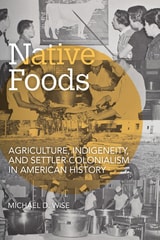
Native Foods
Agriculture, Indigeneity, and Settler Colonialism in American HistoryMichael D. Wise
University of Arkansas Press, 2023
Combining original historical research with interdisciplinary perspectives and informed by the work of Indigenous food sovereignty advocates and activists, this study sheds new light on the historical roles of Native American cuisine in American history and the significance of ongoing colonial processes in present-day discussions about the place of Native foods and Native history in our evolving worlds of taste, justice, and politics.
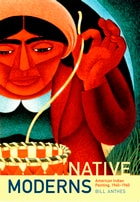
Native Moderns
American Indian Painting, 1940-1960Bill Anthes
Duke University Press, 2006
In the mid-twentieth century, Native artists began to produce work that reflected the accelerating integration of Indian communities into the national mainstream as well as, in many instances, their own experiences beyond Indian reservations as soldiers or students. During this period, a dynamic exchange among Native and non-Native collectors, artists, and writers emerged. Anthes describes the roles of several anthropologists in promoting modern Native art, the treatment of Native American “Primitivism” in the writing of the Jewish American critic and painter Barnett Newman, and the painter Yeffe Kimball’s brazen appropriation of a Native identity. While much attention has been paid to the inspiration Native American culture provided to non-Native modern artists, Anthes reveals a mutual cross-cultural exchange that enriched and transformed the art of both Natives and non-Natives.
Native People of Wisconsin
Patty Loew
Wisconsin Historical Society Press, 2003
The revised edition ofPatty Loew'sNative People of Wisconsin is now available, ISBN 9780870207488.Native People of Wisconsin, the fifth text in the New Badger History series for upper elementary and middle school students, focuses on the Indian Nations in the state: the Menominee, Ho-Chunk, Ojibwe, Oneida, Mohican Nation, Stockbridge-Munsee Band, and the Brothertown Indians. Patty Loew has followed the same structure she used in Indian Nations of Wisconsin, her book for general audiences, in which she provided chapters on Early History and European Arrivals, then devoted the remaining chapters to each of the Indian Nations in Wisconsin today.
Native People of Wisconsin, TG
Bobbie Malone and Kori Oberle
Wisconsin Historical Society Press, 2003
The revised and updated Teacher's Guide for Native People of Wisconsin is available Winter 2015, ISBN 9780870207495.This teacher's guide helps students grasp fully the rich content of Native People of Wisconsin. The guide offers more structured activities that reengage students in the text itself in a manner that diverges from teacher's guides to our earlier publications. Activities for each chapter focus on interdisciplinary standards-related reading strategies, journaling, and other multidimensional skills that both reinforce and complement the content of the text. Included with the teacher's guide is an accompanying CD-ROM, produced specifically for Native People of Wisconsin of segments from several of the video series on Wisconsin Studies produced by the Wisconsin Educational Communications Board. Such interactive learning integrates reasoning and reading skills (and state standards) beyond the social studies and promise to make Native People of Wisconsin an essential part of the classroom curriculum.
Native Space
Geographic Strategies to Unsettle Settler ColonialismNatchee Blu Barnd
Oregon State University Press, 2017
What are the limits and potentials of indigenous acts of spatial production? Native Space argues that control over the notion of “Indianness” still sits at the center of how space is produced in a neocolonial nation, and shows how non-indigenous communities uniquely deploy Native identities in the direct construction of colonial geographies. In short, “the Indian” serves to create White space in concrete ways. Yet, Native geographies effectively reclaim indigenous identities, assert ongoing relations to the land, and refuse the claims of settler colonialism.
Barnd creatively and persuasively uses original cartographic research and demographic data, a series of interrelated stories set in the Midwestern Plains states of Kansas and Oklahoma, an examination of visual art by contemporary indigenous artists, and discussions of several forms of indigenous activism to support his argument. With its highly original, interdisciplinary approach, Native Space makes a significant contribution to the literature in cultural and critical geography, comparative ethnic studies, indigenous studies, cultural studies, American Studies, and related fields.
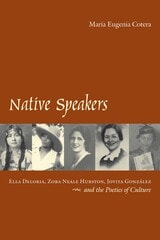
Native Speakers
Ella Deloria, Zora Neale Hurston, Jovita Gonzalez, and the Poetics of CultureBy María Eugenia Cotera
University of Texas Press, 2008
Gloria Anzaldua Book Prize, National Women's Studies Association, 2009
In the early twentieth century, three women of color helped shape a new world of ethnographic discovery. Ella Cara Deloria, a Sioux woman from South Dakota, Zora Neale Hurston, an African American woman from Florida, and Jovita González, a Mexican American woman from the Texas borderlands, achieved renown in the fields of folklore studies, anthropology, and ethnolinguistics during the 1920s and 1930s. While all three collaborated with leading male intellectuals in these disciplines to produce innovative ethnographic accounts of their own communities, they also turned away from ethnographic meaning making at key points in their careers and explored the realm of storytelling through vivid mixed-genre novels centered on the lives of women.
In this book, Cotera offers an intellectual history situated in the "borderlands" between conventional accounts of anthropology, women's history, and African American, Mexican American and Native American intellectual genealogies. At its core is also a meditation on what it means to draw three women—from disparate though nevertheless interconnected histories of marginalization—into conversation with one another. Can such a conversation reveal a shared history that has been erased due to institutional racism, sexism, and simple neglect? Is there a mode of comparative reading that can explore their points of connection even as it remains attentive to their differences? These are the questions at the core of this book, which offers not only a corrective history centered on the lives of women of color intellectuals, but also a methodology for comparative analysis shaped by their visions of the world.
Native Wills from the Colonial Americas
Dead Giveaways in a New WorldMark Z. Christensen and Jonathan Truitt
University of Utah Press, 2015
Native Wills from the Colonial Americas showcases new testamentary sources from the sixteenth to the eighteenth centuries. It provides readers with translations and analyses of wills written in Spanish, Nahuatl, Yucatec Maya, K’iche’ Maya, Mixtec, and Wampanoag.
Divided into three thematic sections, the book provides insights and details that further our understanding of indigenous life in the Americas under colonial rule. Part One employs testaments to highlight the women of Native America and the ways their lives frequently challenged prescribed gender roles and statuses. Part Two uses testaments to illustrate the strategies of the elite in both negotiating and maintaining their power in a colonial, Spanish world. Part Three contributes to our understanding of the individual and collective nature of death by extracting from wills the importance of conversion, kinship, and societal ties in the colonial Americas. Capturing individual voices during dramatic periods of change, the documents presented here help us understand how cultures both adapt and persist.
Natural Acts
Gender, Race, and Rusticity in Country MusicPamela Fox
University of Michigan Press, 2009
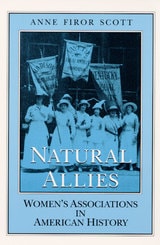
Natural Allies
Women's Associations in American HistoryAnne Firor Scott
University of Illinois Press, 1991
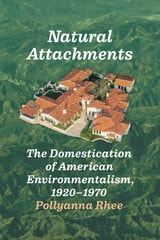
Natural Attachments
The Domestication of American Environmentalism, 1920–1970Pollyanna Rhee
University of Chicago Press, 2025
A massive oil spill in the Pacific Ocean near Santa Barbara, California, in 1969 quickly became a landmark in the history of American environmentalism, helping to inspire the creation of both the Environmental Protection Agency and Earth Day. But what role did the history of Santa Barbara itself play in this? As Pollyanna Rhee shows, the city’s past and demographics were essential to the portrayal of the oil spill as momentous. Moreover, well-off and influential Santa Barbarans were positioned to “domesticate” the larger environmental movement by embodying the argument that individual homes and families—not society as a whole—needed protection from environmental abuses. This soon would put environmental rhetoric and power to fundamentally conservative—not radical—ends.
Natural Attachments
The Domestication of American Environmentalism, 1920–1970Pollyanna Rhee
University of Chicago Press, 2025
A nuanced analysis takes a California oil spill as its point of departure to show how affluent homeowners pushed for an environmentalism that would protect not only the earth but also property and community norms.
A massive oil spill in the Pacific Ocean near Santa Barbara, California, in 1969 quickly became a landmark in the history of American environmentalism, helping to inspire the creation of both the Environmental Protection Agency and Earth Day. But what role did the history of Santa Barbara itself play in this? As Pollyanna Rhee shows, the city’s past and demographics were essential to the portrayal of the oil spill as momentous. Moreover, well-off and influential Santa Barbarans were positioned to “domesticate” the larger environmental movement by embodying the argument that individual homes and families—not society as a whole—needed protection from environmental abuses. This soon would put environmental rhetoric and power to fundamentally conservative—not radical—ends.

Natural Born Celebrities
Serial Killers in American CultureDavid Schmid
University of Chicago Press, 2005
David Schmid provides a historical account of how serial killers became famous and how that fame has been used in popular media and the corridors of the FBI alike. Ranging from H. H. Holmes, whose killing spree during the 1893 Chicago World's Fair inspired The Devil in the White City, right up to Aileen Wuornos, the lesbian prostitute whose vicious murder of seven men would serve as the basis for the hit film Monster, Schmid unveils a new understanding of serial killers by emphasizing both the social dimensions of their crimes and their susceptibility to multiple interpretations and uses. He also explores why serial killers have become endemic in popular culture, from their depiction in The Silence of the Lambs and The X-Files to their becoming the stuff of trading cards and even Web sites where you can buy their hair and nail clippings.
Bringing his fascinating history right up to the present, Schmid ultimately argues that America needs the perversely familiar figure of the serial killer now more than ever to manage the fear posed by Osama bin Laden since September 11.
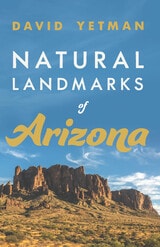
Natural Landmarks of Arizona
David Yetman
University of Arizona Press, 2021
Whether you have climbed these peaks many times, enjoy seeing them from your car window, or simply want to learn more about southwestern geology and history, reading Natural Landmarks of Arizona is a fascinating way to learn about the ancient and recent history of beloved places such as Cathedral Rock, Granite Dells, Kitt Peak, and many others. With Yetman as your guide, you can tuck this book into your glove box and hit the road with profound new knowledge about the towering natural monuments that define our beautiful Arizona landscapes.
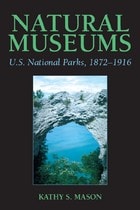
Natural Museums
U.S. National Parks, 1872-1916Kathy S. Mason
Michigan State University Press, 2004
In 1872, the world’s first national park was founded at Yellowstone. Although ideas of nature conservation were not embraced generally by the American public, five more parks were created before the turn of the century. By 1916, the year that the National Park Service was born, the country could boast of fourteen national parks, including such celebrated areas as Yosemite and Sequoia. Kathy Mason demonstrates that Congress, park superintendents, and the American public were forming general, often tacit notions of the parks’ purpose before the new bureau was established.
Although the Park Service recently has placed some emphasis on protecting samples of North America’s ecosystems, the earliest national parks were viewed as natural museums—monuments to national grandeur that would edify visitors. Not only were these early parks to preserve monumental and unique natural attractions, but they also had to be of no use to mining, lumbering, agriculture, and other “productive” industries. Natural Museums examines the notions of park monumentalism, “worthlessness,” and national significance, as well as the parks’ roles as wilderness preserves and recreational centers.
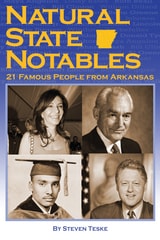
Natural State Notables
Twenty-One Famous People from ArkansasSteven Teske
Butler Center for Arkansas Studies, 2014
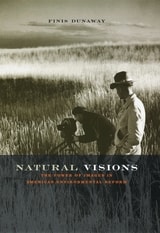
Natural Visions
The Power of Images in American Environmental ReformFinis Dunaway
University of Chicago Press, 2005
In Natural Visions, Finis Dunaway tells the story of how visual imagery—such as wilderness photographs, New Deal documentary films, and Sierra Club coffee-table books—shaped modern perceptions of the natural world. By examining the relationship between the camera and environmental politics through detailed studies of key artists and activists, Dunaway captures the emotional and spiritual meaning that became associated with the American landscape. Throughout the book, he reveals how photographers and filmmakers adapted longstanding traditions in American culture—the Puritan jeremiad, the romantic sublime, and the frontier myth—to literally picture nature as a place of grace for the individual and the nation.
Beautifully illustrated with photographs by Ansel Adams, Eliot Porter, and a host of other artists, Natural Visions will appeal to a wide range of readers interested in American cultural history, the visual arts, and environmentalism.
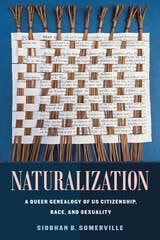
Naturalization
A Queer Genealogy of US Citizenship, Race, and SexualitySiobhan B. Somerville
Duke University Press, 2026
Naturalizing Mexican Immigrants
A Texas HistoryBy Martha Menchaca
University of Texas Press, 2011
2013 — NACCS Book Award – National Association for Chicana and Chicano Studies
During the nineteenth and early twentieth centuries, a majority of the Mexican immigrant population in the United States resided in Texas, making the state a flashpoint in debates over whether to deny naturalization rights. As Texas federal courts grappled with the issue, policies pertaining to Mexican immigrants came to reflect evolving political ideologies on both sides of the border.
Drawing on unprecedented historical analysis of state archives, U.S. Congressional records, and other sources of overlooked data, Naturalizing Mexican Immigrants provides a rich understanding of the realities and rhetoric that have led to present-day immigration controversies. Martha Menchaca's groundbreaking research examines such facets as U.S.-Mexico relations following the U.S. Civil War and the schisms created by Mexican abolitionists; the anti-immigration stance that marked many suffragist appeals; the effects of the Spanish American War; distinctions made for mestizo, Afromexicano, and Native American populations; the erosion of means for U.S. citizens to legalize their relatives; and the ways in which U.S. corporations have caused the political conditions that stimulated emigration from Mexico.
The first historical study of its kind, Naturalizing Mexican Immigrants delivers a clear-eyed view of provocative issues.
Nature Religion in America
From the Algonkian Indians to the New AgeCatherine L. Albanese
University of Chicago Press, 1990
Nature of Hope
Grassroots Organizing, Environmental Justice, and Political ChangeChar Miller
University Press of Colorado, 2018
Through lively and accessible storytelling, The Nature of Hope reveals unsung and unstinting efforts to protect the physical environment and human health in the face of continuing economic growth and development and the failure of state and federal governments to deal adequately with the resulting degradation of air, water, and soils. In an age of environmental crisis, apathy, and deep-seated cynicism, these efforts suggest the dynamic power of a “politics of hope” to offer compelling models of resistance, regeneration, and resilience. The contributors frame their chapters around the drive for greater democracy and improved human and ecological health and demonstrate that local activism is essential to the preservation of democracy and the protection of the environment. The book also brings to light new styles of leadership and new structures for activist organizations, complicating assumptions about the environmental movement in the United States that have focused on particular leaders, agencies, thematic orientations, and human perceptions of nature.
The critical implications that emerge from these stories about ecological activism are crucial to understanding the essential role that protecting the environment plays in sustaining the health of civil society. The Nature of Hope will be crucial reading for scholars interested in environmentalism and the mechanics of social movements and will engage historians, geographers, political scientists, grassroots activists, humanists, and social scientists alike.
Nature's Burdens
Conservation and American Politics, The Reagan Era to the PresentDaniel Nelson
Utah State University Press, 2017
Nature’s Burdens is a political and intellectual history of American natural resource conservation from the 1980s into the twenty-first century—a period of intense political turmoil, shifting priorities among federal policymakers, and changing ideas about the goals of conservation. Telling a story of persistent activism, conflict, and frustration but also of striking achievement, it is an account of how new ideas and policies regarding human relationships to plants, animals, and their surroundings have become vital features of modern environmentalism.
In the 1960s and 1970s, Congress embraced the largely dormant movement to preserve distinctive landscapes and the growing demand for outdoor recreation, establishing an unprecedented number of parks, monuments, and recreation areas. The election of Ronald Reagan and a shift to a Republican-controlled Senate brought this activity to an abrupt halt and introduced a period of intense partisanship and legislative gridlock that extends to the present. In this political climate, three developments largely defined the role of conservation in contemporary society: environmental organizations have struggled to defend the legal status quo, private land conservation has become increasingly important, and the emergence of potent scientific voices has promoted the protection of animals and plants and injected a new sense of urgency into the larger cause.
These developments mark this period as a distinctive and important chapter in the history of American conservation. Scrupulously researched, scientifically and politically well informed, concise, and accessibly written, Nature’s Burdens is the most comprehensive examination of recent efforts to protect and enhance the natural world. It will be of interest to environmental historians, environmental activists, and any general reader interested in conservation.
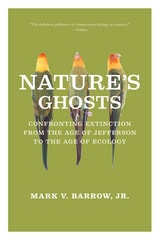
Nature's Ghosts
Confronting Extinction from the Age of Jefferson to the Age of EcologyMark V. Barrow, Jr.
University of Chicago Press, 2009
The rapid growth of the American environmental movement in recent decades obscures the fact that long before the first Earth Day and the passage of the Endangered Species Act, naturalists and concerned citizens recognized—and worried about—the problem of human-caused extinction.
As Mark V. Barrow reveals in Nature’s Ghosts, the threat of species loss has haunted Americans since the early days of the republic. From Thomas Jefferson’s day—when the fossil remains of such fantastic lost animals as the mastodon and the woolly mammoth were first reconstructed—through the pioneering conservation efforts of early naturalists like John James Audubon and John Muir, Barrow shows how Americans came to understand that it was not only possible for entire species to die out, but that humans themselves could be responsible for their extinction. With the destruction of the passenger pigeon and the precipitous decline of the bison, professional scientists and wildlife enthusiasts alike began to understand that even very common species were not safe from the juggernaut of modern, industrial society. That realization spawned public education and legislative campaigns that laid the foundation for the modern environmental movement and the preservation of such iconic creatures as the bald eagle, the California condor, and the whooping crane.
A sweeping, beautifully illustrated historical narrative that unites the fascinating stories of endangered animals and the dedicated individuals who have studied and struggled to protect them, Nature’s Ghosts offers an unprecedented view of what we’ve lost—and a stark reminder of the hard work of preservation still ahead.

Nature's Justice
Writings of William O. DouglasJames M. O'Fallon
Oregon State University Press, 2000
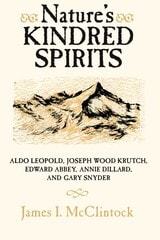
Nature's Kindred Spirits
Aldo Leopold, Joseph Wood Krutch, Edward Abbey, Annie Dillard, and Gary SnyderJames I. McClintock
University of Wisconsin Press, 1994
In Nature's Kindred Spirits James McClintock shows how their mystical experiences with the wild led to dramatic conversions in their thinking and behavior. By embracing the ecstasy of nature, they reject modern alienation and spiritual confusion.
From Aldo Leopold, America’s most important conservationist and author of the classic A Sand County Almanac, to Pulitzer Prize winners Annie Dillard and Gary Snyder and defenders of the desert Joseph Wood Krutch and Edward Abbey, these writers share a common vision that harkens back to Henry David Thoreau and John Muir. To nineteenth-century Romantic ideals, they add the authority of modern ecological science. Collectively they have elevated nature’s importance in American culture, shaping the growth of the environmental movement and influencing American environmental policies.
Widely admired among educated readers but relatively neglected by the literary establishment, these writers unite the experiential with the metaphysical, the ordinary with the sacred, the personal with the public, and the natural with the social. Using ecology as a touchstone, McClintock further draws connections among science, politics, religion, and philosophy to create an enlightening overview of the work of these “kindred spirits.”
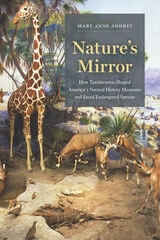
Nature's Mirror
How Taxidermists Shaped America’s Natural History Museums and Saved Endangered SpeciesMary Anne Andrei
University of Chicago Press, 2020
Witnessing firsthand the decimation caused by hide hunters, commercial feather collectors, whalers, big game hunters, and poachers, these museum taxidermists recognized the existential threat to critically endangered species and the urgent need to protect them. The compelling exhibits they created—as well as the scientific field work, popular writing, and lobbying they undertook—established a vital leadership role in the early conservation movement for American museums that persists to this day.
Through their individual research expeditions and collective efforts to arouse demand for environmental protections, this remarkable cohort—including William T. Hornaday, Carl E. Akeley, and several lesser-known colleagues—created our popular understanding of the animal world and its fragile habitats. For generations of museum visitors, they turned the glass of an exhibition case into a window on nature—and a mirror in which to reflect on our responsibility for its conservation.
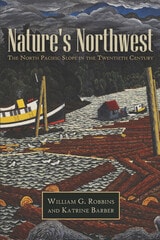
Nature's Northwest
The North Pacific Slope in the Twentieth CenturyWilliam G. Robbins and Katrine Barber
University of Arizona Press, 2011
With an emphasis on the region’s political economy, its environmental history, and its cultural and social heritage, this lively and colorful history of the Pacific Northwest—defined here as Oregon, Washington, Idaho, Montana, and southern British Columbia—places the narrative of this dynamic region within a national and international context.
Embracing both Canadian and American stories in looking at the larger region, renowned historians William Robbins and Katrine Barber offer us a fascinating regional history through the lens of both the environment and society. Understanding the physical landscape of the greater Pacific Northwest—and the watersheds of the Columbia, Fraser, Snake, and Klamath rivers—sets the stage for understanding the development of the area. Examining how this landscape spawned sawmills, fish canneries, railroads, logging camps, agriculture, and shared immigrant and ethnic traditions reveals an intricate portrait of the twentieth-century Northwest.
Impressive in its synthesis of myriad historical facts, this first-rate regional history will be of interest to historians studying the region from a variety of perspectives and an informative read for anyone fascinated by the story of a landscape rich in diversity, natural resources, and Native culture.
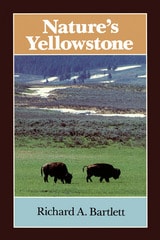
Nature's Yellowstone
Richard A. Bartlett
University of Arizona Press, 1974
"A timely work; its 'mission' is to make the reader wish 'to have seen Yellowstone before the people came.' The author must be commended for writing a scholarly book with appeal for a popular audience." —Journal of American History
"A joy for the recreational reader and a solid reference for scholarly researchers . . .The author has been both energetic and fortunate in gathering material from a rich variety of original accounts and later writings, and he has used them skillfully." —Western Historical Quarterly
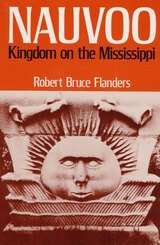
Nauvoo
KINGDOM ON THE MISSISSIPPIRobert Bruce Flanders
University of Illinois Press, 1965
A history of what became a romantic
legend about a martyred prophet, a lost city, and religious persecution,
this volume tells the story of Nauvoo, the early Mormon Church, and the
temporal life of Joseph Smith. Nauvoo (1839-46) was a critical period in
Mormon history. The climax of Smith's career and the start of Brigham Young's,
it was here that Utah really had it's beginnings and that the pattern of
Mormon society in the West was laid.
"...the quality and quantity of research is commendable... an excellent
contribution to American mid-western history and to Mormoniana in general."
-- Journal of American History
Navigating Climate Change Policy
The Opportunities of FederalismEdella C. Schlager
University of Arizona Press, 2011
Federalism—the system of government in which power is divided among a national government and state and regional governments—is well-suited to address the challenges of climate change because it permits distinctive policy responses at a variety of scales. The chapters in this book explore questions such as what are appropriate relationships between states, tribes, and the federal government as each actively pursues climate-change policies? How much leeway should states have in designing and implementing climate-change policies, and how extensively should the federal government exercise its preemption powers to constrain state activity? What climate-change strategies are states best suited to pursue, and what role, if any, will regional state-based collaborations and associations play? This book examines these questions from a variety of perspectives, blending legal and policy analyses to provide thought-provoking coverage of how governments in a federal system cooperate, coordinate, and accommodate one another to address this global problem.
Navigating Climate Change Policy is an essential resource for policymakers and judges at all levels of government who deal with questions of climate governance. It will also serve as an important addition to the curriculum on climate change and environmental policy in graduate and undergraduate courses and will be of interest to anyone concerned with how the government addresses environmental issues.

Navigating Difficult Situations in Public Libraries
The PLA Guide to Trauma-Informed De-EscalationMargaret Ann Paauw
American Library Association, 2025
- a succinct overview of how to define and understand trauma, including its definition, causes, effects, and manifestations;
- evidence-informed approaches drawn from the fields of social work, psychology, and counseling;
- dozens of activities, handouts, and worksheets designed to spur reflection and help readers build upon the practices introduced in the book;
- guidance on debriefing, evaluation, facing compassion fatigue, and other aftercare topics; and
- appendices that provide information on mental health resources, crisis intervention hotlines, and further reading on trauma and burnout.
Navigating Gendered Terrain
Stereotypes and Strategy in Political CampaignsKelly Dittmar
Temple University Press, 2014
Navigating Gendered Terrain addresses how gender is used to shape how campaigns are waged by influencing insider perceptions of and decisions about effective campaign messages, images, and tactics within party and political contexts. Dittmar uses survey information and interviews with candidates, political consultants, and other campaign professionals to reveal how gender-informed advertising, websites, and overall presentation to voters respond to stereotypes and perceptions of female and male candidates.
She closes her book by offering a feminist interpretation of women as candidates and explaining how the unintended outcomes of political campaigns reinforce prevailing ideas about gender and candidacy.
Navigating Interracial Borders
Black-White Couples and Their Social WorldsChilds, Erica Chito
Rutgers University Press, 2005
Is love color-blind, or at least becoming increasingly so? Today’s popular rhetoric and evidence of more interracial couples than ever might suggest that it is. But is it the idea of racially mixed relationships that we are growing to accept or is it the reality? What is the actual experience of individuals in these partnerships as they navigate their way through public spheres and intermingle in small, close-knit communities?
In Navigating Interracial Borders, Erica Chito Childs explores the social worlds of black-white interracial couples and examines the ways that collective attitudes shape private relationships. Drawing on personal accounts, in-depth interviews, focus group responses, and cultural analysis of media sources, she provides compelling evidence that sizable opposition still exists toward black-white unions. Disapproval is merely being expressed in more subtle, color-blind terms.
Childs reveals that frequently the same individuals who attest in surveys that they approve of interracial dating will also list various reasons why they and their families wouldn’t, shouldn’t, and couldn’t marry someone of another race. Even college students, who are heralded as racially tolerant and open-minded, do not view interracial couples as acceptable when those partnerships move beyond the point of casual dating. Popular films, Internet images, and pornography also continue to reinforce the idea that sexual relations between blacks and whites are deviant.
Well-researched, candidly written, and enriched with personal narratives, Navigating Interracial Borders offers important new insights into the still fraught racial hierarchies of contemporary society in the United States.

Navigating The Future With Sce Nario Planning
A Guidebook FoJoan Giesecke
Assoc of College & Research Libraries, 2015

Navigating White News
Asian American Journalists at WorkDavid C Oh
Rutgers University Press, 2023
Combining critical race studies with cultural production studies, Navigating White News: Asian American Journalists at Work is the only academic book to examine the ways that racial identification and activation matters in their understanding of news. This adds to the existing literature on race and the sociology of news by examining intra-racial differences in the ways they navigate and understand White newsrooms. Employing in-depth interviews with twenty Asian American journalists who are actively working in large and small newsrooms across the United States, Navigating White News: Asian American Journalists at Work argues that Asian American reporters for whom racial identities are important questioned what counted as news, questioned the implicitly White perspective of objectivity, and actively worked toward providing more complex, substantive coverage of Asian American communities. For Asian American reporters for whom racial identity was not meaningful, they were more invested in existing professional norms. Regardless, all journalists understood that news is a predominantly and culturally White institution.
Navigating the Future with Scenario Planning
A Guidebook for LibrariansJoan Giesecke
Assoc of College & Research Libraries, 2015
Navigators of the Contemporary
Why Ethnography MattersDavid A. Westbrook
University of Chicago Press, 2008
Navigators of the Contemporary describes the changing nature of ethnography as anthropologists use it to analyze places closer to home. Westbrook maintains that a conversational style of ethnography can help us look beyond our assumptions and gain new insight into arenas of contemporary life such as corporations, financial institutions, science, the military, and religion. Westbrook’s witty, absorbing book is a friendly challenge to anthropologists to shed light on the present and join broader streams of intellectual life. And for those outside the discipline, his inspiring vision of ethnography opens up the prospect of understanding our own world in much greater depth.
Navy Priest
Richard Gribble
Catholic University of America Press, 2015
Near Black
White-to-Black Passing in American CultureBaz Dreisinger
University of Massachusetts Press, 2008
In the United States, the notion of racial “passing” is usually associated with blacks and other minorities who seek to present themselves as part of the white majority. Yet as Baz Dreisinger demonstrates in this fascinating study, another form of this phenomenon also occurs, if less frequently, in American culture: cases in which legally white individuals are imagined, by themselves or by others, as passing for black.
In Near Black, Dreisinger explores the oft-ignored history of what she calls “reverse racial passing” by looking at a broad spectrum of short stories, novels, films, autobiographies, and pop-culture discourse that depict whites passing for black. The protagonists of these narratives, she shows, span centuries and cross contexts, from slavery to civil rights, jazz to rock to hip-hop. Tracing their role from the 1830s to the present day, Dreisinger argues that central to the enterprise of reverse passing are ideas about proximity. Because “blackness,” so to speak, is imagined as transmittable, proximity to blackness is invested with the power to turn whites black: those who are literally “near black” become metaphorically “near black.”
While this concept first arose during Reconstruction in the context of white anxieties about miscegenation, it was revised by later white passers for whom proximity to blackness became an authenticating badge. As Dreisinger shows, some white-to-black passers pass via self-identification. Jazz musician Mezz Mezzrow, for example, claimed that living among blacks and playing jazz had literally darkened his skin. Others are taken for black by a given community for a period of time. This was the experience of Jewish critic Waldo Frank during his travels with Jean Toomer, as well as that of disc jockey Hoss Allen, master of R&B slang at Nashville's famed WLAC radio. For journalists John Howard Griffin and Grace Halsell, passing was a deliberate and fleeting experiment, while for Mark Twain's fictional white slave in Pudd'nhead Wilson, it is a near-permanent and accidental occurrence.
Whether understood as a function of proximity or behavior, skin color or cultural heritage, self-definition or the perception of others, what all these variants of “reverse passing” demonstrate, according to Dreisinger, is that the lines defining racial identity in American culture are not only blurred but subject to change.
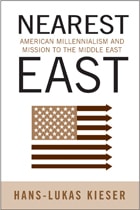
Nearest East
American Millenialism and Mission to the Middle EastAuthored by Hans-Lukas Kieser
Temple University Press, 2012
Long before oil interests shaped American interaction with the Middle East, the U.S. had a strong influence on the late Ottoman and post-Ottoman region. Covering the period from approximately 1800 to the 1970s, Hans-Lukas Kieser’s compelling Nearest East tells the story of this intimate, identity-building relationship between the U.S. and the Near East.
Kieser chronicles how American missionaries worked to implement their belief in Biblical millennialism, enlightened modernity, and a modern Zion-Israel. Millennialism was part of an American identity that constituted itself religiously in the interaction with and the representation of the “cradle of Zion.” As such, "going Near East" was—at least to American evangelical Protestants—in some ways more important than colonizing the American West. However, many Ottoman Muslims felt threatened by the American missionaries perceiving their successful institutions as an estranging challenge from the outside.
Measuring the long twisted road from the missionary Zion-builders of the early 19th century to the privileged US-Israeli partnership in the late 20th century, Nearest East looks carefully on both sides of the relationship. Kieser uses a wide range of Ottoman, Turkish, French, German and other sources, unfamiliar to most Anglophone readers, to tell this story that will appeal to historians of all stripes.
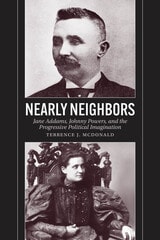
Nearly Neighbors
Jane Addams, Johnny Powers, and the Progressive Political ImaginationTerrence J. McDonald
University of Chicago Press, 2026
Jane Addams was full of courage and goodwill when she opened Hull House in Chicago’s Nineteenth Ward in 1889. However, she failed to understand that her immigrant neighbors had been well-organized around mostly Catholic churches and schools for decades before her arrival. Her ultimate political rival, Johnny Powers, grew up in this culture but was no ethnic hero or deep political thinker. Nearly Neighbors is the first book to provide a contextualized history of their encounter, embedding it in the social and political culture and structures of Chicago and the Nineteenth Ward in the 1890s.
Terrence J. McDonald provides a crucial analysis of two pivotal figures in Chicago’s political history, in part by providing the first detailed assessment of Powers’s life and practices, but also by demonstrating Addams’s misconception of him and her neighbors—and why it matters for understanding her Progressive work overall. In both her political work and writings, Addams saw her ethnic neighbors as bundles of economic need, rather than bearers of ethnic culture. At the same time, she was recruited by elite allies into causes that appeared to be opposed by her neighbors. These views and practices permitted Powers to win in their climactic political battle in 1898 simply by claiming to be the neighborhood defender against Addams and her “downtown” allies. Nearly Neighbors offers a new way of understanding Addams and the complicated legacy of her famous political work and writings.

Nearly Nuclear
A Mismanaged Energy Transitionleroy smith
Michigan State University Press, 2021
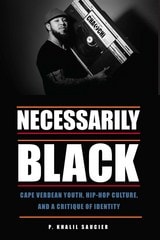
Necessarily Black
Cape Verdean Youth, Hip-Hop Culture, and a Critique of IdentityP. Khalil Saucier
Michigan State University Press, 2015

Necessary American Fictions
Popular Literature of the 1950sWilliam Darby
University of Wisconsin Press, 1987
William Darby gives us a comprehensive and (mostly) sympathetic reading of over fifty novels and a few movies from the 1950s. He examines titles such as Mandingo, The Invisible Man, I the Jury, Catcher in the Rye, Battle Cry, The Caine Mutiny, The Revolt of Mamie Stover, The Manchurian Candidate, Hawaii, The Bramble Bush, Peyton Place, Ten North Frederick, A Stone for Danny Fisher, The Bad Seed, Not as a Stranger, The Blackboard Jungle, From Here to Eternity, and Compulsion.
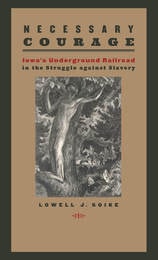
Necessary Courage
Iowa's Underground Railroad in the Struggle against SlaveryLowell J. Soike
University of Iowa Press, 2013
Necessary Evil
Settling Missouri with a Rope and a GunJoe Johnston
Missouri Historical Society Press, 2014
Necessary Evil is the first book to chronicle the implications of vigilantism in Missouri, ultimately showing that the state could never have been settled without a healthy dose of rebel justice. Packed with stories of popular gunslingers such as Wyatt Earp, Wild Bill Hickok, and Jesse James, this action-filled read will be of interest to crime enthusiasts and historians alike.