Results by title
5159 books match the query 'Biography' and 113 start with n
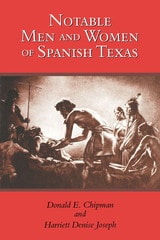
Notable Men and Women of Spanish Texas
By Donald E. Chipman and Harriett Denise Joseph
University of Texas Press, 1999
Winner, Presidio La Bahia Award, Sons of the Republic of Texas, 2000
Texas Old Missions and Forts Restoration Association Book Award, the Texas Old Missions and Fort Restoration Association and the Texas Catholic Historical Society, 2001
The Spanish colonial era in Texas (1528-1821) continues to emerge from the shadowy past with every new archaeological and historical discovery. In this book, years of archival sleuthing by Donald E. Chipman and Harriett Denise Joseph now reveal the real human beings behind the legendary figures who discovered, explored, and settled Spanish Texas.
By combining dramatic, real-life incidents, biographical sketches, and historical background, the authors bring to life these famous (and sometimes infamous) men of Spanish Texas:
- Alvar Núñez Cabeza de Vaca
- Alonso de León
- Francisco Hidalgo
- Louis Juchereau de St. Denis
- Antonio Margil
- The Marqués de Aguayo
- Pedro de Rivera
- Felipe de Rábago
- José de Escandón
- Athanase de Mézières
- The Marqués de Rubí
- Antonio Gil Ibarvo
- Domingo Cabello
- José Bernardo Gutiérrez de Lara
- Joaquín de Arredondo
The authors also devote a chapter to the women of Spanish Texas, drawing on scarce historical clues to tell the stories of both well-known and previously unknown Tejana, Indian, and African women.

Notable Women of Arkansas
From Hattie to Hillary, 100 Names to KnowNancy Hendricks
Butler Center for Arkansas Studies, 2016
Meet one Arkansas woman who was nominated for the Pulitzer Prize, Tony Award, and three Grammys. Learn about a female presidential candidate whose initials are not HRC. See beauty queens on the runway and a runaway beauty queen. Meet the trailblazing black actress who, if she had been born thirty years later, might have had a career like Halle Berry’s.
They are all Arkansas women, each with their own family, childhood, loves, losses, dreams, fears, hopes for the future, and ghosts from the past. These notable women—profiled together in one volume—have left an impressive legacy.
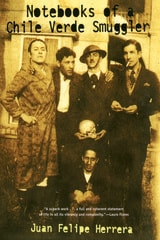
Notebooks of a Chile Verde Smuggler
Juan Felipe Herrera
University of Arizona Press, 2002
Notebooks of a Chile Verde Smuggler is a river of faces and phrases, jottings and reflections—a personal pilgrimage and collective parade of love, mock-prophecy, and chiste. Tuning in voices from numerous time zones, languages, and minds, Herrera recalls his childhood and coming of age, his participation in the Chicano Movement, and the surreal aspects of postmodern America. He uses broad strokes to paint a historical, social, and familial portrait that moves from the twilight of the nineteenth century to the dawn of the twenty-first, then takes up a finer brush to etch the eternal tension between desire and frustration, hope and disillusionment, violence and tenderness.
Here are transamerican sutras spanning metrocenters from Mexico City to San Francisco, or slinking across the border from Juárez to El Paso. Outrageous, rhythmic lists—"Foodstuffs They Never Told Us About," "Things Religion Makes Me Do"—that fire the imagination. Celebrations of his Plutomobile that "runs on ham hawks & bird grease," and of Chicano inventions such as cilantro aftershave and "the art of eating Vicks VapoRub with your dedos."
Pushing forms to the edge of possibility while forcing readers to rethink reality as well as language, Herrera invokes childhoods and neighborhoods, stand-up clowns and Movimiento gypsies, grandmothers of the buñuelo kitchen and tragicomic soliloquies of dizzy-headed outcasts of paradise. Notebooks of a Chile Verde Smuggler is a crucible of flavorful language meant to be rolled lazily on the mind's tongue—and then swallowed whole to let its hot and savory sweetness fill your soul.
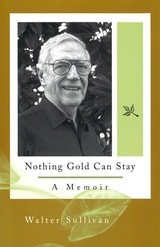
Nothing Gold Can Stay
A MemoirWalter Sullivan
University of Missouri Press, 2006
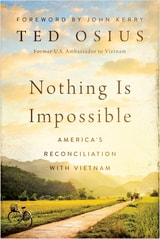
Nothing Is Impossible
America's Reconciliation with VietnamTed Osius
Rutgers University Press, 2022
Ted Osius, former ambassador during the Obama administration, offers a vivid account, starting in the 1990s, of the various forms of diplomacy that made this reconciliation possible. He considers the leaders who put aside past traumas to work on creating a brighter future, including senators John McCain and John Kerry, two Vietnam veterans and ideological opponents who set aside their differences for a greater cause, and Pete Peterson—the former POW who became the first U.S. ambassador to a new Vietnam. Osius also draws upon his own experiences working first-hand with various Vietnamese leaders and traveling the country on bicycle to spotlight the ordinary Vietnamese people who have helped bring about their nation’s extraordinary renaissance.
With a foreword by former Secretary of State John Kerry, Nothing Is Impossible tells an inspiring story of how international diplomacy can create a better world.
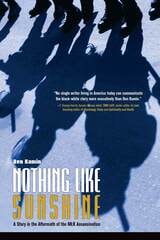
Nothing Like Sunshine
A Story in the Aftermath of the MLK AssassinationBen Kamin
Michigan State University Press, 2010
Rabbi Ben Kamin has written a definitive personal expression about race, coming of age in the 1960s, a forbidden friendship, and his personal love for Dr. Martin Luther King Jr. This is a story that spans a four-decade search for a lost high school chum, a deep misunderstanding, and a coming to terms with an America painfully evolving from the blood of MLK to the promise of Barack Obama.
The book is a remembrance of Kamin's life at Cincinnati's notorious Woodward High School, a microcosm of the 1960s and of America itself, as well as detailing Kamin's search-for Clifton, for America, for the key to understanding what race relations really are in the United States. Simultaneously, it is the story of the emerging rabbi's search for the legacy of his spiritual mentor, Dr. Martin Luther King Jr., taking Kamin from Cincinnati to Cleveland to Memphis to New Orleans and other points, and constantly bringing him home to his friend Clifton and "the heaving hallways" of that high school.
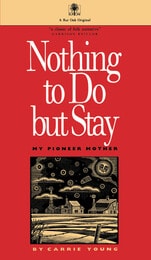
Nothing to Do but Stay
My Pioneer MotherCarrie Young
University of Iowa Press, 1991
Carrine Gafkjen was, as her daughter remembers, at once the most liberated and unliberated of women. If she had considered the subject at all she would have thought it a waste of time. She firmly believed in destiny; what fate planned for her she dealt with head-on.
In the early 1900s the twenty-five-year-old Gafkjen boarded a train from Minneapolis to claim a homestead for herself on the western North Dakota prairies. She lived alone in her claim shack, barred her door at night against the coyotes, existed on potatoes and salt, and walked five miles to the nearest creek to wash her clothes. A decade later she had, by her own ingenuity, doubled her landholdings and became a secure women of property. Then, at an age when most other women would have been declared spinsters, Carrine Gafkjen married Sever Berg and had six children.
Nothing to Do but Stay tells the story of this uncommon woman with warmth and good humor. It gives testimony to the lasting spirit of our pioneer heritage and, in these uncertain times, to the staying power of family and tradition. This book will appeal to all those with an interest in the settlement of the West, the history of the Great Plains, women's studies, and the perseverance of the early-twentieth-century farmers.
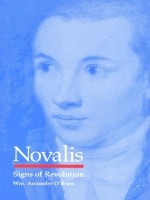
Novalis
Signs of RevolutionWilliam Arctander O Brien
Duke University Press, 1994
A member of the generation of the 1770s that included Hegel, Hölderlin, and Schelling, Hardenberg was an avid follower of the French Revolution, a semiotician avant la lettre, and a prescient critic of religion. Yet in 1802, only a year after his death, the writer who had scandalized the Prussian court was marketed to a nation at war as a reactionary patriot, a sweet versifier of Idealism, and a morbid mystic. Identifying the break between Hardenberg’s own early Romanticism and the late Romanticism that falsified it, Novalis shows us a writer fully engaged in revolutionary politics and examines his semiotic readings of philosophy and of the political, scientific, and religious institutions of the day. Drawing on the full range of Novalis’s writings, including his poetry, notebooks, novels, and journals, O’Brien situates his semiotics between those of the eighteenth century and those of the twentieth and demonstrates the manner in which a concern for signs and language permeated all aspects of his thought.
The most extensive study of Hardenberg available in English, Novalis makes this revolutionary theoretician visible for the first time. Mining a crucial chapter in the history of semiotics and social theory, it suggests fruitful, sometimes problematic connections between semiotic, historical, "deconstructive," and philological practices as it presents a portrait of one of the most complex figures in literary history. Indispensable for scholars of German Romanticism, Novalis will also be of interest to students of comparative literature and European intellectual history.

Novelist to a Generation
The Life and Thought of Winston ChurchillUniversity of Wisconsin Press, 1976
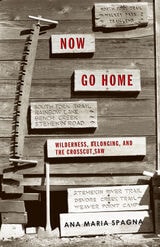
Now Go Home
Wilderness, Belonging, and the Crosscut SawAna Maria Spagna
Oregon State University Press, 2004
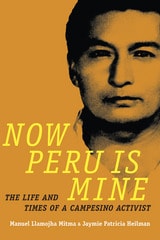
Now Peru Is Mine
The Life and Times of a Campesino ActivistManuel Llamojha Mitma and Jaymie Patricia Heilman
Duke University Press, 2016
Nowhere Near the Line
Pain and Possibility in Teaching and WritingElizabeth H. Boquet
Utah State University Press, 2016
In this short work, Elizabeth Boquet explores the line Lawrence Schall describes above, tracing the overlaps and intersections of a lifelong education around guns and violence, as a student, a teacher, a feminist, a daughter, a wife, a citizen and across the dislocations and relocations that are part of a life lived in and around school. Weaving narratives of family, the university classroom and administration, her husband’s work as a police officer, and her work with students and the Poetry for Peace effort that her writing center sponsors in the local schools, she recounts her efforts to respond to moments of violence with a pedagogy of peace. “Can we not acknowledge that our experiences with pain anywhere should render us more, not less, capable of responding to it everywhere?” she asks. “Compassion, it seems to me, is an infinitely renewable resource.”

Nurturing Doubt
From Mennonite Missionary to Anthropologist in the Argentine ChacoElmer S. Miller
University of Illinois Press, 1995