Results by title
4038 books match the query 'Social aspects' and 113 start with n
Not Only the Market
Martin Potucek
Central European University Press, 1999
Not Tonight
Migraine and the Politics of Gender and HealthJoanna Kempner
University of Chicago Press, 2014
In Not Tonight, Joanna Kempner argues that this general dismissal of migraine can be traced back to the gendered social values embedded in the way we talk about, understand, and make policies for people in pain. Because the symptoms that accompany headache disorders—like head pain, visual auras, and sensitivity to sound—lack an objective marker of distress that can confirm their existence, doctors rely on the perceived moral character of their patients to gauge how serious their complaints are. Kempner shows how this problem plays out in the history of migraine, from nineteenth-century formulations of migraine as a disorder of upper-class intellectual men and hysterical women to the influential concept of “migraine personality” in the 1940s, in which women with migraine were described as uptight neurotics who withheld sex, to contemporary depictions of people with highly sensitive “migraine brains.” Not Tonight casts new light on how cultural beliefs about gender, pain, and the distinction between mind and body influence not only whose suffering we legitimate, but which remedies are marketed, how medicine is practiced, and how knowledge about disease is produced.
Not Trying
Infertility, Childlessness, and AmbivalenceKristin J. Wilson
Vanderbilt University Press, 2014
But the majority of women who struggle with fertility avoid treatment. The women whose interviews appear in Not Trying belong to this majority. Their attitudes vary and may change as their life circumstances evolve. Some support the prevailing cultural narrative that women are meant to be mothers and refuse to see themselves as childfree by choice. Most of these women, who come from a wider range of social backgrounds than most researchers have studied, experience deep ambivalence about motherhood and non-motherhood, never actually choosing either path. They prefer to let life unfold, an attitude that seems to reduce anxiety about not conforming to social expectations.

Not Yet Pregnant
Infertile Couples in Contemporary AmericaGreil, Arthur L
Rutgers University Press, 1991
Although voluntary childlessness has come to be accepted as permissible, the "normal" plans of most American couples include parenthood. Having a child is still seen as a rite of passage to adulthood. When a couple finds out that they are infertile and that life is not going to go according to plan, they ask, "why me?" Greil explores not only "why me?" and the difficulty of finding a satisfying answer, but other questions as well. Why do women and men respond differently to infertility? Do gender differences play a role in the experience of infertility? How has medical technology affected the experience of infertility? Why are infertile couples so committed to the goal of having biological children?
Greil argues that the complexity of infertility comes from its changing statusÐÐit is no longer considered a provate problem but a medical problem that can be solved. The human body is thought of as a finely-tuned machine and infertility is just a mechanical problem. In America, the author claims, those who suffer from medical problems become subject to cultural beliefs about the nature of illness and the role of the sick. This includes the belief that the sufferer should do everything in his or her power to get better; in the cae of infertility the infertile couple should do everything possible to have a baby. What results is often painful, humiliating, and never-ending treatment programs. But infertile couples are reluctant to stop treatment because new techniques are being developed, and there is always next month. Couples do not consider themselves infertile forever, they consider themselves "not yet pregnant."
Greil explores the effect that infertility has on men and women, and why men seem to accept infertility more easily than women. Women see infertility as failure, they see themselves as incomplete. Men, seeing infertility more frequently as something they cannot change, ask why worry about it? Greil also explores what effect these attitudes have on the couple's marriage, on relationships with their relatives, and with their fertile friends. Infertility is not just a medical problem, it is a personal and emotional problem that affects all other aspects of the couple's life. This is a thorough investigation of what fertility means to contemporary American couples.
Not Your Average Zombie
Rehumanizing the Undead from Voodoo to Zombie WalksBy Chera Kee
University of Texas Press, 2017
The zombie apocalypse hasn’t happened—yet—but zombies are all over popular culture. From movies and TV shows to video games and zombie walks, the undead stalk through our collective fantasies. What is it about zombies that exerts such a powerful fascination? In Not Your Average Zombie, Chera Kee offers an innovative answer by looking at zombies that don’t conform to the stereotypes of mindless slaves or flesh-eating cannibals. Zombies who think, who speak, and who feel love can be sympathetic and even politically powerful, she asserts.
Kee analyzes zombies in popular culture from 1930s depictions of zombies in voodoo rituals to contemporary film and television, comic books, video games, and fan practices such as zombie walks. She discusses how the zombie has embodied our fears of losing the self through slavery and cannibalism and shows how “extra-ordinary” zombies defy that loss of free will by refusing to be dehumanized. By challenging their masters, falling in love, and leading rebellions, “extra-ordinary” zombies become figures of liberation and resistance. Kee also thoroughly investigates how representations of racial and gendered identities in zombie texts offer opportunities for living people to gain agency over their lives. Not Your Average Zombie thus deepens and broadens our understanding of how media producers and consumers take up and use these undead figures to make political interventions in the world of the living.
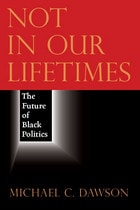
Not in Our Lifetimes
The Future of Black PoliticsMichael C. Dawson
University of Chicago Press, 2011
For all the talk about a new postracial America, the fundamental realities of American racism—and the problems facing black political movements—have not changed. Michael C. Dawson lays out a nuanced analysis of the persistence of racial inequality and structural disadvantages, and the ways that whites and blacks continue to see the same problems—the disastrous response to Katrina being a prime example—through completely different, race-inflected lenses. In fact, argues Dawson, the new era heralded by Barack Obama’s election is more racially complicated, as the widening class gap among African Americans and the hot-button issue of immigration have the potential to create new fissures for conservative and race-based exploitation. Through a thoughtful analysis of the rise of the Tea Party and the largely successful “blackening” of President Obama, Dawson ultimately argues that black politics remains weak—and that achieving the dream of racial and economic equality will require the sort of coalition-building and reaching across racial divides that have always marked successful political movements.
Polemical but astute, passionate but pragmatic, Not in Our Lifetimes forces us to rethink easy assumptions about racial progress—and begin the hard work of creating real, lasting change.
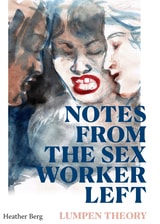
Notes from the Sex Worker Left
Lumpen TheoryHeather Berg
Duke University Press, 2026

Novel Ecologies
Nature Remade and the Illusions of TechAllison Carruth
University of Chicago Press, 2025
Allison Carruth’s Novel Ecologies shows how the tech industry has taken up the wilderness mythologies that shaped one strain of American environmentalism over the last century. Calling this twenty-first-century environmental imagination Nature Remade, Carruth describes a distinctly West Coast framework that is at once nostalgic and futuristic. Through three case studies (synthetic wildlife, the digital cloud, and space colonization), the book shows Nature Remade to be a quasi-religious belief in venture capitalism and big tech. This paradigm thus imagines a future in which species, ecosystems, and entire planets are re-generated and re-created through engineering.
Novel Ecologies challenges the conviction that climate change and other environmental crises must be met with ever larger-scale forms of technological intervention. Against the new worlds conjured by Google, Meta, Open AI, Amazon, SpaceX, and a host of lesser-known start-ups, Carruth marshals writers and artists who imagine provisionally hopeful environmental futures while refusing to forget the histories that have made the world what it is. On this track of the book, Carruth discusses the works of Octavia Butler, Becky Chambers, Jennifer Egan, Ruth Ozeki, Craig Santos Perez, Tracy K. Smith, Jeff VanderMeer, Saya Woolfalk, and many more. Their novels, poems, installation artworks, and expressive media offer a speculative world built on livable communities rather than engineered lifeforms.
Nowhere Near the Line
Pain and Possibility in Teaching and WritingElizabeth H. Boquet
Utah State University Press, 2016
In this short work, Elizabeth Boquet explores the line Lawrence Schall describes above, tracing the overlaps and intersections of a lifelong education around guns and violence, as a student, a teacher, a feminist, a daughter, a wife, a citizen and across the dislocations and relocations that are part of a life lived in and around school. Weaving narratives of family, the university classroom and administration, her husband’s work as a police officer, and her work with students and the Poetry for Peace effort that her writing center sponsors in the local schools, she recounts her efforts to respond to moments of violence with a pedagogy of peace. “Can we not acknowledge that our experiences with pain anywhere should render us more, not less, capable of responding to it everywhere?” she asks. “Compassion, it seems to me, is an infinitely renewable resource.”
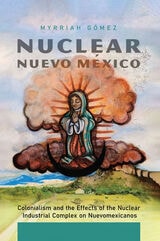
Nuclear Nuevo México
Colonialism and the Effects of the Nuclear Industrial Complex on NuevomexicanosMyrriah Gómez
University of Arizona Press, 2022
Contrary to previous works that suppress Nuevomexicana/o presence throughout U.S. nuclear history, Nuclear Nuevo México focuses on recovering the voices and stories that have been lost or ignored in the telling of this history. By recuperating these narratives, Myrriah Gómez tells a new story of New Mexico, one in which the nuclear history is not separate from the collective colonial history of Nuevo México but instead demonstrates how earlier eras of settler colonialism laid the foundation for nuclear colonialism in New Mexico.
Gómez examines the experiences of Nuevomexicanas/os who have been impacted by the nuclear industrial complex, both the weapons industry and the commercial industry. Gómez argues that Los Alamos was created as a racist project that targeted poor and working-class Nuevomexicana/o farming families, along with their Pueblo neighbors, to create a nuclear empire. The resulting imperialism has left a legacy of disease and distress throughout New Mexico that continues today.

Nuclear Suburbs
Cold War Technoscience and the Pittsburgh RenaissancePatrick Vitale
University of Minnesota Press, 2021
From submarines to the suburbs—the remaking of Pittsburgh during the Cold War
During the early Cold War, research facilities became ubiquitous features of suburbs across the United States. Pittsburgh’s eastern and southern suburbs hosted a constellation of such facilities that became the world’s leading center for the development of nuclear reactors for naval vessels and power plants. The segregated communities that surrounded these laboratories housed one of the largest concentrations of nuclear engineers and scientists on earth. In Nuclear Suburbs, Patrick Vitale uncovers how the suburbs shaped the everyday lives of these technology workers.
Using oral histories, Vitale follows nuclear engineers and scientists throughout and beyond the Pittsburgh region to understand how the politics of technoscience and the Cold War were embedded in daily life. At the same time that research facilities moved to Pittsburgh’s suburbs, a coalition of business and political elites began an aggressive effort, called the Pittsburgh Renaissance, to renew the region. For Pittsburgh’s elite, laboratories and researchers became important symbols of the new Pittsburgh and its postindustrial economy. Nuclear Suburbs exposes how this coalition enrolled technology workers as allies in their remaking of the city.
Offering lessons for the present day, Nuclear Suburbs shows how race, class, gender, and the production of urban and suburban space are fundamental to technoscientific networks, and explains how the “renewal” of industrial regions into centers of the tech economy is rooted in violence and injustice.

Nullius
The Anthropology of Ownership, Sovereignty, and the Law in IndiaKriti Kapila
HAU, 2022
Nullius is an award-winning anthropological account of the troubled status of ownership in India and its consequences for our understanding of sovereignty and social relations. Though property rights and ownership are said to be a cornerstone of modern law, in the Indian case they are often a spectral presence. Kapila offers a detailed study of paradigms where proprietary relations have been erased, denied, misappropriated.
The book examines three forms of negation, where the Indian state de facto adopted doctrines of terra nullius (in the erasure of indigenous title), res nullius (in acquiring museum objects), and, controversially, corpus nullius (in denying citizens ownership of their bodies under biometrics). The result is a pathbreaking reconnection of questions of property, exchange, dispossession, law, and sovereignty.
Nullius is the winner of the 2024 Bernard S. Cohn Prize, Association of Asian Studies.
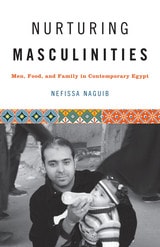
Nurturing Masculinities
Men, Food, and Family in Contemporary EgyptBy Nefissa Naguib
University of Texas Press, 2015
Two structuring concepts have predominated in discussions concerning how Middle Eastern men enact their identity culturally: domination and patriarchy. Nurturing Masculinities dispels the illusion that Arab men can be adequately represented when we speak of them only in these terms. By bringing male perspectives into food studies, which typically focus on the roles of women in the production and distribution of food, Nefissa Naguib demonstrates how men interact with food, in both political and domestic spheres, and how these interactions reflect important notions of masculinity in modern Egypt.
In this classic ethnography, narratives about men from a broad range of educational backgrounds, age groups, and social classes capture a holistic representation of masculine identity and food in modern Egypt on familial, local, and national levels. These narratives encompass a broad range of issues and experiences, including explorations of traditions surrounding food culture; displays of caregiving and love when men recollect the taste, feel, and fragrance of food as they discuss their desires to feed their families well and often; and the role that men, working to ensure the equitable distribution of food, played during the Islamist movement of the Muslim Brotherhood in 2011. At the core of Nurturing Masculinities is the idea that food is a powerful marker of manhood, fatherhood, and family structure in contemporary Egypt, and by better understanding these foodways, we can better understand contemporary Egyptian society as a whole.